The Telluride Detonation
Nobody saw it coming. When Telluride programmers slotted a mystery title into their Labor Day weekend lineup, the smart money was on another prestige drama looking for an early launchpad. What audiences actually got was a 174-minute nonfiction epic from Lance Oppenheim and Nathan Fielder, parachuted into the fall calendar with the kind of theatrical surprise A24 usually reserves for its horror releases. The lights came up on a documentary about Elizabeth Holmes. The lights came up on the Oscar race rearranged.
Within 48 hours, every awards column in Los Angeles had torn up its predictions and started over. The reason is simple and seismic: in 98 ceremonies, the Academy has never nominated a documentary for Best Picture. The last time a nonfiction film even flirted seriously with the top category, Franklin D. Roosevelt was in his first term. We are talking about a 90-year drought that You Can See Everything is now, improbably, a credible threat to end.
This is not a breathless recap. The hype is real, the numbers are freakish, and the campaign is already in motion — but the math of a Best Picture race is unforgiving, and Christopher Nolan's The Odyssey is sitting at the top of the ballot with every structural advantage a frontrunner can want. The question dominating prognosticator chatter isn't whether Fielder's doc gets nominated. It's whether Odysseus or Elizabeth Holmes walks out of the Dolby holding the statue.
What the Movie Actually Is
The film is harder to categorize than any awards contender in recent memory. It begins, per the Variety and Rolling Stone reviews that crystallized the critical consensus out of Telluride and NYFF, as something close to an image-rehabilitation project — Holmes, post-prison, inviting cameras in — before it mutates into something far stranger. Owen Gleiberman's Variety review called it a shameless, fascinating, reality-TV-eats-its-tail look at entitled duplicity, and that framing has become the shorthand critics keep returning to.
Fielder himself is on camera throughout, which is where the formal radicalism lives. He is interviewer, participant, provocateur, and sometimes antagonist. The deadpan social-engineering grammar he refined across his television work gets pointed, here, at a subject who is herself a kind of professional performer. The result occupies a space documentary rarely visits — the line between nonfiction and performance isn't blurred so much as interrogated as the actual subject of the film.
The moral spine of the thing is Fielder's running confrontation with Billy Evans, Holmes's husband, whose management of her post-conviction notoriety becomes the lens through which the film asks who, exactly, is exploiting whom. Rolling Stone's NYFF notice tracks how the project evolves from a straightforward profile into a layered study of pathology and complicity, with Fielder's own ethics implicated by the end.
That places You Can See Everything in a lineage of destabilizing nonfiction the Academy has historically waved past — the kind of territory The Act of Killing occupied in 2013, when it earned a Documentary Feature nomination but was never in serious Best Picture conversation. Three-hour runtimes and formal experimentation have always been the kinds of things voters admire from a distance and then rank fourth on their ballots. The question is whether this one is different.
The Gen Z Box Office Anomaly
The numbers are the thing. They are the entire reason this conversation is happening, and they are frankly berserk for a three-hour documentary.
Deadline's opening-weekend data showed 62% of audiences aged 18-34, 70% under 35, a 98% PostTrak positive score, and an all-time-record 4.8 Letterboxd rating — a combination of demographic skew and ecstatic reception that is simply unheard of for nonfiction cinema. Then came the second weekend. IndieWire reported the film's grosses actually increased 25% in its second weekend to $19.5 million, bringing its total to $45.1 million on a $7 million budget — a trajectory no three-hour doc has ever posted, and a word-of-mouth curve that normally only attaches to superhero sequels or horror phenoms.
This is the awards-narrative rocket fuel. Academy voters, whatever they say in interviews, respond to cultural heat. They want to be where the conversation is. A documentary that teenagers are quoting on TikTok and that fills IMAX houses on a Tuesday night in week three is not a documentary — it is a cultural object, and cultural objects win nominations. Compare that to how prestige documentary movies releases typically perform. The business model is streaming, with a token theatrical run for qualifying weeks and a handful of festival screenings for critics. Nobody expects a doc to double its production budget in its second weekend. Nobody expects a doc to double its production budget, period.
The Fielder fandom pipeline — the audience built across Nathan For You and The Rehearsal — is doing a lot of the work here. These are viewers who treat his output like appointment television and are primed to decode his tonal register. But the data suggests the film has broken containment well beyond the existing fanbase. The 70%-under-35 figure doesn't come from a cult audience. It comes from a hit.
A24's 90-Year Gambit
A24 is not treating this like a documentary release. Variety's 2027 Oscar predictions report the studio is submitting the film in every major category, including Best Picture, Director, and Production Design, with acting consideration also on the table. This is a maximalist play, and it is historically unprecedented.
The Hollywood Reporter's analysis of the 99th Academy Awards rulebook confirms the hybrid form is technically eligible across the board, which is the structural crack A24 is driving a truck through. The Academy's own rules do not forbid a documentary from competing for Best Picture — they simply reflect a 90-year cultural consensus that it won't. A24's bet is that cultural consensus is exactly what this film is built to upend.
The historical weight here is heavy. No documentary has ever been nominated for Best Picture in 98 ceremonies. The nearest brush was in the mid-1930s, in the Nanook-era territory when the category boundaries were still porous. To put You Can See Everything on that ballot would be to end a drought measured not in years but in cinematic eras.
The risk of the everywhere-everywhere submission strategy is real. Campaign enthusiasm can split; voters who might have rallied around a single clean narrative — "the documentary that broke through" — can get pulled in five directions. But the upside is that A24 is creating the only film in the race with two viable paths to a win: Best Picture as the historic upset, Documentary Feature as the near-lock. IndieWire's category-by-category predictions note the film has already landed on both the Critics Choice Documentary nominations and the influential DOC NYC Short List, which are the early validators that tend to precede a sweep.
Odysseus vs. Elizabeth Holmes: The Race Math
Top of ballot: The Odyssey. Nolan's post-Oppenheimer coronation project has scale, star wattage, and the legacy-voter affection that always matters more than pundits admit. He is the frontrunner, and the gap between him and the field is not small.
You Can See Everything is the only film in the race with the cultural velocity to credibly reshape the ceremony — not to win Best Picture, probably, but to force every other category to reckon with its existence. A realistic nomination haul looks like Picture, Director, Documentary Feature, Editing, and a long-shot acting slot that will generate its own news cycle regardless of outcome.
The headwind is voter demographics. The Academy that resisted Roma in 2019 and gave The Power of the Dog eleven nominations but handed Best Picture to CODA is not an organization that embraces formal risk under pressure. A three-hour Fielder stunt-doc hybrid is exactly the kind of film that older voters will admire in theory and rank sixth in practice.
And then there is the preferential ballot. Best Picture is tallied by ranked choice, which systematically punishes polarizing films — the ones with intense top-tier support but equally intense bottom-tier dismissal. A documentary that upends what cinema is will inspire both reactions, and the math of the preferential ballot will quietly bury the second kind of enthusiasm under the first.
Translation: the nomination is now more likely than not. The win is a long shot. But a nomination alone would be the story of the ceremony.
What to Watch Before (or After) You See It
If you want context for the film's radicalism, its subject, or the cultural moment it has detonated, these are the right companion pieces across 2020s movies nonfiction and true-story movies territory.
The Inventor: Out for Blood in Silicon Valley
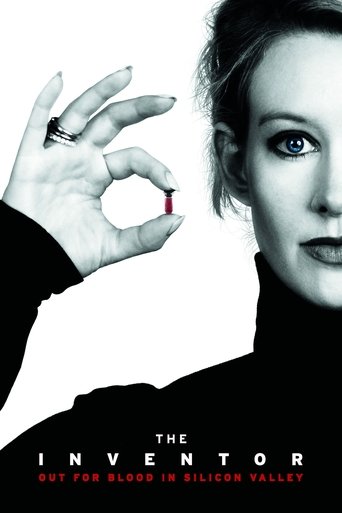
Alex Gibney's conventional-documentary take on Holmes and Theranos is the perfect ballast. Watch it to see exactly how far Fielder and Oppenheim stray from the orthodox grammar of true-crime nonfiction. Gibney gives you the facts; Fielder gives you the vertigo.
Spaceship Earth
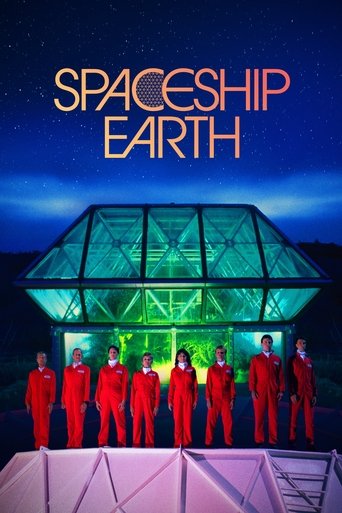
Oppenheim's sensibility — his eye for institutional delusion as a kind of architecture, for cults and compounds and the people who build their lives inside unreality — traces straight back to this stranger-than-fiction Biosphere 2 portrait. It is the clearest primer available on how he sees.
The Social Network
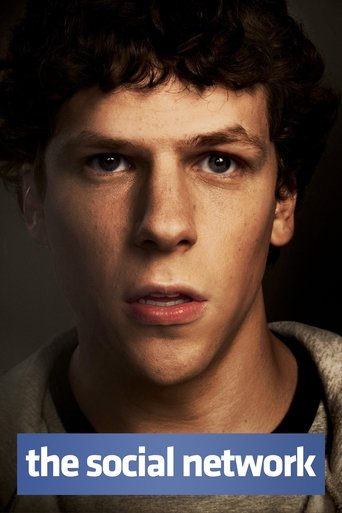
The last cultural object to turn a tech-world con into a generational myth with this much velocity. The Zuckerberg-to-Holmes line is not perfect, but as a comparison point for how Gen Z heat around a prestige film actually behaves, nothing else is close.
The Act of Killing
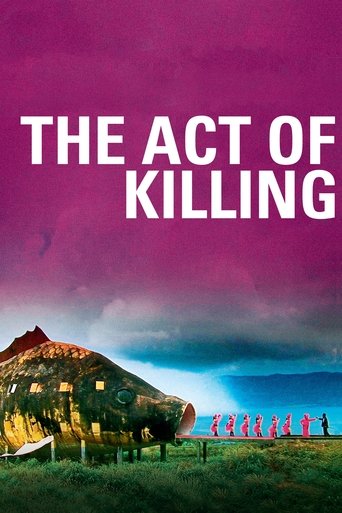
For the lineage of formally destabilizing nonfiction that the Academy has historically honored in Documentary Feature while ignoring in Picture. Joshua Oppenheimer's film is the ceiling of what a doc can be and still get ignored by the top category. You Can See Everything is testing whether that ceiling still holds.
Can't Decide What to Watch?
Let RandomFlix pick a movie for you. One click, one great movie.
Roll the DiceThe Verdict on Its Oscar Chances
Here is the honest read.
A Best Picture nomination is now more likely than not. The commercial trajectory, the critical consensus, the campaign machinery, and the cultural moment are all pulling in the same direction, and the last barrier — Academy tradition — is softer than it looks after the voter expansions of the last decade. If you had asked anyone in August whether a Nathan Fielder documentary could crack the top category, you would have been laughed out of the room. In October, the question answers itself.
A Best Picture win remains a long shot. Nolan has the scale, the legacy, and the preferential-ballot profile to absorb a challenge, and You Can See Everything is precisely the kind of film that polarizes under ranked voting.
The Documentary Feature race, meanwhile, is effectively over. This is the frontrunner, barring a scenario in which A24's maximalist strategy accidentally cannibalizes its own category support — unlikely, but not impossible.
The acting campaign is the wildest variable in the entire ceremony. A nomination for a nonfiction subject or participant would trigger a rules-controversy news cycle that would do nothing but help the film, because every day the conversation is about You Can See Everything is a day Nolan is not consolidating his lead. A24 knows this. A24 is counting on this.
The broader stake is the one worth sitting with. If this film lands a Best Picture nomination, it rewrites what the Academy considers cinema for the next decade. The line between documentary and fiction, between performance and reportage, between prestige film and streaming content — all of it moves. Future hybrid works that would have been quarantined in Documentary Feature will have an actual path to the top of the ballot. That is not a minor change. That is a redefinition.
Whatever happens in March, this is the fall's most-discussed movie. Catch it in a theater while the conversation is still live — because the ceremony is six months away, and the argument is happening right now.