The $32.6M Debate Nobody Expected
Something strange happened the weekend Verity opened. Audiences packed theaters while critics stood in the lobby shaking their heads, and the gap between the two reactions started to look less like a disagreement and more like the movie's thesis made flesh. Michael Showalter's adaptation of Colleen Hoover's novel debuted at No. 1 with $32.6 million from 3,510 locations, beating Tom Cruise's Digger into the ground. And yet the Rotten Tomatoes critical score settled at a punishing 34% — a Gone Girl-sized split that mirrors the film's own unreliable-narrator architecture almost too neatly.
For Anne Hathaway, this is a career moment with no modern parallel. Verity is her third No. 1 opening of 2026, following The Devil Wears Prada 2 and Christopher Nolan's The Odyssey, and it's the biggest Colleen Hoover adaptation since It Ends with Us. The 2026 Hathaway resurgence is real, but it's also, crucially, built on a trio of films where she keeps asking audiences to decide what kind of woman they think she is.
Which is the question Verity is actually about. When Lowen finds the letter under the floorboard, does it overturn the manuscript — or is the letter the real lie? The reason that argument is spilling out of theater lobbies is because Showalter refuses to answer it.
Heavy spoilers from here on. If you haven't seen it yet, close the tab.
What Actually Happens in the Final 20 Minutes
The climax is a hall of mirrors, so it's worth walking through carefully.
Lowen, having read Verity's manuscript "So Be It," confronts Jeremy in the bedroom with what she believes to be proof that his wife murdered their daughter Harper and has been faking her catatonic state since the car accident. Jeremy reads the manuscript, and in a rage, strangles Verity in her bed. He and Lowen then move Verity's body to the lake and stage her death to look like an accidental drowning.
Lowen's whispered instruction to Jeremy — make it look like an accident — is the moment the film quietly implicates her. She is now a co-author of events, not a reader of them.
Then, weeks later, the floor shifts. While cleaning out Verity's office, Lowen discovers a letter hidden beneath a floorboard. In it, Verity claims the manuscript was never a confession but an exercise in "antagonistic journaling" — a dark writing experiment meant to purge her worst thoughts. The woman Jeremy just killed, by this account, was a frightened wife who feared her husband would mistake her craft for her character.
Showalter stages this reveal with a visual callback to the dream sequence Hollywood Reporter first described from the CinemaCon footage — Lowen pulling back from kissing Jeremy only to find Verity's face beneath her own. In context of the ending, that image stops being a nightmare and starts looking like a thesis: these two women are the same woman, viewed through different documents.
The film closes on Verity's whispered voice, musing on the dangerous comfort of certainty. That's the hinge the whole movie swings on.
The Manuscript vs.
The Letter: Reading Both Documents Honestly
Here is what the manuscript "So Be It" claims, in order: that Verity never wanted children, that she was responsible for the drowning death of her daughter Harper, and that her catatonic state after the car accident is a long-running performance. It also claims she seduced Jeremy with calculated patience before the marriage, and that her love for him curdled the moment he became a father.
Here is what the letter claims: that none of this was true. That the manuscript was a writing exercise, a container for intrusive thoughts, a way of exorcising the parts of herself she was most afraid of. That she wrote it precisely because she feared Jeremy would find it and misread her — which is exactly what happened.
Now notice something the film does very carefully: the only piece of hard evidence we see with our own eyes is the staged accident at the lake. Everything else — Harper's drowning, the catatonia fakery, the predatory seduction — exists only inside one of two competing texts. We never witness Verity do a single one of the things the manuscript accuses her of. We do, however, witness Lowen help kill her.
This is where the 34% critical score starts to look less like a response to the movie and more like a demonstration of it. Reviews that defaulted to "the letter is the truth, Verity was innocent, this is a tragedy" are performing the same selective reading Lowen performs when she chooses to believe the manuscript. Reviews that defaulted to "the letter is a final manipulation, Verity really was a monster" are performing the inverse. Both camps picked the version of the story that let them keep their verdict on Jeremy intact.
Hathaway's Villain Is the Film's Rorschach Test
What makes the ambiguity actually work — rather than feeling like a cheat — is Hathaway's refusal to tip either flashback.
In the manuscript sequences, she plays Verity as the predatory, cool-eyed architect the text describes: a woman who understood exactly what she was doing from the moment she met Jeremy. In the letter sequences, she plays a warm, overwhelmed young mother drowning in postpartum fear, a writer using fiction to survive her own brain. Both performances are fully committed. Neither one winks.
That's a Rosamund-Pike-in-Gone Girl move, and it's a harder trick than it looks. Pike's Amy worked because the film ultimately committed to one version of her. Hathaway's Verity works because the film refuses to.
It also fits a specific recent arc. In Eileen, Hathaway played a woman whose glamour concealed something colder and more complicated. The chill she brought to Mothers' Instinct was similar — a performance that lived in the gap between what a woman says and what the camera suspects. Verity is the full flowering of that register. "Anne Hathaway's villain" is a label the audience assigns, and the film knows it, and the film is quietly interested in why we're so eager to assign it.
Why Showalter Shot It This Way
Both Showalter and Hoover have said in press for the film that they wanted the ending to feel like a conversation rather than a verdict. That intention is visible in nearly every choice in the final act — the sound design that drops out during the letter reveal, the refusal to flash back to Harper's death from any neutral vantage, the way the camera lingers on Lowen's face as she decides what to do with what she's found.
The screenplay went through multiple writers before Nick Antosca — the architect of The Act and Channel Zero — delivered the final draft. Antosca's fingerprints are all over this ending. His whole body of work is interested in domestic horror as an epistemological problem: who gets to narrate the house, who is believed, which document survives. The novel tips its hand more decisively. The film, under Antosca's rewrite and Showalter's direction, withholds.
That places Verity inside a specific small lineage of ambiguous-document thrillers — Gone Girl most obviously, but also the quieter dread of recent psychological-thriller movies entries that trust audiences to sit with contradiction. It's a lineage mainstream October releases rarely join, which is probably why some critics bounced off it. We're trained to expect the final scene to tell us who was right.
What the Ending Actually Means for Lowen, Jeremy, and the Baby
Here's the reading the film quietly points toward, if you let it.
The final scene isn't Verity's story. It's Lowen's. She is now the woman in the house. She is Crew's stepmother. She is Jeremy's partner. She is, almost certainly, the author of the next manuscript — and the next manuscript will, like Verity's, be a story about this family told by the woman currently sharing Jeremy's bed.
The circular structure matters. A writer enters a house of secrets. A writer may be becoming the thing she feared, regardless of which document was true. If the manuscript was real, Lowen has replaced a monster with herself. If the letter was real, Lowen helped murder an innocent woman and is now raising her son. There is no reading of this ending that lets Lowen off the hook.
Jeremy is the common denominator both documents agree on. The manuscript's Verity married a man who could be seduced; the letter's Verity married a man who could be convinced. Both accounts position him as someone who needs a monster to blame in order to feel like a good father. That is the one fact the film treats as settled.
And then there is the baby — Crew, the surviving son, the quiet moral center the film keeps returning to in cutaways. Whatever happened to Harper, whichever document is lying, Crew is now being raised by his father and the woman who told that father to make murder look like an accident. The film's real horror is not the question of what Verity did. It is the certainty of what Lowen just became.
If Verity Rewired You, Watch These Next
Gone Girl
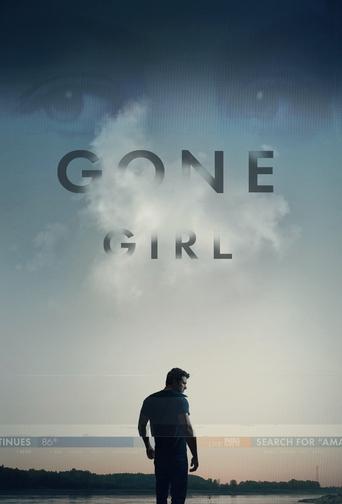
The obvious cousin, and the one critics kept invoking in reviews. Fincher's film remains the gold standard for weaponized unreliable narration, and it's a useful contrast — because Gone Girl ultimately commits to a version of events, where Verity refuses to. Watch them back to back and you can feel the shift in what mainstream thrillers are willing to withhold.
Sharp Objects
Gillian Flynn's other great study of a writer returning to a house that wants to tell her something. The parallels with Lowen's arc are striking — the professional reader forced to become a participant, the architecture of the house standing in for the architecture of memory.
Stoker

Park Chan-wook's gothic family thriller shares Verity's interest in dream logic bleeding into memory, in the way an outsider woman enters a household and starts rearranging its truths. The visual grammar is different, but the moral vertigo is the same.
The Girl on the Train
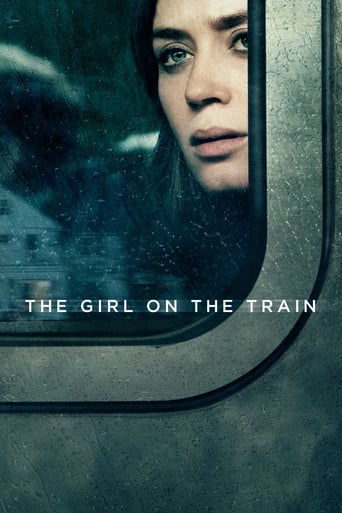
Another story about which woman's version of events we're willing to believe, and why. The failure modes of its ending are instructive — it's a useful comparison for understanding what Showalter does differently by refusing to resolve.
For more stories built on unreliable narration and competing accounts, the mystery movies shelf is where this tradition lives, and the broader 2020s movies wave of adult thrillers has been quietly rediscovering ambiguity as a feature rather than a bug.
The Verdict Verity Refuses to Give You
The ending is a mirror, not a reveal. That is the whole point, and it is the thing the 34% critical score missed — or, more generously, the thing the critical score was never equipped to measure. A film that refuses to resolve is going to read as a failed film to any rubric that measures resolution. But to the audience that drove it to $32.6 million in a weekend, the lack of a verdict is the verdict.
So here is the question the movie actually leaves you with. When Lowen pulled that letter out from under the floorboard, which document did you believe first? Not which one you argued for in the car ride home — which one your gut reached for in the theater. Did you want Verity to be innocent so the murder would feel like a tragedy? Did you want her to be guilty so the murder would feel like justice? Did you want the letter to be true because it meant Jeremy could still be a good man?
Whichever instinct you had, that's what the movie is about. The documents are a Rorschach, and Showalter is handing you the inkblot.