The Telluride Secret Screening That Rewrote the Race
Secret screenings happen every Labor Day weekend in Telluride. Most of them generate a day's worth of tweets and a polite paragraph in a festival wrap. The one that unspooled in a half-full theater at the top of the mountain in early September became something else — a cultural rupture that trade reporters were still trying to measure a month later, when the film finally surfaced officially at the New York Film Festival. By the time Variety ran its awards analysis, the conversation had already pivoted from "did you see it?" to a question nobody in the modern Academy era has had to seriously ask: can a documentary win Best Picture?
The film is You Can See Everything, Nathan Fielder and Lance Oppenheim's 174-minute plunge into the orbit of Elizabeth Holmes. The runtime alone would be a provocation. The subject alone would be a provocation. Together, filtered through Fielder's particular brand of discomfort — the same instinct for ethical freefall that powered The Rehearsal and bled into the atmosphere of The Curse — they produce something the Oscar race genuinely hasn't had to metabolize before. A24, never shy about a formal gamble, is reportedly going for it: Best Picture, not a consolation parked in the documentary movies shelf.
The question isn't whether the film is good. By the time it hit Lincoln Center, that was settled. The question is whether its specific form — a psychodrama in nonfiction clothing, a hall of mirrors with a comedian at the center — is the thing finally breaking the awards-season algorithm.
What Actually Happens at NYFF (and Why the Room Sounded Like That)
The NYFF screening sounded, by every account that leaked out of it, less like a premiere and more like a live wire. Reporters on the ground described a room that lurched between raucous laughter and the kind of ambient dread that most drama movies filmmakers would kill to engineer. There's a long sequence involving Billy Evans, Holmes's partner, being questioned by Fielder in that trademark affectless monotone, that reportedly produced audible gasps. There's another — the one Den of Geek singled out — in which Fielder and a producer verbally box in a subject with the structural precision of an Abbott & Costello routine, except what's being extracted is self-incrimination rather than a punchline. The room, I'm told, went silent in a way rooms don't usually go silent at documentaries.
Film at Lincoln Center's programming note called the film "an astounding new high-wire act of self-reflexivity," which, applied to a doc, is doing a specific kind of rhetorical work. Self-reflexivity is the language we use for essay films, for Charlie Kaufman, for Welles. It is not the language we use for the thing that normally wins Best Documentary Feature. That's a tell.
The thesis of the movie, if it has one, surfaced at Fielder's Academy Museum Q&A. He told the audience, in that halting Fielder way, that he needs them to help him understand what he went through making it. Read as PR, it's a cute soundbite. Read as text, it's the entire structural argument: the movie isn't about Holmes. It's about the condition of looking at Holmes, and the viewer is being conscripted into that condition whether they like it or not.
The Form: Why This Isn't a Documentary the Way the Academy Means
It
To understand what Fielder and Oppenheim have made, you have to understand what each of them was already doing. Oppenheim arrived on the nonfiction scene with Some Kind of Heaven, a sun-bleached observational portrait of a Florida retirement community whose formal elegance already strained against conventional doc grammar. He followed it with Spermworld, pushing the ethics of observation further still. Fielder, meanwhile, had spent two seasons of The Rehearsal turning performance itself into an epistemological weapon. The collision of those two methods — observational cinema that respects its subjects' interiority meeting a performance-as-interrogation style that cheerfully destabilizes everyone in the room — is the movie.
What it refuses to be is the Holmes doc you've already seen. The Inventor: Out for Blood in Silicon Valley established the template: archival footage, talking-head journalists, a prosecutorial arc that marches toward a verdict. Fielder and Oppenheim throw all of that out. Instead they build a hall of mirrors in which Holmes is performing for Fielder, who is performing for us, who are — the film insists — performing for ourselves, enacting the role of the morally serious viewer. The murky line between director and subject that IndieWire's Telluride review identified is not a weakness. It's the structural move. It makes the audience complicit, which is the operating logic of psychological fiction, not of journalism.
The 2020s movies have been full of nonfiction filmmakers chipping at this wall. Kitty Green has been doing it in dramatized recreations. Robert Greene has been doing it in therapeutic reenactment. What Fielder and Oppenheim have done is push the method until the wall simply isn't there anymore. There is no clean account you can give of You Can See Everything that doesn't involve the words "and then Fielder, playing Fielder, does the thing."
The Oscar Math: What A24 Is Actually Attempting
The record is 90 years long and it is unambiguous: no documentary has won Best Picture, and only a handful have ever been nominated. {{movie:Hoop Dreams} wasn't even nominated in the doc category in a year it topped half the critics' lists in America. The ceiling is real and it is low.
A24's campaign logic, as it's being described by trade reporters, is to push on four fronts simultaneously: Best Picture, Best Director, Best Documentary Feature, and — the dark horse that nobody is talking about enough — Film Editing, for whoever shaped three years of footage into 174 coherent minutes. The dual-category play is the interesting part. Nominating a film in both Best Picture and Best Documentary Feature would itself be a historical event; winning Best Picture while losing Best Documentary Feature would be a cosmic joke the Academy has never had to live with.
The playbook has a template, though. A24's successful runs for Everything Everywhere All at Once and The Zone of Interest both leveraged formal strangeness as a feature of the campaign, not a bug to apologize for. The pitch wasn't "it's weird but." The pitch was "it's weird, that's the point, and the Academy should reward the swing." The You Can See Everything campaign is reportedly being built on the same principle.
Where does it crack? Older voters, obviously. The runtime, obviously — 174 minutes is a lot to ask of a screener at Christmas. And the queasier question underneath all of it: does rewarding the film also constitute rewarding Holmes's platforming? That's the knife every voter is going to have to decide whether to pick up.
Start a Watchlist
Keep track of every movie that catches your eye. Your watchlist, your rules.
Start Your WatchlistThe Fielder Problem: Deadpan as Investigative Tool
Here is the paradox Den of Geek's review surfaced and then mostly left for others to work out: Fielder's affectless, almost childlike interview persona extracts more from Billy Evans and from Holmes herself than a decade of serious investigative journalism managed. The reason, I think, is that the Fielder persona bypasses the defensive architecture that media-trained subjects deploy against reporters. You can't deflect a question that doesn't sound like a question. You can't go into talking-points mode when the person across from you appears, with total sincerity, to simply not understand what you just said. The subjects fill the silence, and in filling it, they reveal.
In The Playlist's NYFF interview, Fielder and Oppenheim talked about observation itself as the subject of the film. That is a startling thing for the directors of a true-crime-adjacent doc to say, and it places the movie closer in spirit to F for Fake or Shoah than to anything on the current prestige-doc shelf. Those are films about the act of looking. This is a film about the act of looking at a woman who built a career on being looked at.
The counterargument deserves real space. There is a plausible read — and some critics are already making it — that Fielder's persona is a shield. That it lets him sit across from Holmes without ever having to adopt the moral posture a reporter would be obligated to adopt, and that this same affordance lets Holmes evade accountability by appearing, obliquely, to be in on a joke she is actually the butt of. That the whole project is a mutual ethical offloading dressed up as inquiry. I don't fully buy it, but I take it seriously, and anyone writing about the film honestly has to. The movie's defense is that it builds this exact concern into its text. The question is whether building the critique into the film insulates the film from the critique, or whether that's just a more sophisticated form of the same shield.
If It Lands For You, Watch These Next
A short festival-watch sidebar for anyone trying to understand the lineage Fielder and Oppenheim are drawing from. These are the films You Can See Everything is in conversation with — some by inheritance, some by contrast.
The Act of Killing
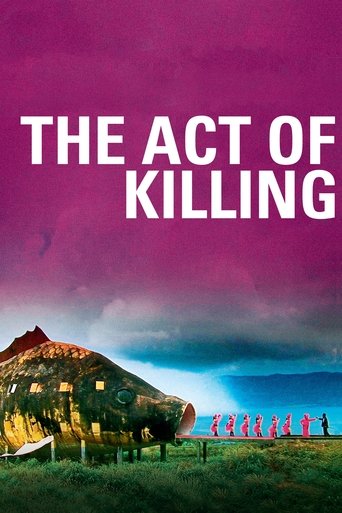
Joshua Oppenheimer's unclassifiable 2012 masterwork is the gold standard for a documentary that weaponizes performance against its subjects, letting perpetrators of mass violence restage their own crimes in the genre film styles of their choosing. The ethical queasiness that You Can See Everything induces has its clearest precedent here.
F for Fake
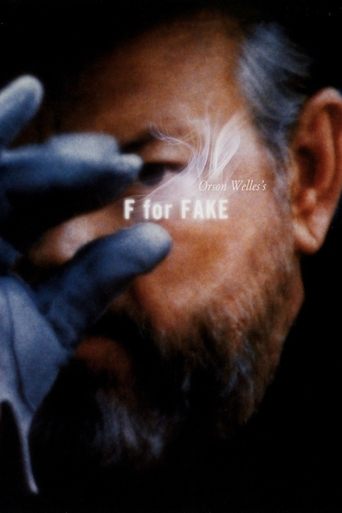
Orson Welles's 1973 essay film, built around art forger Elmyr de Hory and his biographer Clifford Irving, is the formal ancestor Fielder and Oppenheim are most obviously channeling. A film about fakery that is itself partly fake, narrated by a magician who is also the subject — the shape of the argument is nearly identical.
The Inventor: Out for Blood in Silicon Valley
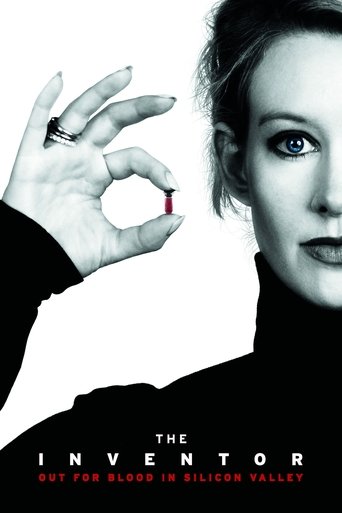
Alex Gibney's 2019 Holmes doc is included here specifically as a contrast. It is a competent, well-reported, formally conventional piece of long-form journalism. Watching it alongside You Can See Everything is the clearest possible demonstration of what Fielder and Oppenheim refuse to do, and why their refusal matters.
Some Kind of Heaven
Lance Oppenheim's 2020 breakthrough is the clearest preview of the observational instincts he brings to the new film. The painterly compositions, the willingness to sit with his subjects long enough that performance curdles into something more honest — all of that is in the DNA of what he's doing with Fielder.
What to Watch For Between Now and March
The theatrical release is set for October 16, 2026, and the first question is whether A24 holds the runtime at 174 minutes through wide expansion or quietly trims it for broader distribution. If the cut survives intact, that itself is a campaign statement.
The critics' groups are the real tell. NYFCC, LAFCA, and the National Society of Film Critics vote before Academy ballots go out, and if two or more of them name You Can See Everything their Best Picture of the year — not best documentary, Best Picture, period — the nomination becomes defensible for every fence-sitting voter in the Academy. One critics' group doing it is a stunt. Two is a movement. Three is a mandate.
The Holmes factor is the wild card nobody can model. She is still a public figure with ongoing legal and PR exposure, and any development on either front between now and March could reshape the campaign overnight — either by making the film feel more essential or by making the Academy's embrace of it feel more unseemly.
But the larger point, the one that outlasts whatever happens on nomination morning: this film has already done the thing. It has forced a serious, grown-up conversation about why the documentary movies category exists as a separate shelf at all, and about what the Academy's documentary ceiling has been protecting all these years. Whether or not Fielder and Oppenheim stand on the Dolby stage in March, that conversation is now the price of admission for anyone who wants to talk about the Oscars with a straight face.
Keep an eye on the critics' circuits in December. That's where this stops being a formal provocation and becomes, or doesn't become, a race.