The Rerelease: What's Actually Happening October 2-4, 2026
Twenty-five years after a jet engine fell through the roof of the Darko house and sent a generation of teenagers down a wormhole they're still crawling out of, Richard Kelly's suburban fever dream is coming back to theaters — and this time, properly. Fathom Entertainment and Saga Arts are bringing a new 4K restoration of Donnie Darko to theaters October 2-4, 2026, in what's being pitched as the widest theatrical run the film has ever had.
For a movie that originally limped into cinemas and vanished within weeks, that's not a small deal. The original 2001 release grossed only a fraction of what its reputation now suggests, and Donnie Darko spent most of its life as a DVD passed between dorm rooms, a midnight screening, a Hot Topic t-shirt. Seeing it on a real screen, in real October light, with real strangers around you — that's something most of its fans have never actually done.
The screenings come with a wrapper, too. Each one includes an exclusive new introduction from writer-director Richard Kelly reflecting on the film's enduring legacy. And there's a reason the dates land where they do: October 2 has quietly become "Donnie Darko Day" among fans, and Kelly is using the moment to tee up a long-promised sequel novel, The Philosophy of Time Travel, named after the in-film text that Donnie reads in a cold panic.
Context for anyone too young to remember the first run: the film originally opened October 26, 2001, carried a $4.5 million budget, and grossed roughly $7.5 million worldwide — a flop in every spreadsheet sense of the word. What happened next is one of the most-cited cult trajectories in modern cinema.
Why October Is the Only Month This Film Makes Sense
Donnie Darko isn't set in autumn. It is autumn. The entire narrative is a countdown clock — 28 days, 6 hours, 42 minutes, 12 seconds — ticking down to Halloween night 1988. Everything that happens in the film is scaffolding under that number. Every scene is one tick closer to the end of October.
Kelly shoots suburban Virginia in a very specific late-October light: bare branches scratching at the sky, orange leaves clotting in gutters, early dusk pressing in on living room windows, jack-o'-lanterns softening on porches. The air has that pre-Halloween weight to it where everything feels slightly costumed, slightly unreal. Frank the Rabbit — the film's most indelible image — isn't just a cosmic emissary; he's a Halloween costume first. The horror leaks out of the holiday itself, out of a culture that lets its kids walk around dressed as monsters one night a year and pretends the rest of the year is normal.
That tactile autumn dread puts Donnie Darko in strange company with other seasonal touchstones in horror movies — Halloween and Trick 'r Treat both weaponize the holiday the same way, treating October 31 as a thin spot in reality. Donnie Darko isn't technically horror, but it belongs on that shelf. It's a Halloween movie that happens to be about wormholes.
The Suburban Dread That Still Hits Different
1988 Middlesex, Virginia, as Kelly paints it, is Reagan-era affluence with rot underneath the floorboards. The adults in Donnie's orbit are either hollow or actively malignant: Jim Cunningham's slick self-help cult, Kitty Farmer's weaponized moralism, a gym teacher who confiscates books she can't understand. The grown-up world is a motivational poster taped over a crack in the wall.
This is a specific American subgenre — suburbia-as-wrongness — and Donnie Darko sits comfortably alongside Blue Velvet, The Virgin Suicides, and American Beauty. All of them treat the manicured lawn as the first sign of a crime scene. What Kelly adds to the lineage is scale: he treats teenage alienation as literally apocalyptic. The tangent universe isn't a metaphor for how high school feels, it's a cosmology where high school's weight is correct. Donnie is right about everything. The adults are wrong about everything. The universe will end in 28 days.
That hits differently in 2026 than it did in 2001. A generation raised on screens — on dissociative, chapter-of-your-own-life, main-character framing — recognizes something in the way Donnie moves through Middlesex. He's narrating his own film. He's watching his life from a few inches outside his own body. That used to feel like schizophrenia metaphor; now it feels like Tuesday.
From Box Office Bomb to Cult Monolith: The 25-Year Arc
The film's commercial failure wasn't really the film's fault. It premiered at Sundance in January 2001 to strong word of mouth, then got dumped into theaters a few weeks after 9/11 — a movie whose inciting incident is a jet engine falling from the sky out of nowhere. There was no universe in which American audiences, in October 2001, lined up for that image. The film originally opened in US theaters in October 2001 and earned $3.1 million at the box office before becoming a cult hit.
What saved it was the format shift. Fathom VP of Marketing Shannah Miller has pointed to the DVD era and the slow build of its cult audience as the actual launchpad. Midnight screenings sustained it through the 2000s. Dorm room screenings sustained it after that. By the time streaming arrived, the film was already canonized.
The 2004 Director's Cut remains the fault line among the faithful. Kelly added explanatory text, swapped some needle drops, and spelled out the time-travel mechanics in a way that purists feel undercuts the original's beautiful opacity. The new 4K restoration honors the theatrical cut — the ambiguous one, the one most people fell in love with first.
Can't Decide What to Watch?
Let RandomFlix pick a movie for you. One click, one great movie.
Roll the DiceIt's also worth remembering what an odd ensemble this film assembled before anyone involved was famous for it. Jake Gyllenhaal pivots his entire career off Donnie. Maggie Gyllenhaal plays his sister (because of course she does). Jena Malone, Patrick Swayze cast against every grain he had, Drew Barrymore in the English-teacher role she also helped produce the film into existence to play, and Mary McDonnell as the mother who holds the whole wobbling thing together. There is not another cast list from 2001 that looks like that one.
The Mood Board: What to Watch Around It This October
The Virgin Suicides
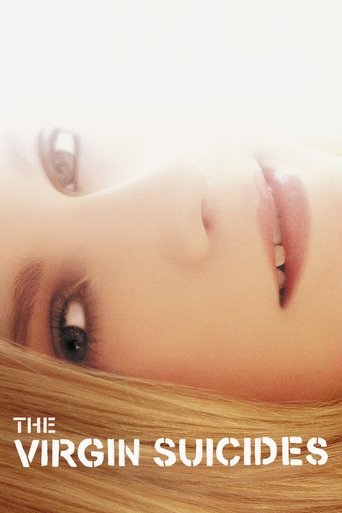
Sofia Coppola's debut shares the dreamy suburban-tragedy wavelength and the same woozy needle-drop sensibility. Both films understand that the saddest thing about adolescence isn't the pain, it's the soundtrack playing underneath it. Watch them back-to-back and the Lisbon house and the Darko house start to look like the same house.
Jacob's Ladder
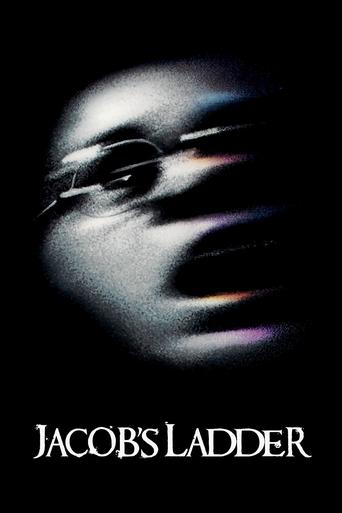
A direct spiritual ancestor. Adrian Lyne's hallucinatory nightmare about a man slipping between realities was openly cited by Kelly as an influence, and you can see it everywhere in Donnie Darko — the twitching faces, the medical-industrial dread, the sense that the protagonist is being gently moved toward a truth he can't quite stand to see.
Mulholland Drive
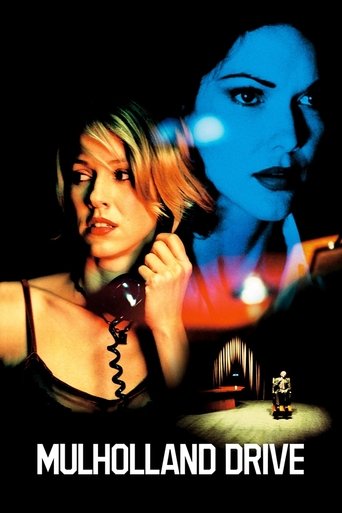
Released the same month as Donnie Darko in 2001. Pair them for a double feature of pure dream-logic unraveling. Both films dare you to make a flowchart; both films punish you for trying. David Lynch and Richard Kelly working in parallel is one of the great accidental releases of modern cinema — two first-decade-of-the-millennium puzzle boxes that still haven't been solved.
It Follows
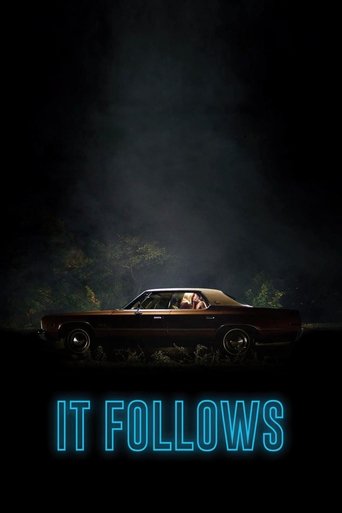
More recent, but David Robert Mitchell's film shares the autumnal suburban-malaise palette and the sense that something slow and inevitable is approaching from down the block. Both films understand that true dread isn't a jump scare — it's a shape that keeps walking.
dream-logic movies on a lighter note
If the above sounds like too much existential weight for a single weekend, chase it with something that works the same era-anxiety muscle without the dissociation hangover. The late-'90s and early-'00s suburban-apocalypse strand runs deep in science-fiction movies, and some of it is actually fun.
If You've Never Seen It on a Big Screen
The Michael Andrews score — glacial, synthetic, patient — was engineered for theatrical sound systems. Gary Jules' closing "Mad World" cover was engineered to gut you in a dark room with other people, not through laptop speakers at 11pm. Home streaming flattens all of it. The low rumble of the jet engine, the subsonic hum under Frank's voice, the final montage's slow emotional detonation — these are shots and sounds designed to physically overwhelm you.
And the 4K restoration is, by all accounts, a real restoration — not a filter pass. Detail that was lost on the original DVD transfers and the subsequent Blu-rays comes back. The autumn exteriors in particular, which have always looked a little muddy on home video, should finally hit the way Kelly's cinematographer intended: cold, orange, specific.
If Fathom isn't playing anywhere near you this weekend, you're not without options. The 2000s movies is full of cult oddities that work the same wavelength, and the suburban-weird strain of science-fiction movies has only gotten richer in the twenty-five years since Donnie first climbed on his bike and rode toward the end of the world.
But if there's a 4K screening within driving distance, go. This is a film that was built for a dark room in late October, and for twenty-five years most of its audience has had to settle for the next best thing. The next best thing was always a compromise. This weekend isn't.