Why Venice Still Owns the Awards Season Starting Gun
The Lido is not subtle about what it is anymore. Cannes has the couture and the boos, Toronto has the audience awards and the industry buyers, but Venice has become the place where Best Picture campaigns actually begin. The numbers back it up: from 2007 to 2024, thirteen of the eighteen Best Picture winners — a full seventy-two percent — premiered at Cannes, Venice, or Telluride, and Venice's slice of that pie has grown noticeably in the last decade.
You can trace the recent pipeline in a straight line. Poor Things detonated on the Lido and rode that wave to the Dolby. All Quiet on the Western Front turned a Netflix acquisition into a nine-nomination haul. The Whale minted a Best Actor winner. And last year, Bugonia made the leap from a Venice competition slot to a Best Picture nomination, extending a streak that has industry watchers treating the festival's opening weekend as an unofficial ballot preview.
The 83rd edition runs September 2–12 under jury president Maggie Gyllenhaal, with George Clooney and Ellen Burstyn collecting Golden Lions for Lifetime Achievement. What makes this year's slate particularly interesting is what's not in it. Industry reads suggest the lineup skews lighter on studio and streamer product than usual, which means auteur cinema sits front and center — no Oppenheimer-sized behemoth crowding out the specialty plays.
So how do you rank a slate like this for awards potential? Four factors: pedigree of the filmmaker, appetite from the various Academy branches, the muscle of the distributor behind the release, and — often the most underrated variable — whether the film's subject matter aligns with what voters actually want to reward in this specific fall. Here are the ten titles most likely to still be part of the conversation in March.
The Frontrunner: Florian Zeller's Bunker
Zeller's third feature is the closest thing this slate has to a pre-declared favorite, and the reason is simple math. The Father was his debut. It won two Oscars, including Adapted Screenplay, and it did so by turning a chamber drama into a formal experiment that voters could actually feel. That is a very hard first impression to shake.
Bunker's cast reads like a ballot in miniature: Penélope Cruz, Javier Bardem, Stephen Graham, and Paul Dano, a quartet with a combined nine acting nominations between them. Chamber dramas anchored by that kind of firepower speak directly to the actors' branch, which remains the largest voting bloc in the Academy. Zeller knows the register. He knows how to give four performers oxygen without letting the film feel airless.
The pressure is real, though. The Son received a notably cooler reception, and Zeller's formal ingenuity on The Father set a bar he now has to clear. The other lingering question is distribution: whichever buyer walks Bunker out of Venice with a full-throated fall campaign attached is essentially locking in a Best Picture slot. Sony Classics, A24, Neon — all are plausible. None will come cheap.
The Wild Card: Martin McDonagh's Wild Horse Nine
McDonagh going political is the swing of the festival. Wild Horse Nine is a Searchlight-released CIA thriller set on the eve of the 1973 Chilean coup, and the ensemble — John Malkovich, Sam Rockwell, Steve Buscemi — suggests the acid McDonagh dialogue that made his earlier work sing is very much intact. This is a hard tonal pivot from the melancholy Irish miniature of The Banshees of Inisherin, but it's not a pivot away from his strengths.
McDonagh has been nominated for Original Screenplay three times — In Bruges, Three Billboards Outside Ebbing, Missouri, and Banshees — and Wild Horse Nine is his most overtly political script to date. Searchlight, meanwhile, has the specialty-campaign muscle that turned Nomadland and Poor Things into Best Picture nominees. That combination alone makes this a probable player.
The risk factor is category: period political thrillers (thriller movies entries with real historical weight) have a documented tendency to underperform on the Best Picture line unless critics unify early. Venice will tell us in a week whether the review consensus lands where Searchlight needs it to.
The Return: Lee Chang-dong's Possible Love
This is the premiere the international critical community has been waiting seven years for. Possible Love is Lee Chang-dong's first feature since Burning in 2018, and it arrives Netflix-backed, which fundamentally reshapes its release calculus. The streamer wants a Best Picture win in the worst way and has repeatedly demonstrated a willingness to spend accordingly.
Lee's international critical standing is essentially untouchable — he is one of the four or five living directors whose new work triggers automatic cinephile mobilization. The current drama movies branch appetite for Korean auteurs, established by Parasite and sustained by follow-up Korean work in the intervening years, gives Possible Love a plausible path to a double nomination for International Feature and Best Picture.
The historical caution: Burning was shortlisted for International Feature but missed the final five. That was without Netflix behind it. With Netflix behind it, the math changes considerably. Regardless of prize outcome, this is likely to be the festival's most-discussed premiere, and the reviews out of the Sala Grande will effectively set the ceiling for its awards run.
The Other Seven Titles Worth Tracking
Primetime
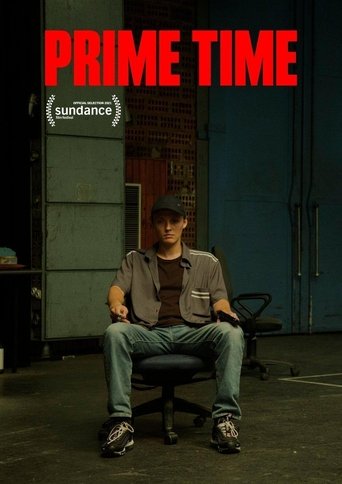
Robert Pattinson has spent the better part of a decade quietly building the most credible art-house résumé of any actor his age. Primetime is the film that could finally convert that streak into his first Oscar nomination. The Academy has been circling him for a while; a strong Venice reception is the shove.
Casey Affleck's Company
Deadline has described this as gothic horror, which is a genuinely wild directorial swing from an actor whose previous behind-the-camera work played much smaller. Company is the kind of premiere that either becomes a critical rallying point or splits the Lido down the middle. Either outcome is interesting.
Luca Guadagnino's next
Coming off Challengers and Queer, Guadagnino has been prolific to a fault. The work has stayed strong, but voter fatigue is a real thing, and the sheer volume of output over the last three years may work against him at ballot time even if the reviews are excellent.
Werner Herzog in Competition
Never underestimate the Golden Lion sentiment factor for a living legend. Herzog's competition entry may not translate directly into Best Picture heat, but a top prize on the Lido would be a genuine story, and juries have shown they know how to read the room.
Paul Schrader's Latest
The 1970s movies sensibility Schrader keeps refining — the alienated protagonist, the diary voiceover, the moral ledger — still commands screenplay attention from voters who came of age on the films that shaped him. Best Picture is a stretch. Original Screenplay is not.
Hirokazu Kore-eda
Reliable is the word. Post-Shoplifters, Kore-eda has become a fixture in the International Feature conversation, and his new work rarely leaves a major festival without at least a plausible submission path.
The Oasis Documentary
Not an Oscar player in any realistic sense. But it will dominate coverage from the Lido for at least forty-eight hours, and cultural-conversation grenades of this size have a way of pulling attention toward the festival's more serious contenders by osmosis.
Can't Decide What to Watch?
Let RandomFlix pick a movie for you. One click, one great movie.
Roll the DiceThe Absences That Reshape the Race
What's missing matters as much as what's present. Iñárritu's Digger is not on the slate, with Netflix likely holding it for a tighter, more controlled fall rollout. Tom Ford's Cry to Heaven, which would have marked his first feature since Nocturnal Animals, is also absent, extending an already lengthy silence.
Zoom out and you can see a pattern that echoes this year's Cannes: continued studio pullback from the major European festivals, with Telluride and NYFF absorbing more of the traditional commercial awards bait. For the shape of the race, that means expecting a more auteur-driven Best Picture five than in the Oppenheimer year — a lineup weighted toward specialty distributors, foreign-language contenders, and mid-budget adult dramas rather than $100 million spectacles with prestige polish.
That's not a bad thing for cinema. It may be a very good thing for the films on this list.
How to Actually Watch the Venice Class of 2026
Most of these titles won't hit theaters until October through December, which means the smartest pre-game right now is revisiting each filmmaker's back catalog. For McDonagh, the arc is legible: In Bruges to Three Billboards Outside Ebbing, Missouri to The Banshees of Inisherin. Three films, one voice sharpening across two decades, and the political edge of Wild Horse Nine already visible in the second act of Three Billboards if you know where to look.
For Zeller, The Father is essential viewing before Bunker premieres. It's not just a great film — it's the film that established the formal vocabulary he'll almost certainly be extending.
For Lee Chang-dong, Burning and Poetry remain the definitive entry points, though every one of his features rewards the trip. RandomFlix's roll-the-dice tool is a decent way to surface these auteurs' deeper cuts when you don't know where to start — Lee in particular has a filmography that resists chronological binging and rewards a more scattered approach.
The Prediction: What Wins the Golden Lion, What Wins in March
Golden Lion prediction: Lee Chang-dong's Possible Love, with Herzog as a sentimental spoiler if the jury tilts that direction. Gyllenhaal's presidency suggests a jury that will reward formal ambition over safer choices, and Possible Love is likely to be the most formally ambitious title in competition.
Best Picture nomination locks from the slate, at this early vantage: Bunker and Wild Horse Nine. Both have the distributor muscle, the pedigree, and the subject matter to survive the long march from September to January without losing altitude.
Bubble contenders: Possible Love, contingent almost entirely on how aggressively Netflix decides to campaign, and Primetime as a Best Actor vehicle for Pattinson if the reviews land where the industry expects them to.
The larger takeaway is the one that keeps proving itself year after year. Even in a lighter studio year — maybe especially in a lighter studio year — Venice's competition remains the single most predictive festival slate for what happens at the Dolby Theatre six months later. If you care about the Oscar race, the ten films above are where it actually starts.
For everything else in the wider drama movies landscape while the September premieres roll in, the deep catalog is your friend. There are worse ways to fill two weeks than with the back half of Lee Chang-dong's filmography.