The Re-Release That Feels Like a Victory Lap
Ten years after it tore out of Cannes' Midnight Directors' Fortnight and became the highest-grossing Korean film of 2016, Train to Busan is coming back to theaters. Well Go USA's 4K restoration hits North American screens on August 14, 2026, and the timing is uncannily sharp. This isn't a nostalgia lap. It's the moment a genre film that never really left the conversation gets to walk back in through the front door.
The context matters. According to Comscore data, more than 100 theatrical re-releases hit screens in 2025, compared to roughly 60 in 2019 before the pandemic. Studios have figured out that catalog titles with genuine crossover heat — the ones that play to horror kids and cinephiles and TikTok discoverers all at once — can outperform mid-budget originals on a per-screen basis. Yeon Sang-ho's film fits that profile better than almost anything else in the queue.
Well Go USA's leadership hasn't been shy about the framing either, positioning the re-release as a celebration of a title that genuinely reshaped what a mainstream zombie picture could look like on a global stage. And the critical scaffolding has only gotten sturdier over the decade: the film holds a 95% Rotten Tomatoes score with an 89% audience rating, and Stephen King placed it on his New York Times Top 100 of the 21st century list. On an $8.5 million budget, it grossed north of $98 million globally — the kind of numbers that reset industry expectations for subtitled genre exports.
So the question worth asking on the anniversary isn't whether the film holds up. It obviously does. The question is: what did Yeon do in 2016 that a decade of imitators — from his own Peninsula to a torrent of Netflix zombie output — still hasn't managed to replicate?
2016 in Context: The Zombie Genre Was Exhausted
To understand why Train to Busan landed with the force of a revelation, you have to remember how tired the undead were by 2016. horror movies had spent a decade cycling through Romero homages, the weightless CGI swarms of World War Z, and the increasingly diminishing returns of The Walking Dead's cable-drama exhaustion. Sprint zombies had been a formal novelty in 2002; by the mid-2010s they were a shorthand. The whole ecosystem felt like it was running on fumes.
Then a Korean animator with no live-action features to his name premiered a bullet-train picture at Cannes and everyone woke up. Variety's original 2016 review made the comparison that would define the film's critical afterlife, framing it as a class-rebellion allegory in conversation with Bong Joon-ho's Snowpiercer — another Korean genre exercise using a moving train as a diagram of stratified society. That framing has only grown more prescient as the decade wore on.
Yeon's background is the tell. He came out of animation — the pitch-black The King of Pigs and the companion piece Seoul Station, which actually functions as a prequel to Busan — and he arrived with no live-action baggage, no franchise handlers, no notes about softening the ending. He treated the zombie not as a spectacle prop but as a moral stress test, a way of asking who each character actually is when the social contract collapses at 300 kilometers per hour.
The Craft: Why the Set Pieces Still Play
Re-watch the vestibule sequence — the one where Gong Yoo, Ma Dong-seok and Choi Woo-shik have to fight their way car-by-car through a horde using nothing but a baseball bat, gaffer's tape and Ma's shoulders — and you're watching a masterclass in confined-space blocking. Ma Dong-seok's brawler physicality anchors it, but the real trick is Yeon's geometry. He never loses the reader. You always know which car we're in, which door is next, who's on which side of the bodies. The 4K remaster makes that legibility even sharper; you can see choreography decisions that streaming compression used to smear.
Then there's the bigger design: the train itself as class diagram. First-class hoarders sealing the doors and using other passengers as buffer. Working parents and a pregnant couple crammed into economy. An unhoused man riding in the bathroom — the character who, crucially, turns out to be one of the film's moral centers. Geography as thesis. You don't need a graduate seminar to feel it; the camera does the argument for you.
Yeon has talked about how Train to Busan changed the international perception of Korean horror, and part of what he means is craft-level. The film treated a mainstream popcorn premise with the compositional rigor of an arthouse director. The horde runs practical whenever possible. When CGI enters, it's motion-captured to real stunt performers, so the mass has weight and inertia. Compare that to the weightless digital swarms that define most Western imitators, where the undead flow like fluid dynamics simulations, and you understand why the set pieces still hit.
The Allegory That Aged Into Prophecy
Yeon has been explicit about his thesis for years. At a recent Korea Times press conference, he articulated the idea that zombie films are effective because they reveal the latent fears of the society that produces them. Train to Busan was written in the shadow of the 2015 MERS outbreak in South Korea, with its images of quarantine failure, government obfuscation, and citizens left to fend for themselves. When COVID hit in 2020, the film's opening act — a distant news bulletin, a dismissive corporate response, a father too busy to notice — read like documentary.
In 2026, with a decade of pandemic memory layered on top, it reads sharper still. But the deeper allegory is the one Variety flagged at Cannes: this is a class picture. Gong Yoo plays a fund manager who's spent his adult life optimizing for other people's portfolios and neglecting his daughter, and the film's real horror isn't the infected — it's the recognition of what he's already become before the outbreak begins. His arc from selfish operator to sacrificial parent is the emotional engine. The zombies are just the catalyst that makes the accounting finally come due.
That moral clarity is what most of the imitators miss. The finale — a sacrifice, a lullaby sung through tears, a tunnel of light — refuses the cheap nihilism that has defined post-2016 zombie output. Yeon believes in something. He believes people can be redeemed, that a bad father can become a good one in the last hour of his life, and that a stranger's kindness in a train car has the weight of gospel. Pair the film with Parasite and Snowpiercer and you have the Korean class-cinema triptych of the 2010s movies — three films using genre machinery to interrogate stratification, with Yeon's the most openly sentimental of the three.
Can't Decide What to Watch?
Let RandomFlix pick a movie for you. One click, one great movie.
Roll the DiceWhy Every Imitator Fell Short
The decade since 2016 has produced a small mountain of sprint-zombie pictures. Most of them copied the surface — the running dead, the confined setting, the family dynamic — and none of them replicated the alchemy underneath.
Peninsula
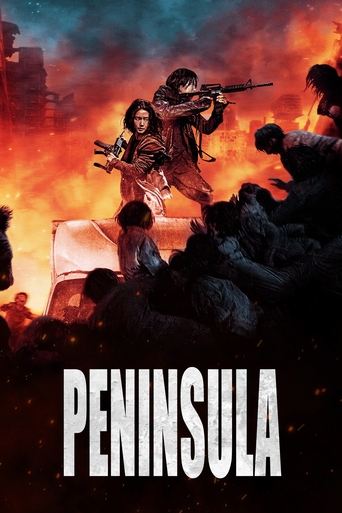
Yeon's own 2020 sequel is the most instructive failure. Freed from the train's geometry, he opted for post-apocalyptic wasteland, armored convoys, and a Mad Max sensibility that traded intimacy for spectacle. The set pieces are competent. But there's no fund-manager father, no lullaby, no moral weight-class to anchor the running. It's proof that the original's power wasn't in its zombies — it was in its people.
Army of the Dead

Zack Snyder's 2021 heist-zombie mashup mistook world-building for stakes. Zombie tigers, zombie hierarchies, a queen, a Vegas biodome — a whole cosmology, none of it earning a single tear. The film is engineered to reward franchise expansion and it feels like it. Busan is engineered to end.
#Alive
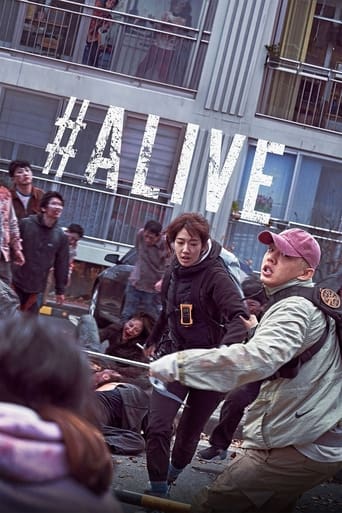
A solid Korean follow-up from 2020 that inherited the sprint and the practical horde but not the social x-ray. It's a two-hander about isolation during lockdown, and on its own terms it works. But it treats the zombie outbreak as backdrop rather than as diagnosis, and the difference shows.
Overlord
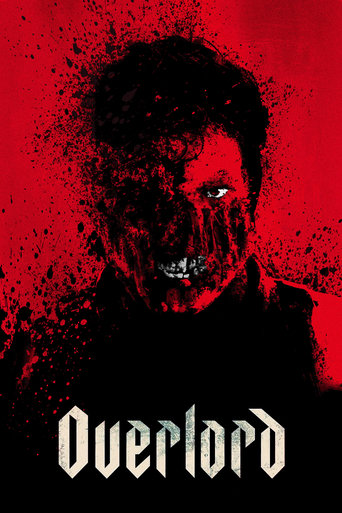
Fun pulp with a great opening 20 minutes — proof that zombie horror without a class or moral spine flattens fast once the novelty of the premise runs out. It's a good time. It isn't a film you carry with you.
The pattern is consistent: imitators copied the running dead and forgot the parenting drama underneath. You can hire a good stunt team. You can't fake sincerity.
Colony and Yeon's Refusal to Franchise
The most telling thing about Yeon in 2026 is what he's refusing to do. His new film Colony, made with star Gianna Jun (Jun Ji-hyun), returns to the zombie genre but is being pitched as a deliberately different swing — not a Train to Busan universe expansion. He's ruled out a shared zombie universe and, in Variety, made clear he has no interest in directing a Hollywood remake.
That restraint is itself part of the legacy. In an era where every hit becomes a "cinematic universe" pitch deck before the credits stop rolling, Yeon has spent a decade protecting the singularity of the original. Peninsula was arguably the one time he blinked, and its reception seems to have hardened the position. The film outruns its imitators partly because Yeon refuses to imitate himself.
Watching It Again in 2026
The 4K remaster is genuinely worth the theatrical trip. Watch the tunnel sequence — the one where the survivors have to navigate through the dark using only phone lights and the sound of infected breathing — and you'll see grain structure and shadow detail that streaming has been eating for years. The vestibule fight benefits similarly; the tape wrapping on Ma Dong-seok's forearms, the wet reflectivity of the floor, the choreographed way bodies compress into a doorway all read with restored clarity.
Beyond the technical uplift, what makes the re-release worthwhile is the chance to see a film that was originally received as "the good zombie movie of 2016" now visible as what it actually was: a genre-defining work that reset expectations for what Korean cinema could do on a global commercial stage. It walked so Parasite could run. It's still running.
If the rewatch leaves you hungry for something in the same lineage — a class-allegory sibling, another zombie movies picture with actual moral stakes, or a decade-mate from Korean genre cinema — RandomFlix is a fine place to let the algorithm surprise you.
Ten years on, the film's real trick is still the one nobody has cracked: it makes you cry at a lullaby. Everyone else is still trying to make you flinch.