The $52M Weekend That Wasn't Supposed to Happen
The numbers don't lie, and they don't really make sense either. Scary Movie — the 2026 sixth installment, not the 2000 original it shares a title with — opened to roughly $55 million domestic and $105.5 million worldwide, blowing past Scary Movie 3's $49.7 million debut from 2003 to claim the franchise record. The film cost Miramax $30 million to produce. By Sunday night, it had more than tripled that, becoming Paramount's biggest comedy launch ever and the biggest R-rated comedy opening in over a decade.
For a genre most critics had quietly buried alongside the broader theatrical comedy movies marketplace, this was supposed to be impossible. Spoof movies were the punchline of the 2010s. The Wayans brothers were a nostalgia act. And yet here we are: $7.7 million in Thursday previews across 2,800 locations, a Times Square stunt, more than a billion social-media views in the marketing run-up, and the biggest non-action comedy opening since 22 Jump Street in 2014.
The temptation is to read this as a comeback. A vindication. A reminder that audiences still want to laugh in a theater with strangers. But pull the box office apart from the actual movie, and a stranger picture emerges — one where a record-breaking opening doesn't prove parody is healthy so much as expose how badly it's wounded.
The Wayans Comeback Narrative
To understand what makes the sixth film land emotionally even when it whiffs critically, you have to rewind 23 years. Marlon and Shawn Wayans created the franchise in 2000, co-wrote the first two installments with Keenen Ivory Wayans directing, and were then pushed out of their own series. Scary Movie 2 underperformed creative expectations, the rights changed hands, and David Zucker — the ZAZ veteran behind Airplane! and The Naked Gun — took the wheel for installments 3 through 5, softening the tone toward PG-13 and toward his own gag-density sensibility.
The new film is, fundamentally, an authorship reclamation. Anna Faris returns as Cindy Campbell. Marlon and Shawn are back on script and onscreen. The anarchic, scatological, raunch-forward DNA of White Chicks and the brothers' earlier work returns alongside her. That's the engine selling tickets. It's not a promise of a fresh satirical thesis — it's a class reunion for an audience that grew up renting the originals on DVD and quoting them in high-school cafeterias.
The marketing leaned hard into that recognition. The Times Square stunt, the viral teasers, the 1B+ social-media views: every beat of the campaign told lapsed fans that the real Scary Movie was finally back. That's a different sell than "we have something new to say about horror." And the box office shouldn't be confused with the second thing just because it succeeded at the first.
Why Critics Called It 'Meh'
The reviews tell the other half of the story. Variety's headline — "So Meta It's Meh" — captures the core complaint: the sixth film locks itself almost exclusively onto Scream-style requel mechanics, when the actual horror conversation has moved miles past Ghostface. IndieWire's Alison Foreman gave it a C+ and described parody arriving "pre-shaped by corporate ideology and brand management." RogerEbert.com called it a Russian nesting doll of comedy — a parody of a franchise that was already parodying itself, layered onto a meta-horror genre that already does the wink for you.
The structural problem isn't that the jokes are bad. It's that they aim at a target that's already wearing the costume. When critics list what the new film didn't swing at, the gap becomes obvious:
- Get Out — Jordan Peele's 2017 social-thriller blueprint, still the dominant template every "elevated horror" pitch is measured against.
- Sinners — the 2025 Ryan Coogler vampire epic that became one of the year's most-talked-about genre films.
- Weapons — Zach Cregger's 2025 follow-up to Barbarian, a movie whose marketing was itself a meme cycle.
These are the films a Scary Movie made in 2026 should be in conversation with. Instead, the Wayans cooked up another Ghostface riff. Which leads to the real question hiding inside the rave opening weekend.
Theatrical Parody vs. The Meme Era
Here's the structural problem with theatrical spoof comedy in 2026: parody used to enjoy a 12 to 18 month head start on the culture. Scary Movie came out in 2000, four years after Scream. That delay wasn't a bug — it was the whole engine. You needed time for the source film to saturate, for the tropes to harden into cliché, and for the audience to be ready to laugh at the thing they'd loved.
That window no longer exists. A horror trailer drops on a Tuesday and by Friday TikTok has produced 400 variants, X has memed the jump scare into a reaction format, and a YouTube essayist has already explained what the movie is "really" about. The internet ships the joke for free, in hours, by committee, with no notes from legal.
A theatrical spoof, by contrast, requires script approval, talent deals, a shoot, post-production, an MPA rating, a marketing rollout, and a release window. By the time it lands, the meme accounts have eaten the carcass. IndieWire's "pre-shaped by corporate ideology" framing isn't really an aesthetic complaint — it's a description of the process. Anything that has to clear that many gates arrives feeling slightly stale, slightly safe, slightly behind. The new Scary Movie opened against two Gen Z horror movies hits, Backrooms and Obsession, which were themselves born from internet folklore. The spoof is now competing with movies that were already memes before they had a script.
The Spoof Canon: What Scary Movie 6 Is Measured Against
Every parody arrives carrying the ghosts of the ones that worked. Here's the lineage the new film is being judged against — ranked by how cleanly each entry solved the problem of its moment.
1. Airplane!
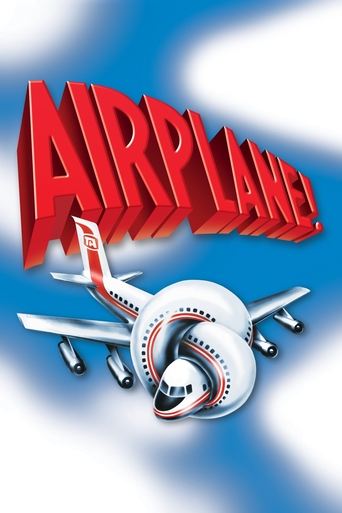
The 1980 ZAZ template. Gag-per-second density so high that the jokes you missed on first viewing carried subsequent rewatches. Every spoof since has tried to reverse-engineer this rate of delivery, and almost none have managed it. The film's secret weapon was sincerity: the cast played absurdity with utter dramatic conviction. Modern spoofs almost always tell you they're joking. Airplane! trusted you to keep up.
2. The Naked Gun
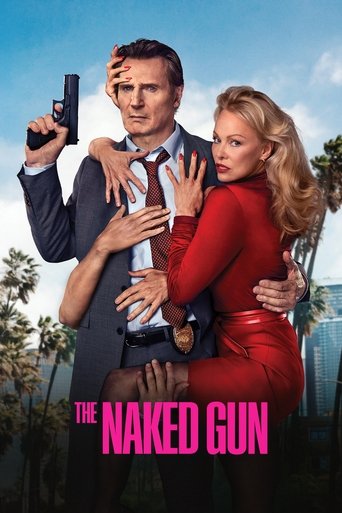
Proof that a recurring star — Leslie Nielsen, whose Frank Drebin became one of comedy's most beloved buffoons — could carry a parody franchise on persona alone. The 2025 reboot starring Liam Neeson actually opened well on brand recognition but cooled fast on word of mouth, a pattern the new Scary Movie should be watching carefully.
3. Scary Movie
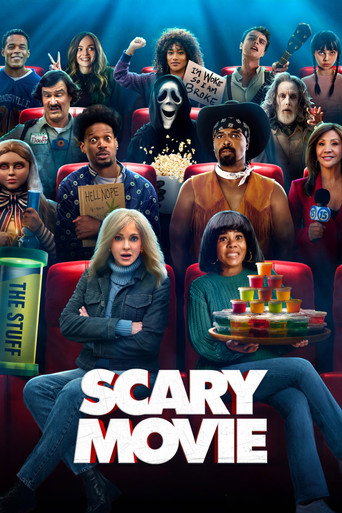
The 2000 Wayans original, which weaponized R-rated raunch against the 1990s movies slasher revival kicked off by Wes Craven. It worked because the gap between Ghostface's cool-kid meta and the Wayans' gleeful vulgarity was huge, productive, and culturally specific. It said something the source films wouldn't.
4. Tropic Thunder
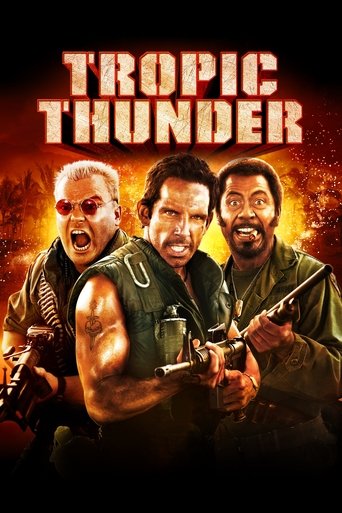
The high-water mark of the post-spoof era. Ben Stiller's 2008 film embedded its parody inside a functional action movie rather than stitching gags onto a hollow skeleton. You could watch it as a war picture and it would still work. That's the form's escape hatch — and it's the move the new Scary Movie didn't make.
5. Scary Movie 6
The new entry. The opening weekend says audiences showed up. The reviews say nobody left with a quotable line. Measured against the canon above, this isn't a creative renaissance. It's an exceptionally well-engineered nostalgia transaction.
Can't Decide What to Watch?
Let RandomFlix pick a movie for you. One click, one great movie.
Roll the DiceWhat the Box Office Actually Proves
The $105.5 million global opening conflates two very different questions, and pulling them apart matters.
Question one: Do people still want spoof movies in theaters? Yes. The weekend numbers settle that. Brand-name parody, marketed with a billion impressions and a Times Square stunt, can absolutely move tickets in 2026.
Question two: Is spoof still a vital cultural form? That's where the answer gets uncomfortable. The Wayans pulled off a feat of distribution and nostalgia engineering, not a creative one. The 2025 The Naked Gun reboot followed a similar arc — strong brand-marketing pull, softer CinemaScore, weaker word-of-mouth legs. Audiences are turning up for the idea of a spoof movie. They're not necessarily leaving the theater telling friends which scene killed them.
The sequel that would actually save the form has to look more like horror-comedy movies — genuinely scary, genuinely funny, with stakes that don't dissolve the second the next sight gag lands — than like a 35mm reaction video. Get Out did that. Ready or Not did that. The new Scary Movie didn't.
Where to Go From Here
If the sixth installment left you hungry rather than satisfied, the right double feature isn't another spoof — it's a horror movie that already does the meta work the parody should have engaged with. Start with the 2000 Scary Movie for franchise context, then watch Get Out back-to-back to see exactly what the modern target should have been. You'll feel the gap between the joke being made and the joke that's already in the room.
The deeper horror-comedy movies catalog is where the real conversation lives anyway — films like Ready or Not, Abigail, and Companion that braid laughs into actual dread. RandomFlix's dice roll is a decent way to surface the deep cuts the algorithm tends to bury beneath whatever's trending this week.
As for the next great parody: it's almost certainly being made right now by someone who grew up on Vine, TikTok, and YouTube poop edits — someone who instinctively understands that a joke needs to ship in 48 hours, not 18 months. The only real question is whether they'll bother releasing it in a theater at all, or whether the form's natural home is now a vertical video that lives for 72 hours and dies before the studio's lawyers have even read the script.