The Man Who Was Never Just Alan Grant
The image arrived before the sentences did. On July 13, when the news of Sam Neill's death broke, most of us reached for the same picture: a sunburnt paleontologist in a khaki shirt, kneeling in the tall grass, cradling the flank of a sick Triceratops. Alan Grant in Jurassic Park is one of the great screen scientists — patient, awestruck, gentle with children he claimed not to want. It's the face the culture pinned to Neill's lapel like a name tag.
But scroll a little further into any of the tributes that followed, and a second image kept surfacing. A man in a threadbare blue coat, sweat-soaked, hollow-eyed, sawing at his own arm with an electric carver in a filthy Berlin flat. That's Mark, the diplomat husband at the center of Andrzej Żuławski's Possession, and he is, impossibly, the same actor. It's not a stretch to say you could show the two performances side by side to a stranger and they'd swear you were lying.
That gap is the whole story. As RogerEbert.com argued in its tribute, Neill's intelligence and fundamental decency were the very qualities that made his horror movies work so devastating — he was always the smartest guy in the room, and the smartest guy in the room still couldn't stop the madness. Before Spielberg ever called, Neill had built his reputation in arthouse and horror, and the paternal-hero corner audiences later parked him in was always too small for what he could do. This is a corrective to that Alan Grant-shaped hole in the memory of him.
Before the Dinosaurs: The Arthouse Foundation
Neill was a New Zealand-raised, Australian-trained actor who came up through the Australian New Wave, breaking through in Gillian Armstrong's My Brilliant Career opposite Judy Davis. That film established the register he'd never really abandon: watchful, articulate, faintly bruised.
By 1989 he was at the hinge of his career with Phillip Noyce's Dead Calm, a three-hander on the open Pacific opposite Nicole Kidman and Billy Zane. As John Ingram, the naval officer husband whose grief-fogged detour into open water becomes a trap, Neill sketched the archetype he'd refine for the next four decades: an intelligent man under siege, holding it together with mostly convincing competence right up until he can't.
Damien: Omen III
Between the arthouse work and the mainstream breakthrough came the adult Antichrist. Neill's Damien Thorn in the third Damien: Omen III film is the crucial piece of the pre-Grant puzzle — a charming, media-savvy industrialist who happens to be the son of Satan. Neill plays him without ever raising his voice, purring diplomatic English into television cameras. It's the first proof of a principle his career would keep re-testing: he could play evil without theatrics, because his face already trusted the camera and the camera already trusted him back.
Possession (1981): The Most Extreme Film He Ever Made
Every actor has one shoot they talk about the way soldiers talk about a bad tour. For Neill, it was Żuławski's Possession — nominally a divorce drama set against a divided Berlin, actually a metaphysical breakdown that curdles into Cold War allegory and full-tilt body horror before it's done.
Neill has said flatly that it was the most extreme film he ever made, and that he only just escaped it with his sanity barely intact. He's talked about having to slap Isabelle Adjani for real in one scene, and about the general atmosphere of Żuławski's set — a director who wanted his actors past exhaustion, past craft, into something closer to possession itself.
Adjani gets the acclaim, and rightly: her subway freakout is one of the most physically extreme minutes of acting in cinema. But Collider's read on the film is the right one — Neill's Mark is the audience's point of entry, the reference point that lets us measure how far the movie has traveled from ordinary reality. If Adjani is the storm, Neill is the barometer, and the barometer is what tells you the storm is real.
What makes the performance so unnerving in retrospect is exactly the quality that would later make Alan Grant so warm. Mark is a diplomat, an educated man, a father — and Neill lets that intelligence collapse into something sweaty, bug-eyed, abusive, barely recognizable as the man in the opening scenes. It's the anti-Grant. Watch it once and Jurassic Park will never look quite the same.
Event Horizon (1997): Grief Weaponized
If Possession is the deep-water dive, Paul W.S. Anderson's Event Horizon is the gateway drug. It came out four years after Jurassic Park, with the same actor, and asks him to play the exact inverse: a scientist whose intellectual pride is not a virtue but a wound the universe can crawl into.
Dr. William Weir is a widower. He designed the ship that vanished. He wants, desperately, to have been right. All of that is on Neill's face in the first quiet scenes — the small, tight smile of a man who has decided that being correct will hurt less than being sad. When the ship begins to use him, the horror isn't that a good man is turned into a monster; it's that all the raw material was already there, laid out on the counter for the ship to pick up. The film weaponizes grief.
There's a small detail on his uniform that tells you everything about who Neill was off-camera: he insisted on wearing an Aboriginal flag patch, a quiet act of political conviction smuggled into a studio horror picture. It's the kind of gesture that reads as thoughtful now and read as slightly risky then, and it belongs in any honest accounting of the man.
The film's reputation has only grown, and it's earned its place in the cosmic-horror movies canon. If you want a serious conversation about science-fiction movies horror performances, Weir has to be in it — a whole doctrine of hell filtered through one bereaved engineer trying not to cry.
In the Mouth of Madness (1994): The Slow Crack
The third panel of Neill's unofficial breakdown trilogy is John Carpenter's In the Mouth of Madness, and it might be the most craftsman-like piece of work in the set. Neill plays John Trent, an insurance investigator sent to track down a missing horror novelist, who slowly realizes the novelist is writing reality — and that Trent himself is a character on the page.
MovieWeb's line on the performance is the sharpest one I've read: Neill lets the character crack slowly instead of all at once. He rations Trent's disintegration across the runtime, spending it a coin at a time, so that by the time we get to the famous final beat — a lone man laughing in an empty cinema at a movie of his own life — the laugh lands like a guillotine. Nothing in the film's Lovecraftian machinery would work if Trent weren't a plausibly sane skeptic to start with. You need a smart anchor for cosmic doubt to feel like a real threat, and Neill is that anchor right up until he isn't.
It's also the film that pairs most obviously with the rest of Carpenter's 1990s movies run for anyone who wants to go deeper into the so-called Apocalypse Trilogy. Neill's Trent is the human variable Carpenter's cosmology needed.
Can't Decide What to Watch?
Let RandomFlix pick a movie for you. One click, one great movie.
Roll the DiceThe Quieter Masterworks
The breakdown trilogy gets the headlines, but Neill's range was wider than the horror ledger suggests.
The Piano

Jane Campion's The Piano asked him to do something almost as hard as Possession, in the opposite direction. Stewart is a colonial husband who buys a wife, misreads her at every turn, and eventually commits an act of unforgivable violence. Neill plays him not as a villain but as a wounded, confused man whose repression curdles into cruelty. It's a role that risks the audience's sympathy entirely, and Neill is willing to lose it — willing to be small, and mean, and pitiable, in a film that could easily have used him as a cardboard patriarch.
Merlin
On the populist side of the ledger sits the 1998 miniseries where Neill carried a whole mythic universe on his back with warmth and no irony. It's the counterweight the horror work needs — proof that his gentleness on screen wasn't a mask he was pretending to wear in the paternal roles. It was there. It was real. The horror films were just showing you what happens when the world doesn't respect it.
Hunt for the Wilderpeople
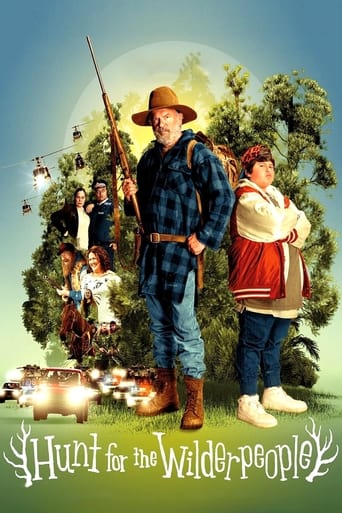
Taika Waititi's Hunt for the Wilderpeople is the late-career grace note, and it's where the whole shape of Neill's career becomes visible in a single character. Uncle Hec is a gruff bushman grieving his wife, and Neill's comic timing throughout the film is inseparable from that grief — the jokes land because a sad man is telling them. Whether the register is horror, arthouse, comedy, or myth, Neill kept playing intelligent men negotiating loss. The instrument didn't change.
How to Actually Watch Him Now
If you only know Alan Grant and you want the shortest walk from there to the abyss, start with Event Horizon. It'll take about ninety-six minutes to rearrange your sense of what Neill was capable of, and it uses the science-fiction movies frame as scaffolding you already trust.
If you want to be genuinely shaken, start with Possession. Understand going in that it is not a mainstream horror film. It's slower, stranger, more European — closer to a nervous breakdown filmed in real time than to anything modern audiences have been trained to expect from the genre. It will not comfort you. It will not resolve. That is the point.
If you'd rather let chance decide which era of Neill to spend an evening with, RandomFlix collects the full filmography in one place — the arthouse, the horror, the family films, the miniseries — and lets the dice pick.
The Legacy of a Gentle Face in Terrible Places
The Boston Globe's obituary framing gets to the center of it: Alan Grant and Mark from Possession are the same actor, and understanding that is understanding what acting can actually do. It's not that Neill had a "dark side" the mainstream missed. It's that his kindness on screen was never a limitation — it was the instrument. The reason his horror performances cut so deep is that we watched a decent, intelligent, funny man be dismantled, and we recognized every piece as it came off.
Off screen he was a memoirist, a vintner, a genuine warm presence on the press circuit for decades, a man friends and co-stars kept describing in almost identical language: generous, self-effacing, curious. The distance between that man and Mark, or Weir, or Trent, is not a contradiction. It's the art. He knew exactly what he was giving up when he stepped into those roles, and he gave it up on purpose, because that was the only way the films could hurt the way they needed to hurt.
Spend an evening with the Sam Neill you didn't know you had. He left more of himself on screen than the dinosaur movies ever let on.