The Last Golden-Age Star Signs Off
Eva Marie Saint died at her Los Angeles home on October 6, 2026, at the age of 102. According to Deadline's obituary, she passed of natural causes and was, at the time of her death, the oldest living Academy Award winner — a quiet record for a woman whose entire career was built on quiet.
Her singular place in film history is almost impossible to overstate. She worked with Elia Kazan, Alfred Hitchcock, Otto Preminger, Fred Zinnemann, and Marlon Brando — and she lived long enough to voice the elder Katara on Nickelodeon's The Legend of Korra, introducing herself to a generation of kids who had never seen a frame of black-and-white film. She was, functionally, the last unbroken thread between the Actors Studio of the early 1950s and the streaming era.
The shape of her career was deliberate. Roughly one film a year. A 65-year marriage to television director Jeffrey Hayden. Two children she refused to shortchange for a role. In an industry built on wanting more, Saint consistently chose less — and the performances she did leave behind are the stronger for it. What follows is not a complete filmography but a map: five films, spanning the 1950s movies through the 2000s, that show exactly what made her irreplaceable.
From Live TV to the Waterfront: How Saint Arrived
Saint's path was less glamorous than her screen presence suggested. She grew up in New York, studied at Bowling Green State University, worked in radio, then moved into the explosion of live television drama in the early 1950s. The crucial step was her training at the Actors Studio, where her classmates included Marlon Brando, Montgomery Clift, and James Dean — the generation that would redefine American screen acting.
So when her film debut landed her opposite Brando in a Kazan picture, it wasn't luck. It was the rare case of an ingenue who could meet Method intensity with equal interior life. Saint's particular gift — the thing you notice once and then can't stop noticing — was listening on camera. Her stillness read as thought, not vacancy. She let the other actor's work land on her face, and the audience watched her metabolize it in real time.
That's the throughline for everything below.
Five Essential Eva Marie Saint Performances
Not a ranking. A map of her range, from her Oscar-winning debut to the Hitchcock blonde who quietly rewrote the archetype to the late-career character work that proved the instrument never dulled.
On the Waterfront (1954)

Her film debut. Her Best Supporting Actress Oscar. Edie Doyle — convent-educated, grief-stricken sister of a murdered dockworker — is the moral conscience of Kazan's picture, and Saint plays her not as a saint but as someone whose decency is still being tested, scene by scene.
The famous glove scene with Brando has been written about endlessly, and for good reason. Walking with Terry Malloy on a park bench, Edie drops her glove; Brando picks it up and, instead of returning it, slides his own hand inside. Saint's instinct not to snatch it back — to let him keep it, to let the strange intimacy stand — is why the moment still plays as one of the great screen flirtations. It was largely improvised, and it tells you everything about her training: she didn't react to what she expected, she reacted to what happened.
Kazan reportedly cast her because she seemed genuinely startled by Brando in their audition — and the camera, as always, caught something that couldn't be acted. For anyone exploring the roots of American Method on film, this is foundational drama movies.
A Hatful of Rain (1957)
Fred Zinnemann's unflinching portrait of morphine addiction in a working-class New York family is one of the first serious Hollywood depictions of narcotic dependence, and Saint plays Celia, the pregnant wife slowly piecing together what's wrong with her husband. The role earned her BAFTA and Golden Globe nominations, and it remains perhaps the clearest showcase of what she could do without the scaffolding of star glamour.
There's no uplift here. No big breakdown aria. Just a woman doing arithmetic on her own future — tallying rent, baby, husband, in-laws, and the growing suspicion that one of those variables is going to collapse the equation. Saint plays Celia's dawning realization as a series of micro-adjustments, the kind of domestic realism that almost nobody in Hollywood was attempting in 1957.
North by Northwest (1959)
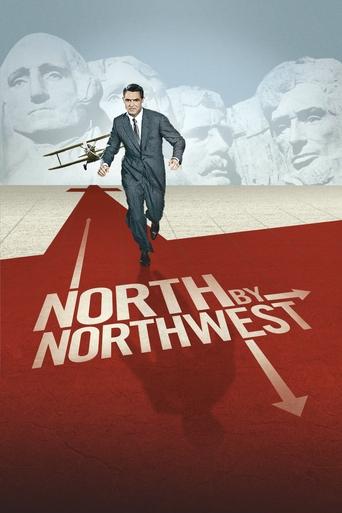
Hitchcock, famously, gave Saint three directions for Eve Kendall: lower your voice, don't use your hands, and look at Cary Grant. The result reinvented the Hitchcock blonde. Eve isn't icy — she's ironic. A double agent who is demonstrably smarter than every man in the room, including the one she's seducing on a train.
The dining car scene is still cited as a masterclass in verbal foreplay, two performers trading double-entendres with the precision of fencers who respect each other too much to actually land a hit. By the time the Mount Rushmore finale arrives, the film has earned its cornerstone status in the thriller movies canon not through stunts but through character — through the fact that we actually believe these two people would risk their necks for one another. If you want to see how different leading ladies shaped Grant across his career, pair it with other cary-grant movies vehicles and watch him recalibrate for each one.
Exodus (1960)
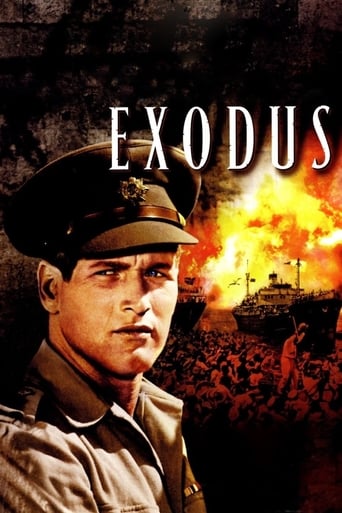
Otto Preminger's three-and-a-half-hour epic about the founding of Israel is one of the most ambitious roadshow productions of the era, and Saint plays Kitty Fremont, an American nurse pulled gradually into the conflict. It's a rare case of a major Hollywood star carrying a politically charged prestige picture without softening it into melodrama.
Kitty's power as a character comes from her questioning American gaze — she is the audience's surrogate, and Saint grounds Preminger's sweep by refusing to pretend Kitty has it figured out. The role expanded her range into historical epic territory and demonstrated that the restraint which served Edie Doyle and Eve Kendall could also anchor a four-hour geopolitical canvas.
Nothing in Common (1986)

Garry Marshall's underrated dramedy pairs a young Tom Hanks with Jackie Gleason in one of his final performances, and Saint plays the long-suffering wife and mother whose quiet departure sets the entire plot in motion. It's a small role in screen time and an enormous one in weight.
Her return to major studio work after a decade largely spent in television proved she had aged into one of American film's great character actors. The Actors Studio precision was all still there — the listening, the restraint — now in service of a woman who has finally decided she's done. The role was a bridge to her late-career appearances in Because of Winn-Dixie and her final feature, 2014's Winter's Tale: gentler, grandmotherly parts that still carried every ounce of the old technique.
The Life Between the Films
The deliberate pacing was not an accident. Saint has said in interviews, including a late Turner Classic Movies special, that she turned down work consistently to be present for her two children — a choice almost unheard of among her peers, and one that cost her the kind of filmography that generates career-retrospective box sets. The Washington Times, in its obituary, noted that she capped her output at roughly one film per year for most of her career for exactly this reason.
The marriage was the other anchor. Sixty-five years with director Jeffrey Hayden, who died in 2016, and who directed her in television throughout the 1960s and 70s. Hollywood is not kind to long marriages. Theirs was the exception.
And the second careers kept arriving. She won an Emmy for the 1990 miniseries People Like Us. She did a recurring run on Moonlighting opposite Cybill Shepherd and Bruce Willis. She voiced the elder Katara on The Legend of Korra, which did more than any TCM retrospective to introduce her to viewers who had never heard of a dockworkers' union, let alone On the Waterfront. She even surfaced in Bryan Singer's Superman Returns in 2006, playing the widow Martha Kent — one more quiet, grounded woman holding a loud movie together.
Her longevity matters because she was, functionally, a living bridge to a vanished Hollywood. Her death closes a specific door, and it is unlikely to be reopened by anyone else.
Where to Start, and Where to Go Next
If you've never seen her: start with North by Northwest for pure pleasure, then watch On the Waterfront for the Oscar and the glove. That's the entry point.
If you want the full artist, add A Hatful of Rain and Exodus — the serious middle period, where she proved she could carry weight without needing a leading-man foil to lean on. Nothing in Common is the one to add once you want to understand how she aged into character work without losing a single instinct.
If you want to understand her influence, trace her lineage in two directions: through the other Actors Studio alumni who defined postwar screen acting, and through the Hitchcock heroines who came after Eve Kendall and quietly borrowed her ironic register. Saint is the hinge between those two traditions. Nobody else occupies that spot.
For a looser evening with her era, RandomFlix subscribers can shuffle their way into a Saint-adjacent night by rolling within classics movies and letting a Kazan, a Hitchcock, or a Preminger surface on its own. However you get there, start with Edie Doyle on that rooftop with the glove. Everything else in American screen acting since 1954 is, in some small way, a response.