The Actor Who Made Camp a Serious Craft
Tim Curry has died at 80, and the tributes pouring in have all reached for the same word: unhinged. It's not an insult. It's the closest English gets to describing what he did for fifty years — the operatic commitment, the rolled consonants, the way his eyes could suggest a private joke you were absolutely not invited to. His later years were reshaped by a 2012 stroke that pushed him almost entirely into voice work, but even from a wheelchair, in cartoons and audiobooks, that voice never lost its curl.
The résumé is more decorated than his reputation as a camp icon suggests. Three Tony nominations. A Daytime Emmy. Olivier recognition. A career that began on the London stage in Hair and Amadeus and passed through the Royal Academy of Dramatic Art before he ever put on a corset. The "over-the-top" label always got him wrong; what looked like excess was actually rigorous classical technique aimed at extremity. He was a rigorously trained actor who chose, again and again, to play the loudest thing in the room.
So this isn't a ranking of his best films. It's a ranking of the ten performances where his theatrical maximalism became the load-bearing wall of the movie — the roles where he refused to blink. His legend lives mostly in two neighborhoods: horror movies and cult-classics movies. What follows is a tour through both.
10.
Cardinal Richelieu — The Three Musketeers (1993)
The 1993 Disney Musketeers is a bouncy family adventure with Kiefer Sutherland pouting and Charlie Sheen looking confused, and then Tim Curry glides in wearing silk robes and immediately behaves like he's wandered in from a much dirtier film. He plays Richelieu as a bored aesthete rather than a scheming political operator — menace as a leisure activity, treachery as an amuse-bouche.
It's a performance built almost entirely on tempo. He never raises his voice; he lets the threat sit in the pauses. That "casual delivery, dripping with menace" is the Curry house style in miniature. The kids in the audience were watching Musketeers. Curry was doing Marlowe.
9. Rooster Hannigan — Annie (1982)

The inverse-Curry performance, and the one people forget. In John Huston's Annie, he's Rooster — the sleazy grifter brother of Miss Hannigan — and instead of playing him with the arch menace he'd already trademarked in Rocky Horror, he turns him into a full song-and-dance heel. "Easy Street" is the whole thesis: his musical-theater chops weren't a garnish, they were the engine under every villain he ever played.
Watch what he does around Carol Burnett. He doesn't try to out-mug her — he can't — so he lowers his voice, smirks, and lets her do the shouting while he does the stealing. It's a masterclass in how a trained musical actor takes screen space without ever seeming to ask for it.
8. Concierge — Home Alone 2: Lost in New York
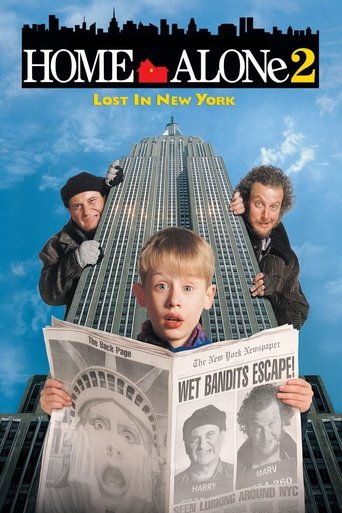
Hiring Tim Curry for a bit part is a directorial flex, and Chris Columbus knew exactly what he was doing. The Plaza Hotel concierge only has a handful of scenes, but they're the eyebrow-acting summit of the 1990s — an entire performance built on suppressed contempt for a child guest he legally cannot strangle.
The famous "the room is fine" beat plays as Shakespearean humiliation. Curry receives an insult from an eight-year-old and, for a millisecond, you can see three centuries of British theatrical dignity collapsing behind his eyes. He recovers with a smile so tight it could cut glass. Nobody else in Hollywood could have done more with less screen time.
7. Long John Silver — Muppet Treasure Island
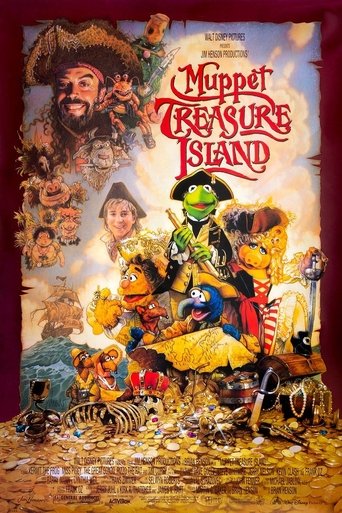
The only correct way to appear in a Muppet movie is to take it completely, dangerously seriously. Curry understood this the way Michael Caine understood it in A Christmas Carol — you play it as if the felt pig across from you is Laurence Olivier, or the whole thing collapses.
His Long John Silver has a precisely calibrated menace dial. Kids need to be scared; they cannot be traumatized. There's a moment where he threatens Kermit the Frog and — this is the miracle — he somehow means it. The eyes go flat. The purr sharpens. Then, a beat later, he's singing again, and children who were about to cry are suddenly clapping. That's not overacting. That's control.
6. Wadsworth — Clue

The final-act monologue in Clue is a track-and-field event, and Curry is the only human being who could have run it. Room to room, weapon to weapon, suspect to suspect, breathless — it's less a scene than a piece of verbal choreography. Watch his footwork. He literally sprints between accusations, arriving in each doorway just in time to reset the audience's understanding of the plot.
This is, I'd argue, his most technically astonishing screen work. Frank-N-Furter is bigger; Pennywise is scarier; Wadsworth is the one where you can see the classical training doing pull-ups in public. The film flopped in 1985 and has since become an enduring ensemble-comedy movies touchstone almost entirely on Curry's shoulders — a cult resurrection that his death has only accelerated.
5. Kinsey — Congo
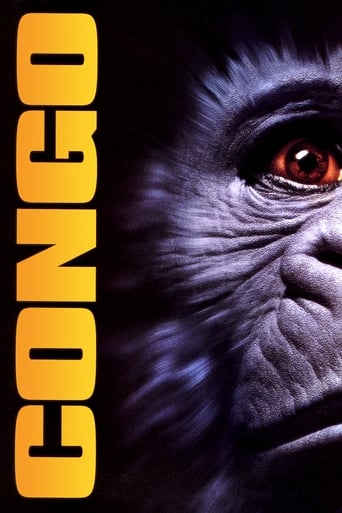
Congo is a killer-ape movie starring a talking gorilla and Ernie Hudson doing a British accent, and Tim Curry decided to treat it like Chekhov. His Herkermer Homolka is a Romanian treasure hunter with an accent that has launched a thousand impressions, and the astonishing thing is that Curry finds actual pathos in him — a genuine, wounded weirdness under all the vowels.
He never winks. He never lets the audience off the hook. In a movie that is otherwise a monument to studio miscalculation, he's giving a fully-formed character performance, complete with backstory and yearning, as if he'd been hired for A Man for All Seasons. It is the purest example of Curry elevating a film that did not, strictly speaking, deserve him.
Start a Watchlist
Keep track of every movie that catches your eye. Your watchlist, your rules.
Start Your Watchlist4.
Nigel Thornberry — The Wild Thornberrys Movie
"Smashing!" is now a generational catchphrase, and the man behind it turned voice acting into his second act with an ease most stage actors would kill for. Nigel Thornberry — mustachioed, curious, absurdly kind — is the warm inversion of every villain Curry had played. Same theatricality, same fearless commitment. Aimed at joy instead of menace.
This warmth is where his post-stroke career really lived. Audiobooks, animated series, video games — every one of them buoyed by a voice that had lost none of its topspin. Nigel is where you can hear him deciding, in real time, that being enormous could also mean being generous.
3. Pennywise the Dancing Clown — It (1990)
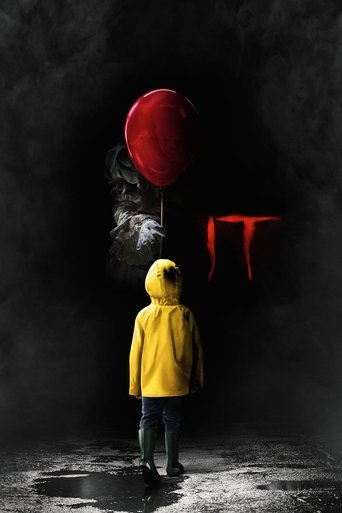
The performance that terrorized an entire generation of latchkey kids who really should not have been watching a two-night ABC miniseries about a child-eating clown. John Wayne Gacy reportedly influenced Curry's take on the character, and you can see the choice everywhere — his Pennywise isn't cartoon horror, he's adult predatory logic wearing a smile. The come-hither finger. The friendly baritone. The way he asks children if they want a balloon like he's actually curious about the answer.
Bill Skarsgård's 2017 version is a great performance, but it's a great performance in Curry's shadow — deliberately louder, more digital, more monstrous, because it has to be. Curry got there first with almost no effects and half the budget. His Pennywise remains a landmark of 1990s movies horror television and a permanent fixture of the horror movies canon.
2. Lord of Darkness — Legend
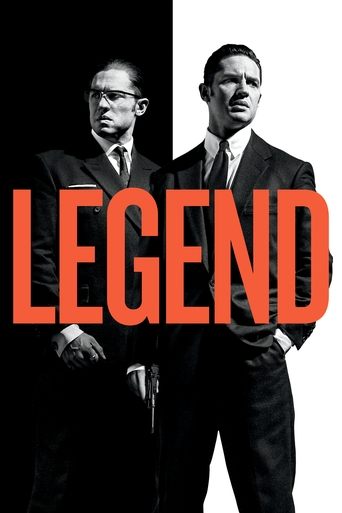
Ridley Scott's Legend buried Curry under hours of Rob Bottin prosthetics — the red skin, the two-foot horns, the cloven hooves — and somehow he acted through all of it without losing a shred of nuance. Most actors, given that much latex, retreat into pantomime. Curry did the opposite. He got quieter. He let the makeup do the shouting and used his voice to do the thinking. CNN's obituary singled out Legend as a role where his casual delivery elevated the character beyond caricature, and that's exactly right.
"What is light without dark?" is one of the great fantasy-villain arias, delivered with the kind of theological melancholy you don't expect from a movie with unicorns in it. Scott built him a stage — smoke, shadow, a gothic banquet hall — and Curry filled every inch of it. The performance is architectural. You could hang a chandelier from it.
1.
Dr. Frank-N-Furter — The Rocky Horror Picture Show
Everything else on this list is downstream of this. Frank-N-Furter was the defining role of Curry's career, and it invented a template that pop culture is still using fifty years later: queer, glam, dangerous, funny, tragic — all at once, all in fishnets, all without a single apologetic beat. "Sweet Transvestite" remains the single best entrance in movie musical history. He kicks the elevator door open and the entire film reorganizes itself around him.
The midnight-movie afterlife is its own kind of monument. Half a century of shadow casts, callback lines, thrown rice, and audiences who learned Curry's dialogue before they learned their own wedding vows. Every Curry performance after 1975 was, in some way, in conversation with Frank — Pennywise's mischief, Wadsworth's velocity, Richelieu's boredom, the Lord of Darkness's tragic grandeur. Frank freed him to be huge. Once you've worn a corset and a pearl necklace and sold the entire audience on your right to do so, no other role can ever intimidate you.
What Curry Leaves Behind
The obituaries have described him as the offbeat British actor who specialized in playing eccentrics, which is polite and true and slightly insufficient. He specialized in playing eccentrics the way Pavarotti specialized in singing loud — with a technique so complete that the effect looked like nature. The three Tony nominations never turned into wins; the stroke ended his on-camera career but not his voice work; the cast tributes have been unanimous and heartbroken.
The real legacy is permission. Watch Barry Keoghan in Saltburn. Watch Hugh Grant swan through Paddington 2 and Heretic. Watch Nathan Lane in anything. Watch any current actor who understood that restraint is one tool among many and not the only respectable one. They all descend from the Curry school of full commitment — the belief that a big performance, done with real craft, is not a lesser thing than a small one.
If you want to wander deeper into where he did his most iconic work, the 1980s movies shelf is the mother lode, and the cult-classics movies hub is essentially a Tim Curry retrospective in disguise. Roll something of his tonight. Let him be loud in your living room one more time.
The loudest actor in any room just got quiet. Turn the volume up.