The Numbers That Broke Korea's 2026
Five days. That's how long it took Na Hong-jin's Hope to blow past the two-million-admission mark on home turf — the fastest of any 2026 release tracked by the Korean Film Council, outpacing even the earlier record set by The King's Warden. For a director who hadn't released a feature in a decade, it's the kind of debut that reframes an entire year of Korean cinema.
The numbers tell a specific story. Variety's box office report clocks Hope at an $11.3 million three-day opening from 1,504,019 admissions, a dominant 66.62% share of the Korean market, and a cumulative $16 million from 2,129,723 admissions through Sunday. In a weekend that pitted Na against Moana, Toy Story 5, and Colony, none of the international competition came close. Hope didn't win the frame — it flattened it.
And yet. These are numbers that would qualify as a smash almost anywhere in the world, and Hope still isn't safe. The production reportedly cost 50 billion won — around $36 million — and by Korean industry math it needs roughly 20 million tickets sold to reach true break-even. That's an entirely different galaxy from a great opening weekend. It's the kind of ceiling only a handful of Korean films in history have ever touched, and the reason every trade covering this release is treating the second-weekend hold as a genuine referendum on whether Na Hong-jin's brand of divisive, genre-shattering cinema can scale.
Who Is Na Hong-jin, and Why Does Korea Care This Much?
For readers who might have missed his run, Na is the director behind The Chaser (2008), The Yellow Sea (2010), and 2016's The Wailing — three films that between them redefined the modern Korean thriller movies and locked Na into the small pantheon of directors capable of making a mid-budget arthouse-genre picture behave like an event.
Hope is his first feature in ten years. In a landscape saturated with algorithmic horror movies and studio-safe thrillers, a new Na Hong-jin film functions less like a release and more like a return — the kind of thing critics prep for the way sports fans prep for a heavyweight bout.
The Cannes pedigree confirms the stakes. Hope is Na's fourth selection at the festival and, per Wikipedia's release consolidation, the first South Korean film in the main Competition slate since Park Chan-wook's Decision to Leave in 2022. The world premiere at the Grand Théâtre Lumière drew a six-minute standing ovation — the traditional Cannes handshake that says a filmmaker is being welcomed back to the top table. The domestic release just cashed the check that ovation wrote.
What Hope Actually Is (Aliens, Village Horror, and a Genre Blender)
Without spoiling anything: Hope drops us into the fictional coastal village of Hopo, which becomes ground zero for an event Na himself has described, per Forbes' Cannes coverage, as a horror-comedy-action-sci-fi hybrid — with aliens. Yes, aliens. In a Na Hong-jin film. Deal with it.
For Western viewers who might be raising an eyebrow, remember: this is the same filmmaker who made shamans, zombies, and a Japanese demon coexist inside The Wailing without ever fully explaining which one was pulling the strings. Genre-mashing isn't a gimmick in Na's filmography; it's the whole point of the exercise. His movies argue with themselves, and the audience is drafted into refereeing.
That said, Hope has its documented frictions. Forbes noted mixed VFX reception out of Cannes — a fair concern for a Korean production trying to buy Hollywood-scale spectacle on a Korean budget. Na even initially declined the Cannes invite because post-production wasn't complete, before ultimately relenting. The gap between his ambition and the resources available to service it is baked into the DNA of the film.
And Na's ambition keeps escalating. Per Variety's Cannes press conference coverage, he's already written a sequel script and confirmed he's been courting Michael Fassbender, Alicia Vikander, and Taylor Russell for an expanded international follow-up. Whatever Hope is, Na is treating it as chapter one.
The Wailing Playbook: Why Controversy Sells Tickets in Korea
Here's where Western readers need a Rosetta Stone, and The Wailing is it.
When The Wailing opened in 2016, per Korea Herald's contextual reporting, it landed with fierce audience division — arguments about what the ending meant, whether the shaman was good, whether the film was profound or gibberish. That argument didn't hurt the film; it fueled it. The Wailing rode the debate all the way to 6.9 million admissions, a colossal number for a two-and-a-half-hour supernatural korean-thriller movies.
Korean moviegoing culture rewards films worth arguing about in a way that Western markets often don't. Social-media debate translates directly into repeat viewings and word-of-mouth. A viewer walks out furious, posts about it, drags three friends back the next weekend to prove they're right. The theater becomes the arena.
Hope is following the exact same pattern. Korea Herald describes viewers leaving theaters delighted, bewildered, or outraged, then reaching immediately for the group chat to relitigate what they'd just seen. That's not a marketing accident — it's Na's signature move working exactly as designed. The 66% market share isn't a fluke; it's the cultural feedback loop that the 2010s movies Korean thriller boom perfected, applied to a director who trained the audience to expect exactly this response.
The Break-Even Problem: Why
This Opening Isn't a Victory Lap
The trade context here is grim in ways that don't show up in the opening-weekend headlines. Deadline reports that Plus M Entertainment's parent group has filed for bankruptcy protection, which makes Hope's performance not just important but existentially so. A hit isn't enough. It has to be a hit at a very specific scale.
Twenty million admissions is a rarefied tier. Only a handful of Korean films have ever crossed it — the Extreme Job-tier phenomena, the patriotic epics like The Admiral: Roaring Currents that turn into national events. Even a full-throated Wailing-style trajectory to 7 million admissions would leave Hope well short of break-even on domestic revenue alone.
That's why international rollout matters so much. Per The Hollywood Reporter's Cannes coverage, Neon will handle U.S. distribution with a September 9 release, and Mubi has taken Latin America and multiple European territories. Both distributors have long, credible track records of shepherding divisive auteur work to audiences that don't scare easily. Neon in particular has spent years training American arthouse crowds to sit still for the kind of tonal whiplash that Na traffics in — the same instincts that turned Parasite into a Best Picture winner will be tested against a very different, much stranger export.
Start a Watchlist
Keep track of every movie that catches your eye. Your watchlist, your rules.
Start Your WatchlistWhere to Start With Na Hong-jin Before Hope Reaches You
If you're looking to get up to speed before the U.S. release, the good news is that Na's filmography is small enough to actually finish. Here's the shortlist worth prioritizing.
The Chaser
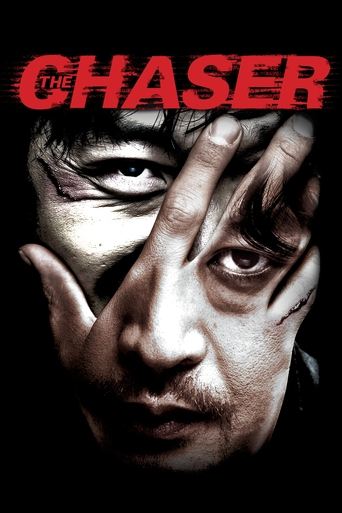
Na's 2008 debut, a serial-killer procedural so lean and mean it essentially reset the template for the modern Korean thriller movies in a single film. If you've watched anything remotely similar out of Korea in the last fifteen years, this is the ancestor.
The Yellow Sea

The 2010 sophomore feature, which traded The Chaser's urban chase geometry for a cross-border sprawl of ethnic-Korean-Chinese assassins, brutal axe fights, and a paranoid immigrant nightmare. Longer, sweatier, and even more punishing than his debut.
The Wailing
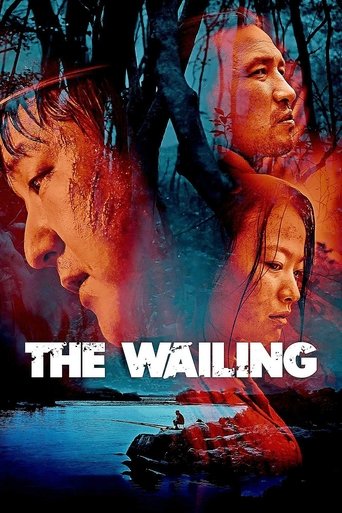
The direct spiritual predecessor to Hope. If you only watch one Na Hong-jin film before September, watch this one. It teaches you the rhythms — the tonal swerves, the refusal to resolve, the way horror and comedy live in the same scene — that Hope is reportedly pushing even further.
Memories of Murder

Not Na's film — Bong Joon-ho's — but essential context. Understanding the tradition that Hope is arguing with means understanding the film that made "Korean thriller" mean something specific to Western audiences in the first place.
What Happens Next
The second-weekend hold is the number to watch. Korean divisive films tend to bifurcate quickly: either they collapse as the negative word-of-mouth suffocates the positive, or they double down as the argument itself becomes the marketing. Hope's trajectory will be visible within days, not weeks.
Neon's September rollout is the bigger test. Domestic Korean audiences arrived at Hope with a decade of accumulated Na Hong-jin goodwill; American viewers walking into a Neon release on a Tuesday won't have that scaffolding. Whether Na's genre chaos translates without the Wailing safety net is the real question the U.S. numbers will answer.
And the written sequel — with those Fassbender, Vikander, and Russell rumors floating around — signals that Na is done playing in the sandbox he built. He wants a bigger one. Whether Hope earns him the keys depends entirely on the next ninety days of ticket sales, on both sides of the Pacific.
If Hope hasn't hit your region yet and you're hungry for something equally strange, equally Cannes-adjacent, and equally likely to start a fight in the group chat, there's a whole catalog of divisive genre cinema waiting a click away — Na's peers, his influences, and the filmmakers his next film is about to influence in turn.