The Venice Ovation and What McDonagh Is Actually Doing
When Martin McDonagh walked out onto the Lido this September, he was making his third consecutive appearance in Venice competition — a run that began with Three Billboards Outside Ebbing, Missouri and continued with The Banshees of Inisherin. This time the vehicle was Wild Horse Nine, a 1973-set CIA story starring John Malkovich and Sam Rockwell as two Company lifers tangled in the aftermath of the Chilean coup, with Steve Buscemi, Tom Waits and Parker Posey rounding out the ensemble.
The register is instantly recognizable to anyone who has been following McDonagh's career: tradecraft threaded through a memoir-writing spook, buddy-comedy rhythms that snap between affection and cruelty, and the blood-dipped punchlines Rockwell has been fluent in since Seven Psychopaths. Reviewers have leaned into that pairing — the Hollywood Reporter called Malkovich and Rockwell a perfect pair in a poignant blood-dipped buddy comedy, and TIME framed the film as a delight built around McDonagh's now-signature two-hander.
But Wild Horse Nine isn't a one-off. It's the newest entry in a very specific hybrid tradition — one that braids the paranoid thriller movies craft of the post-Watergate era with the black-hearted comedy movies of writers who find Langley intrinsically ridiculous. To trace how McDonagh got here, it helps to plot two poles on a map: Sydney Pollack's grim 1975 template on one end, the Coens' 2008 farce on the other. Eight films fill in the space between.
The Paranoid Pole: Post-Watergate Tradecraft
Three Days of the Condor
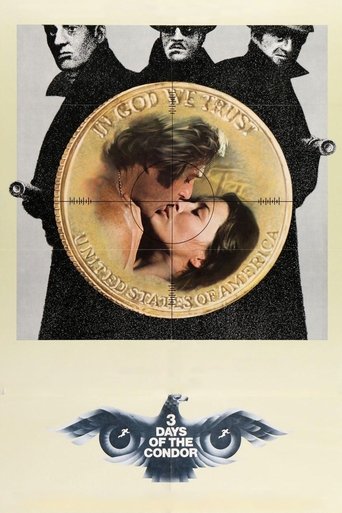
The foundational text. Robert Redford plays Joe Turner, a bookish CIA reader-analyst who steps out for lunch and returns to find his entire office slaughtered. Roger Ebert's 1975 review remains one of the definitive accounts of what a paranoid CIA thriller could look like on screen, and the film's post-Watergate anxieties still bleed into every subsequent Company picture. Collider has noted how convincingly Pollack rendered the tradecraft — the film sits squarely inside the New Hollywood paranoia cycle that gave the genre its permanent shape.
Wild Horse Nine inherits Condor's 1970s Company atmosphere almost wholesale: the sense that the wet work happens off-books, that the institution signing the checks is the thing you should fear most, that the people running foreign policy have their own private ledgers to settle. McDonagh's Chile is Pollack's Manhattan with mountains.
The Conversation
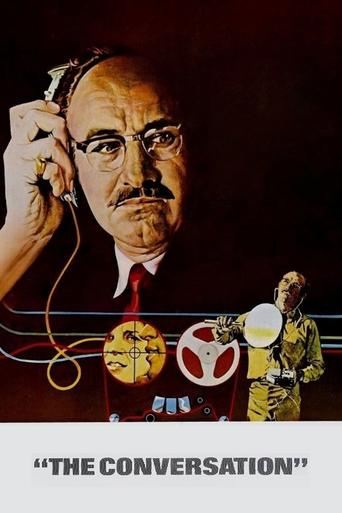
Coppola's surveillance nightmare, released a year before Condor, provides the other half of the 1970s movies template. Gene Hackman's Harry Caul is a wiretapper eaten alive by his own conscience — the introvert cousin to Malkovich's memoir-writing spook, a man whose profession has slowly become his interior weather.
This is where tradecraft-as-character-study begins. paranoia movies isn't a plot device in The Conversation; it's a personality, a way of moving through rooms. McDonagh clearly clocked the lesson. His Malkovich isn't rattled by the plot around him so much as by the memoir he can't quite finish, the sentences that keep coming out wrong.
The Comic Pole: When the Company Becomes a Farce
Burn After Reading
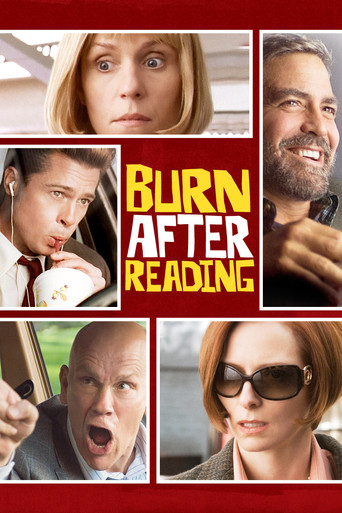
Here is the most direct ancestor in the entire lineage — and, unmistakably, an inflection point. The Coens' 2008 film opens with a satellite descending on Langley, then follows a fired CIA analyst attempting to write his memoirs while a misplaced disc careens through the hands of vain, greedy idiots. NPR flagged it as a Coen brothers black comedy anchored at CIA headquarters and driven by a fired spook's memoir project. Ebert wrote about its screwball plot coils and the zany energy the Coens injected into a genre that usually plays it straight.
And who plays that fired analyst, Osbourne Cox, purpling with rage in his study? John Malkovich. The doubling with Wild Horse Nine is almost too neat to be accidental. The Coens gave McDonagh permission to treat Langley as a workplace comedy where people still get shot in the head — and to cast Malkovich as the fulcrum of that tonal trick twice, seventeen years apart.
Charlie Wilson's War
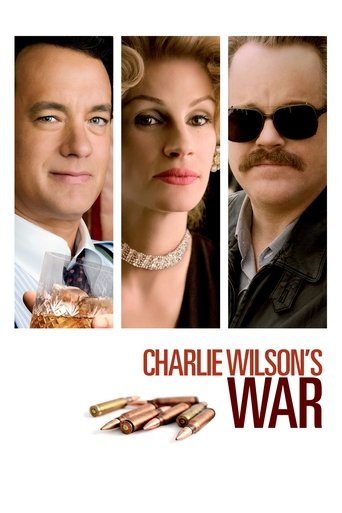
Mike Nichols and Aaron Sorkin's 2007 Cold War caper is the other major comic beat in the lineage. Philip Seymour Hoffman's Gust Avrakotos — a rumpled, foul-mouthed case officer with permanent contempt for his superiors — is the exact species Rockwell now plays: exasperated, sharp, weirdly principled in the middle of the worst possible institution. The dark joke that American foreign policy gets executed by cranks, drunks and grudge-holders is one Wild Horse Nine sharpens into something considerably bleaker by relocating it to Pinochet's Santiago.
The Buddy-Picture Spine: Fractious Male Friendship as Genre
The TIME review made the connection explicit: Wild Horse Nine belongs on the shelf with In Bruges and The Banshees of Inisherin. McDonagh keeps making the same essential movie — two men who love each other and cannot stop wounding each other — and keeps finding fresh genre chassis to hang it on. This time the chassis is spycraft.
Spy Game
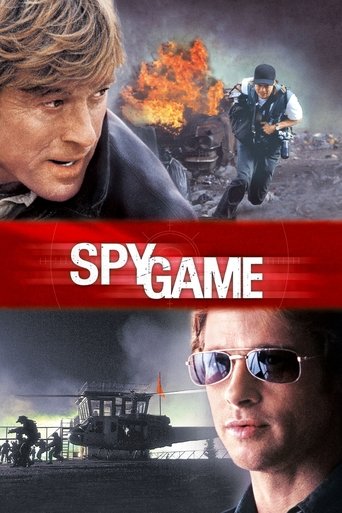
Tony Scott's 2001 mentor-protégé thriller pairs Redford (again) with Brad Pitt across a career-long CIA relationship of favors owed and betrayals postponed. It's the clearest generational-handoff template in the genre — the old Company teaching the new Company how to survive, both men lying to each other constantly out of what feels a lot like love. That is precisely the note Malkovich and Rockwell play, only McDonagh has the older man writing his memoirs while the handoff happens.
Can't Decide What to Watch?
Let RandomFlix pick a movie for you. One click, one great movie.
Roll the DiceThe Good Shepherd
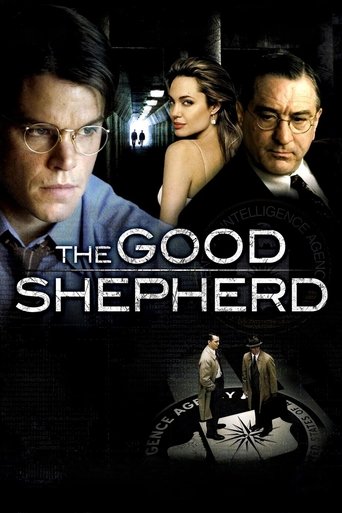
De Niro's 2006 CIA origin story is the humorless twin to Wild Horse Nine — an austere, melancholy account of what it costs to build the Company from the inside. Watching it back-to-back with McDonagh's film is the fastest way to measure how much comic oxygen McDonagh lets into the same historical material. The Good Shepherd holds its breath for two and a half hours; Wild Horse Nine laughs, then flinches, then laughs again.
Between them, these two films establish the modern spy movie as a two-hander about loyalty, betrayal and shared guilt — an argument every reviewer of Wild Horse Nine has essentially been making, whether they cited these titles or not.
Two Wild Cards That Round Out the Register
Our Man in Havana
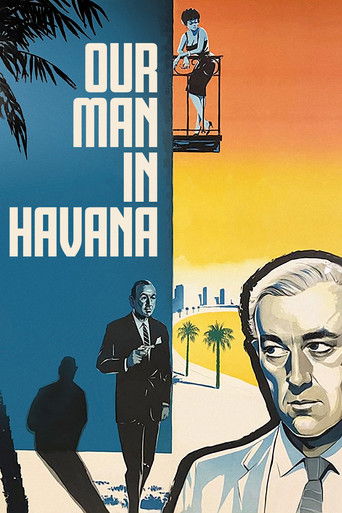
Carol Reed's 1959 adaptation of Graham Greene is the granddaddy of the CIA-as-absurdity comedy — a vacuum salesman in pre-revolutionary Havana invents intelligence out of thin air, sketching vacuum-cleaner parts as enemy weapons, and watches London swallow every word. Everything the Coens do in Burn After Reading, and everything McDonagh is doing in Wild Horse Nine, is downstream of Greene's central joke: that intelligence agencies believe what they want to believe, and that the space between their credulity and reality is where the corpses accumulate.
The Death of Stalin

Armando Iannucci's 2017 apparatchik farce isn't a CIA movie, but it belongs on the same shelf. The register — dark-comedy movies pointed directly at state violence, with cowardly men bickering while blood pools in the next room — is the same one McDonagh calibrates for his Malkovich-Rockwell rhythms. Iannucci's film is also proof that this hybrid tradition isn't just American; the fusion of political horror and workplace comedy travels.
How the Lineage Adds Up
Chart the through-line and the equation becomes clear: Condor's post-Watergate paranoia + Burn After Reading's screwball CIA farce + In Bruges's buddy-picture cruelty = the Wild Horse Nine register. Every ingredient is already in the tradition. McDonagh's contribution is the specific alloy.
What he adds that his ancestors didn't is worth naming. The theater-trained monologue — those Malkovich set-pieces that stall the plot to interrogate a single moral hesitation — is a McDonagh signature no other director in this lineage attempts. Rockwell's cadence, honed across Seven Psychopaths, A Behanding in Spokane and Three Billboards, is a genuine collaboration; the Hollywood Reporter's review specifically clocked that history as the reason he can make McDonagh's dialogue sing. And there is the Catholic guilt that has run under McDonagh's work since In Bruges, now bleeding sideways into Cold War guilt — the sense that some sins are structural and that no memoir will absolve them.
For anyone walking out of the Venice coverage wanting to trace the DNA, the shortest route is three films: start with Three Days of the Condor for the paranoid template, chase it with Burn After Reading for the screwball inversion, then revisit In Bruges for the two-hander cruelty. Those three predict Wild Horse Nine more accurately than any synopsis. RandomFlix's thriller movies and comedy movies shelves make it easy to pull any of the eight titles above when you want the register but haven't decided on the title yet.
Where to Go Next
The specific pleasure of this hybrid mode is that the funniest spy movies are almost always the saddest — that the Coens laughing at Osbourne Cox's memoir and Pollack grieving Joe Turner's dead colleagues are, in some deeper sense, doing the same work. McDonagh has quietly become the most reliable practitioner of that fusion working today, and Wild Horse Nine is his most ambitious swing at it yet. Watch the ancestors first. The film will only get better.