Clayface Isn't a Superhero Movie—It's a Vanity-Horror Film
There's a shot in the first Clayface trailer where Matt Hagen, the rising matinee idol played by Tom Rhys Harries, stands in front of a mirror and watches his own face stop obeying him. It's the kind of moment that doesn't belong in a DC movie. It belongs in a tradition that stretches back through Cronenberg's screens, Tsukamoto's metal, and Franju's surgical table—a tradition where the face is the first thing the horror takes.
James Gunn has described the film in blunt terms: "true and psychological and body horror and gross". Director James Watkins, coming off Eden Lake and the recent Speak No Evil, isn't a hire you make if you want a cape movie. He's a hire you make when you want a horror film that happens to be wearing a DC jersey. The Clayface mythos has always been, at its core, the story of an actor whose job is to be anyone—until the job eats the person. Watkins is pulling that thread straight into the lineage of body-horror movies cinema, where vanity, fame, and flesh collapse into each other.
What follows isn't a reading list of DC lore. It's nine films from the horror movies canon that explain where Clayface is actually coming from—and what it will have to live up to.
The Cronenberg Blueprint: Media, Flesh, and the Watched Body
Videodrome
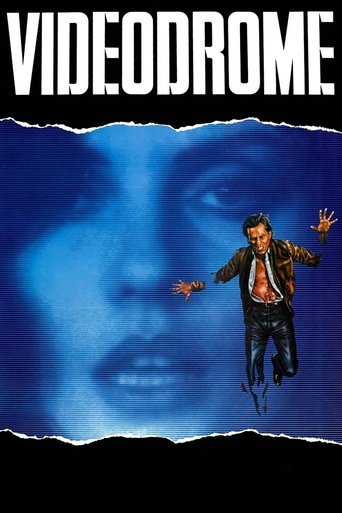
If there's a single ur-text for Clayface, it's David Cronenberg's 1983 fever dream about a sleazy cable programmer whose body starts rewriting itself to accommodate the signals he's been broadcasting. Max Renn's abdomen opens into a cassette slot. His hand fuses with a gun. By the end, he's preaching the gospel of the "New Flesh." The Criterion Collection has long positioned the film as Cronenberg's definitive statement that media is not a thing we consume but a thing we become.
The connection to Hagen is almost too clean. One man's body becomes a VCR; another man's face becomes malleable clay. Both films treat screens and audiences as the real pathogen. Celebrity itself, in the Cronenberg schema, is a transmissible disease—and the camera is the vector.
The Fly

If Videodrome gives Clayface its thesis, The Fly gives it the only template that matters emotionally. Seth Brundle doesn't transform in a single horrifying beat. He decays over an hour and a half, and the horror works precisely because we're mourning the person inside the deformation long before the deformation finishes him off.
That's the trick Watkins has to pull off. A face that misbehaves in a mirror is a great trailer image. A face that misbehaves after we've fallen in love with the man behind it—that's a movie.
Tokyo Metal and French Scalpels: The Transformation Canon
Tetsuo: The Iron Man

Shinya Tsukamoto's 1989 black-and-white nightmare is the moment body horror went industrial. MoMA's program notes frame it as a film that "anticipat[ed] the extremities of body horror that would peak in the early 21st century" while skewering postwar Japanese society. The BFI, in its own canon of the subgenre, describes Tetsuo as "an unyielding nightmare of sexual repression and body dysmorphia".
The relevant inheritance isn't thematic alone. Tetsuo was built on stop-motion, prosthetics, and the raw tactility of real metal pushing through real skin. Early buzz around Clayface suggests the production is leaning hard into practical effects over pure CGI, and that's the right instinct. Clay, like iron, has to look like it hurts.
Eyes Without a Face

Long before anyone used the phrase "body horror," Georges Franju made the subgenre's founding document. His 1960 masterpiece follows a disgraced surgeon kidnapping young women and grafting their faces onto his disfigured daughter. It is quiet, lyrical, and absolutely monstrous—the original sin of every vanity-horror movie that followed.
What Eyes Without a Face understood, and what Clayface seems to be grasping at, is that the horror lives in the gap between the face you had and the face you're forced to wear. Everything in this lineage descends from Franju's cold operating room.
Beauty as Body Horror: The Modern Vanity Wave
The Substance

The most obvious living sibling to Clayface is Coralie Fargeat's grotesque, which earned an Oscar nomination for Best Picture and a critical consensus praising it as "audaciously gross, wickedly clever". Elisabeth Sparkle and Matt Hagen are the same character wearing different uniforms: industry products whose careers depend on a surface that is actively eating them alive.
Fargeat's film is also instructive for how brutal it's willing to be. It does not treat the body as a metaphor you can walk back from. If Clayface flinches where The Substance committed, it will show.
The Neon Demon

Nicolas Winding Refn's 2016 LA fashion nightmare is the aestheticized cousin to Fargeat's splatter. Here, beauty isn't a trap the industry sets—it's a resource other people will literally consume. Fangoria has grouped it with Eyes Without a Face and The Substance as part of a specifically vanity-centered horror tradition, and the throughline is unmistakable.
Hagen, as a matinee idol trying to shape his own face into something more castable, is standing on the same stage.
American Mary

The Soska sisters' 2012 cult oddity is the underseen entry in this cluster, but it belongs here. Its heroine is a medical student who falls into the world of extreme body modification, surgically authoring herself and others into shapes the market will accept. Any film where a character tries to sculpt themselves into something more marketable owes it a debt.
Across the 2010s movies and into the 2020s movies, vanity horror stopped functioning as metaphor and started functioning as plot. The body is no longer a stand-in for the industry's violence—the body is the industry's violence, enacted directly on flesh. Clayface is arriving at the exact moment this subgenre has become its own tradition.
Can't Decide What to Watch?
Let RandomFlix pick a movie for you. One click, one great movie.
Roll the DiceThe Hunger Underneath: Appetite, Identity, and Loss of Self
Raw

Julia Ducournau's debut is the coming-of-age flipside of everything above. A vegetarian veterinary student discovers, over one long and bloody semester, what her body actually wants. IndieWire's survey of the subgenre singles it out as one of the essentials of the last decade, and for good reason: it's a film about a body learning its own appetite before its owner is ready to accept it.
That's the engine Watkins seems to be setting up for Hagen. Shapeshifting is a power until it becomes a hunger. The question of what you're willing to turn into is also the question of what you're willing to consume.
Possessor
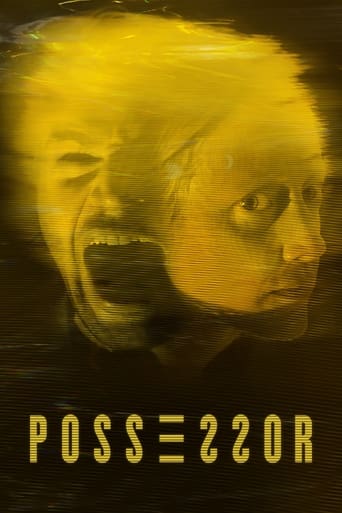
Brandon Cronenberg's second feature carries the family name forward with alarming confidence. Tasya Vos is an assassin who inhabits other people's bodies to carry out contracts, and over the course of the film she begins losing track of which body is actually hers. It is, structurally, almost a dry run for Clayface—an identity-dissolution thriller dressed as a transformation story.
It's not an accident that transformation movies and identity-crisis movies are the two tags critics keep reaching for when they describe this corner of horror. The genre has figured out that the scariest thing a body can do isn't rupture. It's forget who it used to be.
What This Lineage Tells Us to Expect from Clayface
If Watkins is working inside this canon—and everything about his hire, his cast, and Gunn's own framing says he is—then the shape of the film is already partly visible. Expect a seductive first transformation, a scene designed to make the audience understand why Hagen wants this. Expect a mid-film loss of control, where the gift reveals its appetite. Expect a final scene that refuses catharsis, because this subgenre has never once offered one.
The business framing supports the reading. The film is directed by James Watkins from a Mike Flanagan and Hossein Amini script, with Tom Rhys Harries as Matt Hagen, and is positioned as a body horror–psychological thriller rather than a conventional superhero picture. At a reported $40M budget with an October 23, 2026 release, DC isn't swinging for tentpole numbers. They're swinging for The Substance's scale and The Substance's discourse.
The real question isn't whether Clayface fits inside the DCU. It's whether it earns a seat at the table these nine films built. Readers who want to work through the lineage without committing to a watchlist can always spin RandomFlix for a random pull from the vanity-horror shelf and see where it lands.
Where to Start If You're New to the Subgenre
If you've never done a deep dive into body horror and the Clayface trailer is what pulled you in, there are three obvious entry points, each pointing to a different pleasure in the subgenre.
For accessibility and recency, start with The Substance. It's the most direct sibling to what Clayface appears to be doing, and it's calibrated to work on viewers who don't consider themselves horror people.
For the pure, uncut subgenre with no commercial sanding, go to Tetsuo: The Iron Man. It's short, it's merciless, and it will reset your sense of what the form can do.
For the emotional gut-punch that justifies all the grossness, nothing has yet surpassed The Fly. If you want to feel something after the transformations are over, this is the one.
Pair any of them with the Clayface trailer and the throughline becomes impossible to unsee. Watkins isn't making a superhero movie. He's making the newest entry in a seventy-year argument about what the camera does to the people it loves.