Why The Invite Hits Different: The Dinner-Party Dramedy, Decoded
When The Invite finally lands on HBO Max this week after a year of festival buzz and a surprisingly muscular theatrical run, a lot of viewers are going to finish it, pour another glass of whatever they were drinking, and immediately want more of the same. That specific more is harder to find than it sounds. Olivia Wilde's film isn't just a comedy with uncomfortable moments or a thriller with jokes — it's a chamber piece, a pressure cooker, a room where polite smiles slowly rot into something you can't un-see.
The release numbers tell you why it caught on. The Invite begins streaming exclusively on HBO Max on October 23, 2026, with a linear HBO debut the following night, after a Sundance premiere that triggered a bidding war A24 ultimately won. Critics have been staggeringly kind — a 96% Rotten Tomatoes score accompanied a global theatrical take north of $55 million, numbers that put a talky two-couple apartment movie in rarified company. It's also, formally, a remake: Wilde and screenwriters Rebecca Dinerstein Knight and Celine Held have transplanted Cesc Gay's 2020 Spanish feature The People Upstairs (Sentimental) to a cramped San Francisco apartment, where a strained marriage collides with a pair of enigmatic upstairs neighbors who want to talk about things nobody wants to talk about.
That setup — small space, few people, a meal, a slow-building sense that the social contract is about to shatter — sits at the exact crossroads of drama movies and thriller movies. It's a lineage that stretches back nearly eighty years, from a Hitchcock experiment shot to look like one unbroken take all the way to A24-adjacent satire with Michelin-star knives. The eight films below share at least two of The Invite's four core ingredients: a cramped single location, strained couples, nosy or unknowable neighbors, and a tonal slide from awkward laughs to genuine social horror. None of them are substitutes. All of them are companions.
The Blueprint: Hitchcock's Single-Room Experiment
Rope
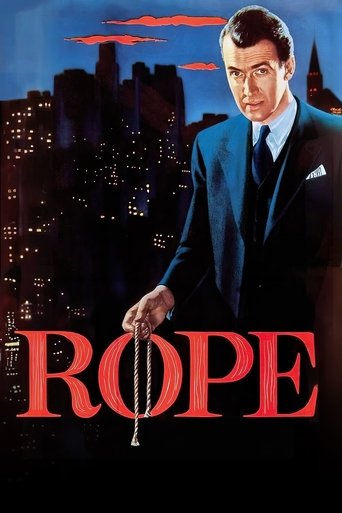
Every single-location dinner-party film owes something to Hitchcock's 1948 real-time thriller, and most of them owe quite a lot. Two hosts throw a party. One of their guests is already dead, stuffed inside the chest the hors d'oeuvres are being served from. The guests include the victim's family. The runtime is roughly the length of the party itself.
What makes Rope the ur-text isn't the gimmick of the long takes stitched into one apparent single shot — though that formal daring remains stunning in the 1940s movies context — it's the way Hitchcock weaponizes hospitality against the audience. Every polite exchange is a near-miss. Every refilled drink buys the killers another minute. The Invite doesn't have a corpse, but it uses the same engine: the social obligation to stay seated and smile is itself the source of dread.
When the Guests Can't Leave: Surrealism and Satire
The Exterminating Angel
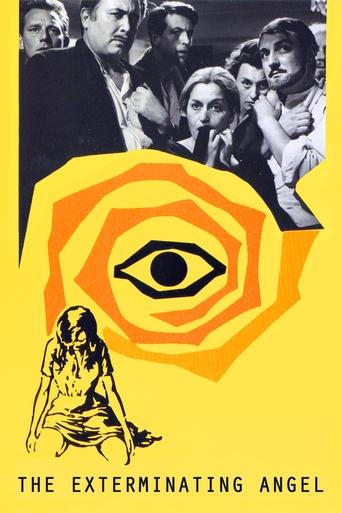
Luis Buñuel's 1962 masterpiece is the premise distilled to its most unnerving essence. A group of upper-class guests arrive for a lavish dinner party and then, inexplicably, cannot leave the room. There is no door locked. No one is holding them hostage. They simply… can't. Days pass. Civilization peels away in layers.
Modern filmmakers keep rediscovering this film because it names something The Invite also understands: the invisible glue that keeps us in a room with people we'd rather flee is far stickier than any physical lock. It's the gateway drug into a strain of surreal movies cinema where manners curdle into madness, and it's essential viewing for anyone who found themselves asking, during Wilde's film, why nobody just… left.
The Family Secret Detonates at the Table
Festen
If The Invite's closest tonal cousin exists anywhere on this list, it's Thomas Vinterberg's 1998 Dogme 95 landmark. A wealthy Danish patriarch's 60th birthday gathering becomes the site of a devastating public reckoning when his eldest son stands to deliver a toast and says something nobody in the room is prepared to hear. What follows is one of the most harrowing dinner scenes in cinema — not because of what happens physically, but because of the social machinery that keeps trying, grotesquely, to resume normal service.
Festen is the film that proved comedy and horror can share the same wine glass. The toasts keep coming. The band keeps playing. People keep eating. That's the horror. For viewers who responded to the way Wilde lets tension build through what characters pointedly refuse to say out loud, this is the mountain the whole subgenre is climbing.
The Modern Classic: Grief, Wine, and Something Worse
The Invitation

Karyn Kusama's 2015 nerve-shredder is the most direct "if you liked The Invite" pick on this list — the titles are practically a Rorschach test. A man and his new partner attend a dinner party thrown by his ex-wife and her new husband in the Hollywood Hills home he used to share with her. The wine is good. The hors d'oeuvres are better. Something is deeply, deeply wrong.
What Kusama understood, and what Wilde clearly studied, is that strained couples and a host with a quiet agenda are more than enough fuel. You don't need a monster. You need a creeping awareness that the evening has rules you weren't told about. This one is pure slow-burn movies cinema, and the final act detonates with the kind of force that justifies every tense silence that came before.
When the Guest List Is the Trap
The Menu

Mark Mylod's 2022 ensemble satire swaps the apartment for a private island and the home-cooked meal for a tasting menu designed by a celebrity chef played with glacial fury by Ralph Fiennes, but the structural DNA is identical to The Invite's. A curated guest list. A host with a buried agenda. Food — or in Wilde's case, the ritual of hosting itself — as the delivery system for revelation.
The industry took the film's blend of comedy and dread seriously enough that it collected five Saturn Award nominations, including Best Thriller Film. It's the contemporary A24-adjacent sibling to The Invite: same wavelength, bigger budget, considerably sharper fangs. If you want the chamber-piece intimacy scaled up without losing the queasy social-horror payoff, start here.
Can't Decide What to Watch?
Let RandomFlix pick a movie for you. One click, one great movie.
Roll the DiceDeeper Cuts: Three for the Adventurous
Coherence
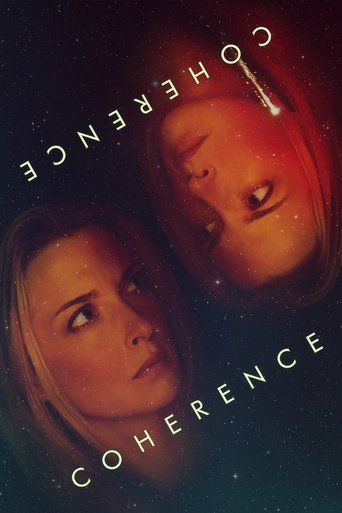
James Ward Byrkit's 2013 micro-budget stunner is proof that you only need eight friends, a house, and an idea to make essential cinema. A dinner party. A comet passing overhead. A power outage. And then, slowly, a reality that quietly splinters along fault lines nobody at the table can quite identify. The film was famously shot over five nights with the actors improvising from loose scene cards, which is why the paranoia feels so unperformed. It's talky, intimate, and — once it clicks — genuinely vertiginous. The Invite fans who loved the sensation of a familiar room gradually becoming unfamiliar will find Coherence operating on the same frequency, just tuned to a stranger station.
Gosford Park

Robert Altman's 2001 country-house ensemble is the maximalist cousin to The Invite's two-apartment chamber piece. An English weekend shooting party. A sprawling cast of guests upstairs and servants downstairs. An elaborate dinner. A murder. Altman's typical technique of overlapping, half-caught dialogue turns the whole house into a single living organism of class resentment and buried history, and the film earns every one of its three-plus hours by trusting the viewer to eavesdrop. If The Invite's two-couple containment left you wanting to see the same social mechanics played out across thirty characters and three floors, this is the expansion pack.
The Perfect Host

The weirdest, darkest comic note on this list. A fugitive on the run cons his way into what he thinks will be an easy mark — a mild-mannered man about to host a dinner party. The man is played by David Hyde Pierce, and he is not what he appears to be. The film is a cult oddity for good reason: it swings tonally from thriller to black comedy to something closer to musical theater with the kind of confidence that makes you distrust the floor beneath you. For viewers who liked how The Invite refuses to settle into a single register, The Perfect Host is a reminder that the dinner-party movie can get genuinely strange when the host is the one holding all the cards.
Keep the Night Going
The thread running through all eight of these films is architectural. A room. A table. A finite guest list. A dwindling supply of patience. Follow that thread far enough and you'll end up deep in the broader dark-comedy movies shelf, or scrolling through the single-location movies tag where dozens more films are built on the same principle — a few people, one space, and nowhere left to hide.
If you can't decide between Festen's devastation, Coherence's quiet sci-fi vertigo, and The Menu's seven-course cruelty, RandomFlix can make the call for you. Otherwise, pick the one whose logline makes you most uncomfortable. That's usually the right answer with this kind of movie.
The dinner party is still ringing the bell. Someone has to answer it.