Why 'Verity' Belongs to a Very Specific Thriller Tradition
Amazon MGM Studios has set director Michael Showalter's Verity for a wide theatrical release on October 2, 2026, with Anne Hathaway, Dakota Johnson, Josh Hartnett and Ismael Cruz Cordóva leading a cast working from a script by Nick Antosca. The marketing pitch sells the gothic estate, the injured author in the upstairs bedroom, and the whisper of an affair. But those are set dressings. The real engine of Verity—the thing that makes the premise click into place for anyone who's ever read a book that felt a little too alive—is older and simpler.
A struggling writer takes a job ghostwriting for a bedridden novelist and, buried in the house's archive, finds an autobiographical manuscript that reads less like memoir than confession. Amazon MGM describes it as a seductive psychological thriller in which a writer relocates to the remote Crawford estate and uncovers chilling autobiographical notes. That's the hook. That's also the oldest trick in psychological-thriller movies: a text inside the text, a reader inside the story, and a slow dawning realization that pages can bite.
What follows is a tour of eight films that pull the same lever Showalter and Antosca are reaching for. Think of them as the deep bench of the unreliable-manuscript thriller, with Verity as a very useful 2026 entry point into a lineage that stretches back decades.
The Rules of an Unreliable-Manuscript Thriller
The micro-genre has a working definition. There is a document inside the film—diary, memoir, draft novel, ghostwritten memoir, journalistic notebook—that the audience and at least one character on screen must read together. The reader-protagonist becomes our proxy. The author is usually dead, missing, incapacitated, or lying. And the final act turns on a revelation that forces us to re-read, mentally, everything we thought the text was telling us.
Three signature moves recur. First, the reader-detective, whose profession or circumstances put them inside the pages. Second, the absent author, whose silence is the entire mystery. Third, the reframing twist, which flips the moral polarity of the manuscript without changing a single word of it. This is the connective tissue tagged across every pick below under unreliable-narrator movies, and it's the reason the subgenre has thrived from epistolary gothic novels straight through the glossy 2010s movies prestige thriller boom.
The Canonical Pairings: Eight Films That Rewrite Themselves As You
Watch
These are read-and-watch doubles, ordered loosely from closest tonal match to boldest formal cousin.
Gone Girl
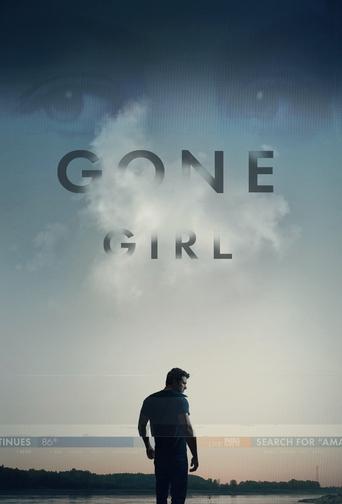
The modern template. Amy Dunne's diary voiceover is the most elegant weaponized prose in American film this century, and No Film School's analysis argues Fincher and Flynn deployed the diary voiceover as a tool of manipulation that redefined the unreliable narrator and showed storytelling itself can be a weapon. The trick is that we never doubt a word of Amy's narration until the film insists we must—and by then we've been complicit in building the version of her the diary wanted us to build.
The novel's use of unreliable narration, plot twists, and suspense carried directly into the David Fincher-directed 2014 film adaptation with a Flynn-penned screenplay, which achieved both commercial and critical acclaim. The alternating Nick/Amy chapter structure is the direct ancestor of Hoover's dual-manuscript conceit: two voices, one of them lying, the other too damaged to notice. If you're reading Verity before seeing the film, Gone Girl is the Rosetta Stone for how to feel the trapdoor opening under your feet.
The Ghost Writer

The closest structural sibling Verity has in cinema. The Ghost Writer is a 2010 neo-noir political thriller directed by Roman Polanski, adapted from Robert Harris's 2007 novel The Ghost, starring Ewan McGregor, Pierce Brosnan, Kim Cattrall, and Olivia Williams, and the setup is almost absurdly on the nose for Verity readers: a hired writer, an absent-but-still-dangerous principal, and a manuscript left behind by a dead predecessor.
The Hollywood Reporter frames the never-named ghostwriter as an innocent confronting a manuscript that may contain a hint of what caused its previous writer's death—which is essentially Lowen Ashleigh's job description with the serial numbers filed off. McGregor plays the reader-detective archetype in its purest form, and the final shot of the film is one of the great manuscript-as-murder-weapon payoffs in modern thriller movies: a single page carried across a city square by the wind, and the whole plot resolved in the margins of a document we never finish reading.
Secret Window
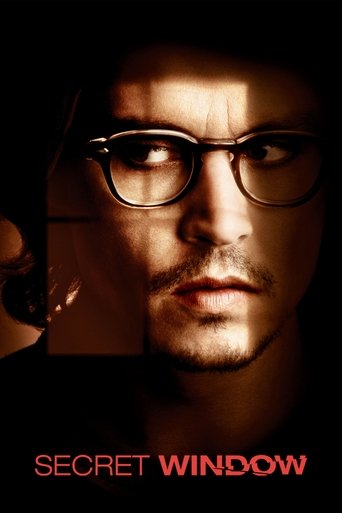
David Koepp's Stephen King adaptation, with Johnny Depp as Mort Rainey, flips the Verity anxiety on its axis. A stranger shows up at the writer's cabin with a manuscript, accuses him of plagiarism, and refuses to leave. The question is no longer "is this document telling the truth about its author?" but "is the author telling the truth about this document?"
That inversion is why it belongs here. Verity worries about reading a confession; Secret Window worries about being read as one. Both films understand that the moment a manuscript enters the room, every character in it—on the page and in the house—becomes a suspect.
The Girl on the Train
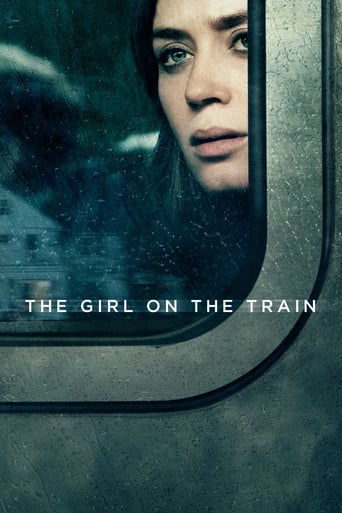
No literal manuscript, but Rachel Watson's fragmented memory functions as one: a draft she's constantly revising, with pages missing and sentences crossed out. The Girl on the Train has been widely compared to Gillian Flynn's Gone Girl because both employ unreliable narrators and deal with suburban life, and that's the exact register Verity trades in once the Crawford estate stops feeling safe—domestic surfaces concealing a text that keeps rewriting itself.
Pair it with Verity for the mood more than the mechanism. Both are stories about women trying to piece together a narrative from fragments while a stronger, more confident narrator keeps interrupting them.
Misery
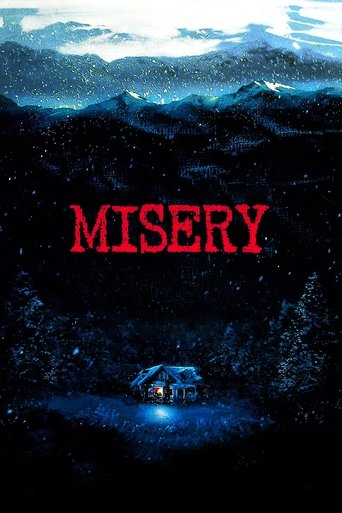
The grandparent of the whole subgenre. A captive novelist, a reader who has become his jailer, and a manuscript composed under literal duress. Rob Reiner and William Goldman externalize what Verity internalizes—the manuscript isn't a metaphor for power, it's the hostage situation.
Watch it before or after Verity and the Hoover premise suddenly feels both fresh and ancient. The Crawford estate is Annie Wilkes's farmhouse with better lighting; Lowen is Paul Sheldon with the chains swapped for a book contract. Every manuscript thriller since 1990 has had to answer, in one way or another, to the sledgehammer at the foot of the bed.
Atonement
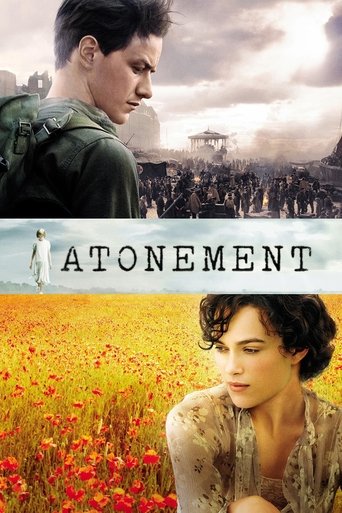
The purest "the manuscript was lying to you the whole time" twist in prestige cinema. Joe Wright's adaptation of Ian McEwan's novel spends two hours building a devastating wartime love story and then reveals, in its final act, that the entire film has been a novel written by Briony Tallis as expiation for a childhood lie.
Tonally this is a left turn from Verity—there's no gothic dread, no injured wife upstairs—but formally it's the most ambitious cousin on this list. Atonement is what happens when a filmmaker takes the unreliable-manuscript premise to its logical endpoint: the entire text is the lie, and the author is the only person who ever knew.
Wonder Boys

Curtis Hanson's lower-stakes but genuinely essential entry. Michael Douglas plays a professor-novelist dragging a bloated, unfinished manuscript through one disastrous Pittsburgh weekend, and the horror isn't violence—it's the slow suffocating awareness that the pages he's carrying may not be any good, and may never end.
A palate cleanser between the heavier picks, and proof that the subgenre doesn't have to be lethal to be about the terror of what writers put on the page. Verity readers who worry the Crawford manuscript might be real will appreciate a film where the central document's only crime is being three thousand pages long.
Can't Decide What to Watch?
Let RandomFlix pick a movie for you. One click, one great movie.
Roll the DiceSharp Objects
Technically a limited series rather than a feature, but it earns a spot by sheer family resemblance. Camille Preaker is a reporter writing the story we're watching, with words—actual words—carved into her skin. Gillian Flynn again, this time weaponizing journalism instead of a diary, and leaning hard into the gothic Southern-estate atmosphere that Showalter is reportedly chasing with the Crawford house.
If Verity's trailer is landing for you because of the mood as much as the plot, Sharp Objects is the closest tonal match on offer. The manuscript here is the body itself, and the author is still writing.
Reading Order, Watching Order, and the Case for Doubles
A few natural pairings jump out. Verity and The Ghost Writer run on nearly identical fuel—the ghostwriter inheriting a predecessor's dangerous pages—and watching them close together clarifies what each film is doing that the other isn't. Gone Girl and Atonement are the twist-as-text double feature: two films that make the act of reading a trapdoor, in very different registers. Misery and Secret Window work as a King-adjacent double, with the same anxiety—writer, manuscript, intruder—played first as horror and then as doppelgänger psychodrama.
Some of these reward reading the source novel first. Gone Girl, Atonement, and The Ghost (the Harris novel beneath Polanski's film) all gain a second dimension when you've met the prose version of the manuscript before you watch it rendered on screen. Others, like Misery and Secret Window, work in either direction. And if deciding feels like too much work on a given night, RandomFlix's shuffle will happily surface the next unreliable-narrator pick without the ceremony.
What Verity Adds to the Canon
The honest context: this is a crowded market. Deadline's review positions Verity as the fourth Hoover novel adaptation in two years and compares it unfavorably to sleeper hit The Housemaid, which gives you a sense of the domestic-thriller glut the film is landing into. On paper, there's an argument that the subgenre has already said what it needs to say.
But Verity's contribution, if it works at all, is tonal rather than structural. Most of the films above play the unreliable-manuscript trick cool and procedural—Fincher's icy symmetry, Polanski's gray political remove, even Reiner's deliberately contained chamber piece. Showalter and Antosca are reaching, by all indications, for gothic maximalism: a crumbling estate, candlelight, an unreliable wife upstairs, a text that reads like a ghost story told by its own ghost. That's a register the subgenre has largely left on the shelf since the great epistolary novels of the nineteenth century.
Whether or not the film sticks the landing, its October release is a useful excuse to revisit the whole lineage rather than just the latest entry in mystery movies. The manuscript thriller doesn't belong to any one decade or any one author. It belongs to anyone who's ever picked up a book and felt, for a moment, that the book was reading them back. Start with Polanski, end with Fincher, and let the Crawford estate be the room you walk into last.