Why Other Mommy Belongs to a Very Specific Horror Lineage
Rob Savage's Other Mommy arrives with a serious pedigree — a James Wan/Atomic Monster and Blumhouse production, adapted from Josh Malerman's novel Incidents Around the House, with Jessica Chastain pulling double duty as both a loving mom and the entity that crawls out of her daughter's closet asking a question no eight-year-old should ever have to answer: Can I go inside your heart?
That premise — a child cornered by something that looks almost, but not quite, like her mother — is the whole engine. Variety's review frames it explicitly as doppelgänger horror, even while arguing the execution falters. Caseymoviemania singles out the film's two most memorable set-pieces: the cold open where the entity emerges from young Bela's closet, and a kitchen contortion sequence that strains the limits of what Chastain's body can do onscreen. Whatever the film's uneven reception, those beats stick because they tap something older and deeper than any single screenplay.
Because here's the thing: the maternal doppelgänger isn't a one-off conceit. It's a lineage. It's a specific pocket of horror movies where the double isn't just a stranger wearing a familiar face — it's specifically a mother, the one person a child is biologically wired to trust without question. When that face lies, something fundamental in the universe breaks.
What follows is eight films that work the same nerve ending as Other Mommy. Some are quiet. Some are feral. All of them are built around impersonation, replacement, bodily mimicry, or the slow fracture of maternal trust.
The Two Pillars: Mother-as-Impostor Done Right
Goodnight Mommy

Veronika Franz and Severin Fiala's Austrian puzzle box is Other Mommy's closest living relative — and in many ways its inversion. A woman returns home from facial surgery, head wrapped in bandages, and her twin sons become convinced that whoever is under the gauze is not their mother. Where Savage's film weaponizes jump scares and literal supernatural threat, Goodnight Mommy weaponizes ambiguity. The dread lives in sunlit kitchens and tidy bedrooms, not in attics or closets. The question "is this really her?" is both the opening and the ending, and the film trusts you to sit inside that doubt until it curdles. If you loved the central hook of Other Mommy but wanted it slower and more surgical, start here.
Us
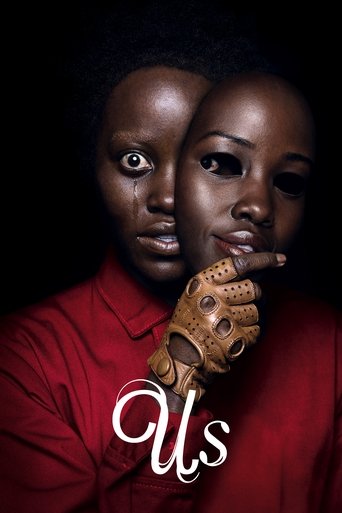
Lupita Nyong'o's performance as both Adelaide Wilson and her Tethered double, Red, is the modern gold standard for one actress playing a mother and her shadow — and it's clearly the benchmark Chastain is reaching toward. Jordan Peele frames Red as both protector and threat, a mirror-mom whose maternal instinct is twisted but unmistakably present. Both Bloody Disgusting and IndieWire pieces that have charted this terrain single out Us as the maternal-doppelgänger film other filmmakers measure themselves against. It's also the film that proved mainstream audiences will absolutely show up for the mother-as-double premise when the lead performance can carry it.
When the Mother Makes the Monster
Hatching
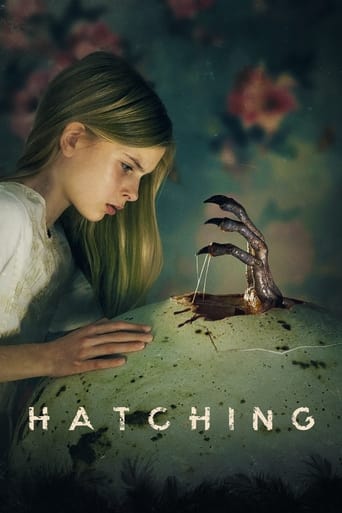
Hanna Bergholm's Finnish body-horror fable is one of the strangest and best things to come out of 2020s movies horror. A twelve-year-old girl, suffocating under a perfectionist mother who runs a cheery lifestyle vlog, finds a bird's egg in the forest and incubates it in her bed. What hatches is her double — feral, hungry, loyal to her and only her. Technically the doppelgänger is the daughter, but Hatching is really about the mother who summoned it, whose relentless curation of the family's image created the exact empty space the creature walks into. It pairs beautifully with Other Mommy's own interest in how parental absence — emotional, not physical — makes room for something uncanny to move in.
Mama
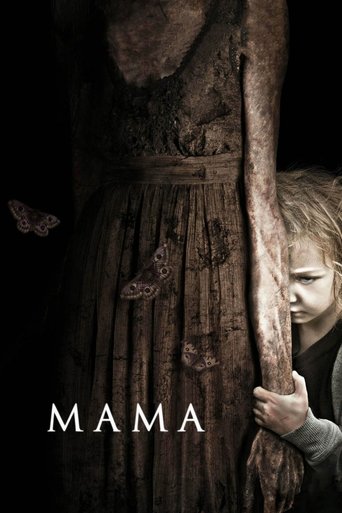
It's worth revisiting Chastain's earlier maternal horror as a mirror text, because Mama flips Other Mommy's premise inside out. Here she plays a reluctant stand-in parent haunted by a spectral surrogate — a ghost mother competing with her for the children's affection, and winning. The entire evil-mother movies archetype gets inverted: the dead thing in the walls is more maternal than the living woman, more attentive, more fiercely protective. That's the exact fear Other Mommy exploits from the opposite direction. In one film the double wants to replace the mother because the mother isn't enough. In the other, the mother fears being replaced precisely because she suspects she isn't enough. Same wound, different scalpel.
Doubles, Mirrors, and the Uncanny Household
Enemy
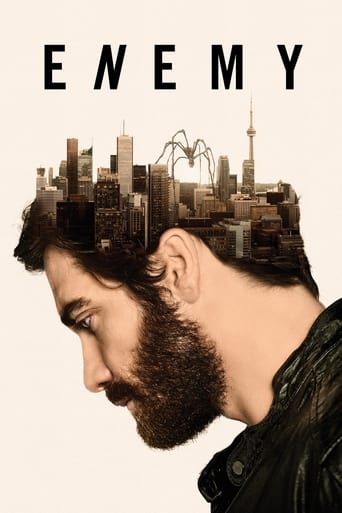
Denis Villeneuve's jaundiced, spider-haunted doppelgänger drama isn't about motherhood per se, but its pregnant-wife subplot and its reading of the double as repressed domestic self make it essential companion viewing. The film understands that a doppelgänger is never just a plot device — it's a projection of everything the self has tried to wall off from the household. The yellow-tinted dread, the sense that a familiar apartment has turned against you, the final-shot gut punch — all of it rhymes with Other Mommy's closet-threshold imagery, where the safest room in the house becomes the one you can't look at directly.
The Babadook
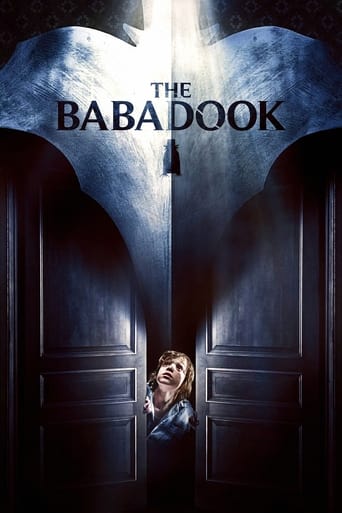
Jennifer Kent's grief parable isn't about a literal doppelgänger, but it absolutely belongs on this list, because Amelia becomes one. Possessed by the thing in the picture book, she mimics her own voice, moves through her own house like something wearing her skin, and turns on her son with a venom that no "normal" mother is allowed to show. The scene where she looms over Sam's bed, hair hanging down, voice distorted — that's the exact nightmare Other Mommy stages in a more literal register. The Babadook just has the honesty to admit the monster was always inside the parent, dressed up in metaphor only because the alternative is unspeakable.
Can't Decide What to Watch?
Let RandomFlix pick a movie for you. One click, one great movie.
Roll the DiceThe Deep Cuts: Replacement Horror from the Margins
Possession
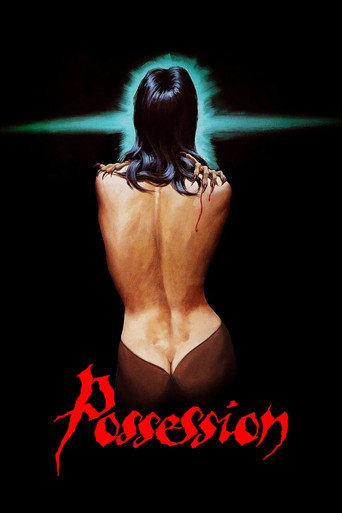
Andrzej Żuławski's 1981 fever dream is, arguably, the most unhinged maternal-doppelgänger film ever made. Isabelle Adjani's Anna grows a tentacled double-lover in a bombed-out Berlin apartment while her role as wife and mother disintegrates around her in real time. The infamous subway miscarriage scene remains, four decades later, a benchmark for depicting a woman's body as the site of pure horror — all milk, blood, and screaming animal grief. Possession is not an easy watch and not a comforting one, but if you want to see what the maternal-doppelgänger subgenre looks like at its most operatic and least repressed, this is where the tradition really starts. Everything after it is, in some sense, a translation.
Lamb
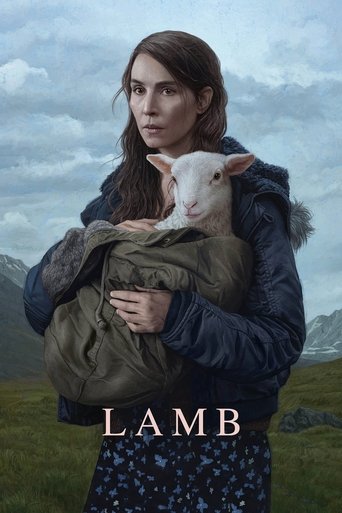
Valdimar Jóhannsson's Icelandic folk-horror is the quietest film on this list and maybe the saddest. A grieving couple on a remote sheep farm raises a lamb-child as their own, and for a long stretch the film plays almost like a fable about tentative healing. Then the real doppelgänger arrives in the final act — a reckoning for the motherhood these two stole rather than earned. Lamb operates on a slower frequency than Other Mommy, but it hits the same primal nerve: something is pretending to belong to this family, and the mother knows it, and she chooses to pretend back, because the alternative is grief she cannot survive.
What the Subgenre Keeps Telling Us
Line these eight films up next to Other Mommy and a thesis emerges. The maternal doppelgänger is never just a monster. It's a projection of the specific, hard-to-articulate fear that motherhood itself can be hollowed out, mimicked, or lost — either from the inside (postpartum dread, grief, estrangement) or from the outside (a culture that keeps telling mothers they're never enough, never present enough, never authentic enough).
It's not an accident that so much of this subgenre is concentrated in the last five years. Hatching, Lamb, and Other Mommy all landed in the 2020s movies, in a moment where the question "is she still really my mom?" resonates well beyond the screen — through pandemic isolation, parental burnout, and a wider cultural anxiety about who, exactly, is raising the next generation. If you want to go deeper into psychological-horror movies that uses the double this way, the throughline from Possession in 1981 to Other Mommy in 2026 is forty-five years of filmmakers using the doppelgänger to say what grief, postpartum dread, and family estrangement don't have polite vocabulary for.
(If this is a vein you want to keep mining, RandomFlix tags the maternal-horror and doppelgänger sides of this subgenre separately, so you can shuffle between them without ever climbing out of the uncanny.)
Keep the Nightmare Going
The line from Other Mommy that lingers isn't a scare — it's a request. Can I go inside your heart? Every film above is, in its own crooked way, answering that question. Sometimes the answer is yes and the mother becomes the monster. Sometimes the answer is no and the monster becomes the mother. Sometimes nobody knows which is which until the credits roll, and sometimes not even then.
Pick one and leave the hall light on.