Why Grief Makes Rom-Coms Better, Not Worse
The central image of Voicemails for Isabelle is simple enough to fit on a Post-it: a young woman keeps calling her dead sister's old number to leave voicemails, and a stranger on the other end keeps listening. Leah McKendrick's film follows Jill, who copes with the loss of her sister Isabelle by leaving voicemails on her old number — a number that has since been reassigned to a man named Wes, who finds himself unable to stop listening. The meet-cute is powered entirely by mourning. Without the death, there is no story.
That's the whole subgenre in miniature. The romance movies mode most worth defending right now isn't the airport-run rom-com or the enemies-to-lovers workplace farce — it's the grief rom-com, where the love interest and the loss interest occupy the same emotional space, and where comedy is treated not as grief's opposite but as its survival mechanism. Critics reaching for comparisons to McKendrick's film have landed on the same handful of titles — Sleepless in Seattle, You've Got Mail, The Shop Around the Corner, Love Again — and those aren't lazy reaches. They're a genuine continuity of form, stretching from Lubitsch in 1940 to a voicemail inbox in 2026.
The structural observation worth holding onto: in these films, grief isn't a third-act obstacle invented to keep the lovers apart. It's the first-act engine. The meet-cute only happens because someone is missing.
The Posthumous-Message Premise: Closest Cousins
P.S. I Love You

The closest spiritual sibling. Holly opens letters from her dead husband Gerry, each one nudging her toward a life — and eventually a person — beyond him. It's the same trick as Isabelle's voicemails, just inverted: here the dead speak first, and the living have to catch up. P.S. I Love You stands out as a rare rom-com that balances charm with the weight of grief, and that delicate balance is exactly why it has endured.
What Richard LaGravenese understood — and what every imitator since has had to relearn — is that the comic register has to stay alive. The karaoke scene, the Ireland trip, the bickering best friends: none of it softens the bereavement, but it keeps the film breathing. This is the model.
Love Again
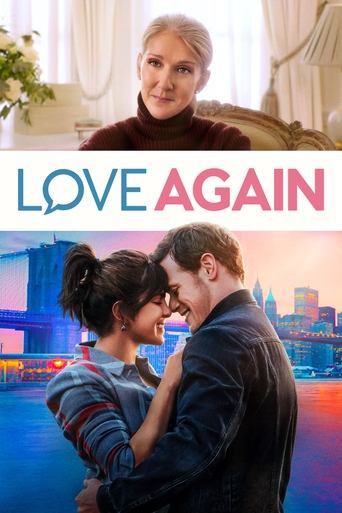
Priyanka Chopra Jonas texts her late fiancé's reassigned number, and the texts land in the phone of a journalist played by Sam Heughan. The 2023 release flopped commercially, but it proved the wrong-number-to-the-dead conceit could sustain a feature — and Deadline reviewers reaching for Voicemails' direct formal ancestors named it for a reason. McKendrick's film refines what Love Again sketched: the same premise, sharper execution, the asymmetry between sender and receiver more carefully drawn.
The Lubitsch Inheritance: Letters, Then Email, Then Voicemail
The Shop Around the Corner
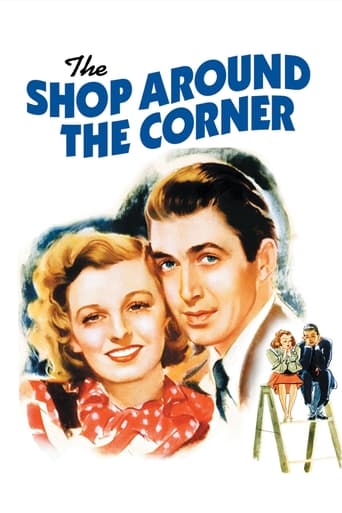
Lubitsch, 1940. Two bickering coworkers in a Budapest leather-goods shop are secretly anonymous pen pals, each unaware that the irritating colleague is the soulmate on the page. It isn't grief-driven — that mutation comes later — but it's the foundational text for every "falling in love with a voice you can't see" rom-com. The technological substrate that Voicemails inherits starts here, with handwritten letters and a P.O. box.
You've Got Mail
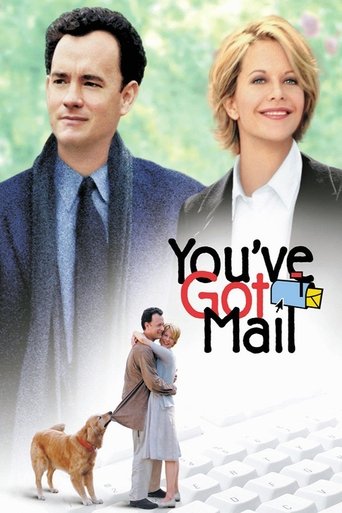
Nora Ephron's 1998 remake swaps letters for AOL chimes, but the grief is quieter and easier to miss: the death of Kathleen's mother, the slow death of her bookstore, the death of a particular kind of New York. It shadows every scene with Joe Fox without ever announcing itself. The film argues that mourning doesn't have to be theatrical to be structural — sometimes it's just the ambient weather a romance unfolds inside.
Sleepless in Seattle
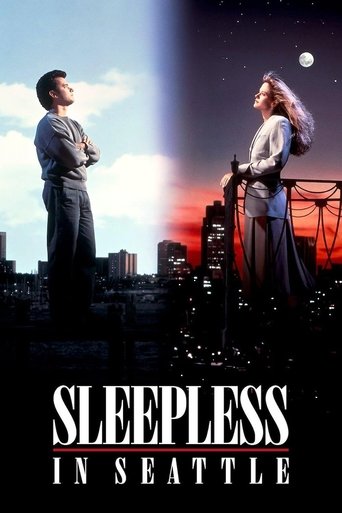
The Ephron film Variety reached for first when reviewing Voicemails, and the purest crystal of the subgenre. Sam's grief for his wife isn't a backstory beat; it's the entire emotional architecture. Annie hears his voice on a radio call-in show — a meet-cute mediated by airwaves, exactly the kind of one-way medium McKendrick will later compress into a voicemail. The widower's son does the matchmaking, but it's the absent wife who makes the romance possible.
The Widow/Widower Variant
Good Grief
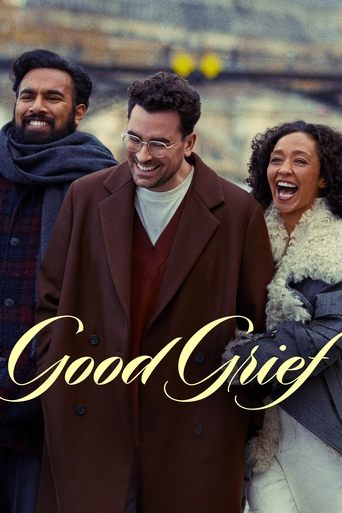
Dan Levy's 2023 directorial debut watches a widower in Paris with his closest friends, his husband's secrets, and a slow, comic re-entry into the possibility of desire. It's tonally adjacent to the Voicemails register — wry, weepy, gentle, allergic to easy catharsis. The Paris setting does some of the work an Ephron film would have given to Manhattan: a city beautiful enough to make sadness feel survivable.
Our Souls at Night
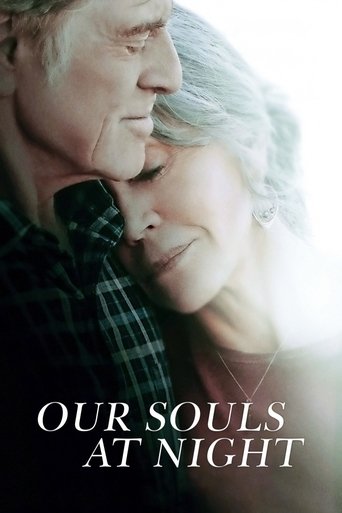
Robert Redford and Jane Fonda as widowed neighbors who decide to sleep — just sleep — in the same bed, because the nights are long and they've both been alone for too long. The rom-com beats are muted by age and grief, but the structure is identical to every other film in this lineage: loss as the door love walks through. Two people who would never have looked at each other twice if the people they loved were still alive.
Irreplaceable You

The terminal-illness flip side of the conceit: a woman planning her husband's romantic future after she's gone. Variety's review of Voicemails noted that the film works terminal-disease weepie tropes into a rom-com formula, with explicit on-screen references to A Walk to Remember — and Irreplaceable You is the purest version of that hybrid. It's the rom-com written from the perspective of the person who won't be there for the third act.
The Outlier That Earns Its Spot
The Big Sick
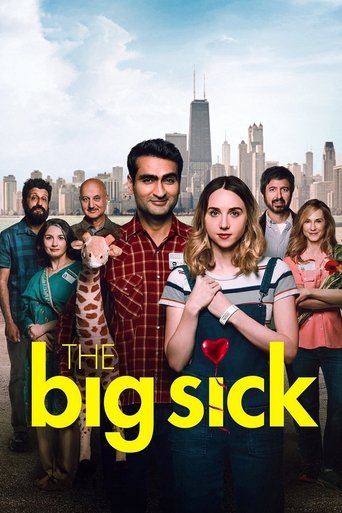
Kumail Nanjiani and Emily V. Gordon's autobiographical script puts the grief mid-rom-com instead of pre-rom-com: the love interest is in a medically induced coma, and her parents are thrown into the courtship by proxy, forced to share hospital cafeteria meals with the boyfriend their daughter was about to break up with. Critical readings of the film have framed it as part of a wave of rom-coms that function as accessible explorations of grief and trauma, sitting alongside titles like Silver Linings Playbook and Forgetting Sarah Marshall.
It belongs in this lineage because it's the modern rom-com most honest about how grief and falling in love use the same muscles: bargaining, sleeplessness, the compulsive retelling of a story to anyone who will listen. The Big Sick is a useful contrast with Voicemails for Isabelle because both films understand that comedy isn't grief's antagonist. It's the only language some characters can still speak.
What Voicemails for Isabelle Adds to the Lineage
McKendrick's specific contribution is the voicemail as a one-way medium. Letters get read. Emails get answered. A radio call-in show is, at minimum, broadcast. But a voicemail is the most asymmetrical form of address we have — Jill isn't writing to be read; she's talking to be heard by no one. That asymmetry is genuinely new to the subgenre, and the ethical wrinkle it creates is the film's most interesting move.
Wes is positioned as eavesdropper before love interest. The film's strong critical reception at launch — sitting at 84% on Rotten Tomatoes from 19 critics with a 6.6/10 average — suggests that the chemistry between Zoey Deutch and Nick Robinson is the thing carrying the conceit, because the premise itself is fraught. He knows her grief intimately before she knows his name. Every grief rom-com in this lineage has flirted with some version of that imbalance — Sam's son in Sleepless in Seattle, the anonymous letters in Shop Around the Corner — but Voicemails makes the imbalance the central ethical question.
The 2020s movies grief rom-com has access to a tonal range that Ephron and Lubitsch simply couldn't touch: texts, voice notes, reassigned numbers, the entire grammar of digital intimacy. McKendrick uses it without showing off. There's no Big Statement about technology, no cute aside about the cloud. The phone is just the phone, the way it is for everyone now.
If the grief movies rom-com keeps returning — and it does, decade after decade, from Lubitsch to McKendrick — it's because audiences recognize the structure intuitively. Love after loss isn't a subgenre quirk. It's most love stories, eventually.
Where to Go From Here
Eight films, roughly chronological, for anyone who wants the lineage in motion: The Shop Around the Corner (1940), Sleepless in Seattle (1993), You've Got Mail (1998), P.S. I Love You (2007), The Big Sick (2017), Our Souls at Night (2017), Irreplaceable You (2018), Good Grief (2023), and Love Again (2023) as the most direct ancestor — which is more than eight, but the subgenre has been generous.
Netflix Tudum's curated list of melancholy romances includes Good Grief and Irreplaceable You among its picks, so most of these are easy to find on Netflix or to rent; the Ephron titles rotate but never stay gone for long. If you want to keep exploring adjacent territory, the broader romantic-comedy movies and drama movies catalogs are where these films live — and where the next one is probably being written right now, by someone who just lost somebody and is trying to make it funny.