Why Cannes Made Thelma & Louise Its 2026 Face
The image is already iconic before you know where it came from: Geena Davis and Susan Sarandon, shoulders pressed together in a convertible, hair knotted by desert wind, the Polaroid grin of two women who've decided the rules don't apply anymore. Shot on set by photographer Roland Neveu in 1991, that frame has now been blown up, recolored and enshrined as the official poster for the 79th Festival de Cannes, running May 12–23, 2026. The festival unveiled the poster featuring Susan Sarandon and Geena Davis from Ridley Scott's 1991 film Thelma & Louise, and the language the festival chose is telling — organizers described the pair as "heroines" and called their escape "a global symbol of freedom."
The timing isn't accidental. Thelma & Louise premiered at Cannes on May 20, 1991, which means the 2026 edition lands almost exactly 35 years after that first screening. The anniversary is the peg; the reappraisal is the point.
A quick credential check, in case anyone's forgotten what the film pulled off: the film secured six Academy Award nominations, with screenwriter Callie Khouri taking home the Best Original Screenplay Oscar. Davis and Sarandon were both nominated for Best Actress, while Ridley Scott earned a Best Director nod. That's not a cult object — that's a film the establishment recognized as a turning point while it was still warm.
The 2026 jury context sharpens the message. Park Chan-wook presides this year, a director whose filmography runs on the high-voltage current of female rage and rewritten endings; watch The Handmaiden back-to-back with Thelma & Louise and the DNA match is immediate. Cannes didn't pick this poster for nostalgia. It picked the film that permanently rerouted the American road movie — the moment the open highway stopped being a boys' club.
The Detour: What Ridley Scott and Callie Khouri Actually Changed
Before 1991, the canonical road movie was a male inheritance. Easy Rider, Bonnie and Clyde, Badlands — films about men (or men with women in tow) discovering America through a windshield. Roger Ebert himself slotted Thelma & Louise into that lineage on release, seeing it as the next entry in a long tradition. The trick is that it wasn't just the next entry. It was the fork in the road.
BYU associate professor Rob McFarland has called Thelma & Louise "the grandma of women's road movies," and the phrase is more accurate than cute. The BFI's Sight and Sound essay, originally published in July 1991, placed the film against contemporaries like Gun Crazy, Something Wild, and Wild at Heart — picking apart how Scott and Khouri inherited the genre's grammar but rewired its politics. The convertible, the diner booth, the dusty gas station, the cop on the shoulder: all familiar. What was new was who sat behind the wheel and what they were driving away from.
The ending is the engine. At the 30th-anniversary screening, Khouri pushed back on the idea that the cliff was a suicide, framing it instead as a transcendent moment — the only ending in which her protagonists remained free. That reframe is the single most influential piece of narrative logic the film left behind. Every subsequent road movie about women choosing motion over safety has had to reckon with it, consciously or not.
The visual grammar mattered too. The T-bird, the Monument Valley light, the Polaroid tucked into a visor — Scott's imagery became the shorthand other filmmakers would borrow, parody and reinvent across the 1990s movies and well into the streaming era. You can still feel it every time a camera pulls back on a woman, a horizon, and a tank of gas.
8 Road Movies That Drove in Its Tire Tracks
What follows isn't a ranking. It's a lineage — eight films that either extend, interrogate, or gender-flip the Thelma & Louise blueprint. Some are obvious descendants. Some are left-of-center detours you might not have connected to the original. All of them make more sense once you see the tire tracks they're following.
Boys on the Side
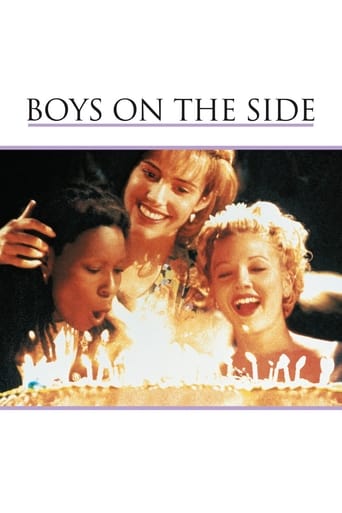
Herbert Ross's 1995 cross-country trio film is the most direct handoff of the female-friendship baton. Whoopi Goldberg, Mary-Louise Parker, and Drew Barrymore drive west under very different pressures than Thelma and Louise, but the structural DNA is identical: the car as a room three women can finally be honest inside, the highway as a slow decompression from the lives they're leaving. It trades fugitive-thriller adrenaline for something softer and more elegiac, but the thesis — that motion is a kind of intimacy — is pure Khouri.
My Own Private Idaho
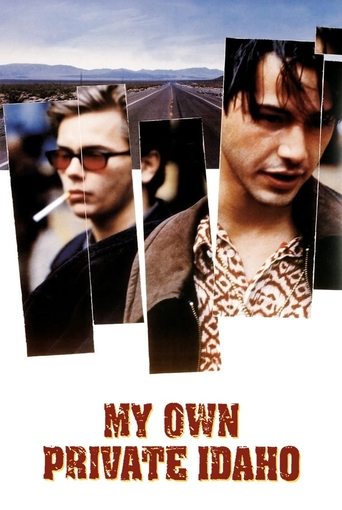
Gus Van Sant's hustler odyssey landed the same year as Thelma & Louise and served as proof of the road movie's sudden elasticity. Instead of outlaw fire, you get queer melancholy; instead of a cliff, a slow narcoleptic drift through Portland, Idaho and Rome. It's the companion piece nobody programs often enough — a reminder that 1991 was a hinge year for who got to own the windshield shot.
Leaving Normal
Edward Zwick's 1992 road movie about two women fleeing bad relationships for Alaska was dismissed on release as a Thelma & Louise knockoff and has been underrated ever since. Watched today, it plays less like a copy and more like a sibling — gentler, less armed, more concerned with what happens after the escape than during it. Christine Lahti and Meg Tilly give it the weight it deserves.
Wild
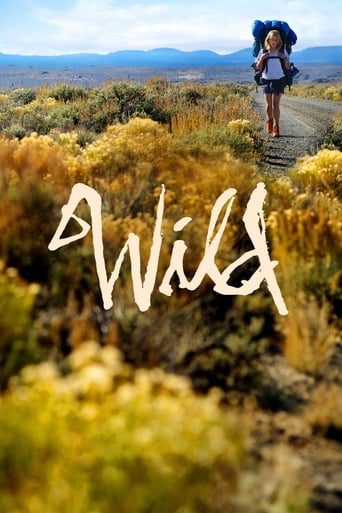
Jean-Marc Vallée's 2014 Reese Witherspoon vehicle swaps the convertible for hiking boots and the Pacific Crest Trail for the American interstate, but the core premise is unbroken: a woman walks away from a life she can't survive inside and lets landscape do the psychological work. The genre label changes — adaptation, memoir, prestige drama — but the Thelma & Louise thesis is intact. Grief, freedom, and distance are the same equation.
Bandits
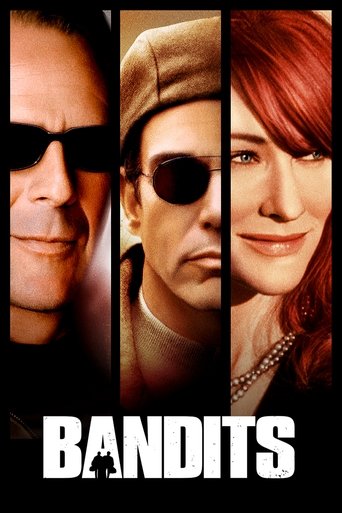
Katja von Garnier's 1997 German cult favorite is the one most Americans have never seen and should. Four women in a prison band escape custody and become folk heroes on the run, instruments in tow. It plays like Thelma & Louise reimagined as a rock opera — louder, weirder, angrier, and just as uninterested in letting its protagonists be domesticated back into the story. If you like your thriller movies with a soundtrack, this is the detour.
Can't Decide What to Watch?
Let RandomFlix pick a movie for you. One click, one great movie.
Roll the DiceQueen & Slim

Melina Matsoukas's 2019 debut is the most direct philosophical heir on this list. A first date goes catastrophically sideways after a traffic stop, and suddenly a young Black couple are fugitives cutting south through an America that was never designed to let them pass through unharmed. The cliff-edge fatalism is there; so is the mythologizing of the fugitive couple. What's new is the explicit racial charge, which reframes the original's questions about freedom and motion as questions that were always racially contingent to begin with.
The Rider
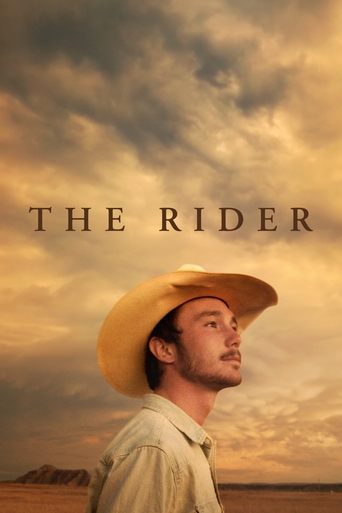
Chloé Zhao's quiet neo-Western is the stealth pick. No convertible, no state lines crossed at speed — but the film inherits Scott's landscape-as-psychology grammar wholesale. A young Lakota rodeo cowboy recovering from a head injury drifts through the Badlands trying to figure out what a life without horses looks like, and the South Dakota sky does the same emotional heavy lifting Monument Valley did in 1991. This is what happens when the road movie goes contemplative.
Nomadland
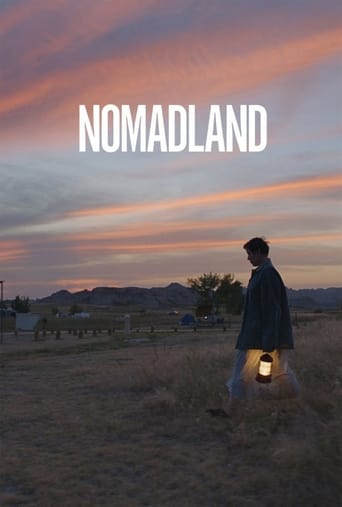
Zhao again, completing her own arc and the arc of this piece. Frances McDormand's Fern lives in a van, works seasonal jobs, moves with the weather. The freedom here isn't the adrenaline freedom of Thelma's foot on the gas; it's the harder, older freedom of a woman who has decided what she will and won't accept from the world and is willing to keep driving to protect that decision. It's Thelma & Louise thirty years later, asked what survival looks like once the cliff isn't an option.
The Through-Line: What Still Makes a Road Movie 'Feel Like Thelma & Louise'
Three ingredients keep recurring across the successors. First: a female protagonist reclaiming motion as a birthright, not a transgression. Second: a landscape that doubles as emotional weather — Monument Valley, the Pacific Crest, the South Dakota grasslands, a Louisiana two-lane at dusk. Third, and most stubborn: an ending that refuses domestic resolution. Nobody goes back to the husband. Nobody settles down.
These films cluster at the cross-section of road-trip movies storytelling and character-driven drama movies, and the best of them smuggle in thriller movies tension under the hood of what looks, from the outside, like a meditative character piece. Queen & Slim is a thriller that pretends to be a romance. Wild is a memoir that pretends to be a survival movie. Thelma & Louise is a crime picture that turns out to be about friendship, which turns out to be about freedom.
Worth watching at Cannes 2026 specifically: with Park Chan-wook chairing the jury, the competition's appetite for morally uncompromising female protagonists is going to be sharper than usual. Keep an eye on Un Certain Regard, where the successors to this tradition tend to cluster before they graduate to the main stage.
Plan Your Own Double Feature
The pairings that work best are the ones that put Thelma & Louise next to a film that either answers or complicates it. Thelma & Louise with Queen & Slim is the outlaw-couple lineage at its most electric — same engine, different America, thirty years of conversation between them. Thelma & Louise with Nomadland is the slower reckoning: same woman, same country, thirty years older, freedom redefined as endurance.
If you'd rather let the car pick the road for you, RandomFlix's dice roll will hand you a road movie at random in one click — or you can wander the road-trip hub and build your own triple bill.
Cannes didn't enshrine a movie this year. It enshrined a detour — the one every filmmaker on the list above has been driving down ever since. Pick one, put it on tonight, and notice how often the camera pulls back on a woman, a horizon, and a tank of gas. That's the inheritance. Now gas up.