The Rocky Problem: Why Project Hail Mary Hits Different
There's a moment early in Project Hail Mary — after the astrophage crisis has been established, after Ryland Grace has clawed his way through amnesia and grief and the horror of finding his crewmates dead — when the film quietly pivots into something else entirely. A tap. Then another tap. Then a rhythm. Grace, an American middle-school science teacher stranded in orbit around Tau Ceti, realizes he isn't alone, and the other guy in the neighborhood is knocking on the wall.
That knock is the whole movie. The astrophage plot is scaffolding. The amnesia is a delivery mechanism. What Andy Weir wrote, and what Phil Lord and Chris Miller adapted, is a story where two intelligences from wildly different biospheres decide — almost immediately, almost without hesitation — that the smart move is to build a laboratory together. RogerEbert.com's review of the film pegs it correctly when it notes that Lord and Miller lean harder into a buddy-movie register than into the tropes of the space thriller, and NPR's Bob Mondello has pointed out that the filmmakers marshal the right blend of wonder and genre awareness for the moment Grace realizes Earth isn't the only civilization that sent someone out here.
Weir's real innovation, which he began articulating in The Martian and completes with Grace and Rocky, is treating science as the protagonist and cooperation as the plot engine. No villains. No death rays. Just two curious minds and a whiteboard. If that's what hooked you — the collaborative pulse, the sense that intelligence tends to reach for a handshake before a weapon — then the rest of the science-fiction movies shelf has more to offer than the trailers suggest. You just have to know which shelf.
Defining Cooperative First Contact
This isn't a list of "alien movies." Forbes' Mark Hughes has drawn the right line: first contact films are a distinct animal from invasion films, defined less by spectacle than by how humanity reacts, listens, and communicates when faced with an intelligence that isn't ours. The heroes of the first-contact movies subgenre tend to be linguists, radio astronomers, marine biologists, engineers — people whose weapon is a notebook.
The tonal register is patient, awed, occasionally melancholy, and allergic to jingoism. PopMatters, writing about Arrival, argued that the heptapods essentially arrive to gift humanity a language rooted in collaboration and community rather than combat. That's the emotional key signature of everything below. If you want laser fights, this isn't your list. If you want the feeling of a stranger tapping on the other side of a wall — and answering back — read on.
8 Grown-Up Sci-Fi Films About First Contact
Arrival
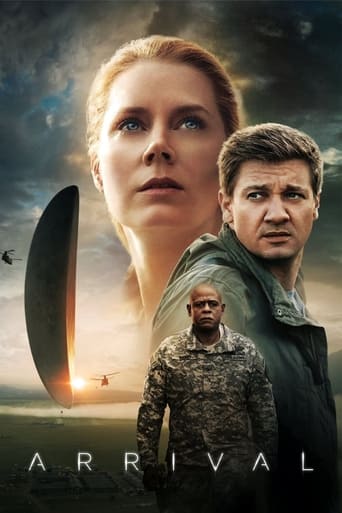
The most direct spiritual sibling to Project Hail Mary, full stop. Denis Villeneuve's film puts Amy Adams' linguist Louise Banks in a temporary tent beside a floating monolith and asks her to decode heptapod logograms while global militaries loudly warm up their tanks. What makes it hurt — and what makes it rhyme with Weir — is that language itself is treated as the technology that saves everyone. Villeneuve consulted real linguists to build the alien writing system, and the film grossed north of $200 million worldwide, which is worth stating out loud: grown-up sci-fi sells when the puzzle is sincere. The mid-film scene where Louise removes her helmet inside the alien craft is the same emotional beat as Grace's first successful exchange with Rocky. Trust, in both films, is a scientific procedure.
Contact
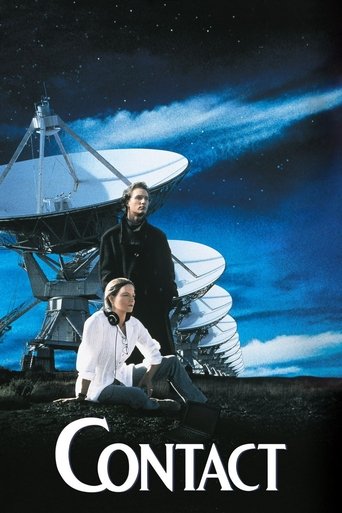
Robert Zemeckis and Carl Sagan's patient procedural remains the North Star of the subgenre. Jodie Foster's Ellie Arroway parses prime numbers arriving from Vega, and the film treats every step of the verification process — the peer review, the political jockeying, the crank hearings — with a seriousness that feels almost radical now. Its final act swaps spectacle for a quiet conversation on a beach, which is the exact tonal move Project Hail Mary earns with Rocky in its late chapters. Arroway is the template for the scientist-hero as evangelist for evidence and wonder, and if you loved Grace's stubborn insistence on running the experiment one more time, you already love this movie. You just haven't seen it recently enough.
The Abyss
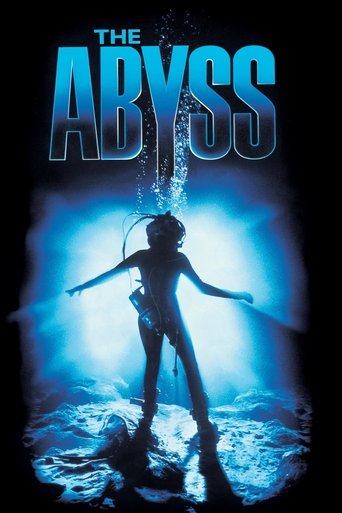
James Cameron's underwater feature is often remembered for its water tentacle effects, but the film New Space Economy rightly flags as one of the great cooperative-contact stories is doing something stranger. Cameron's non-terrestrial intelligences — the NTIs — are benevolent observers who effectively help humans defuse their own nuclear paranoia. The extended Special Edition ending sharpens this thesis to a fine point: they could destroy us, they choose not to, and the choice is contingent on whether we've earned the mercy. It's a crucial reminder that first contact doesn't have to happen in orbit. Sometimes the other intelligence has been down here all along, watching us try not to blow ourselves up, waiting to see if we're worth introducing.
Close Encounters of the Third Kind

Spielberg's five-tone conversation is the ur-text. Before Rocky, before Louise Banks, before Ellie Arroway, there was Roy Neary sculpting Devils Tower out of mashed potatoes because his brain had been imprinted with an image he didn't understand. The film's obsession with pattern recognition — the sunburned pilgrims, the notebook diagrams, the sky-scraping model — is the direct ancestor of Grace's frantic whiteboard math. Music as universal language. Curiosity as compulsion. It belongs on any 1970s movies sci-fi shortlist that takes wonder seriously, and it's arguably the film that gave every subsequent first-contact story permission to end not in war but in awe. The mothership descends. The scientists wave. That's the whole movie, and it's plenty.
The Martian

Not first contact in the strict sense — there's no alien on Mars, just Matt Damon and a lot of potatoes — but the Weir DNA is identical. Science as suspense. Humor as survival tool. Global cooperation as the third act's actual climax. Matt Zoller Seitz's review for RogerEbert.com singles out how Ridley Scott's NASA control rooms operate without hysteria, treating problem-solving as heroism. Metacritic's compiled critical reception is even blunter, calling the film a brainy blockbuster that turns science into edge-of-your-seat spectacle. The connective tissue between The Martian and Project Hail Mary isn't Watney and Grace as characters — it's the underlying belief that competence is beautiful, and that the correct response to a crisis is to sit down and do the math.
Can't Decide What to Watch?
Let RandomFlix pick a movie for you. One click, one great movie.
Roll the DiceE.T. the Extra-Terrestrial
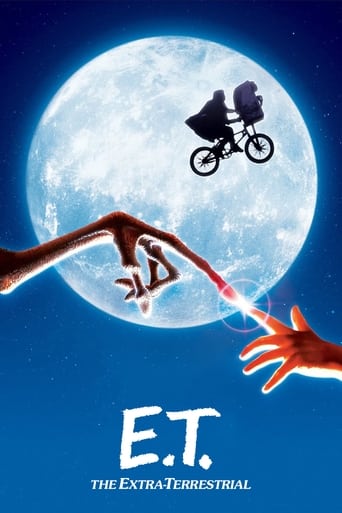
The purest emotional through-line to Rocky. Two beings from utterly different biospheres — one a suburban boy, one a foraging botanist from somewhere with different atmospheric requirements — become best friends through improvisation and empathy. Spielberg's suburban framing hides a genuinely radical thesis: adults threaten contact, curiosity preserves it. The "phone home" apparatus that Elliott helps build is essentially a science-fair project, which is also basically what Grace and Rocky cobble together out of spare parts and mutual desperation. Watch this one back-to-back with Project Hail Mary and you'll notice how similar their emotional architecture is. A stranger arrives. A stranger is scared. A stranger is fed. A stranger becomes family. Then, tragically and necessarily, the stranger goes home.
The Iron Giant
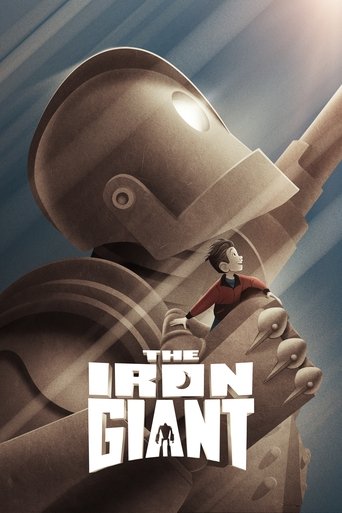
Brad Bird's animated masterpiece belongs on any first-contact list that takes cooperation seriously, and if you're rolling your eyes at "animated" you're the exact person this film was made to convert. The Giant's arc — choosing to be Superman instead of a weapon — inverts the invasion template that WatchMojo has noted dominates the subgenre. Set against Cold War paranoia in small-town Maine, it argues that first contact is fundamentally an ethical negotiation, and that intelligence, once it understands itself, will almost always choose not to be a gun. It's the ideal double-feature partner with Project Hail Mary for anyone who wants to cry at a scientific choice. Both films end on the same note: a machine, or an alien, deciding what to be.
Annihilation
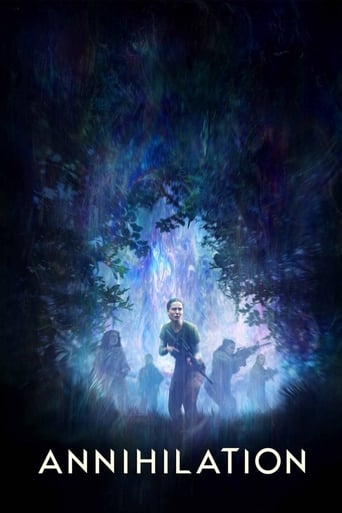
Alex Garland's Shimmer is contact as ecology. The alien intelligence at the heart of the film doesn't communicate so much as refract — it takes DNA, light, memory, grief, and remixes them into something neither hostile nor benign but simply other. This is the list's most difficult entry, and its most important, because it asks whether cooperation is even possible when the other side isn't "thinking" in any framework we recognize. It's the necessary counterweight to Rocky's cheerful reciprocity. Sometimes first contact is a handshake. Sometimes it's a mirror. Sometimes it's a lighthouse full of iridescence and a version of yourself you don't want to meet. Garland's film respects the possibility that intelligence, when it arrives, might not want anything from us at all — and might still change us permanently.
Where to Go From Here
There's plenty of adjacent territory this list didn't touch. Tarkovsky's Solaris and Soderbergh's remake both deserve a long evening of their own. Barry Levinson's Sphere plays like a wet-suited cousin to The Abyss. District 9 flips the contact politics upside down by treating aliens as refugees. Galaxy Quest is the great first-contact comedy, and one of the few films willing to argue that we contacted them by accident, through television. If you want to keep wandering this corner of science-fiction movies, RandomFlix's dice do a decent job of surfacing the deeper cuts once you point them at the first-contact movies shelf.
But the thesis of everything above is what matters. Project Hail Mary's quiet, unfashionable optimism — that a lonely astronaut and a lonely alien, given time and paper and a shared willingness to be wrong, can build a laboratory together — is the through-line of every film on this list. The tap on the wall isn't a warning. It's an invitation. Answer it.