Why The Long Walk Struck a Nerve
When Francis Lawrence's adaptation of Stephen King's 1979 novel landed on HBO Max on July 10, 2026, nobody predicted it would eat the platform alive. Within days, the pared-down dystopian thriller had become the most-watched movie on HBO Max in the United States, outperforming heavy hitters like The Mummy, Undertone, and Deadpool 2. For a mid-budget adaptation with no capes and no franchise scaffolding, that's the kind of streaming detonation that reshapes green-lighting decisions.
The numbers back up the noise. The film pulled a Certified Fresh 88% on Rotten Tomatoes with an 85% audience score, and turned its modest $20 million budget into roughly $62.9 million worldwide before making the jump to streaming. Cooper Hoffman and David Jonsson anchor the ensemble as two of the fifty teenage boys forced into an annual state-run walking contest, with Mark Hamill's Major looming over the asphalt as one of the most quietly monstrous authority figures King has produced.
That success is not an accident. Lawrence has spent more than a decade sharpening our collective template for televised-death dystopia, having directed most of the Hunger Games franchise starting with The Hunger Games: Catching Fire. He understands the machinery: the arbitrary rules, the doomed camaraderie, the sadism dressed up as civic ritual.
But The Long Walk is not a one-off. It's the latest entry in a genre lineage — the state-sanctioned death march — that has been metastasizing across four decades of dystopian movies cinema. If the HBO Max numbers prove anything, it's that audiences are hungry for more. Here's the bloodline worth tracing.
The Anatomy of a Walk-or-Die Movie
The sub-genre has a surprisingly rigid ruleset. There's an authoritarian regime that has normalized public killing. There's a spectacle — televised, whispered, or ritualized — that turns the killing into culture. There's an arbitrary endurance metric: keep walking, kill your classmates, ride the elevator down, don't slow below three miles per hour. And there's the slow psychological erosion of contestants who bond even as they're culled, because the cruelest trick these films pull is making us care about people who are structurally guaranteed to die.
This distinguishes the walk-or-die film from broader dystopian storytelling. Films like Blade Runner or Children of Men are worldbuilding exercises; the death-march film is a chamber piece of institutional cruelty. The set is small. The rules are simple. The dread compounds by attrition.
The sub-genre thrives when real-world anxieties — economic precarity, surveillance, generational expendability — demand a metaphor blunt enough to leave bruises. That's why it keeps resurfacing. From Reagan-era cable paranoia to post-2008 austerity to the streaming-age debt panic, every generation gets the death march it deserves.
What follows are eight films (and one landmark series) arranged loosely from The Long Walk's direct ancestors to the boundary-pushers dragging the formula somewhere new.
The Direct Bloodline: Stephen King and the Televised Death Sport
The Running Man
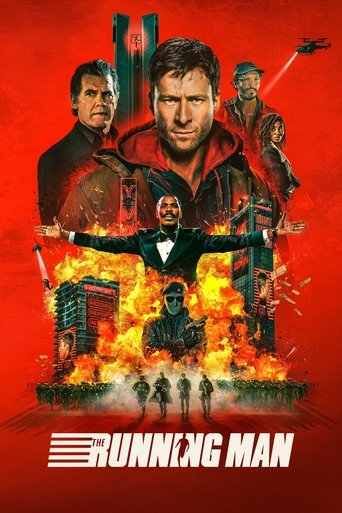
The 1987 Arnold Schwarzenegger adaptation of King's 1982 Bachman novel is the DNA donor. A neon-drenched game-show dystopia where convicted "runners" are hunted for prime-time ratings, it takes place in a stylized 2019 that now feels like a period piece — which somehow makes it more prescient, not less. Collider's own retrospective argues that this 1987 vehicle plants the seeds of what makes The Long Walk so evocative decades later, and the resemblance is architectural: state-sponsored murder rebranded as entertainment, contestants who arrive with names and leave as body counts.
Where The Long Walk strips the concept to its bones, The Running Man piles it high with spandex villains and pyrotechnics. Both are correct interpretations of King's obsession with televised cruelty.
The Hunger Games
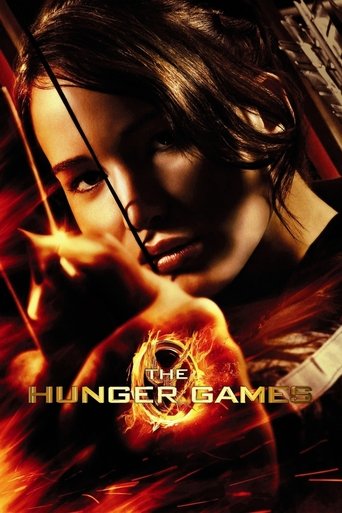
Suzanne Collins has openly acknowledged the Bachman books as an influence, and the fingerprints are everywhere: teenage contestants, an authoritarian capital, a bloodthirsty broadcast, a countryside dressed up as a killing floor. What Collins added — and what Francis Lawrence perfected across the sequels — was the political scaffolding: districts, propaganda, the arithmetic of empire.
Watching The Hunger Games after The Long Walk clarifies what Lawrence has been building toward his entire career. The arena is different. The machinery is identical.
Battle Royale
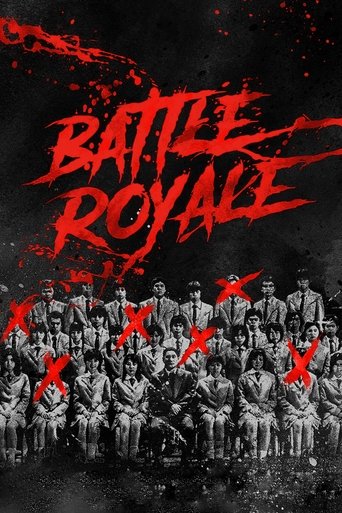
Kinji Fukasaku's 2000 shocker is the most direct spiritual sibling to The Long Walk on this list. A junior-high class is drugged, dropped on an island, fitted with exploding collars, and told to murder each other until one remains. TheWrap has flatly called it the grandfather of the kid-killing competition genre, and every death-game story of the last twenty-five years — including the one you just watched — owes it a royalty check.
What Fukasaku understood, and what King understood before him, is that the horror isn't the violence. The horror is watching children rationalize violence into a survival strategy.
The Contained-Space Endurance Cousins
The Platform
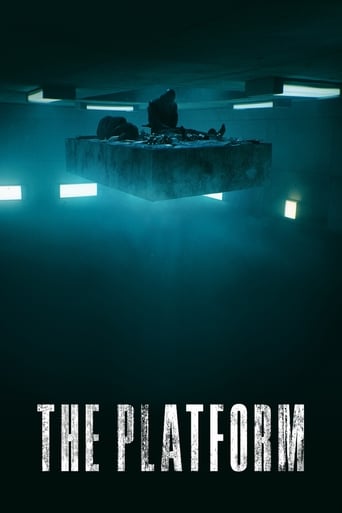
Galder Gaztelu-Urrutia's Spanish vertical-prison nightmare replaces the highway with a shaft. Every day, a platform loaded with food descends past hundreds of floors, and the people on the top floors eat first. By the time it reaches the bottom, there's nothing left but scraps and violence. Same class-warfare bite as The Long Walk, different geometry. It's the sub-genre reimagined as an elevator pitch — literally.
The Maze Runner
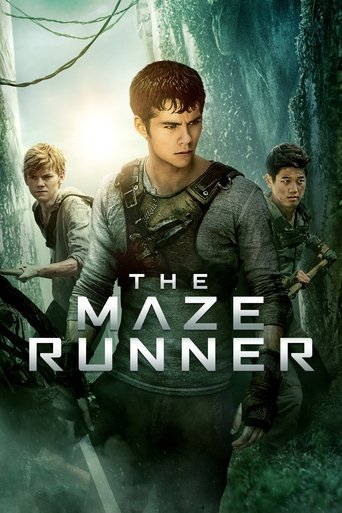
It's the gentlest cousin on this list, and the most obviously commercial, but the core engine is a one-to-one match with King's premise. Teenage boys. An unexplained gauntlet. An authority figure watching from somewhere above. A death toll that grows because the rules require it to. If The Long Walk left you wanting a slightly more hopeful spin on the same nightmare, this is the on-ramp.
The Road
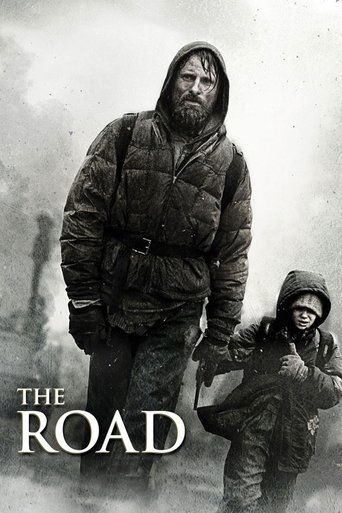
John Hillcoat's 2009 adaptation of Cormac McCarthy's novel doesn't have a game show, or a regime, or a scoreboard. What it has is a father, a son, a cart, and a highway that will kill them both if they stop. It earns its place here because The Long Walk's grief-soaked father-son subtext — that undertow of a boy walking toward a man he loves too much to disappoint — lives here in its purest, most devastating form. Strip the spectacle from King's premise and you get McCarthy's road. Strip McCarthy's mythic register from the road and you get King's walk.
The Genre-Benders Pushing the Formula Forward
Bacurau

Kleber Mendonça Filho and Juliano Dornelles' 2019 Brazilian collision of genres is the most politically charged film on this list, and quite possibly the most furious. In a small village in the Brazilian sertão, the water has been cut off, the town has vanished from digital maps, and wealthy foreign tourists have arrived to hunt the residents for sport. Roger Ebert's site described the film as a dystopian, near-future indictment of colonialism and American imperialism that erupts into a fight-to-the-death bloodbath, and Rotten Tomatoes' critical consensus praises it as "formally thrilling and narratively daring."
What Bacurau brings to the death-march tradition is a swap in perspective: the hunted village fights back, and the film becomes a revenge western that refuses to play by any single genre's rules.
Can't Decide What to Watch?
Let RandomFlix pick a movie for you. One click, one great movie.
Roll the DiceSquid Game
Yes, it's a series, not a film. No honest lineage of walk-or-die stories can leave it out. Hwang Dong-hyuk's debt-crisis parable is what happens when the sub-genre goes global streaming: a Korean production, a universal grievance (household debt), and the machinery of King's Bachman books ported to a candy-colored playground. Every subsequent green-light for a death-game project — including, arguably, the one that put The Long Walk into production — traces back through Squid Game's numbers.
Hard Target
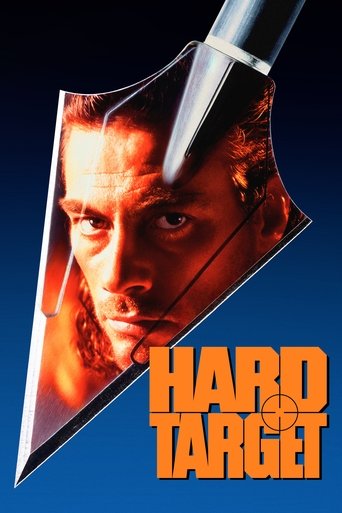
John Woo's 1993 Van Damme vehicle is the sleeper cell on this list. On paper it's a grindhouse actioner about a Cajun drifter protecting a woman whose father was hunted for sport by rich men in the New Orleans bayou. In practice, it's the direct ancestor of Bacurau, and a useful reminder that the "humans hunted by the wealthy" premise has always straddled arthouse and drive-in. Woo's balletic mayhem is the opposite of King's austerity, but the political engine underneath — the poor are entertainment, the rich write the rules — is exactly the same.
What The Long Walk Adds to the Canon
What separates King's story from most of its descendants is the elimination of spectacle. There's no arena. There are no broadcast cameras. There's no Caesar Flickerman working the crowd. There's asphalt, a pace clock, a rifle, and a bullet if you drop below three miles per hour. The horror of The Long Walk is that the state doesn't need to sell tickets. The march is punishment and ritual, not entertainment.
That restraint is arguably why the film outperformed expectations. Coverage of its HBO Max debut noted that Edgar Wright's flashier 2025 The Running Man remake underperformed while The Long Walk broke platform records — a striking data point suggesting audiences have soured on pyrotechnic dystopia and warmed to the quiet dread of a story that trusts its premise. When the walking is the whole movie, every footfall becomes an event.
Sit The Long Walk next to adjacent thriller movies traditions and its lineage becomes clearer still. The 1980s movies King-Bachman novels have proven prescient decade after decade, and the survival-competition movies throughline is by now one of cinema's most reliable engines for smuggling political anger into mainstream storytelling.
Keep the March Going
The walk-or-die film isn't going anywhere. As long as the world keeps supplying the anxieties — precarity, surveillance, spectacle, the sense that somewhere a Major is watching a clock — filmmakers will keep supplying the metaphors. Whether you want Bacurau's slow-burn political fury or Battle Royale's adolescent chaos next, the tradition The Long Walk just revived has decades of unfinished business to work through. Lace up.