The Trailer That Broke the Purists
The numbers tell the story before the criticism does. The final trailer for Christopher Nolan's The Odyssey landed with roughly 542,000 dislikes against 64,000 likes — a ratio so lopsided it read less like reception than revolt. For a director whose trailers are usually cultural events, this was something new: a preemptive rejection from the very audience that once memorized every frame of Inception.
The specific complaints were not about scale or budget. They were about register. Forbes catalogued the wince points: Matt Damon's flat American vowels reading Homer, armor that looked pulled from a Dark Souls character screen rather than a Bronze Age grave, and casting choices — Travis Scott as a Homeric bard, most notoriously — that felt tonally alien to anyone who came to The Odyssey through Robert Fitzgerald or Robert Fagles. Audiences accustomed to associating classical antiquity with a certain gravity of voice (British, in the Anglophone imagination, though the real answer is Greek) heard something closer to a cast recording of Ocean's Eleven in chitons.
This is not a takedown of Nolan, whose epic movies instincts have produced some of the finest large-canvas cinema of the last two decades. It is, rather, an acknowledgment that the backlash has surfaced something real: an audience that remembers, however dimly, that Homer has been filmed before — seriously, ritually, in languages other than English, by directors who treated the ancient texts as scripture rather than source material. That tradition is still there. It just doesn't cut like a Nolan trailer.
What follows is a reading list for viewers whose Homer lives closer to Pasolini than to IMAX. Five films that treat Greek myth as sacred text, political allegory, and ritual pacing — not as four-quadrant spectacle.
What 'Faithful' Actually Means On Screen
It helps to separate two kinds of fidelity that get conflated whenever a new classical adaptation drops. There is literal fidelity — the language spoken, the geography filmed, the chronology preserved — and there is mythic fidelity, which concerns pacing, distance, cosmological weight, and the sense that the story is being told to us from somewhere older than the camera. Purists usually claim to want the first. What they actually want, almost every time, is the second.
By that measure, no English-language blockbuster has ever really tried. Wolfgang Petersen's Troy stripped the gods out entirely. Tarsem Singh's Immortals dressed myth in couture. Even the 1997 Odyssey miniseries — the last major Anglophone attempt at the poem — collapsed Homer into hero-journey shorthand, complete with a redemption arc for a character who, in the poem, mostly just wants to go home and kill the men eating his food.
The tradition purists are actually nostalgic for lives elsewhere: in European arthouse from Rome to Athens, and in the transposition cinema of postwar Japan. These are films that treat ancient texts as living scripture — and that trust landscape, silence, and non-professional or operatic performance to do work that CGI cannot. Two tracks run below. The first is direct Greek adaptation: Pasolini, Cacoyannis, Angelopoulos. The second is the Kurosawa model of transposition — a demonstration that a "faithful" epic can be radically reimagined without becoming a cutscene.
Five Films for the Homer Purist
This is a curated list, not a ranking. Each film answers a different objection the Odyssey trailer raised. All five predate the CGI-epic template. All five treat their source material as older, stranger, and more demanding than any hero's journey template will admit.
Oedipus Rex (1967)
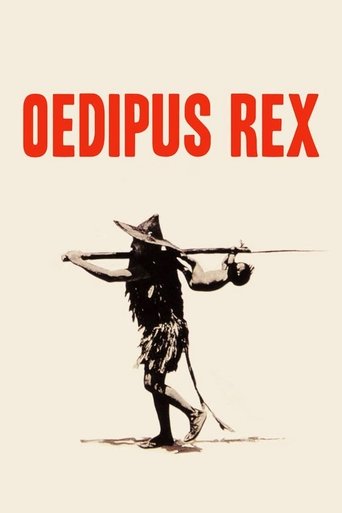
Pier Paolo Pasolini shot Sophocles in the Moroccan desert with Franco Citti, stripping the play of its Freudian reception history to find what Harvard Film Archive notes have called a "primal cinema." The dust, the crude masks, the ritual violence staged without adornment — this is what a pre-Homeric world looks like when a filmmaker refuses to smooth it into genre.
The costumes appear excavated rather than designed. The language, though Italian, feels older than translation. There is no armor cosplay here, no leather-and-steel silhouette borrowed from a video game. Just wind, sun, and the terrible slow arithmetic of a prophecy closing on a man who has already lost. For readers who want to keep pulling on this thread, the broader mythology movies canon rewards the effort.
Medea (1969)
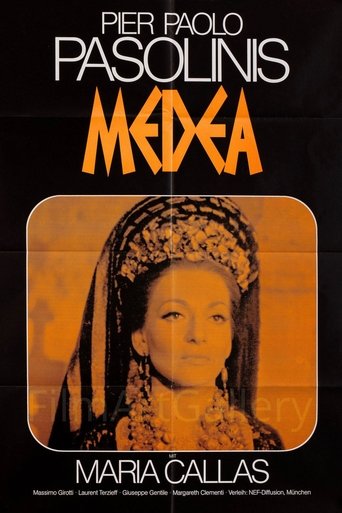
Pasolini again, this time with Maria Callas in her only film role, adapting Euripides as what Film at Lincoln Center reads as a Marxist parable of Western empire against the sacred Third World. North African music, Cappadocian landscapes, and Callas's operatic stillness create a choral register that no English-language epic has ever quite risked. Callas doesn't act Medea so much as haunt her.
Criterion has described the film as a stunningly nihilistic condemnation of injustice — the antidote to Hollywood's reflexive redemption-arc grammar. For purists specifically bothered by the Odyssey trailer's casting logic, Medea is instructive: it shows what happens when a director casts for mythic voice rather than star power, and treats the leading role as an occasion for silence rather than monologue.
Iphigenia (1977)
Michael Cacoyannis's Oscar-nominated closer to his Greek Tragedy trilogy — after Electra and The Trojan Women — adapts Euripides in Greek, with Irene Papas as Clytemnestra and a Mikis Theodorakis score that carries most of the emotional load. Video Librarian's review captures the register well: a full-on period drama in grand yet gritty fashion, one that never loses Euripides' text.
This is the Trojan War film purists have been asking for since Petersen's 2004 Troy. Greek-language. Greek-cast. Greek-scored. Staged on actual Aegean coastline, with real wind moving through real hair. It is also, functionally, the prequel to any Odyssey worth watching: Agamemnon's daughter dies here so the ships can sail. Watch it, and Odysseus's ten-year return home stops being an adventure and becomes the tail end of a monstrous bargain, one paid in advance by a girl at an altar.
Ulysses' Gaze (1995)
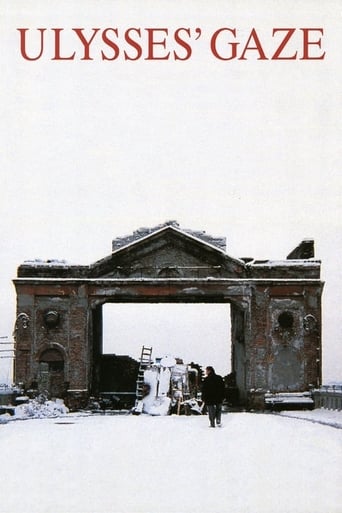
Theo Angelopoulos's three-hour Balkan odyssey with Harvey Keitel is the definitive modern Odyssey, and the only film on this list that maps its Homeric structure onto contemporary history. A Greek-American filmmaker returns to the war-torn Balkans of the 1990s searching for three lost reels of undeveloped film — a quest built, as scholarly readings from the European Institute of the Mediterranean have argued, directly on Homer's episodic architecture, with a Dantean descent layered underneath.
Greece submitted it as its Oscar entry. Cannes gave it the Grand Prix. Angelopoulos trusts long takes and fog where a blockbuster would cut to a set piece; his tracking shots are the anti-IMAX. If the Odyssey trailer's most damning charge is that spectacle has replaced contemplation, Ulysses' Gaze is the counter-evidence — a film that believes duration itself is a form of respect. It's also a fine gateway to the wider arthouse landscape of the 1990s movies, when European cinema was still willing to demand three hours of your attention.
Can't Decide What to Watch?
Let RandomFlix pick a movie for you. One click, one great movie.
Roll the DiceThrone of Blood (1957)
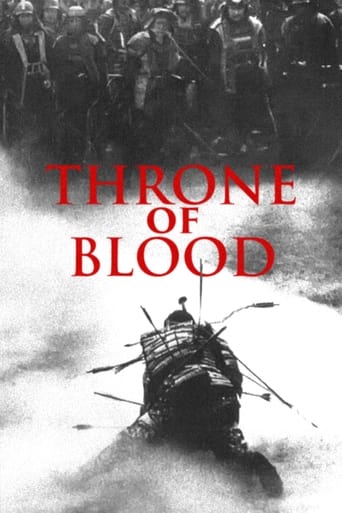
The wildcard, and the theoretical linchpin. Akira Kurosawa transposes Macbeth to feudal Japan without a line of Shakespeare's text — and produces what Criterion has argued is a deeper form of fidelity than any costume-drama literalism could manage. The essay's key word is transposition: not adaptation, not translation, but the reconstruction of a foundational drama inside a wholly different culture and idiom, in a way that reveals what was universal in the original by refusing to preserve what was local.
The BFI has quoted Spielberg calling Kurosawa the pictorial Shakespeare of our time. That is the standard against which any adaptation of a foundational text should be measured, and it is a generous frame for Nolan-skeptics too. Transposition is legitimate. Radical reimagining is legitimate. But both require the discipline Kurosawa brought — a willingness to subordinate personal signature to the shape of the source. Whether Nolan clears that bar is what July 2026 will decide. In the meantime, companion viewing: Ran, Kurosawa's late-career King Lear, for the full-scale demonstration of what a faithful-yet-transformed epic looks like when a master gets three hours and a mountain to work with.
A Homeric Marathon, Loosely Ordered
There is a natural arc through these five. Begin with ritual — Oedipus Rex and Medea, where the camera behaves as a witness to sacrifice rather than a participant in narrative. Move through tragedy proper with Iphigenia, the film that lets you feel the weight of what the Iliad only alludes to. Arrive at Ulysses' Gaze for the modern reckoning: Homer surviving inside a century that tried to forget him. End with Throne of Blood as theoretical coda, the film that clarifies what the other four have been doing all along.
All five reward reading the source texts alongside. Fagles for Homer. Fitts and Fitzgerald for Sophocles and Euripides. The pleasure of these films is partly the pleasure of watching a director wrestle with a specific translation choice, a specific line, a specific silence in the Greek. The broader drama movies canon of the 1960s and 70s is unusually rich in this kind of adaptation — classical texts filmed by directors who had actually read them.
If you'd rather let chance handle the sequencing, RandomFlix will happily shuffle these five (plus Ran, Electra, and The Trojan Women) into whatever order the dice deliver.
The Point Isn't to Boycott Nolan
There is plenty the July 2026 Odyssey may still get right. Nolan's craft is real. His refusal of green-screen crutches is not a marketing pose — the man builds things and shoots them. His commitment to scale, to IMAX, to the physical presence of ships on actual water, deserves the benefit of the doubt in a decade that has largely abandoned all three.
But the backlash reveals something the industry should be paying attention to. Audiences remember, even half-consciously, that cinema has taken Homer seriously before. They remember that the Iliad and the Odyssey are not property to be exploited but scripture to be honored. They want that seriousness back — and if the marketing signals a Game of Thrones aesthetic in a Bronze Age skin, they will notice.
The five films above are not consolation prizes for a disappointing trailer. They are, for many working critics, the actual peak of Greek myth on screen — the standard the current attempt will be measured against whether its makers know it or not. Pasolini, Cacoyannis, Angelopoulos, and Kurosawa were not competing for four quadrants. They were competing with Sophocles.
Whatever arrives on July 17, 2026, these five will still be there. Older. Stranger. Closer to Homer than any trailer has ever been.