Why the Playground Rhyme Is Horror's Most Reliable Trick
"If you leave a door half-open, soon you'll hear him whispering."
Say it out loud. Now imagine a child saying it. Now imagine three children saying it in unison, on a swing set, at dusk, in a village where kids have started to disappear. That's the taunt at the black heart of James Ashcroft's The Whisper Man, and it's the sound the horror genre has been sharpening into a weapon for the better part of a century.
Nursery rhymes are cultural muscle memory. We learned them before we learned to be afraid — before we understood metaphor, before we knew a rhyme could carry a threat. That's exactly why corrupting one is such a devastating trick. It bypasses the horror-savvy viewer's defenses. You can brace for a jump scare. You can prepare for a slow-dolly reveal. You cannot prepare for the sound of your own childhood being turned against you.
horror movies has spent the last two decades quietly refining this device, and Ashcroft's film — arriving on Netflix August 28 with Robert De Niro, Michelle Monaghan and Adam Scott — is landing at a fully matured version of it. Before it drops, it's worth tracing the lineage: seven films that turned children's voices into summoning circles, and what each one hands off to The Whisper Man.
The Whisper Man in Context: What Ashcroft Is Actually Making
Based on Alex North's bestselling 2019 novel, the premise is deceptively simple: a grieving writer moves his young son to a quiet English village, only to discover the town is still haunted by an old child-abduction case — and a new one is beginning. Netflix has confirmed an August 28 global release date for The Whisper Man, with Robert De Niro, Michelle Monaghan and Adam Scott starring in the psychological thriller based on Alex North's bestselling novel, directed by James Ashcroft with a script by Ben Jacoby and Chase Palmer.
The pedigree stacked behind this thing is not accidental. The horror bona fides run deep: director James Ashcroft came off The Rule of Jenny Pen, and the screenplay is by Ben Jacoby (The First Omen) and Chase Palmer (It), with the AGBO/Russo Brothers production partnership backing Netflix. That is a writers' room that has already helped shape two of the most successful supernatural-child properties of the last decade. Add Ashcroft's austere New Zealand chamber-horror sensibility, and you have a film consciously fusing two registers: the small-town serial-killer procedural and the folkloric dark-lullaby ghost story.
Its closest DNA sits between Sinister and The Woman in Black — writers, dead children, and rhymes that will not stay buried. To understand what Ashcroft is doing, it helps to know the ground he's building on.
The Canon: 7 Nursery-Rhyme Thrillers That Paved the Way
These aren't the seven scariest horror films of the last half-century. They're the seven that most centrally use a children's rhyme, song, or chant as the actual engine of dread — not soundtrack window dressing, but a load-bearing structural device. They range across 2010s movies gothic revivals and 2000s movies supernatural procedurals, and each hands something specific to The Whisper Man.
1. The Woman in Black (2012)
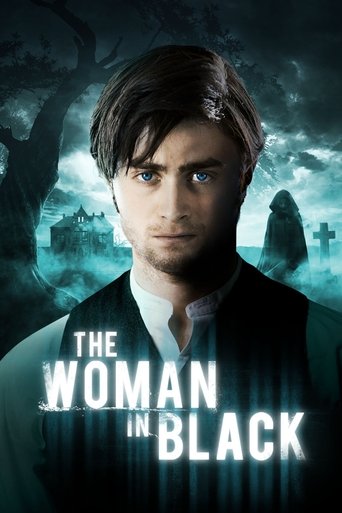
Hammer Film Productions' full-throated return to gothic horror, directed by James Watkins and starring a post-Potter Daniel Radcliffe as a widowed solicitor sent to settle the affairs of a dead recluse. The film grossed roughly $130 million worldwide and revived Hammer's classical gothic style for a new generation.
There is no chanted verse here in the traditional sense — the "rhyme" is communal, environmental. The children of Crythin Gifford sicken and die in ominous sequence, a village-wide cadence of loss. Roger Ebert's review praised the atmospheric craft and singled out how the illnesses of local children function as ominous portents throughout the story.
This is the tonal grandparent of Ashcroft's setup: fog, marshland, a village counting its children off one by one. If you want to know what the exterior of The Whisper Man is going to feel like, this is your reference point.
2. Sinister (2012)
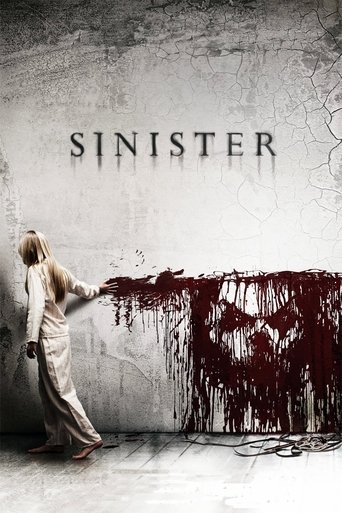
Scott Derrickson's Super 8 nightmare, and the film The Whisper Man is going to be compared to most often. Ethan Hawke plays true-crime writer Ellison Oswalt, who moves his family into a house where a murder occurred and begins finding home movies of other family killings — each one tied to Bughuul, a pagan deity that feeds on children.
The nursery-rhyme analogue is the film reels themselves: a repeatable, ceremonial pattern that children are drawn into and then trapped inside. Rotten Tomatoes lists a 64% Tomatometer for Sinister, with the plot centered on the true-crime writer's discovery of supernatural forces tied to a family's murder.
The parallels write themselves. A writer chases a serial killer and discovers he has invited the thing into his own home. De Niro's character in The Whisper Man is walking the same path Hawke walked — and Derrickson's film is the modern template for how that story ends.
3. Insidious (2010)
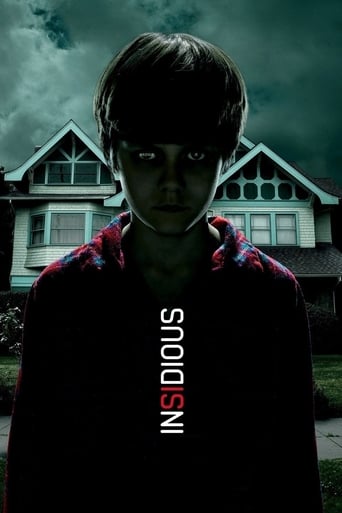
James Wan's Further-set haunting is anchored, indelibly, by "Tiptoe Through the Tulips." The Tiny Tim recording has functionally been ruined for a generation — the kind of pop-cultural collateral damage only horror can inflict.
What Insidious proves is that a pre-existing song, weaponized correctly, can outperform an original composition for pure dread. You don't need to build the association from scratch. You just need to hijack one that's already there. This is also the film that established the Blumhouse-adjacent template Ashcroft is quietly inheriting: modest scale, familial grief, a rhyme functioning as thesis statement.
4. The Shining (1980)
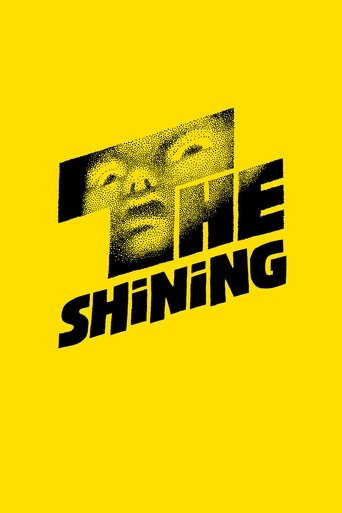
The originator, and the one every later entry has to answer to. "Redrum." The Grady twins' terrible unison invitation to come play. Danny's sing-song imaginary friend Tony, speaking through a crooked finger.
Kubrick codified the rule the rest of the genre would follow: children speaking in cadence is the horror. The ghost behind them is almost secondary. It's the sound — the flat, rehearsed, wrong-tempo delivery of language that should be innocent — that does the work.
Note also the writer-father echo that runs directly from Jack Torrance through Ellison Oswalt and lands, forty-five years later, on De Niro. The haunted-novelist archetype is not new. It's just been waiting for its next definitive iteration.
5. A Nightmare on Elm Street (1984)
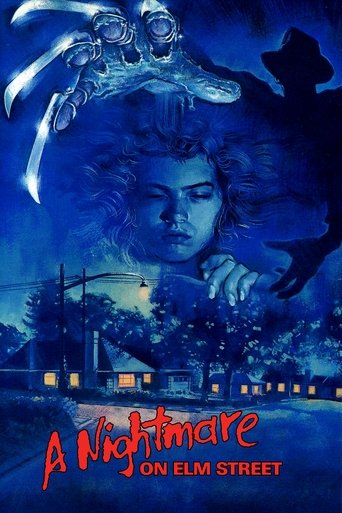
"One, two, Freddy's coming for you." Arguably the most successful original horror rhyme ever written — a chant Wes Craven grafted onto jump-roping girls and released into the American subconscious, where it has stayed for forty years.
Craven's masterstroke was recognizing that the rhyme is the summoning. It outlives every character in the franchise, every reboot, every failed sequel. Kill Freddy, and the rhyme still comes back. The children keep chanting. This is the exact cultural half-life The Whisper Man's playground taunt has been engineered to achieve after August 28. Read the line at the top of this article one more time. That is a chant built for stickiness.
6. The Conjuring 2 (2016)
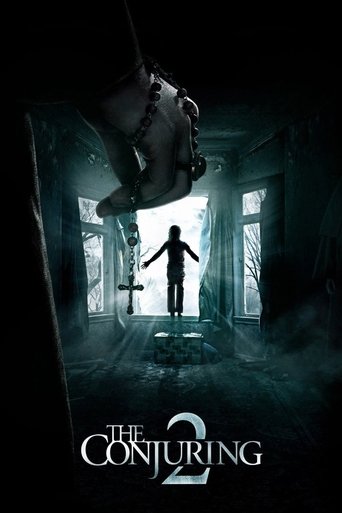
The Crooked Man sequence — "There was a crooked man, and he walked a crooked mile" — pulls a genuine Mother Goose verse into full corporeal horror. James Wan again, refining the Insidious playbook with a period English setting that rhymes (pun acknowledged) with the village geography Ashcroft is working in.
What The Conjuring 2 demonstrates is that the nursery-rhyme device scales. You can take it to tentpole studio size, mount it inside a franchise machine, and it still crawls under the skin. The verse is public domain; the dread is proprietary.
Can't Decide What to Watch?
Let RandomFlix pick a movie for you. One click, one great movie.
Roll the Dice7. Hereditary (2018)
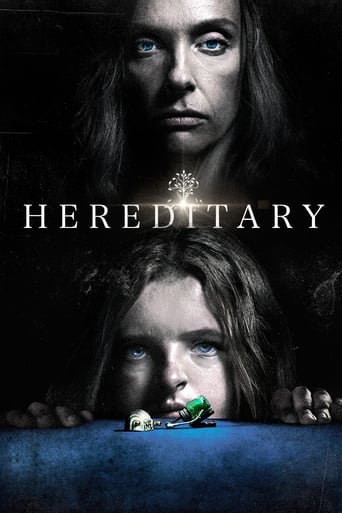
Not a rhyme in the traditional sense — and that's precisely why it belongs here. Charlie's tongue-click is the modern evolution of the device: a repeated, child-produced sound that becomes summoning without ever resolving into language. Ari Aster stripped the trick down to its acoustic essence.
The Whisper Man's whispered chant sits somewhere on this continuum, closer to Aster's minimalism than to Craven's maximalism. Ashcroft's previous work suggests he'll lean toward the former — toward the sound-as-signal school rather than the sound-as-melody school. The whisper doesn't need to scan as a verse. It just needs to be unmistakable when a child says it.
What The Whisper Man Inherits — and What It Might Break
Synthesize the lineage and you can see the shape of what Ashcroft is holding: the writer-protagonist chasing a killer into his own home (Sinister, The Shining), the small-town-with-a-secret ghost logic (The Woman in Black), the original chant designed for cultural stickiness (A Nightmare on Elm Street), the child-vocal-as-summoning acoustic minimalism (Hereditary). Every one of these threads is legible in the source novel. The question is which ones Ashcroft chooses to pull hardest.
The Rule of Jenny Pen suggests he'll lean austere and performance-driven. Deadline's trailer coverage confirms a supporting cast that includes Hamish Linklater, Owen Teague, Acston Luca Porto and Will Brill. That is not stunt casting. Linklater in particular — coming off Late Night with the Devil — is exactly the kind of actor you hire when you want your antagonist to unsettle with cadence rather than volume. De Niro playing a retired detective opposite that energy is the most interesting acting proposition the genre has offered in years.
The open question is register. Does The Whisper Man commit to the supernatural movies — a ghost story about a village that keeps producing the same killer — or does it stay in the thriller movies tradition of the small-town procedural, letting the rhyme function as psychology rather than incantation? North's novel plays this ambiguity beautifully. Ashcroft, working from a Palmer/Jacoby script, is going to have to pick a lane, or at least decide which lane the audience thinks they're in until the final act.
Either way, the canon above is the ground the film is standing on. Watch two or three of these before August 28 and you'll feel Ashcroft's choices land harder — the small compressions and the deliberate departures. RandomFlix's shuffle is a decent way to sample the canon without committing to a rigid order.
The playground rhyme has been horror's most patient trick for forty-five years. On August 28, we find out whether The Whisper Man is its next definitive form — or just its latest attempt.