Why Michael Just Rewrote the Music Biopic Playbook
The numbers landed like a kick drum. Michael pulled in $12.6 million from Wednesday/Thursday previews and is tracking toward an $85 million-plus three-day debut, the biggest opening for a music biopic in history (unadjusted). For context, that eclipses Bohemian Rhapsody's $51 million bow and Straight Outta Compton's $60 million launch — the two debuts that, until this weekend, defined the genre's commercial ceiling.
This didn't happen overnight. Bohemian Rhapsody's eventual $910 million worldwide haul made every studio in town start hunting for the next karaoke-sized phenomenon, and the back half of the 2020s movies has been a parade of estate-blessed life stories trying to bottle that lightning. Michael is the moment the chase paid off.
But Michael isn't a magic trick. It's a synthesis. Nine films across drama movies and music movies each contributed a strand of creative DNA — mythic-scale star power, kinetic performance staging, complicated-genius portraiture — that director Antoine Fuqua's film now braids together. IndieWire has noted that the form has been quietly migrating away from cradle-to-grave saga structure toward sharper, focused chapters of an artist's life, and the picks below trace exactly that evolution. If Michael is the destination, these are the road signs.
The Modern Blueprint: Walk the Line and the Performance-First Era
Walk the Line
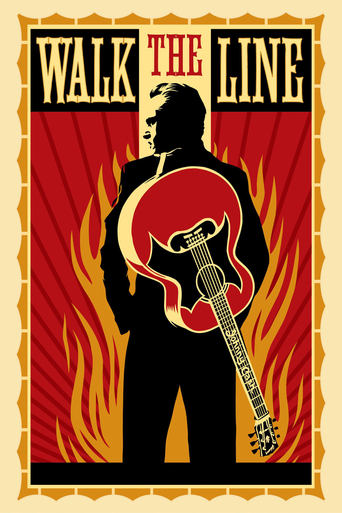
Every modern music biopic — Michael included — is still in conversation with James Mangold's 2005 Johnny Cash film. Joaquin Phoenix and Reese Witherspoon performed live on set. The Sun Records mythology gave the film a built-in origin-of-the-universe energy. The redemption arc, anchored by June Carter, became the template the genre has been remixing for two decades: troubled genius plus addiction plus transcendent love plus stage scenes that crackle.
You can draw a direct line from Phoenix's hunched-over, bass-string commitment to Jaafar Jackson's decision to perform live and in-camera as his uncle. Walk the Line proved that audiences can tell, instantly, when an actor is actually singing — and that the performance economy of a biopic collapses without that authenticity.
Mythmaking on a Spectacle Scale
If Walk the Line is the chassis, the next three films are the chrome.
Elvis
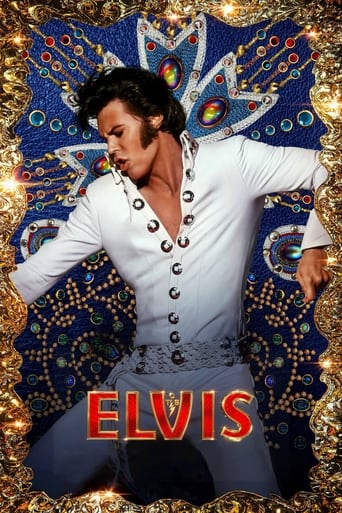
Baz Luhrmann's 2022 fever dream is the closest stylistic cousin to Michael — pop stardom rendered as American myth, all glitter and grief and Colonel Parker's poisoned grin. Austin Butler's transformation showed studios that the Oscar-bait performance and the four-quadrant spectacle could be the same movie. Michael borrows that maximalism wholesale: the swooping crane shots, the costume changes timed to key changes, the sense that you are watching a religious text being illuminated rather than a life being dramatized.
Bohemian Rhapsody
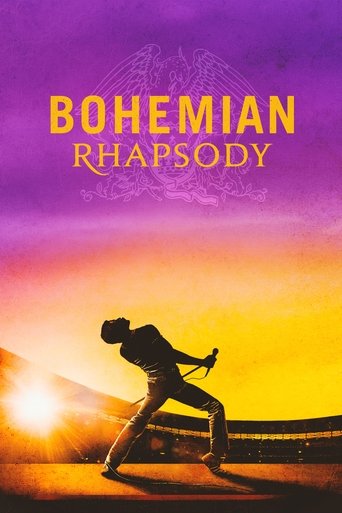
The commercial titan. Whatever you think of its rough edges, Bohemian Rhapsody's $900 million-plus haul is the gravity well every subsequent music biopic has orbited. Its Live Aid finale — twenty minutes of recreated concert footage that turned theaters into stadiums — is the sequence Michael's marketing has been chasing since the first trailer. The lesson studios took: build the movie around the show, and let the show be a phenomenon.
Rocketman
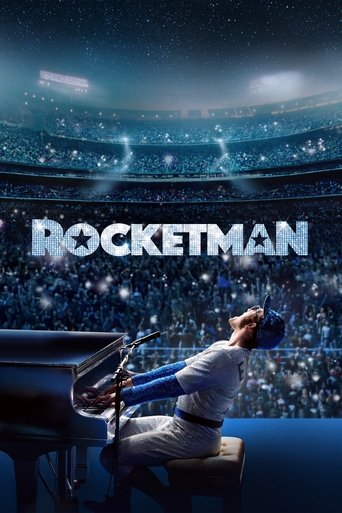
Dexter Fletcher (who, not coincidentally, finished Bohemian Rhapsody) reframed the biopic as interior emotional landscape rather than literal chronology. Elton John levitates above a piano. Numbers stop the narrative cold to externalize trauma. It's a permission slip: you don't have to march from Year One to Final Concert if you'd rather show what addiction feels like from the inside. Michael uses this permission sparingly, but it's there in the dream-logic transitions and the moments where reality bends around a song.
When the Genre Got Honest About the Mess
Spectacle is half the job. The other half is honesty — and these two films represent the genre at its most morally serious.
Straight Outta Compton
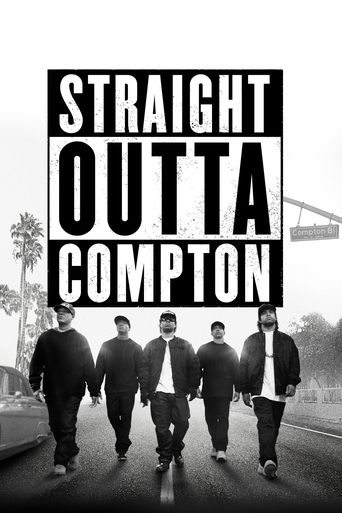
F. Gary Gray's 2015 N.W.A. film made a then-radical case: the group dynamic and the cultural context can be more compelling than a single great-man arc. It grossed roughly $200 million doing it, and its DNA is everywhere in modern hip-hop and rock biopics that refuse to flatten a scene into one face. Michael leans on a single icon by necessity, but the Jackson 5 sections owe Compton a debt — that ensemble interplay, that sense of a movement being born in a specific room.
Love & Mercy
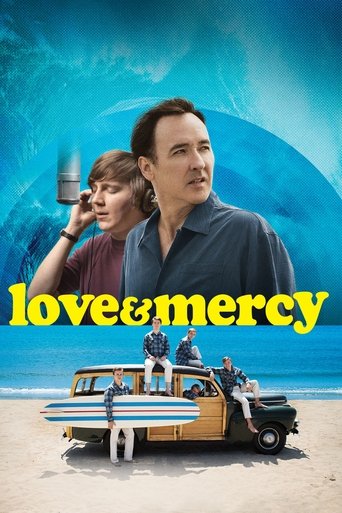
Bill Pohlad's dual-timeline Brian Wilson portrait remains the genre's most empathetic depiction of mental illness. Splitting the role between Paul Dano (the young, fracturing genius) and John Cusack (the medicated, exploited middle-aged survivor) lets the film hold two truths at once — the art and the cost of making it.
This is also where Michael's most-discussed creative choice lives. Fuqua and his collaborators have publicly acknowledged that the film does not engage with the abuse allegations against Jackson. Love & Mercy is the counterargument made cinema: the artistic cost of looking away from a subject's hardest chapters is that you end up with hagiography rather than a person. Whether you think that's a fair criticism of Michael or not, Pohlad's film is the reference text for the conversation.
Can't Decide What to Watch?
Let RandomFlix pick a movie for you. One click, one great movie.
Roll the DiceThe Reinventors: Biopics That Broke Form
These three films are where the genre stops imitating Walk the Line and starts asking new questions.
Better Man

Robbie Williams as a CGI chimpanzee. That's not a metaphor; that's the movie. Michael Gracey's 2024 swing was the boldest formal experiment the genre has produced in years — Metacritic and most major critics flagged it as the kind of risk that justifies the whole enterprise — and it points toward where the form goes after Michael's commercial benchmark resets the conversation. When literal recreation becomes table stakes, the only way forward is sideways.
A Complete Unknown
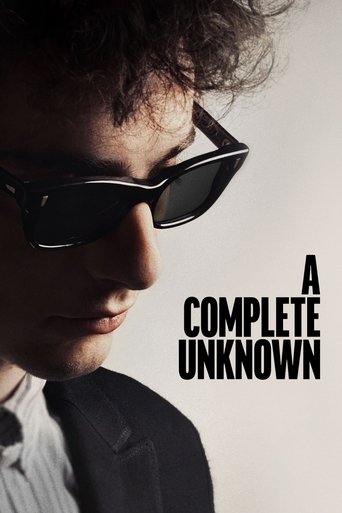
James Mangold (yes, Walk the Line's Mangold, twenty years later) narrowed the lens to four years of Bob Dylan's life: 1961 to 1965, Greenwich Village to Newport. No childhood, no death, no greatest-hits montage. The film is the cleanest embodiment of IndieWire's thesis that the genre is moving from sagas to chapters — and Timothée Chalamet's live-vocal commitment is another data point in the post-Walk the Line authenticity arms race.
8 Mile
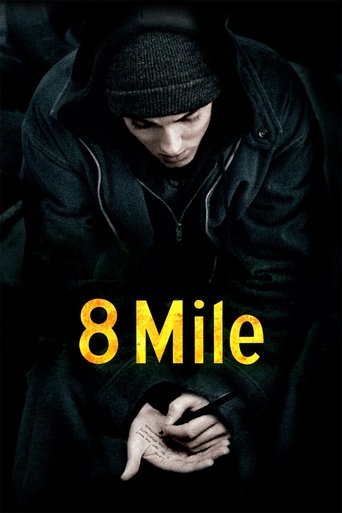
Curtis Hanson's 2002 Eminem-adjacent film is the genre's stealth radical. It's not technically a biopic — B-Rabbit isn't Marshall Mathers, exactly — but it captures more of an artist's truth than most cradle-to-grave efforts manage. Reports during Michael's development suggested its filmmakers seriously considered a similar fictionalized approach before settling on the official biography route. The hybrid model remains a live option for whoever tries to film, say, a still-living pop star next.
How to Build Your Post-Michael Watchlist
What hooked you about Michael will tell you where to go next.
- If you came for the spectacle, run Elvis into Bohemian Rhapsody. They share Michael's appetite for stadium-scale myth, and watched back-to-back they make a useful argument about the difference between maximalism that means something and maximalism that's just loud.
- If you came for the craft, pair Walk the Line with Love & Mercy. Two films at the genre's emotional and technical peak, separated by a decade of evolution in how seriously biopics take mental health and partnership.
- If you came for the formal risk, queue Better Man and Rocketman. Both refuse realism on principle; both are better for it.
When the music-specific well runs dry, the based-on-true-story movies territory is a soft landing — sports figures, political icons, scientists, athletes — that scratches a similar itch without requiring a soundtrack album. And if decision fatigue hits after a long theater day, RandomFlix's dice roll will happily pick one of these for you while you're still in the parking lot.
The Genre After Michael
Variety and The Hollywood Reporter both raised the same question this weekend, in different keys: with an $85 million opening on a roughly $200 million budget, every estate in popular music is now a potential greenlight. What does that mean for the form?
The optimistic read is that the nine films above suggest a healthy path forward, and it's not the Michael path. It's the Better Man / A Complete Unknown route — smaller, weirder, more willing to admit a subject was a difficult human being. The pessimistic read is that studios will see $85 million and order ten more two-hundred-million-dollar hagiographies before next Christmas.
Probably both are true. The genre is big enough now to hold its blockbusters and its experiments, its myth-makers and its honest brokers. The best response, as a viewer, is to keep watching widely — across biography movies and music movies, across decades and tones — so that when the post-Michael wave does arrive, you can tell the films that learned the right lessons from the ones that just learned the box office.
Pick one tonight. The genre is having its loudest year ever, and there's no better time to figure out which strand of it speaks to you.