Why The Last House Landed at No. 1
Louis Leterrier's The Last House arrived on Netflix on August 7 with the kind of premise that reads like a bottle episode of the apocalypse: a Seattle family, sealed inside their own home, watching their supplies dwindle while something vague and menacing waits on the other side of the walls. Greta Lee and Wagner Moura anchor the two-hander, and the film shot to Netflix's No. 1 slot almost immediately — a reminder that audiences, five years after lockdown, still respond to stories about doors that will not open.
The critical read has been fascinating precisely because it's fractured. Variety framed the film as a post-Covid chamber piece, the kind of movie that could only have been written after we all spent a year staring at our own front doors. IndieWire, less charitably, put it in a lineage that runs through pandemic thrillers and even Zack Snyder's Dawn of the Dead. The Hollywood Reporter landed somewhere in the middle, arguing that the film is at its most effective while the threat outside remains unnamed — that the ambiguity is the point.
That's the thesis worth chasing here. The Last House isn't really a movie about what's outside. It's a movie about what a family does when the resources shrink, the walls close in, and the enemy is conveniently abstract enough to become a screen for every private resentment. That's a specific tradition — confinement sci-fi as domestic mirror — and it stretches back further than the pandemic thinkpieces suggest. Below, eight films that sharpen the same blade in eight different ways, ordered from closest sibling to loosest cousin.
The DNA of a Locked-In Sci-Fi Thriller
The subgenre has rules. A single location, or one that keeps shrinking. An external threat kept deliberately vague — viral, atmospheric, cosmic, or simply offscreen. A small ensemble, usually a family or a forced pairing. And a ticking clock made of dwindling resources: air, water, food, sanity, batteries.
This is not home invasion horror movies. The invader in a slasher is a person with a knife; the confrontation is physical. In confinement science-fiction movies, the invader is atmospheric — you can't stab it, you can't outrun it, and often you can't even see it. What you can do is turn on the person sharing the couch with you. That's why the best entries in the tradition tend to be actor showcases: the camera has nowhere else to point.
The post-pandemic critical read has hardened around this idea. Isolation-era rewatches of films like It Comes at Night kept surfacing the same observation: the horror wasn't the sickness, it was the paranoia between the people inside the sealed house. The Last House inherits that mood explicitly, which is why the eight films below aren't just tonal cousins — they're a lineage.
8 Confinement Sci-Fi Thrillers to Stream Next
1. It Comes at Night
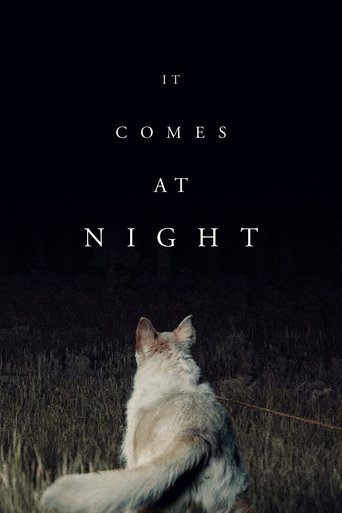
Trey Edward Shults's A24 nightmare is the closest structural sibling The Last House has. A family. A boarded-up house in the woods. An unnamed sickness outside. A stranger who might be carrying it in. The film was famously mis-marketed as a monster movie in 2017, and audiences hated it for the same reason critics later loved it: the "it" never really shows up. What comes at night is the family itself — the suspicion, the small compromises, the moment a parent decides which member of the household is expendable.
If you finished Leterrier's film feeling that the vagueness of the threat was a feature rather than a bug, this is the pick. Joel Edgerton gives a performance of quiet, terrifying pragmatism that reads as a direct ancestor to Moura's patriarch. Same register, same rot.
2. Bird Box
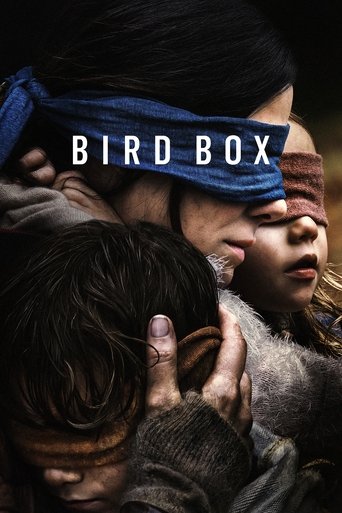
Netflix's own touchstone, and the reason the algorithm probably queued The Last House for you in the first place. Sandra Bullock plays a mother navigating a world where looking at the wrong thing means death — a sensory perimeter rather than a physical one, but the same underlying rule as Leterrier's film: there is an outside, and you cannot go to it.
TheWrap's review positioned it as a thoughtful post-apocalyptic thriller where parenthood becomes the survival mechanism, which is exactly the emotional engine of Leterrier's film too. Both movies are, at heart, about parents making unforgivable calculations on behalf of children who don't yet understand the math.
3. 10 Cloverfield Lane
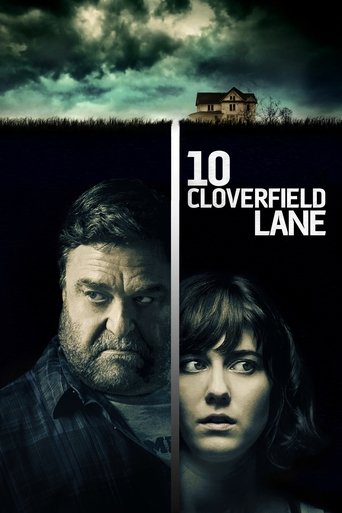
Dan Trachtenberg's bunker thriller weaponizes the exact question The Last House keeps circling: is the outside really as dangerous as we're being told, or is the person telling us using that danger to keep us here? John Goodman's Howard is a masterclass in how a chamber piece lives or dies on one unstable authority figure, and he's a useful lens for reading Moura's performance — the way protection curdles into control when the doors stay shut long enough.
This is the pick for viewers who wanted Leterrier's third act to escalate harder. Trachtenberg commits where The Last House hedges.
4. Oxygen
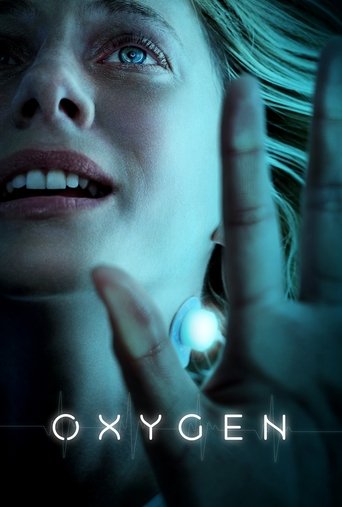
Alexandre Aja's cryo-pod thriller is the purest expression of the subgenre: one actor, one box, one dwindling oxygen supply. Mélanie Laurent wakes up with no memory in a medical pod that's slowly running out of air, and the entire film unfolds inside that coffin-sized space. Rotten Tomatoes' space-horror guide has flagged it repeatedly for its single-setting execution, and it's worth noting the film is also a French-directed Netflix original — making the Leterrier connection more than incidental.
If The Last House felt roomy to you, Oxygen is the graduate seminar in claustrophobia.
5. Buried
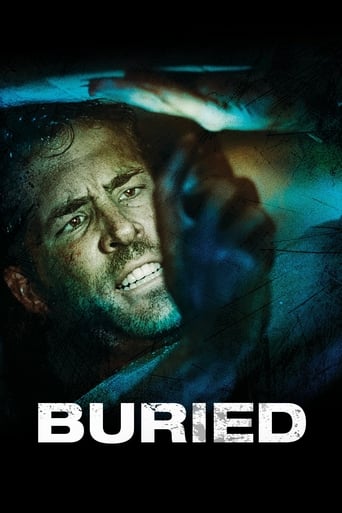
Speaking of coffin-sized: Rodrigo Cortés's ninety-minute Ryan Reynolds vehicle takes place entirely inside a wooden box six feet under Iraqi soil. Tom's Guide has directly flagged it as a follow-up for The Last House viewers, and the reasoning is sound. If you found the Seattle house claustrophobic, this is the film that answers how much smaller can we go. The answer, it turns out, is: a lot smaller.
Buried belongs in any single-location movies canon. The threat here isn't sci-fi so much as geopolitical, but the structural DNA — one person, one sealed space, resources ticking down — is the same organism.
6. The Mist
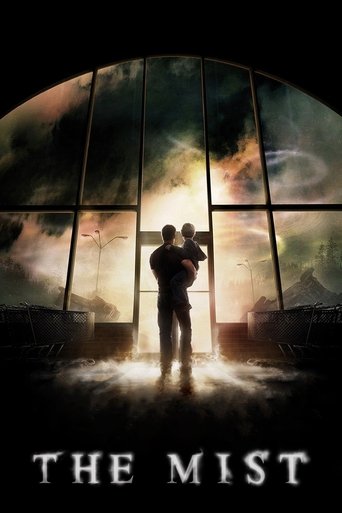
Frank Darabont's Stephen King adaptation is the ensemble-scale version of The Last House's dynamic. Instead of a family in a house, it's a supermarket full of strangers with something inhuman prowling the parking lot. But the central thesis is identical: the neighbors turn faster than the monsters. Faith curdles into cultism, rational people become dangerous, and the real threat is always the one already inside the building with you.
Watch this one especially for the ending — the ending that Leterrier's film gestures toward but refuses to fully commit to. Darabont's version remains one of the great gut-punch finales of 2010s movies-adjacent horror movies.
7. Silent Running
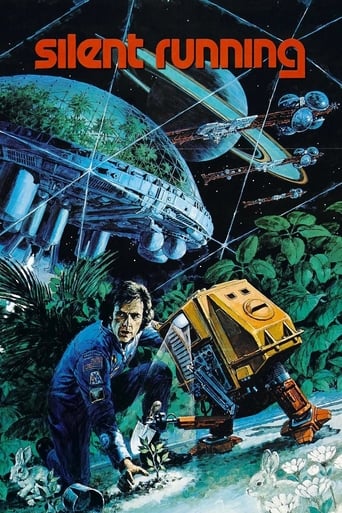
Douglas Trumbull's 1972 eco-parable is the ancestor everyone forgets. Bruce Dern is alone in a sealed environment — a botanical ark in deep space — making impossible ethical decisions about what deserves to survive. It's slower, softer, and more mournful than anything else on this list, and that's precisely why it matters. It grounds the tradition in classic science-fiction movies rather than letting us pretend confinement thrillers were invented during quarantine.
For viewers who want a melancholic, hopeful counterweight to Leterrier's dread — and who don't mind that the sealed environment here is a spaceship rather than a suburban home — this is the pick. Same subgenre, different emotional weather.
8. Take Shelter

Jeff Nichols's storm-shelter drama is, arguably, the film The Last House most wants to be. Michael Shannon plays a working-class father in rural Ohio who becomes convinced an apocalyptic storm is coming and starts building a shelter in his backyard. His family thinks he's losing his mind. He might be. He might also be right.
This is the unreliable-protagonist movies frame in its purest form, and it's the exact register Leterrier flirts with but never fully inhabits. Shannon's performance is the ceiling for what this subgenre can do when it takes the psychological reading seriously — when the question of whether the danger is really out there becomes indistinguishable from the question of whether the person insisting on it can be trusted. Every good confinement thriller eventually arrives at that question. Take Shelter lives inside it.
Where to Go From Here
The Last House isn't a one-off. It's the newest node in a lineage that runs at least fifteen years deep — from the buried-alive minimalism of Buried through the A24 dread of It Comes at Night and back to the melancholy space-arks of the 1970s. The through-line isn't the threat. It's the front door as a moral boundary, and what happens to a family, a couple, or a lone survivor when that door stops opening.
If you want a double feature, pair an ambiguous-threat pick like It Comes at Night with a maximalist one like The Mist — the whisper version and the scream version of the same idea, back to back. And if you want the recommendation engine to keep pulling this thread, RandomFlix can surface more science-fiction movies confinement thrillers in the same key.
The door stays closed. The lights flicker. Somebody in the next room is starting to sound like a stranger. That's the genre. Go find the next one.