Why The Dog Stars Isn't Your Usual Ridley Scott Apocalypse
On August 28, Ridley Scott releases a film that doesn't look much like a Ridley Scott film. The Dog Stars — adapted by Mark L. Smith from Peter Heller's 2012 novel — trades the scale of Blade Runner or The Martian for the ache of a pilot living inside an abandoned airfield with a dog, a Cessna, and one heavily-armed neighbor. Jacob Elordi plays Hig, the pilot. Josh Brolin plays Bangley, the ex-military survivalist whose vigilance keeps them both alive. Margaret Qualley plays Cima, the woman on the other end of a radio signal that eventually pulls Hig out of his holding pattern.
The casting itself signals the register. Paul Mescal was originally attached to Hig before schedule conflicts with Sam Mendes' Beatles project sent the role to Elordi — a swap that preserves the melancholy the material demands. Empire has framed the movie as Scott dipping into a more meditative mode alongside his usual set-piece muscle, and that's the tension worth watching: a director famous for the epic sweep working, at 88, in the register of grief.
This is not another loud dystopia. It's the culmination of a specific two-decade tradition — hushed, weathered, domestic post-collapse cinema that lives in silence and small acts of care. What follows are eight films that map that tradition, and what each one reveals about where Scott is heading.
The Quiet Post-Apocalypse: Defining a Sub-Tradition
The action-driven end-of-the-world film — Mad Max, The Book of Eli, the zombie-horde spectacles — has always dominated the marquee. But since the mid-2000s movies, a quieter tradition has been forming underneath. Its grammar is unmistakable once you see it: father figures, isolated homesteads, radio signals from strangers, animals as emotional anchors (Hig's dog Jasper in Heller's novel is the whole soul of the book), and the corrosive ethics of who to trust in a shrinking world.
These films aren't about the collapse. They're about what people do inside it — the routines, the vigilance, the way love expresses itself as protection. They surged after 2006 for reasons that don't need much unpacking: pandemic dread, climate grief, a decade of wars ending without clear conclusions. The mode found a natural home in sci-fi movies and drama movies hybrids that borrowed dystopian trappings without the noise. For the fuller shelf, the post-apocalyptic movies tradition runs deeper than any single list.
The eight films below are ordered as a lineage — earliest tonal ancestors first, closest cousins last. Not a ranking of quality. A pathway into what August 28 is going to feel like.
8 Films That Lead Into The Dog Stars
1. Children of Men (2006)
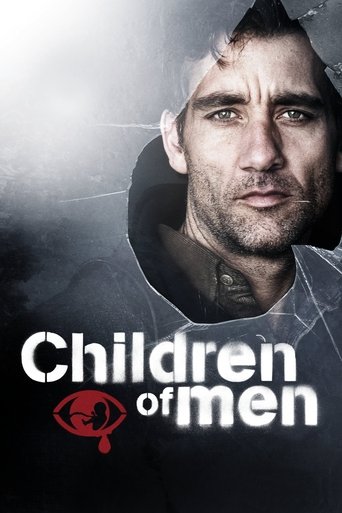
Alfonso Cuarón's film isn't technically post-apocalyptic — the world hasn't ended yet, only stopped renewing itself — but it's the tonal template every quiet dystopia since has borrowed from. Clive Owen's reluctant, half-broken protector is the blueprint for Hig: a man numbed by loss until a mysterious signal (there, a pregnancy) drags him back into the world.
Watch it for the long takes, the ambient dread, the refusal to explain the collapse in exposition. Scott's stakes in The Dog Stars — a broken man pulled outward by a voice on the radio — are Cuarón's stakes with a rural Colorado zip code.
2. The Road (2009)
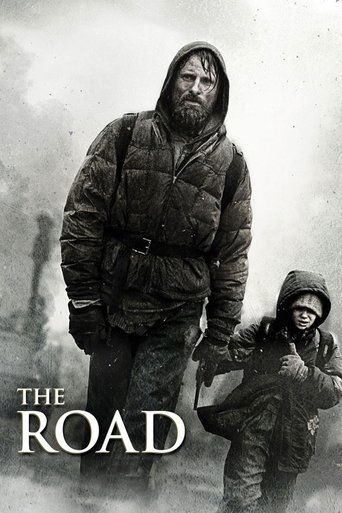
John Hillcoat's ash-gray adaptation of Cormac McCarthy is the canonical reference point. NPR's review called the film's achievement "a kind of sublimity" in its rendering of a father and son trudging through a dead landscape, and every quiet post-collapse film since has been measured against it.
The father-son bond is the entire moral universe here. Scavengers hover as ambient threat — a direct antecedent to the Reapers, the scavenger gang Scott's film introduces as its lurking menace. What The Road models for Hig's story is the refusal of spectacle: the long walk, the impossible tenderness, the way survival becomes a form of grief.
3. Take Shelter (2011)

Jeff Nichols' pre-apocalyptic dread piece is technically about a storm that may or may not be coming. But Michael Shannon's performance — a father building a shelter for a catastrophe no one else believes in — is the emotional register The Dog Stars is reaching for. Love expressed as vigilance. Care that looks, from the outside, like paranoia.
Bangley in the Heller novel is essentially Shannon's character with a rifle and no doubt. Watch this to understand the domestic scale that makes collapse feel personal rather than planetary.
4. Z for Zachariah (2015)
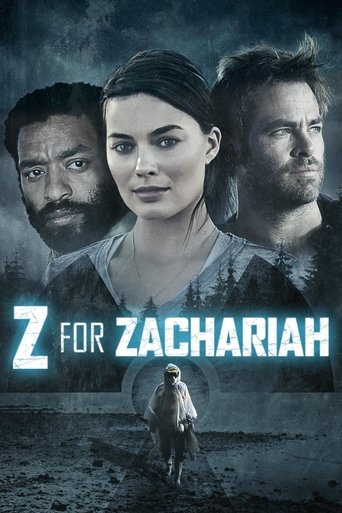
Craig Zobel's three-hander is the closest structural cousin to Scott's film. A green valley spared by nuclear catastrophe. Three survivors — Chiwetel Ejiofor, Margot Robbie, Chris Pine — negotiating trust, faith, and desire inside a homestead that grows smaller every day. The Hig/Bangley/Cima triangle has been written into film grammar before, and this is the version to know.
The "last homestead" as pressure cooker is the playbook Scott seems poised to draw from. Expect the arrival of Qualley's Cima to detonate the fragile equilibrium Elordi and Brolin have built — because that's what this shape of story does.
5. 10 Cloverfield Lane (2016)
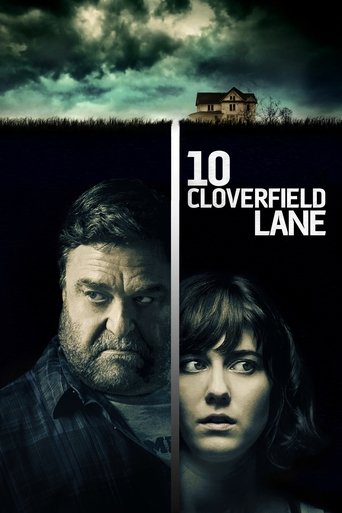
Dan Trachtenberg's bunker thriller sharpens the survivalist-versus-newcomer dynamic that echoes through The Dog Stars' setup. John Goodman's ex-military paranoiac is a darker mirror of the Brolin archetype — protective, competent, and never fully trustworthy. The film's genius is how enclosed spaces sharpen every moral question. Every meal is a test. Every locked door is an ethical proposition.
Scott's airfield is a wider space than a bunker, but the psychology is the same: two men, one shelter, and the constant math of whether the person keeping you alive is also the person you should fear.
6. It Comes at Night (2017)
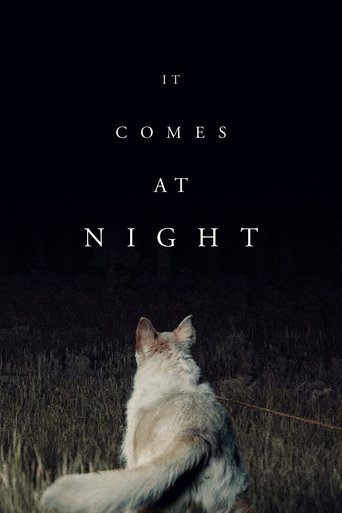
Trey Edward Shults' post-plague chamber piece is A24's contribution to the quiet-collapse canon, and it may be the most tonally aligned entry with Scott's flu-virus setup. Two families, one homestead, and the corrosive arithmetic of who to let in. There are no monsters. There is only the possibility of monsters, which turns out to be worse.
If The Dog Stars has a single film in its immediate DNA, this is it. The dread is domestic. The threat is other people, but also the fear of other people. That doubling is the whole game.
Can't Decide What to Watch?
Let RandomFlix pick a movie for you. One click, one great movie.
Roll the Dice7. Light of My Life (2019)
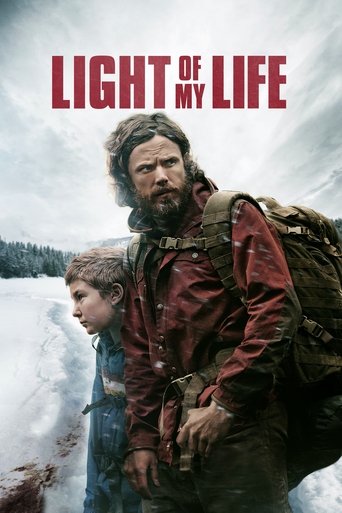
Casey Affleck's underseen post-pandemic drama is the entry Dog Stars viewers will most kick themselves for missing. A father protects his daughter after a virus has wiped out most of the female population. The tone is patient, whispered, almost novelistic in its rhythms — the most direct emotional antecedent to Hig's protective mode.
Affleck's film gets the specific texture right: the way life after collapse is mostly waiting, mostly listening, mostly the small choreography of keeping one person you love unafraid. Which, if the trailer is any indication, is exactly what Elordi's Hig has been doing alone with his dog for the better part of a decade.
8. Leave the World Behind (2023)
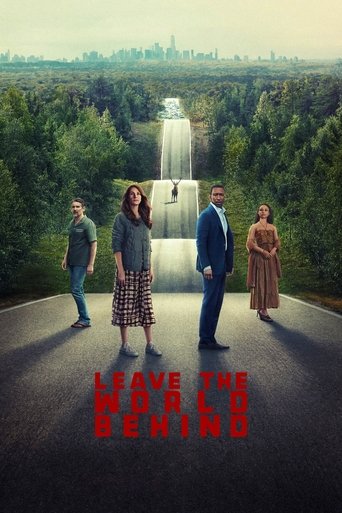
Sam Esmail's slow-burn adaptation is the recent-vintage proof that the quiet mode still has commercial teeth. Ambiguous catastrophe. Deer omens. Radio anxiety. The mysterious-signal motif Scott inherits directly — a broadcast from somewhere, meaning something, pulling characters toward a decision they'd rather not make.
It bridges the classic lineage into 2020s streaming-era dystopia and confirms the audience is still there. Which is likely part of why Scott, a filmmaker who has never chased trends, has quietly stepped into this one.
What This Lineage Tells Us About Scott's August 28
Return to the pilot detail. Hig's Cessna is the whole metaphor of The Dog Stars — mobility inside stasis, memory of a world where flight meant something, the possibility of elsewhere. None of the eight films above have that specific image. The Road has walking. Z for Zachariah has a valley. Take Shelter has a bunker. Scott has an airplane, and that gives him something none of his predecessors had: verticality, altitude, the aerial shot as a form of grief.
Where he'll push harder than the lineage — the Reapers, the set pieces, the scale of the eventual outward journey. Where he'll hold back — the domestic quiet, the routine of the homestead, the long silences between Hig and Bangley that the trailer keeps returning to. Scott has always been a maximalist. What's interesting about this project is that the source material demands he not be, and the casting suggests he knows it.
The real engine of the film is going to be the Brolin/Elordi dynamic — a masculinity conversation the drama movies tradition has been building toward for two decades. Brolin as the older man whose competence is also his cage. Elordi as the younger man whose grief is also his opening. Qualley as the interruption that neither of them can control. If Scott plays it patient — the way Zobel played Z for Zachariah patient, the way Shults played It Comes at Night patient — this becomes the late-career pivot no one saw coming.
If you're circling the fuller sci-fi movies shelf before August 28, the eight above are the map. Rolling the dice on RandomFlix is a decent way to land on the deeper cuts none of your friends have seen.
The Dog Stars arrives at the end of a lineage — not the start of one. Go in knowing what tradition it belongs to, and it becomes a very different film than the trailer alone suggests.