The 3.5-Minute Ovation and What It Confirmed
When the lights came up at the Grand Théâtre Lumière, the applause for Hirokazu Kore-eda's Sheep in the Box lasted three and a half minutes — not the longest of the festival, but the kind of hush-then-swell reception reserved for filmmakers whose audiences already know how to listen. The near-future drama follows a grieving couple who accept a humanoid son into their home, a premise Kore-eda has said was triggered by news of a Chinese company offering AI-driven "revivals" of the deceased. His central question, posed plainly in interviews on the Croisette, is the one his whole filmography has been circling: who do the dead belong to?
It is his first Cannes premiere since Monster in 2023, and it lands in the festival's recent memory alongside Shoplifters, the 2018 Palme d'Or winner that turned Kore-eda from a beloved arthouse name into a global one. Sheep in the Box is his 17th feature, and despite its android premise, it is not a departure into science-fiction movies at all. It is the latest dispatch from a drama movies filmmaker who has been mapping grief and chosen family for three decades, written in the same handwriting he has used since 1995.
The Kore-eda Register: Grief Without Catharsis
To name the wavelength: long takes, domestic ritual, a camera that refuses to underline. Tea is poured. A child eats corn off the cob in the kitchen. Someone says something cruel and the scene keeps going. Kore-eda's films rarely build to a cathartic weep; they accumulate, the way grief actually accumulates — in laundry, in mealtimes, in the wrong shoes at the door. He does not score sadness so much as let it settle into the room like humidity.
The recurring spine is unmistakable across his work: absent parents, surrogate kin, the bureaucracy of mourning, and the ethics of memory — who keeps the dead, who edits them, who is allowed to forget. He belongs to a tradition of Japanese domestic drama that runs from Ozu and Naruse forward, and he shares a register with contemporaries like Naomi Kawase and the late Edward Yang, filmmakers for whom a family meal can carry the weight of a war scene.
The six films below were not chosen by acclaim. They were chosen because each one prefigures Sheep in the Box in a specific, traceable way — the substitute child, the catalogued memory, the family that shouldn't work but does.
The Kore-eda Grief Canon: Six Films That Lead to Sheep in the Box
Maborosi (1995)
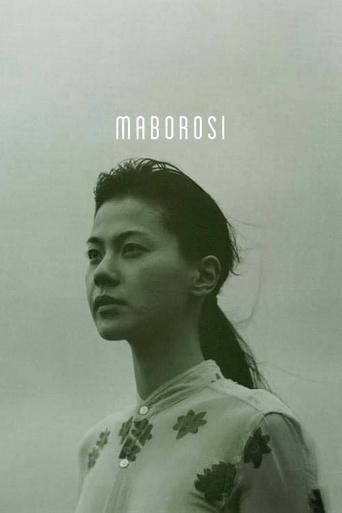
His debut. A young widow in seaside Noto tries to understand why her husband walked onto the train tracks. There is no answer, and Kore-eda refuses to invent one. The film is composed mostly of weather — wind, rain, the gray Sea of Japan — and the widow's slow rearrangement of her interior architecture around an absence she cannot explain.
Everything that becomes Kore-eda is already here: grief as climate rather than event, landscape as emotional architecture, the long shot held until you stop waiting for it to cut. It is also the closest he has come to pure mourning, and the secret rhyme with Sheep in the Box's bereaved couple. Watch Maborosi and you understand why his android-son premise was never going to be a tech thriller.
After Life (1998)
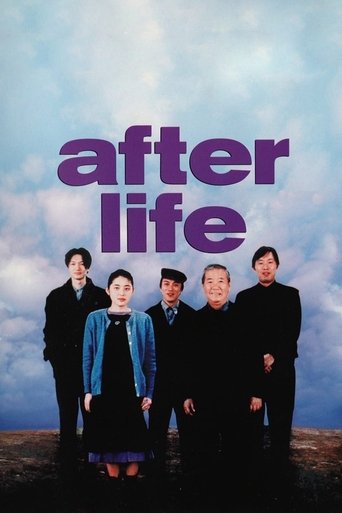
The dead arrive at a way station and are told they may choose one memory to take with them into eternity. The staff — themselves dead, in a fashion — help them film it on modest sets. The premise is the most quietly devastating high concept in modern cinema.
This is the Kore-eda film most explicitly about the question Sheep in the Box now asks: what survives of a person, and who gets to decide? Critics at the 2026 premiere reached for After Life first when looking for the new film's antecedent, and the comparison is exact. Both films treat memory as the thing being engineered, the thing being curated, the thing being chosen — and treat the choosers with the gentleness of someone who knows the stakes.
Nobody Knows (2004)
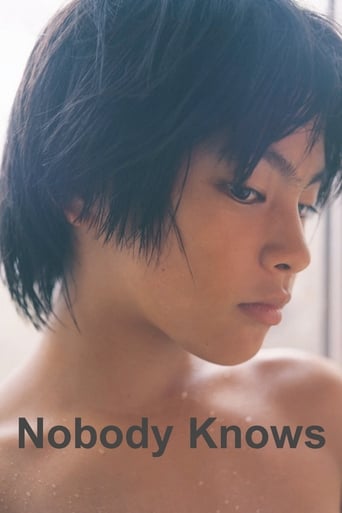
Four siblings, abandoned in a Tokyo apartment by a vanishing mother, raise themselves into invisibility. The film is based on a true incident but plays as something closer to a slow tidal change — the children's world contracting, their rituals improvised, their adulthood arriving too early and unannounced.
It is the first full statement of Kore-eda's "unusual families" thesis, the one that would run through Shoplifters and Broker and now arrive at the android household of Sheep in the Box. Yūya Yagira's Best Actor win at Cannes 2004, at fourteen, remains one of the festival's quietest miracles — a child performance built not from theatrics but from listening.
Still Walking (2008)
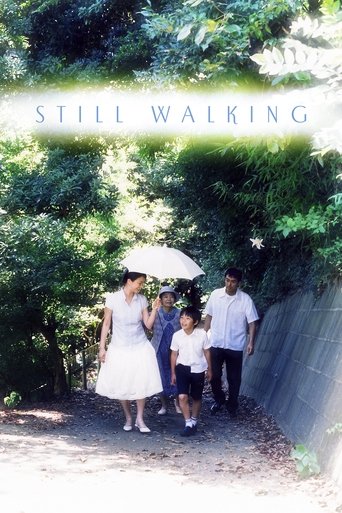
A family gathers at the parental home to commemorate the eldest son, who drowned years earlier saving a stranger. Across one summer day, almost nothing happens and everything does — old grievances surface in throwaway lines, the mother bakes corn fritters, the dead son's name is invoked too often and not enough.
The Ozu comparison stops being lazy here. Kore-eda earns it through composition, pacing, and a refusal to dramatize the kind of resentment that actually lives in families. If Sheep in the Box is about replacing the dead, Still Walking is about living with their permanent residence in a house — the way grief moves in and starts paying its share of the rent.
Like Father, Like Son (2013)
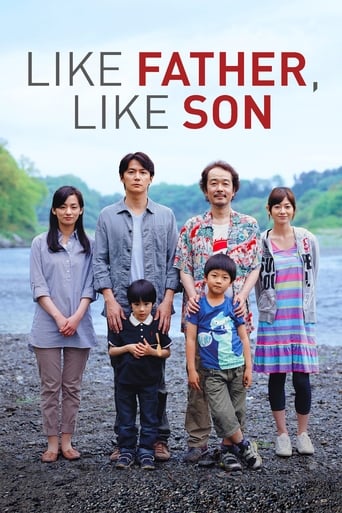
Two families discover their six-year-old sons were swapped at birth. The film plays as moral procedural: blood or bond? Six years of bedtime stories or the DNA that says mine? Kore-eda refuses the easy answer for almost two hours, then refuses it again.
It is the most direct precursor to Sheep in the Box's central question — what makes a son a son? — and it won the Jury Prize at Cannes 2013. The android in the new film is, in a sense, the third boy in this equation: not biological, not adopted, but installed, and asked to do the work of belonging anyway.
Shoplifters (2018)
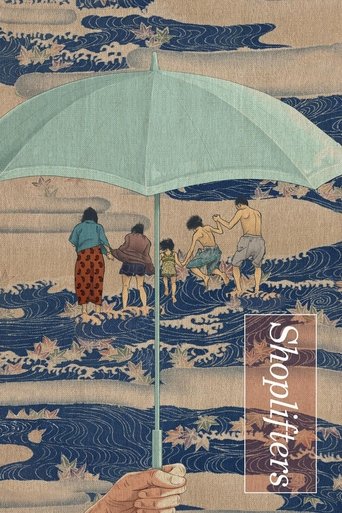
The Palme d'Or winner. A chosen family of grifters in a cramped Tokyo house orbits a small girl they have informally — and then less informally — adopted. Kore-eda's clearest, most generous statement of belief: kinship is built, not inherited. The bonds that hold us are improvised, and the improvisations can be more durable than the legal arrangements that try to break them.
Shoplifters sets up Sheep in the Box's android-son as another entry in his catalogue of non-biological family. The new film does not ask whether a humanoid can love; it asks whether love can be installed in him by people who needed somewhere to put theirs.
Can't Decide What to Watch?
Let RandomFlix pick a movie for you. One click, one great movie.
Roll the DiceOutside the Filmography: Five Films on the Same Wavelength
When you have worked the Kore-eda shelf and still want that specific stillness, here are five films that share the register — synthetic loss, memory as object, family as construction.
After Yang
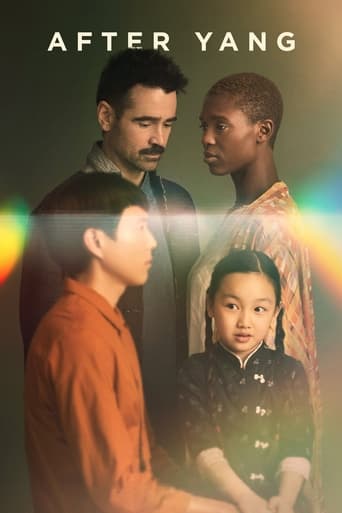
Kogonada's android-grief drama is the closest contemporary cousin to Sheep in the Box. A family sifts through the archived memories of a malfunctioning techno-sapien sibling, and what they find is not revelation but the texture of an ordinary inner life — tea, a girl glimpsed across a courtyard, sunlight on a wall.
After Yang shares Kore-eda's refusal to dramatize what most films would underline in red. It is the film I would put in the same evening as Sheep in the Box, in either order.
Air Doll
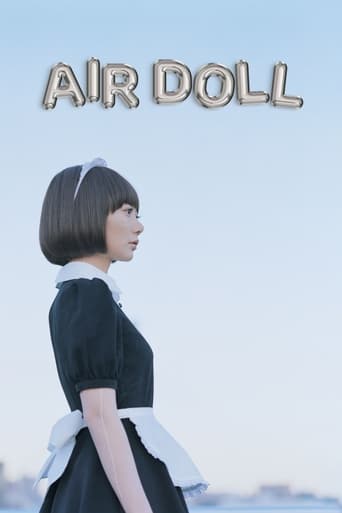
Kore-eda's own 2009 detour, often dismissed at release and ripe for re-evaluation now. An inflatable companion develops a soul, walks out into Tokyo, and tries to live. It is melancholic and strange and not entirely successful, but it is unmistakably the dress rehearsal for Sheep in the Box — the synthetic-being-as-mirror motif he has now been circling for seventeen years.
If you've seen the canon, watch Air Doll the night before the new film. The continuities are startling.
A.I. Artificial Intelligence
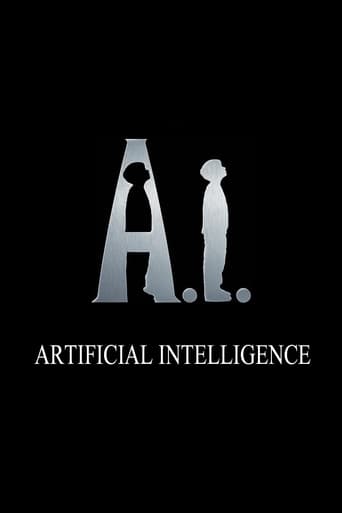
Spielberg's grieving-mother-and-robot-son film was the comparison many Cannes critics reached for second, and it is a useful counter-text rather than a twin. A.I. operates in a louder register — orchestral, mythic, with a fairy-tale spine borrowed from Kubrick. It asks roughly the same question Sheep in the Box asks. It asks it through a megaphone.
What Kore-eda whispers, Spielberg orchestrates. Both gestures are valid. Watching them in proximity sharpens what each is actually doing.
The Trouble with Being Born
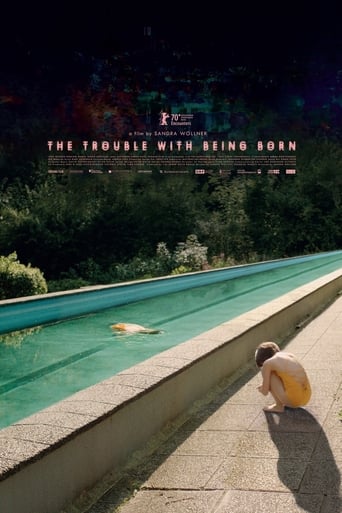
Sandra Wollner's unsettling android drama is the ethically thorniest film on this list and arguably the bravest. It pairs with Sheep in the Box for viewers willing to sit with the discomfort Kore-eda leaves implicit — the question of what we ask synthetic beings to absorb on our behalf, and what we are entitled to ask of them at all.
It belongs to the same 2020s movies conversation about synthetic kinship that Sheep in the Box now joins, and it pushes the conversation somewhere most viewers would rather not go.
Aftersun
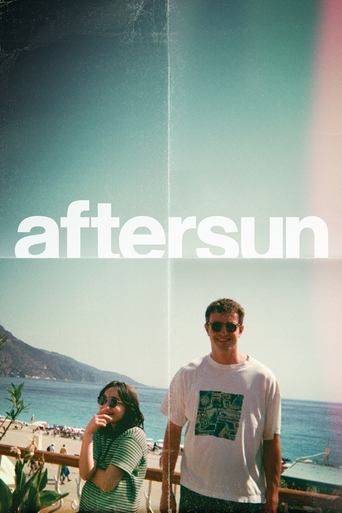
Not science fiction. But Charlotte Wells' debut is doing the same archaeology of loss — a daughter assembling a father from camcorder fragments, the past edited and re-edited in search of something it never quite contained. Memory as imperfect resurrection.
It is the non-Japanese film that most resembles the emotional aftertaste of Still Walking, and the one I would recommend to anyone who left Sheep in the Box wanting more of that specific ache.
Where to Start, Where to Go Next
If Sheep in the Box is your first Kore-eda, begin with Shoplifters — it is the most immediately gripping entry point — then move to After Life for the philosophical underpinning, and finally walk backward to Maborosi to see the whole register in embryo.
If you've already lived inside his films, the new one rewards a fresh look at Air Doll the night before. The two films are in quiet conversation across seventeen years, and the conversation is more direct than the marketing of either suggests.
And if you'd rather let the choice fall to chance — the way so many of his characters stumble into the families that end up defining them — RandomFlix's drama movies shelf is a reasonable place to spin the dice. Sometimes the right film finds you the way the right people do: by mistake, at the wrong moment, and exactly on time.