Why Yahya Abdul-Mateen II's Creasy Reignited a Specific Kind of Thriller
When Netflix dropped its seven-episode Man on Fire reboot, something interesting happened: a subgenre that had been quietly mutating for two decades suddenly felt urgent again. The Hollywood Reporter framed it plainly — Yahya Abdul-Mateen II steps in for Denzel Washington as a mercenary out for revenge in Kyle Killen's seven-episode Netflix adaptation, with Steven Caple Jr. directing the first two episodes. The setting shifts from Mexico City to Rio, the girl gets a name — Poe Rayburn — and the trauma carries fresh contours, but the skeleton is identical to the one A.J. Quinnell sketched in his 1980 novel.I have enough to write the article. Let me proceed.
The Man on Fire story has a stubborn architecture: a scarred ex-operative, a child he ultimately fails to protect, a city that becomes a hunting ground. Every version of John Creasy ends up being the protector of a teenage girl, and Netflix's version is no exception — in the show, Creasy is a contractor for the CIA, where in the books he's part of the French Foreign Legion. The Rio setting and aged-up Poe Rayburn add wrinkles, but the bones are identical.
What separates this lineage from the action movies fireworks of pure-revenge cinema is its tone. The violence is mournful, not triumphant. It's closer to thriller movies territory than to comic-book catharsis. The series understands that remembering pain and being trapped by it are not the same thing — Creasy's and Poe's memories begin as wounds that cannot be looked at directly, but over time, the show reframes memory as something that can also preserve love, purpose, and connection. That's the emotional contract every great Man on Fire descendant signs. What follows are nine films that honor it, organized from closest siblings to bolder genre cousins.
The Direct Bloodline: Bodyguard-Revenge Essentials
Man on Fire (2004)
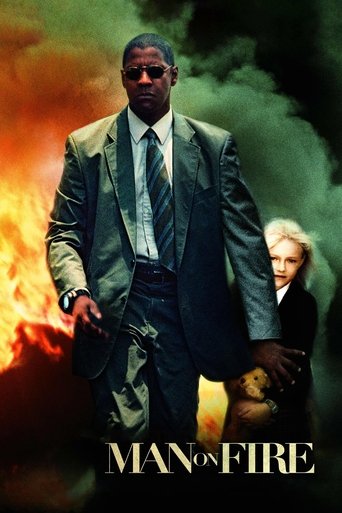
Tony Scott's saturated, jump-cut elegy remains the text every film below is in conversation with. Denzel Washington's Creasy — vulnerable, alcoholic, slowly being humanized by a 10-year-old named Pita before everything is ripped away — defined the modern shape of the subgenre. Be it Denzel Washington's vulnerable portrayal of an invulnerable avenger, Tony Scott's kinetic, ahead-of-its-time direction, or two decades of regular airings across Turner cable networks, "Man on Fire" has carved out a space of its own in aughts-era, man-stream cinema. The film's back half is where the template crystallizes. Scott's film is filled with vivid torture scenes driven by an ugly but pure rationale: Pita, the girl Creasy cared for, is dead. Every descendant on this list either honors or interrogates that rationale.
Léon: The Professional

Luc Besson's 1994 progenitor wrote the emotional contract decades before Quinnell's novel even reached the screen a second time. A hitman, a 12-year-old, a corrupt agent of the state — the components are all there, just arranged with more tenderness and less geopolitics. Jean Reno's Léon doesn't burn down a city in mourning; he builds a tiny, doomed family inside one. But the protector-charge bond at the heart of Creasy stories was forged here first, and every later film in this lineage owes the Mathilda-Léon dynamic a debt, whether it admits it or not.
Taken
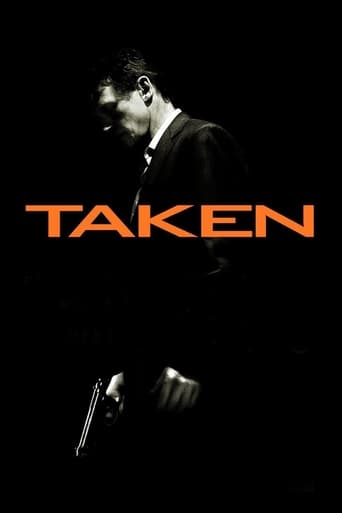
Pierre Morel and Liam Neeson stripped the formula to its skeleton in 2008. Less grief, more procedural fury. Bryan Mills isn't a broken man finding redemption through a child — he's a divorced dad weaponizing his Rolodex of CIA contacts to walk through Paris like an Old Testament plague. But the lineage runs straight back to Creasy. The "particular set of skills" monologue is just Quinnell's protagonist with the existential despair sanded off. Where Scott goes biblical and Besson goes tender, Morel goes transactional, and audiences responded so hungrily that the entire decade of late-Neeson cinema was built on that runway.
The Cartel Corridor: Films That Share Creasy's Geography
Sicario
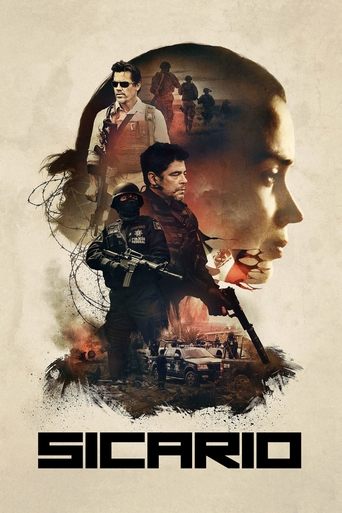
Denis Villeneuve's 2015 border thriller is the prestige-cinema answer to Man on Fire. Benicio del Toro's Alejandro is essentially Creasy — a haunted operative with murdered family in his rearview, working in a moral fog along the U.S.-Mexico border — but Villeneuve refuses to let you root for him the way Tony Scott invited you to root for Denzel. The same revenge movies engine drives the plot; the camera just stands further back. If you watched the Netflix series and found yourself uncomfortable with how clean its catharsis felt, Sicario is the film that has been quietly asking those same questions for a decade. It belongs to the 2010s movies resurgence of cartel cinema as a venue for American action-thriller anxiety, and it remains the high-water mark.
Miss Bala
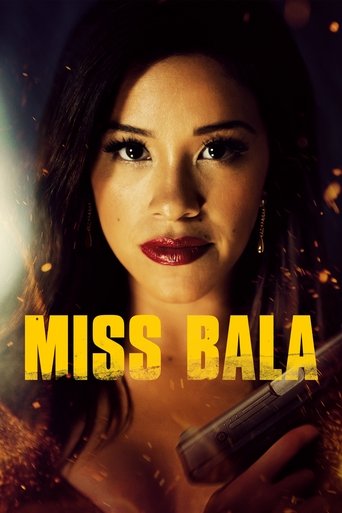
Gerardo Naranjo's original 2011 Mexican thriller flips the perspective entirely. The young woman is at the center; the violence orbits her rather than being unleashed on her behalf. It's essential counter-programming to the male-protector gaze that defines almost everything else on this list. If Creasy stories are fundamentally about what men do when they fail to save a girl, Miss Bala asks what the girl was doing while all that was happening — and the answer is rarely comforting.
Savages
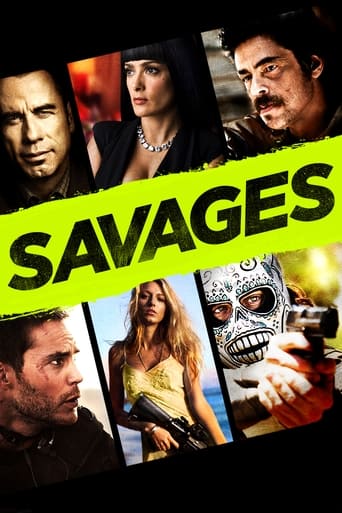
Oliver Stone's 2012 cartel pulp shares Tony Scott's visual maximalism and moral murk. It's lurid, sun-bleached, and unapologetically operatic, with Benicio del Toro again playing a man whose menace is the engine of the whole movie. Savages doesn't have the elegiac weight of Sicario or the grief-engine of Man on Fire, but it lives in the same neighborhood: Americans in over their heads, a young woman as the emotional center, and a vengeance arc that curdles the longer it runs.
Can't Decide What to Watch?
Let RandomFlix pick a movie for you. One click, one great movie.
Roll the DiceThe Equalizer Branch: Antoine Fuqua and the Quiet-Man Killers
The Equalizer
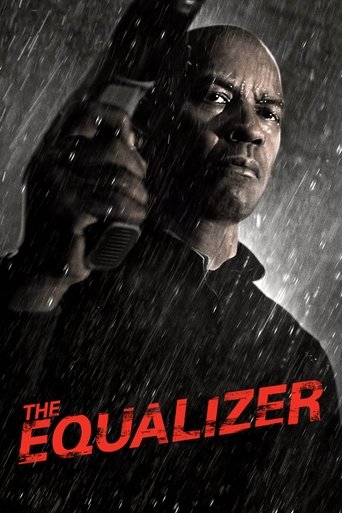
Antoine Fuqua and Denzel reunited in 2014 for what plays like Creasy's spiritual sequel. Older. Calmer. Still the patron saint of waitresses and trafficked girls. Robert McCall doesn't drink himself into oblivion the way Creasy did — he reads classic novels in a Boston diner — but the underlying machinery is the same: a man with a specific and terrible set of skills, a vulnerable young woman who awakens his protective instinct, and a city that becomes a kill box once he decides to move. Where Scott shot his Mexico City in fever-dream smears, Fuqua shoots his world with grounded, almost moralistic precision. Same DNA, different temperature.
John Wick
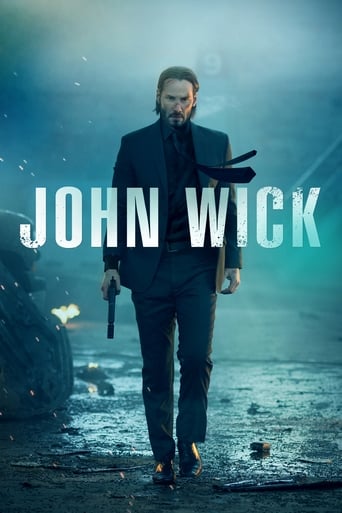
Chad Stahelski's 2014 reinvention swapped a girl for a dog, but the grief-engine is identical. A man retreats from violence after losing the person who anchored him. The world he tried to leave reaches in and takes the last thing tethering him to grace. He responds by depopulating it. Include this one for readers who want the kineticism dialed up to eleven and the moral murk dialed down to near zero. It's worth noting how the subgenre split in the mid-2010s: Fuqua's grounded moralism on one side, Stahelski's operatic worldbuilding on the other — both descended directly from Tony Scott's saturated 2004 template.
Wild Cards: The International Detours Worth Taking
I Saw the Devil
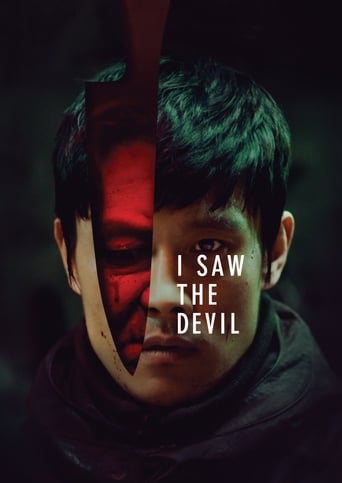
Kim Jee-woon's 2010 South Korean nightmare is what happens when the protector becomes the monster. A secret agent's fiancée is murdered. He hunts the killer not to deliver justice but to inflict suffering — catch, release, catch again, escalate. It's the darkest possible answer to the Creasy question, and it's the film to seek out if you've ever watched a bodyguard-revenge thriller and wondered whether the vengeance was really making anyone whole. Spoiler: Kim's answer is no, and he illustrates that "no" with the kind of formal craftsmanship that has earned the film a permanent place near the top of any serious revenge movies-cinema conversation.
The Villainess
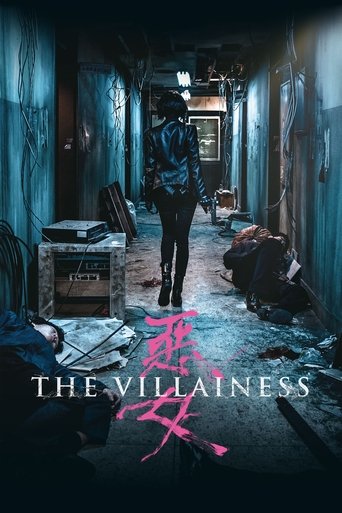
Jung Byung-gil's 2017 Korean assassin thriller hands the bodyguard role to a woman and lets the camera go feral. The opening sequence alone — a single-take first-person rampage through a hallway of bodies — is the kind of swing for the fences that American studios rarely attempt. It belongs on a Man on Fire list because it pushes the subgenre's grief-and-violence equation past the point English-language films are willing to go, and because it answers a question almost none of those films bother to ask: what does this look like when the avenger is also the charge?
Where to Go From Here
The arc, viewed as a viewing sequence, makes its own argument. Start with the 2004 original and let Tony Scott's grammar wash over you. Move through Taken for the stripped-down version, Sicario for the prestige answer, The Equalizer and John Wick for the split inheritance, and finish with I Saw the Devil if you can stomach where this all logically ends.
As for the show that started this whole conversation: Creasy has wrapped up his story with Poe by the skin of his teeth, but his personal turmoil wasn't fully resolved — his call from the CIA highlighted as much, with all signs pointing to a second season revolving around a revisitation of John Creasy's initial trauma in Mexico City. The bodyguard-revenge moment isn't ending soon. If decision fatigue sets in halfway through this lineage, RandomFlix's dice roll is a low-effort way to surface your next pick.
Pour something dark, dim the lights, and start with the 2004 film. The rest will follow.