Why Marty Supreme Belongs in the Hustler Canon
When Marty Supreme arrived on HBO Max on April 24 after a Christmas Day theatrical run, it carried more weight than the average Timothée Chalamet star vehicle. The film picked up nine Academy Award nominations, including Best Picture and Best Actor, and crossed $179 million worldwide to become A24's highest-grossing release ever — a staggering result for a movie about a 1950s table tennis grifter.
Those numbers matter because they tell you the audience showed up for something specific: not a biopic, not a sports drama, but a hustler movie. Marty Mauser, the bold, fast-talking paddle prodigy chasing greatness out of Manhattan's Lower East Side, is adapted from Marty Reisman's 1974 memoir The Money Player: The Confessions of America's Greatest Table Tennis Champion and Hustler. Co-writer/co-director Josh Safdie shot it on 35mm with Darius Khondji behind the camera, scored it with frequent collaborator Daniel Lopatin, and built its vanished New York with production designer Jack Fisk. Every one of those choices is a deliberate handshake with a tradition.
The hustler movie has a recognizable shape. The protagonist is half artist, half con — someone whose talent is real but whose path to glory runs through deception. The arena is closed and ritualized: a felt table, a poker room, a back-alley game, a diamond display case. The camera treats craft like religion and money like a confession. And underneath all the sweat, what's really being measured is whether a person can choose dignity when every incentive is pointed the other way.
That's the lineage Marty Supreme is consciously joining. What follows isn't a Safdie watch-order or a Chalamet completist guide — it's a tour of the drama movies tradition this film belongs to, from Scorsese's pool halls through Cassavetes' strip clubs and back out to a New York that the crime movies movie has spent fifty years trying to capture before it disappears.
The Direct Ancestor: Scorsese's Pool-Hall Gospel
The Color of Money

Every conversation about Marty Supreme has to start in a pool hall in 1986. Scorsese's belated sequel to The Hustler brought Paul Newman back as Fast Eddie Felson — older, slicker, and finally ready to mentor a young hotshot played by Tom Cruise — and won Newman the Best Actor Oscar that had eluded him for twenty-five years. Roger Ebert, in his original review, parsed Eddie as a man who is both "sharpie and hustler," a phrase that doubles as a job description for every protagonist on this list.
What Scorsese and cinematographer Michael Ballhaus did with green felt and overhead lamps became the visual grammar of the genre. The pools of light, the smoke, the slow circling around a table while two men negotiate without quite speaking — Khondji's lensing of Marty Supreme's basement clubrooms is unmistakably answering that template. So is the structural skeleton: an older operator teaching a younger one how the world really works, the road trip through second-tier American venues, money standing in for self-respect because both characters are too proud to say what they actually want. Marty Supreme inherits all of it, then swaps a cue stick for a paddle and dares you to notice the difference.
The Modern Twin: Anxiety as Aesthetic
Uncut Gems
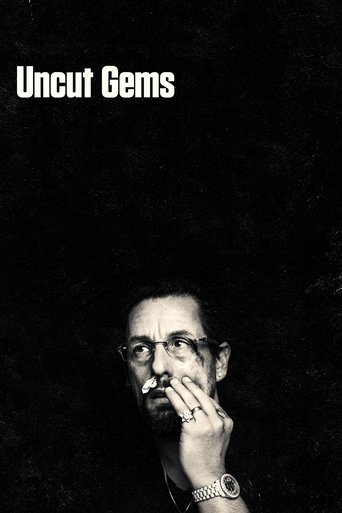
The lineage to the Safdies' 2019 breakthrough is literal — Josh Safdie co-wrote and co-directed Marty Supreme, which makes Howard Ratner and Marty Mauser something close to spiritual brothers. Both men are addicted to the next score. Both believe, against all sane evidence, that one more bet will resolve their lives. Daniel Lopatin scored both films, and the pulsing synth-anxiety he developed for Uncut Gems now reads as a Safdie-house signature, the sonic equivalent of a thumb pressed against your carotid.
What 2010s movies indie cinema did to the hustler movie was reframe it as a panic attack with a haircut. The genre had always been about pressure, but the Safdies turned pressure into the entire aesthetic — overlapping dialogue, telephoto lenses compressing rooms, the constant sense that something off-screen is about to ruin everything. Marty Supreme refines that formula rather than repeating it. It's quieter in stretches, more period-bound, more interested in the romance of obsession than its terror. But the DNA is identical, and the through-line from a Diamond District jeweler to a Lower East Side ping-pong shark is the most direct artistic inheritance American cinema has produced this decade.
Seven More Films That Built This World
The hustler canon doesn't begin or end with the Safdies and Scorsese. Each film below illuminates a different facet of what Marty Supreme is doing — the showman, the gambler, the con artist, the desperate man with a plan, the craftsman who confuses skill for salvation. Watch any of them and you'll see the bones underneath Chalamet's performance.
Rounders
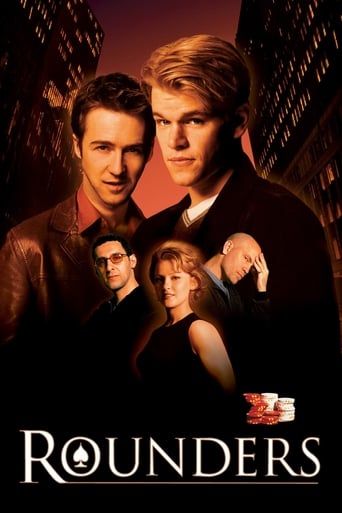
The 1998 underground poker bible, with Matt Damon's law student Mike McDermott and Edward Norton's livewire ex-con Worm running New York's basement card rooms. It's the closest thing the genre has to a procedural — all tells, tuition money, and the seductive logic of "one more game." Mike's voiceover essentially functions as a hustler's catechism, and the film's late-night, fluorescent-lit Manhattan is a direct ancestor of Marty's neighborhood thirty blocks south.
Mississippi Grind
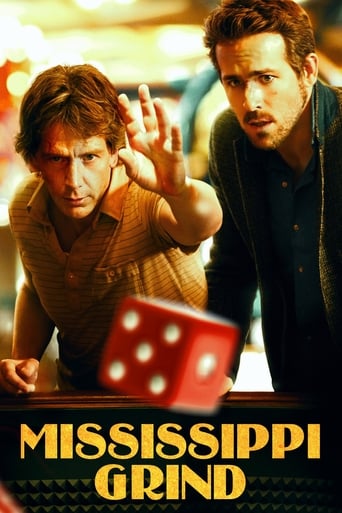
Anna Boden and Ryan Fleck's 2015 road movie pairs Ben Mendelsohn's terminally compromised gambler with Ryan Reynolds' too-charming drifter on a losing streak that runs from Iowa to New Orleans. It's the quietest film here and arguably the most heartbreaking — a study of how the hustler's faith in luck curdles into something closer to a death wish. Where Marty Supreme is propulsive, Mississippi Grind is the comedown.
California Split
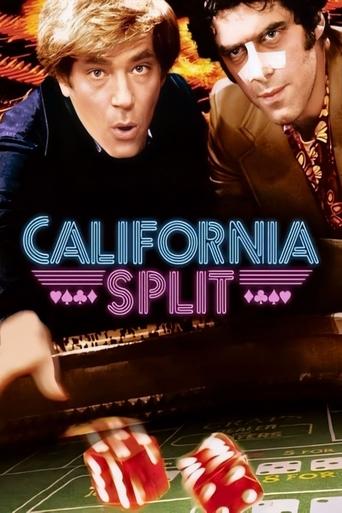
Robert Altman's 1974 gambling masterpiece, with Elliott Gould and George Segal as two men who meet at a poker table and proceed to lose their lives in the most charming way possible. It's the loose, overlapping-dialogue grandfather of every hangout-hustler movie since, and you can hear its rhythms in the way Safdie's characters talk over each other. If Marty Supreme is the polished descendant, California Split is the stoned, rumpled patriarch napping on the couch.
Can't Decide What to Watch?
Let RandomFlix pick a movie for you. One click, one great movie.
Roll the DiceThief
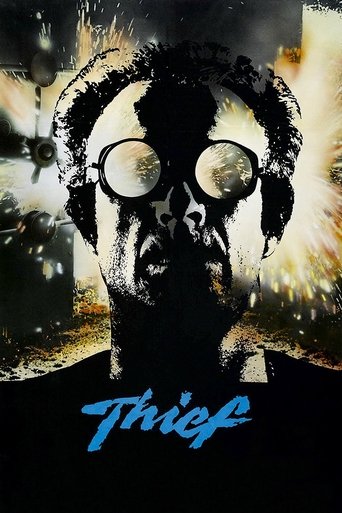
Michael Mann's 1981 debut, with James Caan as Frank, a Chicago safecracker who treats his craft like Zen discipline and his life like a contract he negotiated under duress. The Tangerine Dream score, the rain-slicked streets, the long monologue in the diner where Frank explains exactly who he is — Thief is the closest cousin to Marty Mauser's monomania. Both men confuse mastery with freedom and discover, too late, what that actually costs.
Hard Eight
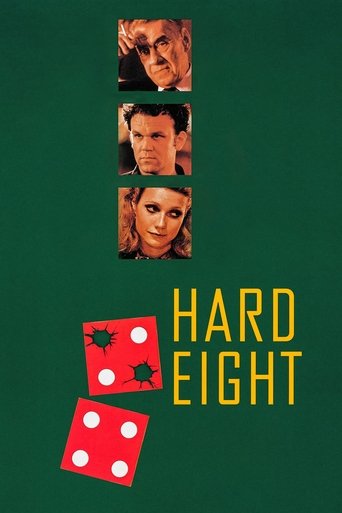
Paul Thomas Anderson's 1996 debut is a Reno mentor-mentee story so quiet it almost disappears. Philip Baker Hall's gentle, unreadable Sydney takes John C. Reilly's broke John under his wing and teaches him how to live off casino comps and small graces. It's the Color of Money template rewired for the indie 90s — same architecture, different emotional climate — and it's a master class in how the hustler movie can run on patience instead of adrenaline.
Dog Day Afternoon
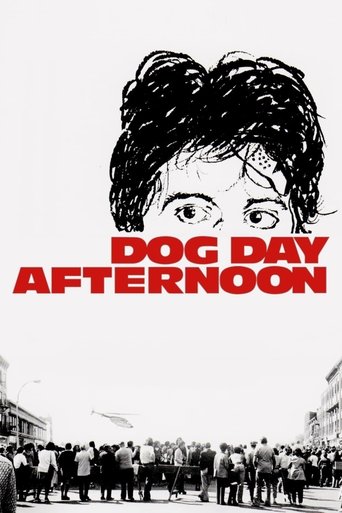
Sidney Lumet's 1975 Brooklyn bank-job opus, with Al Pacino sweating through August in front of a crowd that becomes its own character. Sonny isn't a hustler in the card-room sense, but the film is the patron saint of every sweaty New York pressure cooker that's followed, Marty Supreme included. The way Lumet stages a closed location as a moral arena — every glance from a cop or a hostage adjusting the stakes — is the template the Safdies have spent a decade perfecting.
The Killing of a Chinese Bookie

John Cassavetes' 1976 ordeal about a Sunset Strip club owner pressured into a mob hit to clear a gambling debt is the most formally radical entry on this list. Ben Gazzara's Cosmo Vitelli is a hustler whose hustle is dignity itself — the maintenance of a tiny, doomed showbiz dream against forces that don't care. It's the film that proves the hustler movie was always an art film in disguise, and its fingerprints are all over the way Marty Supreme treats showmanship as a kind of sacred, ridiculous labor.
What Marty Supreme Adds to the Tradition
The genius of using table tennis is that it strips away every romantic alibi the hustler movie has historically leaned on. There's no mob mythology, no Vegas neon, no felt-table Old Hollywood iconography. There's a paddle, a ball, a folding table, and a man who has decided that this — this — is the thing he will trade his life for. That choice is the most honest version of the genre's central question, because the absurdity of the arena makes the obsession unmistakable. You can't pretend Marty is in it for the glamour.
Chalamet's place in the lineage is its own argument. He's the youngest male actor with three acting Oscar nominations since Marlon Brando, which puts him in conversation with a very specific kind of movie-star history — and now he's playing a hustler movies in the Newman/Cruise/Sandler tradition. That's not coincidence. That's a young actor and a young director identifying the genre that still has the sharpest teeth in American cinema and walking straight into it.
Then there's the texture. Jack Fisk's production design and the deliberate choice to shoot 1950s movies Lower East Side on 35mm turn the film into a preservation act for a New York that's almost entirely gone — the storefronts, the basement clubs, the sidewalk rhythms. That's another inheritance from this lineage: every great hustler movie is also, secretly, a city movie, and the city is always vanishing.
Why does this tradition endure? Because in a culture that's spent the last decade marinating in optimization rhetoric and grindset content, these films remain the honest version of the American hustle myth. They know what hustling actually costs. They know the talent is real and the damage is real and you don't get to keep both. Marty Supreme is the strongest argument in years that the genre still has things to say, partly because it refuses to soften the deal.
Where to Start Your Run
If you want craft and mentorship, start with The Color of Money. If you want adrenaline and dread, Uncut Gems is still the high-water mark. For melancholy, nothing on this list cuts deeper than Mississippi Grind. For pure hangout pleasure and the genre's loosest groove, California Split is the night. And if you want to see where the form gets weird and personal, The Killing of a Chinese Bookie will rewire you.
RandomFlix's shuffle can pull from this hustler lineage if you'd rather have the night's pick chosen for you — sometimes the right move is to let the dice decide. Whatever you queue, the lineage keeps growing, and Marty Supreme is the most convincing case in years that the sweat-and-greed picture is still where American movies do their most honest work. The hustle endures. So does the camera that knows how to look at it.