The $250M Mythic Swing: Why Nolan's Odyssey Demands Homework
The IMAX 70mm screens sold out a year before release. Resale tickets are moving for $300 to $400. <cite index="">Christopher Nolan's adaptation of Homer's epic is arriving July 17, 2026, with a reported $250 million net budget that makes it both his most expensive film and the most expensive R-rated movie ever produced.</cite> The cast reads like a small constellation: Matt Damon as Odysseus, Anne Hathaway as Penelope, with Tom Holland, Zendaya, and Robert Pattinson rounding out the ensemble.
Universal is billing it as a "mythic action epic." Nolan himself has described the goal as making "the most extreme version of a story possible." That's a director who built his reputation on rationalist puzzle-boxes telling you, in advance, that he's about to throw the rationalist playbook into the wine-dark sea.
Here's the thesis: every Nolan film is in active conversation with its genre's history. Memento with film noir. The Dark Knight with Heat. Oppenheimer with the David Lean tradition. The Odyssey will be no different — and the lineage he's wading into is specific, traceable, and roughly sixty years deep. The eight films below, arranged chronologically, map the exact mythic-epic vocabulary Nolan has spent his career absorbing. Watch them and you'll walk into the IMAX with a sharpened eye for what he borrowed and what he invented.
The Foundational Texts: Where the Mythic-Epic Vocabulary Was Forged
Jason and the Argonauts
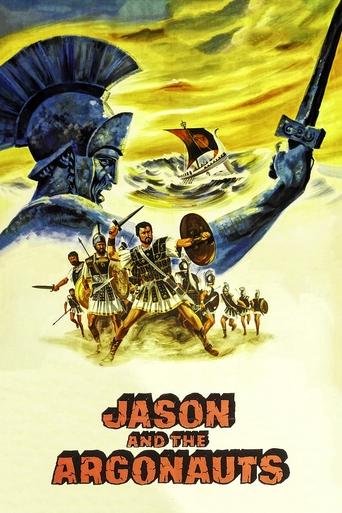
Ray Harryhausen's 1963 stop-motion landmark is the urtext of Greek-myth cinema, the film that taught every subsequent director what gods and monsters look like when they have weight on screen. Tom Hanks has called it the greatest film ever made — not as hyperbole but as an acknowledgment of how completely it set the template.
What Nolan inherits here is a principle, not a technique: mythic creatures need physical presence, not weightless CGI abstraction. The skeleton fight remains the benchmark for choreographed mythic action sixty years on, and the Cyclops and Sirens sequences Nolan is reportedly building will inevitably be measured against Harryhausen's hand-animated standards. Nolan shoots on IMAX film stock, on real Mediterranean and Moroccan locations, with practical effects wherever possible. That's not a stylistic preference. That's a direct inheritance from a 1963 movie that made bronze men and hydras feel like they could kill you.
Clash of the Titans
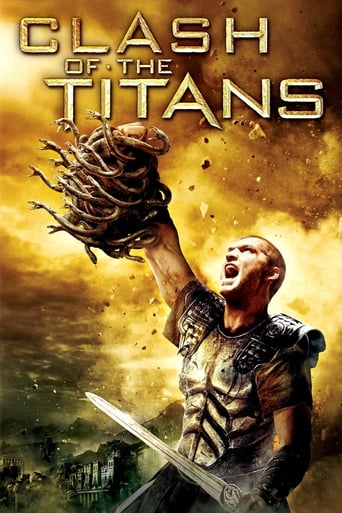
The 1981 original — never the 2010 remake — was Harryhausen's last great showcase and the most direct Greek-myth precedent in mainstream cinema. Its template is exactly the one Nolan is consciously updating: mortal hero, divine interference, episodic monster encounters strung along a quest spine.
The 2010 remake's failure is instructive in the negative. It threw money at the source material without a coherent directorial vision, and the result was an expensive nothing. Nolan, by contrast, is throwing $250 million at the material with a vision so specific he's locked the R rating before a frame has been screened. The lesson the original Titans offers is structural; the lesson the remake offers is cautionary.
The Modern Sand-and-Sandals Era: Human-Scale Myth
Troy
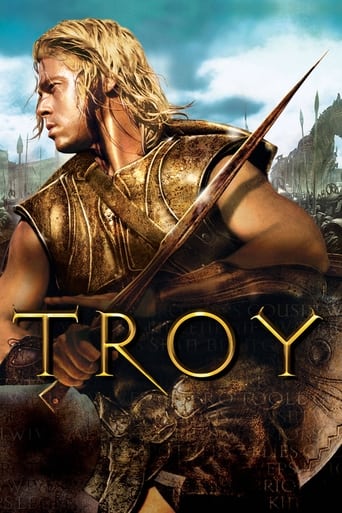
Wolfgang Petersen's 2004 epic was famously "inspired by" the Iliad rather than adapted from it, and that distinction matters. Petersen and screenwriter David Benioff stripped the gods almost entirely from the story, leaving Brad Pitt's Achilles and the rest of the Greeks to fight a war that was purely human in motivation. Critic Emanuel Levy noted the film's deliberate de-mythologizing — the supernatural machinery of Homer's poem replaced by political and personal ambition.
That's the key contrast with what Nolan appears to be doing. Early reporting suggests Nolan is keeping the gods, but filtering them through his characteristic rationalist sensibility — closer to Interstellar's "any sufficiently advanced technology" register than to Petersen's purely secular battlefield. Watch Troy to understand what Nolan is choosing not to do, and to track the Damon/Pitt lineage of the movie-star-as-Greek-hero. Both actors built their careers on a similar quality: intelligence wearing the costume of physicality.
Gladiator
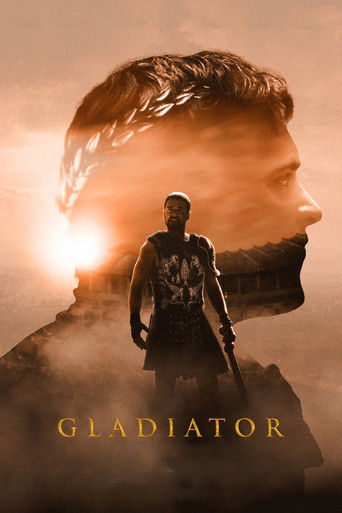
Ridley Scott's 2000 film isn't Greek myth, but it's the financial and aesthetic blueprint for every prestige ancient-world epic since. Without Gladiator's box-office triumph there is no Troy, no Kingdom of Heaven, no 300, and almost certainly no $250 million green light for an R-rated Homer adaptation.
More importantly, the Maximus arc is structurally Odyssean: exile, suffering, the long road home, the reunion deferred until the protagonist has been remade by what he's endured. Nolan is unlikely to have missed the parallel. Gladiator also belongs to the broader tradition of action movies epics that proved hard-R violence and ancient-world spectacle could play to a global audience — a commercial precedent without which Nolan's R rating would be a much harder sell.
The Mythic-Brutalist Turn: Eggers and the Direct Precedent
The Northman
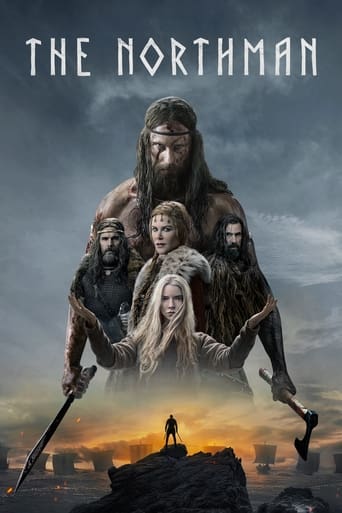
If you watch only one film on this list before July 17, make it this one. Robert Eggers' 2022 Viking revenge epic, made on a roughly $90 million budget, is the single clearest modern precedent for what Nolan appears to be attempting. Critics described it in terms — primal, hallucinatory, choreographed brutality fused with Norse mythic spirituality — that map almost exactly onto the reported tone of The Odyssey.
Eggers' commitment to Iceland's primordial terrain as a character in itself, and to a mythological literacy that refused to apologize for its strangeness, established a visual and tonal register that Nolan is now scaling up. The R rating connection is the most explicit lift: The Northman proved a brutal, mythologically serious epic could find a theatrical audience without sanding off its edges, and Nolan clearly took notes. Where Eggers worked in fjords and volcanic plains, Nolan is working in the Mediterranean and Morocco — same primordial logic, different sea.
The Green Knight
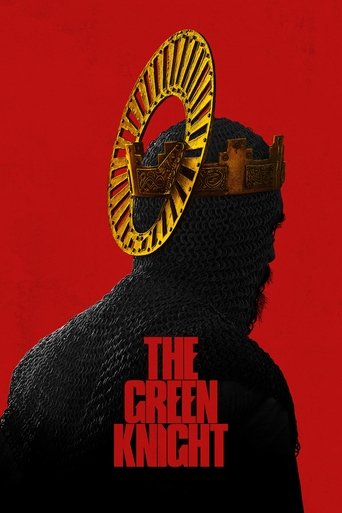
David Lowery's 2021 Arthurian dream-piece is slower, weirder, and more poetic than The Northman, but it operates in the same mythic-realist register. Gawain's journey north to meet his fate mirrors Odysseus's structure almost beat-for-beat: a hero on a quest, encountering tests that are as psychological as they are physical, confronting his own mortality at every turn.
What Lowery understood — and what Nolan will need to understand — is that mythic stories work on their audiences through tone, not exposition. The Green Knight himself is never explained. He simply is, terrible and inevitable. Expect Nolan's Cyclops, his Circe, his Scylla to operate on similar principles. The audience doesn't need a lecture. They need to feel the floor tilt.
The Wild Cards: Two Detours Worth Taking
O Brother, Where Art Thou?
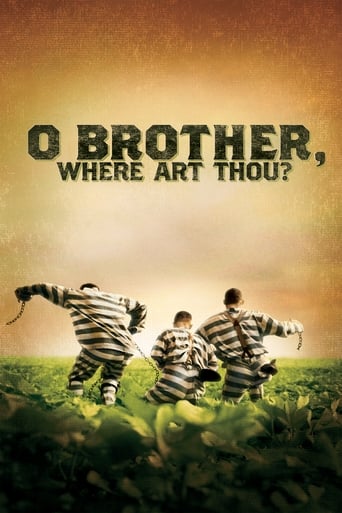
The Coen brothers' 2000 Depression-era riff is the most literal Odyssey adaptation on this list, and the one tonally furthest from Nolan's. Ulysses Everett McGill is Odysseus. The Sirens are Sirens. The Cyclops wears an eyepatch and quotes scripture. It's a comedy, and a great one.
What it demonstrates is that the underlying structure of Homer's poem is so robust it can support tonal extremes Nolan will never touch. The bones are the bones: a man trying to get home, sidetracked by encounters that test his cunning more often than his strength. Watching the Coens' version is a useful reminder that whatever Nolan does with the surface, the skeleton beneath will be doing the heavy lifting — the same skeleton that's been carrying narratives for nearly three thousand years.
2001: A Space Odyssey
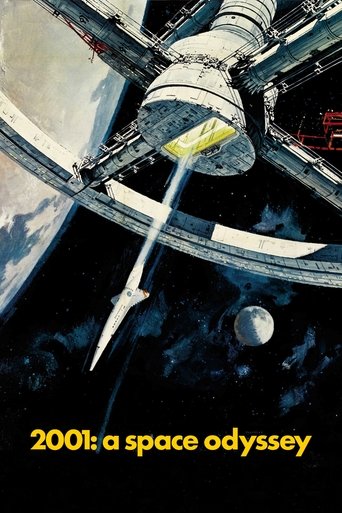
Kubrick didn't title his film 2001: A Space Odyssey by accident. It is, structurally and thematically, an Odyssey — a long voyage, an encounter with the incomprehensible, a homecoming reframed as transformation rather than return. And Kubrick is the director Nolan has named as his north star more often than any other.
This is the cleanest evidence we have that Nolan sees The Odyssey as a science-of-mythology project, not a sword-and-sandal exercise. Expect formal echoes: deep silences, the cosmic dwarfing the personal, sequences that prioritize image and rhythm over conventional plot mechanics. Expect, in other words, a Nolan film that takes Homer as seriously as Kubrick took Arthur C. Clarke — which is to say, as a launchpad for something stranger and more formally adventurous than the source alone would suggest.
What This Lineage Adds Up To
The eight films above span 1963 to 2022 and cover every register Nolan is reportedly working in: Harryhausen's tactile monsters, the 1981 Titans' episodic quest spine, Petersen's humanist battlefield, Scott's commercial template for adult-audience ancient-world spectacle, Eggers' mythic brutalism, Lowery's dream-logic poetry, the Coens' demonstration of structural resilience, and Kubrick's formal ambition.
That's the syllabus. None of it is required. But Nolan's $250 million swing only lands cleanly if audiences can recognize what he's swinging at, and these are the pitches he's been studying. If you want to keep ranging through the broader adventure movies and 1960s movies mythic tradition — or stumble onto a hero-journey movies title you've somehow missed — RandomFlix's roll-the-dice tool is built for that lateral kind of discovery.
July 17 is going to be loud. Show up with the lineage in your head, and the noise will resolve into music.