The Nolan Problem: Myth Without the Magic Wand
The first teaser for Christopher Nolan's The Odyssey did something strange: it made Homer feel dangerous again. No shimmering pantheon, no digital tentacles curling from a green-screen sea. Just salt, sinew, and the flat blue horror of a Mediterranean that doesn't care whether you make it home. In interviews around the trailer's release, Nolan has framed his approach in almost anthropological terms — gods and monsters, he suggests, are pre-scientific ways of naming the weather, the sickness, the earthquake. Collider's read on the footage picks up on the same tension: a Cyclops and a company of shades rendered not as spectacle but as something closer to sacred violence.
This is the promise, and it's a considerable one. A grounded Odyssey — one where the supernatural has weight rather than sheen — sounds radical inside the current blockbuster ecosystem, where every myth arrives pre-digested by CGI. But zoom out and Nolan isn't inventing a new mode. He's stepping into a small, stubborn tradition of filmmakers who figured out decades ago that myth becomes more terrifying, not less, when you strip the magic wand from the frame and let landscape, ritual, and human faces do the work.
What follows is a tour of that tradition. Not a sword-and-sandal roll call, but a lineage of arthouse and folk-horror mythmaking that Nolan's Odyssey is quietly joining — films that treat Homer, Sophocles, and Sir Gawain as scripture rather than intellectual property.
Pasolini's Sacred Anthropology: Myth as Ritual, Not Adventure
If there is a north star for this way of shooting the ancient world, it's Pier Paolo Pasolini. In the late 1960s, Pasolini did something almost no one has attempted since: he took Greek tragedy out of the studio and put it in the dirt.
Oedipus Rex
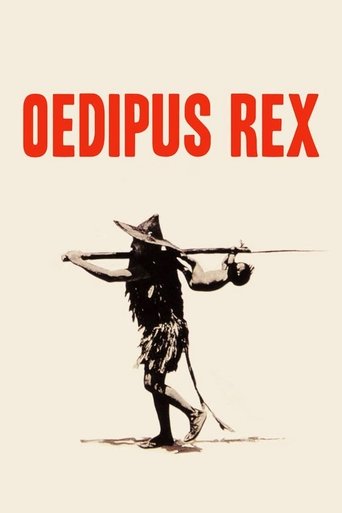
Pasolini's 1967 Sophocles adaptation is a fever dream shot in Moroccan sand and Italian meadow, bracketed by an autobiographical prologue and epilogue that pull the myth into the twentieth century. There are no marble columns. The costumes look like they were dug up rather than designed. Oedipus's kingdom is a scatter of mud walls under a hammering sun, and the prophecy that destroys him feels like a fact of geology — inevitable as heatstroke.
Medea
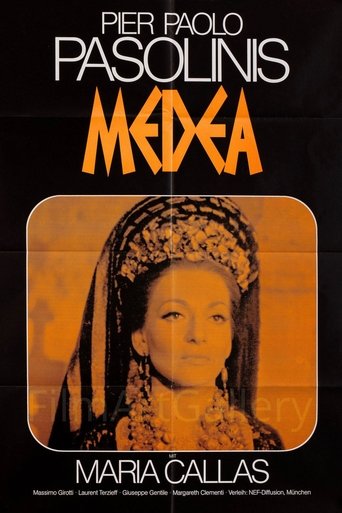
Two years later, Pasolini cast Maria Callas — in her only film role — as Medea and shot her sorceress-in-exile against the volcanic tufa of Cappadocia and the ancient walls of Aleppo. Film at Lincoln Center's program notes describe the film not as a revenge story but as a lament for a lost mystical homeland, a Marxist elegy for the sacred worldview that rational Greek civilization has already begun to eat. Callas barely speaks. She stares. The camera holds on ritual — a human sacrifice sequence early in the film has the slow, awful patience of a documentary — and the supernatural stops feeling magical. It starts feeling geological.
This is the mode Nolan seems to be reaching for. Not "how do we make the Cyclops look real?" but "how do we make the world that could produce belief in a Cyclops feel real?" Pasolini's answer was: shoot in places where that world still leaves fingerprints. Cast faces that look weathered by it. Refuse the polish.
Anyone who wants Homer treated like scripture rather than IP should start here.
The Green Knight and the New Folk-Myth Cinema
Fifty years after Pasolini, David Lowery pulled off something structurally similar with a different tradition. His The Green Knight takes the fourteenth-century Arthurian poem and refuses both of the dominant modes for medieval cinema — the grimy realism of mud-and-blood historicism and the CGI-drenched fantasy of the post-Jackson blockbuster.
Slate's review points out how deliberately Lowery sidesteps the grim-realist template. His Camelot is candlelit and hushed, closer to Byzantine icon than battlefield mud. The supernatural is everywhere — giants stalking a fogged valley, a talking fox, the Green Knight himself as a creaking, arboreal presence — but nothing is staged as spectacle. Everything arrives as slow ceremony, as if the film is showing you a rite whose meaning has partly been lost.
The lineage Lowery is drawing from is closer to Tarkovsky and pagan folk-horror movies than to standard fantasy movies. His Gawain isn't a hero on a quest so much as a young man being processed by a story larger than he can understand. When the giants finally appear, they don't fight anyone. They just walk through the frame, indifferent, and the film lets you sit with what that indifference means.
This is, I think, the closest recent cousin to what Nolan appears to be attempting with Odysseus. A hero who is small inside his own myth. A world where the supernatural is real and utterly uninterested in you.
The Coens, the Argonauts, and the Case for Faithful Whimsy
Fidelity to myth doesn't require solemnity. Two very different films prove that the "grounded" instinct can survive tonal shifts — and even benefit from craft that looks, on paper, less realistic than modern CGI.
O Brother, Where Art Thou?
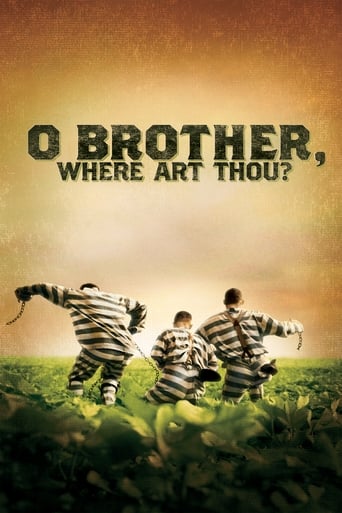
The Coen brothers' Depression-era Mississippi Odyssey keeps the structural bones of Homer intact: the sirens on the riverbank, the one-eyed Bible salesman as Cyclops, the fated homecoming to a wife with suitors at the door. IndieWire has singled the film out as one of the more faithful screen translations of mythological forces precisely because the Coens don't try to depict the gods. They translate them into weather, luck, radio waves, chain-gang chants. The supernatural is diffused into the landscape, which is arguably how the Greeks experienced it in the first place.
Jason and the Argonauts
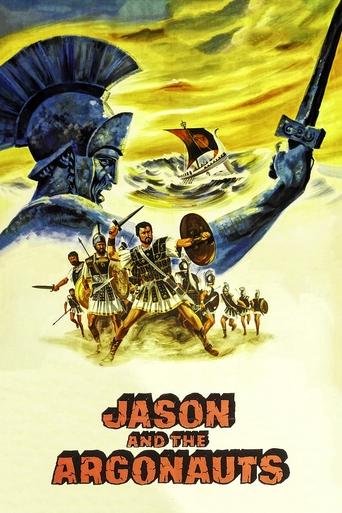
Ray Harryhausen's 1963 stop-motion epic is the counterintuitive entry on this list. On paper it should be the least grounded film here — its Talos and its skeleton army are obviously handcrafted, obviously not photoreal. And yet, watched today, its monsters have more physical weight than nearly anything in a modern CGI blockbuster. The reason is simple: they exist. They are clay and armature, photographed against real landscapes, casting real shadows. Your eye registers presence in a way it doesn't register pixel data.
This is the paradox that Nolan appears to have internalized. Practical craft — cloth, dust, weathered metal, real light — reads as "realistic" in a way that photoreal digital work often cannot, because we recognize physical objects as physical. The Coens' shabby suits and Harryhausen's clay monsters and Pasolini's sun-cracked walls all belong to the same adventure movies lineage: myth made from stuff you could touch.
Can't Decide What to Watch?
Let RandomFlix pick a movie for you. One click, one great movie.
Roll the DiceDeeper Cuts: Iphigenia, Kaneto Shindo, and the Fringes
The lineage runs wider than the obvious names. A few less-cited films sit squarely in the tradition Nolan is joining.
Iphigenia
Michael Cacoyannis's 1977 adaptation of Euripides is the natural companion to Pasolini's Medea — another Greek tragedy shot on hard, sunlit ground, another film where fate is not a plot device but an atmospheric condition. The wind at Aulis stalls Agamemnon's ships. A girl is walked toward an altar. The camera watches. If you loved the doom-rhythm of Pasolini's ancient work, this is the next stop.
Onibaba
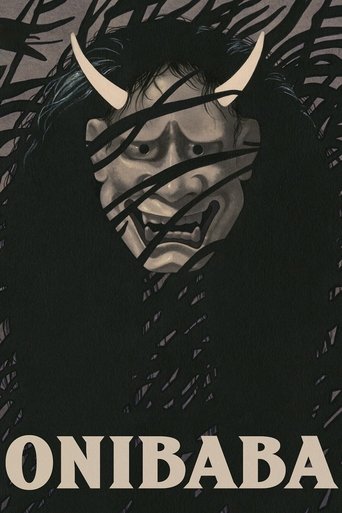
Kaneto Shindo's 1964 masterpiece takes us out of the Mediterranean entirely and into a sea of susuki grass in medieval Japan. Two women murder passing samurai for their armor. A demon mask appears. What Shindo does with wind through grass — the way the reeds hiss and roll like something alive — accomplishes more than any effects budget could. This is folk myth as environmental pressure, and it belongs in this conversation because it proves the principle isn't European. Landscape does the mythmaking wherever a filmmaker trusts it to.
The Witch
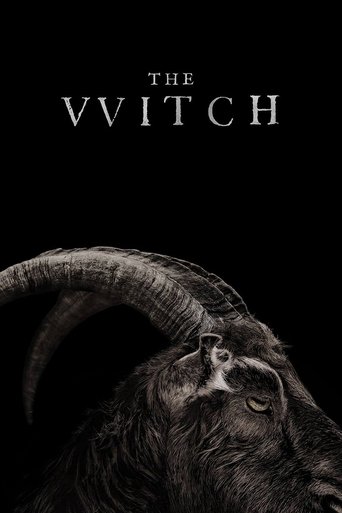
Robert Eggers's 2015 debut is the modern folk-horror text that most directly channels this instinct. Shot in natural light, dialogue reconstructed from period sources, the supernatural presented with the same matter-of-factness as the wheat harvest — Eggers treats seventeenth-century Puritan cosmology exactly as its believers experienced it. The witch in the wood is real. The goat may or may not be the Devil. The film doesn't wink. This is what pre-scientific dread looks like when a filmmaker takes it seriously.
What these 1960s movies tragedies and modern arthouse movies pieces share with Nolan's stated instinct is a refusal to translate myth into modern rational language. They let the landscape carry the weight. They cast faces that look like they belong to the century they're playing. They stage the supernatural as event, not effect.
If the streaming rights for Pasolini and Cacoyannis are notoriously nomadic — one month on a boutique service, the next month gone — that's part of why a discovery tool that surfaces this corner of cinema is genuinely useful, rather than just scrolling and hoping. RandomFlix's mythological and arthouse corners are a fine place to stumble into these titles when you don't want to build a syllabus.
Follow the mood, not the order. Pasolini before Lowery before the Coens is a decent arc, but the tradition doesn't care.
What Nolan Is Really Promising
The grounded approach is not a compromise with myth. That's the crucial thing to understand about what Nolan appears to be doing, and about what Pasolini and Lowery already did. Stripping the CGI is not a way of saying the gods weren't real. It's a way of saying the gods were real in a different register than modern spectacle can access — a register of weather, of ritual, of geography, of the human face reacting to something larger than itself.
If The Odyssey lands next July, it will be because Nolan learned what this small tradition already knew: myth needs weather, not weightlessness. It needs the specific, dust-caked, sun-battered thereness of a real place, and it needs actors who look like they have been walked through it. The Cyclops has to be a thing in the world, not a rendering.
Between now and the release, there are worse ways to spend the wait than living inside this tradition — letting Pasolini's Callas stare you down, letting Lowery's giants pass through the fog, letting Harryhausen's skeletons remind you that a puppet can outweigh a supercomputer. Skip the trailer cycle. Sit with the films that already did what Nolan is trying to do.