Why Venice Opened With a Murdoch Movie
The choice of a film to open the world's oldest film festival is always a statement. This year, the statement is unambiguous. Danny Boyle's Ink, starring Jack O'Connell as young Rupert Murdoch, Guy Pearce as Sir Alick McKay and Claire Foy, will world premiere in main competition at the 83rd Venice Film Festival, chronicling the moment a young Australian bought a struggling London daily called The Sun and turned it into the loudest paper on Fleet Street. Netflix has already picked up U.S. and Latin American rights, meaning the film will be in your living room before the leaves have finished turning.
What makes Ink more than a period piece is Boyle's own framing. In interviews around the announcement, he has explicitly linked the 1969 Sun relaunch to Fox News, clickbait culture and Truth Social—a straight line from Bouverie Street to the phone in your pocket. This isn't a biopic. It's an origin story for our current information disorder.
Venice's artistic director Alberto Barbera set the moral stakes plainly, describing editor Larry Lamb as "unscrupulous" and noting The Sun's rise came at the expense of The Mirror. The word "unscrupulous" is doing quiet, heavy work. It suggests the film is not interested in the "great disruptor" myth Silicon Valley has spent a decade selling us. It's interested in what disruption costs.
That's why Ink deserves a lineage piece rather than a "you might also like" list. Media-empire dramas are one of cinema's most durable subgenres, running from Citizen Kane to The Post and beyond. The eight films below aren't a homework assignment—dip in wherever the era or angle grabs you. Together they map the road that leads directly to Boyle's Wapping.
The Lineage: Eight Films That Built the Road to Ink
These titles are arranged loosely by the era they dramatize, tracing the mogul archetype from press baron to tabloid king to corporate suppressor to digital-age reckoning. Each contributes a specific strand of DNA to what Boyle is doing in Ink: proprietor mythology, editorial ethics, corporate pressure, or populist transformation.
Citizen Kane (1941)
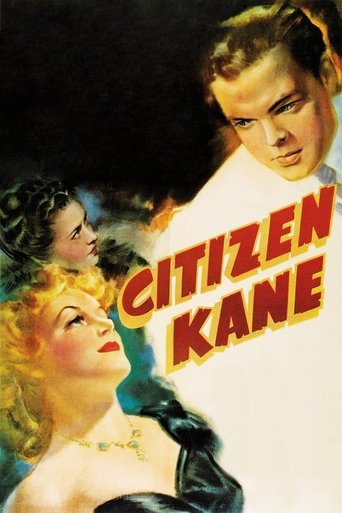
The urtext. Welles's Hearst-inspired portrait establishes the media-mogul archetype every subsequent film in this lineage inherits and mutates. As Empire's review puts it, the film "centres on the power of media moguldom generations before Murdoch"—a reminder that the anxieties Ink dramatizes are older than the tabloid, older than television, older than the twentieth century's second half.
The formal choice matters too. Kane's structure—the great man interrogated posthumously through the fragmented memories of those who orbited him—anticipates the way Boyle appears to be approaching Murdoch through O'Connell's young-man portrait. You cannot understand a mogul from the outside; you have to reconstruct him. Kane also still reads as radical filmmaking rather than a museum piece, which is why it anchors every 1940s movies conversation about cinema's turn toward psychological complexity.
All the President's Men (1976)
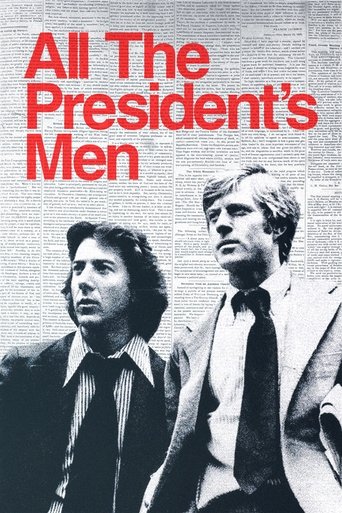
Pakula's Watergate procedural is the mirror-image film to Ink: journalism as institutional check on power rather than as an instrument of power. The Washington Post newsroom here is a sacred space—hushed, fluorescent-lit, procedurally holy. It's the exact ideal Ink will desecrate by showing what happens when a proprietor treats the newsroom as a weapon rather than a check.
Redford and Hoffman play Woodward and Bernstein as the shoe-leather counter-mythology to the mogul-genius myth. No visionary. Just two reporters, a phone, and a lot of doors that don't open. If Boyle's film is about how the news gets weaponized, Pakula's is about how it gets made when nobody's trying to weaponize it.
Network (1976)
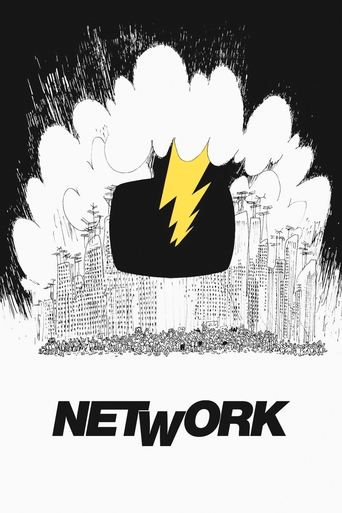
Released the same year as All the President's Men but pointing forward, not back. Chayefsky and Lumet's satire is, per Criterion, "startlingly prescient in its anticipation of today's outrage-driven news cycle." Howard Beale's mad-as-hell breakdown getting reframed as a business decision by network executives is the exact logic Boyle credits Murdoch and Larry Lamb with industrializing five years earlier at The Sun. Rage isn't an accident of the news cycle; it's the product.
Network won four Oscars in 1976 as satire. In 2026 it plays as documentary. It stopped being satire the moment Ink's story began, which is why it belongs at the center of any serious drama movies canon about media and power.
Broadcast News (1987)
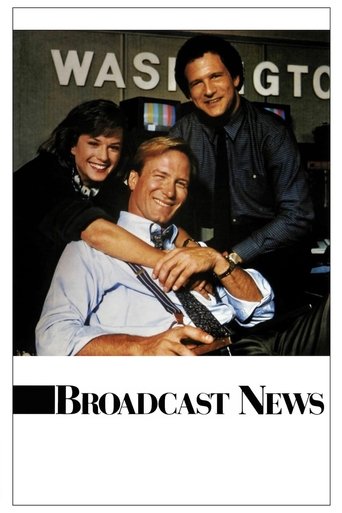
James L. Brooks's romantic-professional triangle diagnoses the exact moment TV news chose telegenic performance over substance—the small-screen equivalent of what Lamb-era Sun front pages did in print. Holly Hunter's producer is the last true believer, being visibly lapped by William Hurt's charming, empty anchor.
Broadcast News turns up on the Columbia Journalism Review's canvass of working journalists' favorite newsroom movies for a reason: it gets the internal politics right. The ethical crisis Hunter's character is having—do I promote the guy who's good on camera even though he can't write?—is the same crisis Ink's editors will face in a different key. Substance versus spectacle. Ink argues the spectacle side won.
The Insider (1999)
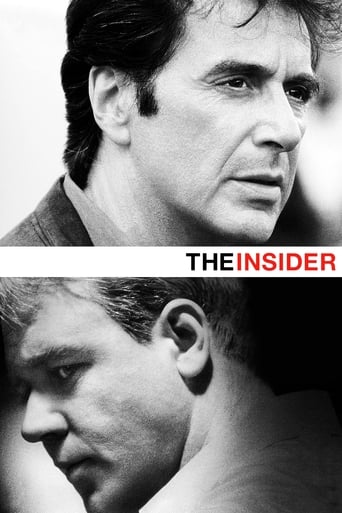
Michael Mann's tobacco-industry thriller performs the crucial pivot in this lineage: it shifts the frame from journalist-vs-government to journalist-vs-own-corporate-owner. Roger Ebert's review details how the film dramatizes 60 Minutes producer Lowell Bergman's battle with CBS executives afraid to run a Big Tobacco exposé—a fight not with a source or a subject but with the people signing the paychecks.
Al Pacino and Russell Crowe embody the two-front war modern journalists actually fight: sources on one side, shareholders on the other. The Insider is arguably the film Ink is in the most direct conversation with. Both ask what happens when the mogul's interests override the story. The Insider studies the suppression side. Ink, if the framing holds, will study the amplification side—what happens when the proprietor's interests aren't to kill a story but to invent a new kind of story entirely.
Shattered Glass (2003)
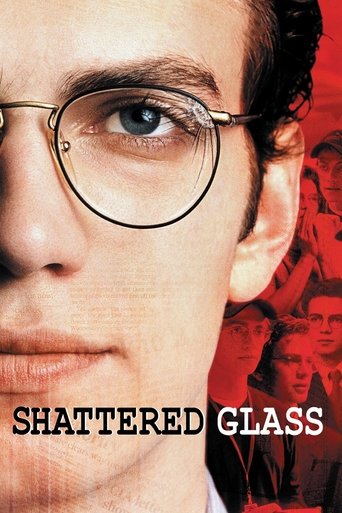
Billy Ray's Stephen Glass drama is the ethics-collapse counterpart to Ink's proprietor-collapse: what happens when the incentive structure rewards a good story over a true one. Hayden Christensen delivers the best performance of his career as the young New Republic fabulist, and Peter Sarsgaard is heartbreakingly quiet as the editor forced to burn down his own magazine to save it.
It's a procedural, patient film that pairs beautifully with the based-on-true-story movies thread running through this entire lineage. The connection to Ink is structural. Glass is the individual reporter version of what Boyle is describing at the institutional level: when the reward system rewards narrative over accuracy, narrative wins. Every time.
Spotlight (2015)
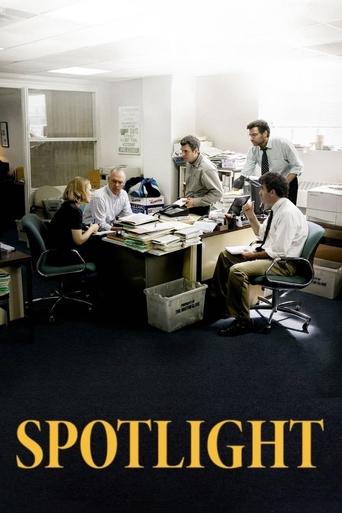
Tom McCarthy's Best Picture winner is the modern gold-standard newsroom procedural—the anti-Ink in its patient, institutional faith in reporting. The Boston Globe's investigation of the Catholic Church becomes a case study in what tabloid populism structurally cannot do: sustained, unglamorous, expensive accountability work. No front-page headlines screaming at you. Just months of index cards and door-knocking.
Spotlight sits at the top of virtually every critical ranking of journalism films for a reason. It's the argument, in cinematic form, for why the kind of newsroom Ink dismantles was worth preserving. Watch it and you understand what tabloid populism traded away for market share.
The Post (2017)
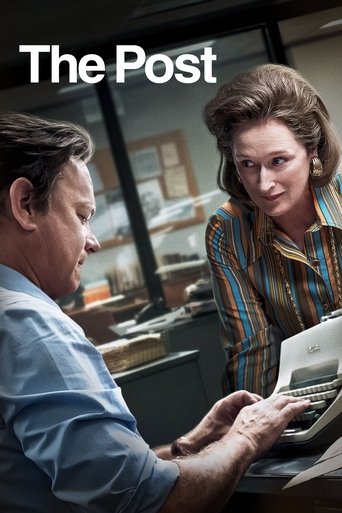
Spielberg's Pentagon Papers drama, with Streep as Katharine Graham and Hanks as Ben Bradlee, is the most direct thematic sparring partner Ink will have on the shelf. NPR's Justin Chang called it a crackling newsroom thriller with electrifying relevance, and the relevance has only sharpened since 2017.
The proprietor question here is inverted. Graham is the owner who chooses journalism over her own class interests—her Georgetown friends, her family's social standing, the government officials at her dinner parties. She takes the ethical fork that costs her personally. Murdoch, in Boyle's telling, takes the other fork at almost the exact same historical moment. Watch these two back to back and Ink's argument becomes unmistakable. The mogul is a choice, not a job description.
What Ink Is Actually Adding to the Canon
Previous media-mogul films treated the mogul as antagonist (Network), mystery (Kane), or invisible pressure system (The Insider). Boyle appears to be doing something formally different. Netflix's official logline describes Ink as an "explosive cinematic rollercoaster" about visionaries who created a new kind of news that changed the world—and that word "visionaries" is doing enormous work. It's not ironic. It's not scare-quoted. It concedes, up front, that what Murdoch and Lamb built was genuinely visionary in the sense that they saw something nobody else saw.
What they saw, if Boyle's framing holds, is that outrage is more engaging than information, that identification is more powerful than analysis, and that a newspaper is really a delivery system for a mood. That's the algorithm, invented decades before the algorithm. 1969 Fleet Street is where the attention economy quietly booted up. Everything since—Fox News, Facebook feeds, Truth Social—is architecture built on the foundation Lamb and Murdoch poured.
Jack O'Connell's casting is the formal move that separates Ink from a straight villain biopic. Playing Murdoch young enough to still be sympathetic, still be forming, still be reachable by argument, is what makes the film a tragedy rather than an indictment. You can't warn a monster. You can, for a couple of hours, watch a young man become one and wonder where the fork was.
The larger point is that the biography movies genre has slowly caught up to something the culture has been slow to admit: media empires are the real superhero franchises of the twentieth century. Not the companies that made the movies about superheroes. The companies that decided what a superhero, or a villain, or a story, or a fact, was going to mean in the first place. Every film on this list is, from a certain angle, an origin story. Ink is just honest enough to call itself one.
If you'd rather let chance pick the entry point—Kane one night, The Post the next, Shattered Glass on a Sunday afternoon—RandomFlix will happily spin the wheel and drop one of these into your lap without asking you to rank them first.
Boyle's film will land on Netflix carrying eighty-five years of cinematic conversation on its back. Watch a few of these before it drops, and you won't just be seeing a movie about Rupert Murdoch. You'll be seeing the closing argument in a case cinema has been building since Charles Foster Kane muttered "Rosebud" and died alone in a room full of things he owned.