Refn Returns, and the Neon Turns Back On
For nearly a decade, Nicolas Winding Refn's cinema lived on television — sprawling, indulgent, structurally unmoored from theatrical rhythm. Then came Her Private Hell, a title borrowed from Norman J. Warren's 1968 sexploitation obscurity and beamed forward into the age of the algorithmic gaze. It's Refn's first theatrical feature in years, and it lands like a signal flare from an aesthetic movement most people assumed had gone dormant.
Bloody Disgusting framed the release as Refn's resurrection, all neon-and-synth signatures reactivated at full voltage. Slant went further, arguing the film functions like Inland Empire refracted through the influencer economy — Lynch's dream logic married to the vertical-video panic of a generation raised on front-facing cameras. Both readings point at the same thing: Refn is back, and he's still making films that treat cinema less as storytelling and more as a controlled hypnotic event.
This isn't a generic "if you liked" list. It's a map of the aesthetic tribe Refn belongs to — filmmakers who don't just decorate their frames with neon but treat image and sound as an inducement to trance. Three branches, one bloodline: Refn's glacial menace, Panos Cosmatos's psychedelic dread, and Julia Ducournau's transgressive flesh. All three converge on the same principle. The screen isn't a window. It's a mirror you can't look away from.
What "Hypnotic Thriller" Actually Means
In a 2013 American Cinematographer interview about Only God Forgives, Refn described his own working method as "the language of hypnotism" — practical lighting sources baked into the frame, glacial camera moves, repetition of gesture and color until narrative dissolves into pulse. Cinematographer Larry Smith (a Kubrick veteran) built the film's Bangkok almost entirely from in-shot lamps and neon, so that the light itself becomes character and threat.
There's a technical accident feeding this too. As Refn told No Film School, he's severely color blind — he can't perceive mid-tones, only extremes. That biological quirk explains everything about his palette: the blood-red saturations, the ink-black voids, the acid greens that seem to hum. What looks like arthouse affectation is really a director painting the only picture his eyes can actually see.
Contrast this with a conventional thriller movies, which teaches its audience to anticipate catharsis — a shootout, a reveal, a reckoning. Hypnotic thrillers withhold that release deliberately. They favor mood over plot, texture over turn, and treat the audience less like a spectator than like a subject being put under. When people say a Refn film is "slow," they usually mean it declines to perform the standard beats. That refusal is the point.
Three directors have made this refusal into a shared grammar. Refn is the glacial cool. Cosmatos is the psychedelic burn. Ducournau is the wet, warm violation. Different temperatures — same fever.
The Refn Branch: Menace as Meditation
Only God Forgives
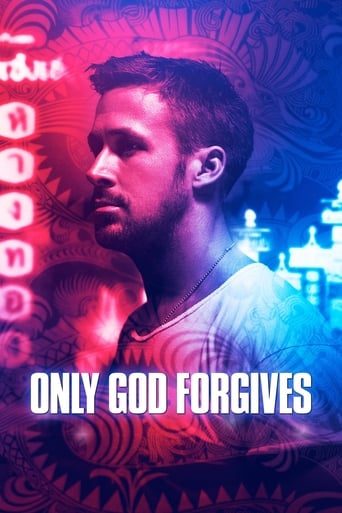
The Dissolve pinned Refn's Bangkok as film noir rendered in "neon reds and Lynchian blacks" — a phrase that has essentially functioned as the Rosetta Stone for everything that came after. Larry Smith's cinematography here is the template every disciple has since studied: chiaroscuro so extreme that faces disappear into shadow between blinks, corridors that read as vascular systems, red gels used not for atmosphere but for emotional temperature. If you want to understand why the last fifteen years of arthouse thrillers look the way they do, this is ground zero.
The Neon Demon
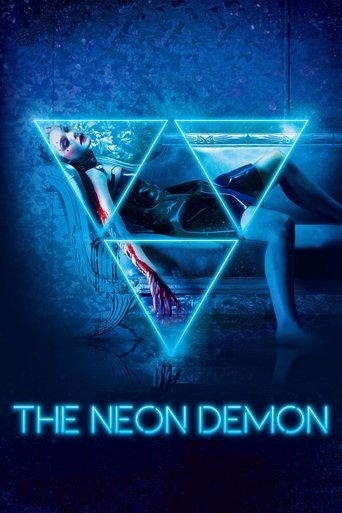
This is the closest sibling to Her Private Hell in Refn's own filmography — a beauty-industry horror that turns the predatory gaze of image-culture back on itself. Mirrors become weapons, strobes become editing tools, and the film's LA modeling world plays like a rehearsal for the influencer inferno Refn would revisit years later. Watched back-to-back with the new film, it reads as a warmup lap.
Drive
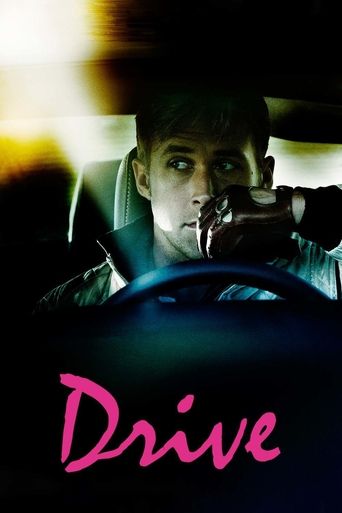
The gateway drug. On the surface a genre exercise — a stoic wheelman, a doomed romance, a heist gone wrong — but underneath, a hypnotic tone poem set to Cliff Martinez's synth pulse. Martinez's score is arguably as influential on the movement as Refn's visuals; the sound of a Juno arpeggio drifting under a slow tracking shot is now shorthand for an entire school of filmmaking. If someone tells you they don't like arthouse, put this on. It's the Trojan horse.
The Cosmatos Branch: Psychedelic Nightmare
Panos Cosmatos is Refn's West Coast cousin. Same devotion to synth scores, same taste for saturation that borders on aggression, same refusal to hurry — but where Refn is icy and Scandinavian, Cosmatos is warmer, weirder, more openly chemical in his influences. Where Refn wants you hypnotized, Cosmatos wants you dosed.
Beyond the Black Rainbow
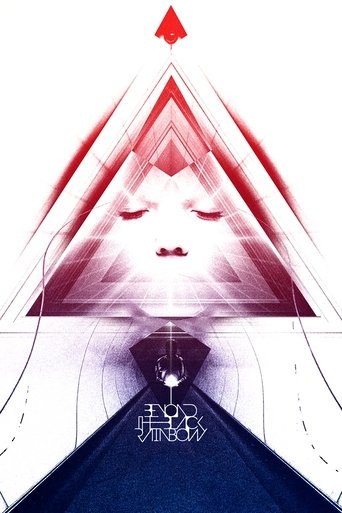
Collider described Cosmatos's 2010 debut as a mood piece of stylish visuals, and that's exactly right — a Reagan-era institutional nightmare set inside a New Age wellness facility that plays like Only God Forgives scored by Tangerine Dream. It moves at glacial speed, offers almost no exposition, and hypnotizes through sheer commitment to its palette. If Refn's films are red-and-black, Cosmatos's debut is red-and-teal, and the two color schemes belong to the same visual dialect.
Mandy
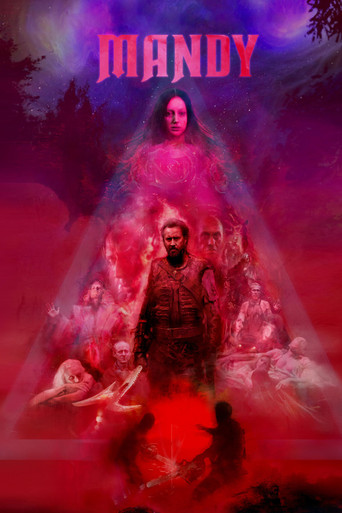
In his ScreenAnarchy interview, Cosmatos framed Mandy as a mythical realm of the imaginary — grief rendered as fever dream, Nicolas Cage as vessel rather than star, red as an emotional temperature rather than a color. It's his maximalist statement, the film where the sensibility of Black Rainbow finally meets a plot engine (revenge, chainsaw, cult) big enough to carry it into wider audiences. What connects it back to Refn is philosophical: both directors talk about cinema in terms of altered states, not stories. Ask either of them what a film is about and they'll answer with a feeling, not a plot.
The Ducournau Branch: Flesh as Neon
Julia Ducournau is the movement's most confrontational voice. She trades Refn's icy remove for something wet, warm, and openly violating — but the sensory-first philosophy is identical. Where Refn hypnotizes through withholding, Ducournau hypnotizes through overwhelm.
Raw

Cannibalism as coming-of-age. Ducournau's debut set a veterinary school as its arena, and the resulting palette — clinical blues under fluorescent light, arterial reds under party strobes — sits on the exact same color wheel as Refn's Bangkok. Same grammar, different vocabulary. The film's most infamous sequences aren't scary in a conventional horror movies sense; they're hypnotic, which is a much harder thing to shake off.
Titane
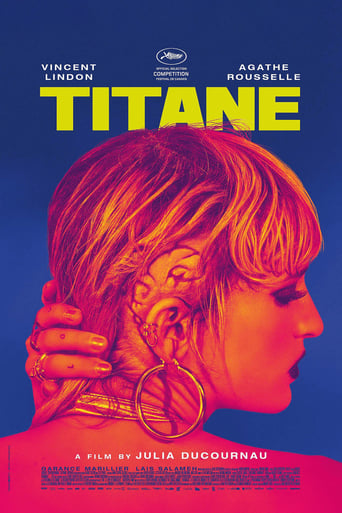
Her Palme d'Or winner, and — per her interview with The Upcoming — her most radical work to date, a film in which she used the body as a totem for anxieties nobody wants to name. It's Cronenbergian body horror strobed with garage neon and motor oil, and it's the clearest proof that the hypnotic-thriller bloodline isn't just a stylistic tic but a full-blown school of thought. Ducournau, like Refn, uses horror vocabulary as a delivery system for something closer to dance or trance than to plot.
Outer Orbit: The Adjacent Fever Dreams
Once you've moved through the core six, there's a wider constellation of films operating in the same key. Not disciples, exactly — more like fellow travelers who arrived at similar aesthetic conclusions from different directions.
Enemy
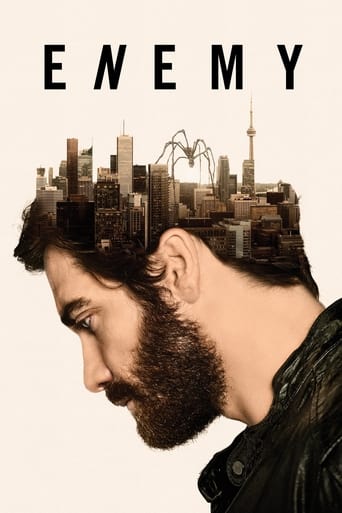
Denis Villeneuve's sulfurous, yellow-soaked doppelgänger thriller is the most Refn-adjacent film in his catalogue — same slowness, same use of color as psychological climate, same willingness to end on an image that refuses to explain itself. The final shot is one of the great hypnotic gestures of the 2010s movies.
Under the Skin
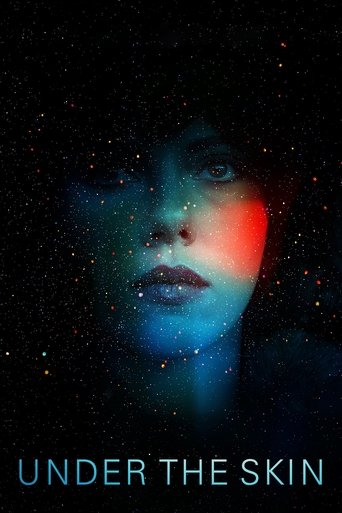
Jonathan Glazer's alien seduction picture is pure hypnotic cinema, particularly in its abstract void sequences, which share direct DNA with the dream logic of Her Private Hell. Mica Levi's score is the sonic equivalent of Refn's palette — a small number of extreme tones, held long enough to become physical.
Possessor
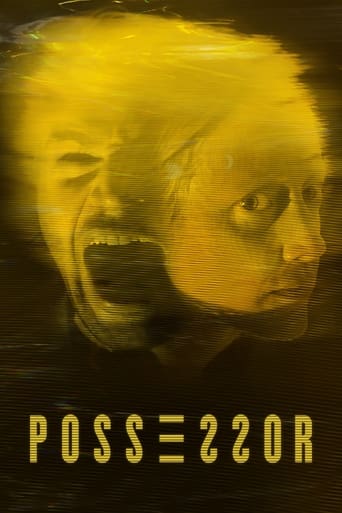
Brandon Cronenberg carries the family flag with strobing, sensory-assault set pieces that any Cosmatos fan will recognize inside of thirty seconds. Its melting-face transition sequences are among the boldest formal experiments in recent genre cinema.
The 2010s movies was the crucible where this whole aesthetic crystallized into a recognizable movement. It's not a coincidence that Drive, Beyond the Black Rainbow, Only God Forgives, Enemy, and Under the Skin all landed within a four-year window. Something in the culture — the collapse of the mid-budget thriller, the rise of the boutique arthouse label, the ubiquity of the analog-synth revival — created the conditions for it. Her Private Hell is what happens when a founding member of that scene wakes up and decides the movement isn't finished yet.
Can't Decide What to Watch?
Let RandomFlix pick a movie for you. One click, one great movie.
Roll the DiceWhere to Start if You're New to the Bloodline
If you came to Her Private Hell cold and left curious rather than converted, there's a natural on-ramp. Start with Drive — it's the most accessible, the most conventionally satisfying, and the film most likely to convince a skeptical friend that arthouse thrillers can also just plainly rip. Graduate to Mandy, which is the most purely enjoyable of the bunch and doubles as an initiation into how far this sensibility can push while still functioning as entertainment. Then commit to Titane, which is the most demanding and the most rewarding — a film that asks you to surrender in a way the others only flirt with.
Beyond that, the bloodline keeps branching. RandomFlix's dice roller inside the thriller movies hub is a decent way to stumble into adjacent titles when you don't feel like plotting a course — the algorithm is friendlier to weird corners than most, and this particular corner is very well-populated.
Refn didn't return to a dead scene. He returned to one that was quietly waiting for him to turn the neon back on. Follow the light.