Why Exit 8 Struck a
Nerve A man steps off a Tokyo subway train.
The corridor stretches ahead, tiled and fluorescent. A poster. A vent. A businessman walking the other way. If he spots an "anomaly," he turns back. If he misses one, he loops. Forever. That's Exit 8 — Genki Kawamura's adaptation of the viral indie walking-sim game — and it has quietly become one of 2026's most talked-about horror exports. The film premiered in the Midnight Screenings section at Cannes before Toho released it in Japan on August 29, 2025, with Neon acquiring North American rights for an April 10, 2026 theatrical rollout. It grossed over ¥5.2 billion in Japan and currently sits at 92% on Rotten Tomatoes. Critics can't stop reaching for the same adjectives. The Hollywood Reporter framed it as an "extended purgatory" single-location J-horror exercise, while Rolling Stone's David Fear called it an existential horror film and invoked the "overlit, antiseptic white" aesthetic associated with Kubrick. Time Out positioned the movie as a direct companion to A24's forthcoming Backrooms adaptation, describing "the unease of infinite liminal spaces" — which is almost certainly why you're here. You felt that specific horror movies unease and you don't know what it's called or where else to find it. Good news: it has a name, a lineage, and a canon. Let's map it.
What Is Liminal Space Horror, Exactly?
Liminal space horror is about transitional architecture turned wrong. Hallways, subways, lobbies, stairwells, motel corridors — rooms designed to be passed through — become inescapable, repeating, and subtly malformed. The horror isn't a ghost jumping out. The horror is that you've been here before, and the ceiling tile is different now, and there is no exit. The subgenre crystallized online around the Backrooms mythos: fluorescent-lit yellow wallpaper, damp carpet, the dread of infinite sameness. But its cinematic DNA stretches back decades. What distinguishes it from haunted-house or slasher horror is simple — the monster is the architecture itself. Nobody is chasing you. The building is the thing that wants you lost. Sensory markers to watch for: humming fluorescents, geometric carpet, disembodied PA announcements, symmetrical tracking shots, the complete absence of other people (or their unsettling presence when they shouldn't be there). If you want to browse the style directly on RandomFlix, the liminal-space movies and one-location movies tags are where this canon lives.
The J-Horror Bloodline:
Loops, Curses, and Corridors Exit 8 didn't emerge in a vacuum.
The Austin Chronicle's Richard Whittaker explicitly places it within a contemporary J-horror tradition alongside Ju-on, Kairo, and Ring, noting its endless-loop psychological mechanics. These are the ancestors you should queue up first. - Pulse (Kairo, 2001) — Kiyoshi Kurosawa's internet-age ghost story pioneered the empty-room dread that Exit 8 inherits wholesale. Long shots of nobody. Silence that hums. Rooms that feel radioactive with grief. If you loved Exit 8's depopulated platform, this is the source code.
- Ju-on: The Grudge — cursed-space logic. The geography itself is contaminated; walk into the wrong house and the curse is on you. Exit 8 inverts this: walk into the wrong iteration of the same corridor.
- Ringu — the loop as horror engine. A thematic cousin to Exit 8's repeating corridor, where time itself becomes the trap.
- Dark Water — mundane apartment-block liminality turned oppressive. Stairwells, elevators, water stains. This is Hideo Nakata proving the most ordinary building in Tokyo is already a haunted house. Dig deeper at j-horror movies — sort by decade and you'll surface an entire alternate canon most Western viewers have never seen.
Kubrick and the Overlit
Hallway Tradition Critics aren't reaching for Kubrick by accident.
His filmography built the visual grammar Exit 8 speaks in. - The Shining — the ur-text of corridor horror. The Overlook's hallways, with their symmetrical tracking shots and geometric carpeting, are Exit 8's direct ancestor. Watch how Danny's Big Wheel ride prefigures every tracking shot in the Tokyo corridor.
- 2001: A Space Odyssey — the white room as existential terminus. The film's final act is pure liminal horror avant la lettre: a room that shouldn't exist, rendered in overlit antiseptic clarity.
- Eyes Wide Shut — dreamlike repetition. Doors open into rooms that shouldn't be there. Tom Cruise wanders Manhattan as if Manhattan were a labyrinth designed specifically to disorient him. What these films share with Exit 8 is a specific camera grammar: symmetry weaponized, tracking shots that turn architecture into an antagonist, lighting that flattens depth until the space itself feels lying.
Can't Decide What to Watch?
Let RandomFlix pick a movie for you. One click, one great movie.
Roll the DiceThe Möbius-Strip Thrillers:
When You Can't Escape the Loop KQED's review discusses Exit 8's cinematic hallway horror precedents — including Oldboy, Inception, and Point Blank — and frames the film around a Möbius-strip structure.
That recursive, I-am-my-own-trap logic defines a whole shelf of films adjacent to liminal horror. - Oldboy — Park Chan-wook's hallway fight is the single most-cited spatial-entrapment sequence in 21st-century cinema. The corridor as purgatory, the corridor as prison, the corridor as the only way through.
- Triangle (2009) — a near-perfect Exit 8 double feature. A woman on a boat. A ship. A loop. A body. Another loop. Christopher Smith's film is pure repeating-space dread dressed up as a thriller.
- Coherence — low-budget, dinner-party identity-loop dread. Houses start duplicating. Which version of the house are you in? Which version of yourself?
- Enemy — Denis Villeneuve's recursive doppelgänger nightmare, all jaundiced Toronto light and locked-in symmetry. For a full deep-dive into this vein, the a preset preset on RandomFlix bundles these together — save it and roll from there.
Backrooms-Coded Modern Picks The 2020s movies have produced more liminal horror per capita than any prior decade, and the Time Out line about Exit 8 and A24's Backrooms adaptation is telling — this is where the subgenre is going. - Skinamarink — the closest Western cousin to Exit 8.
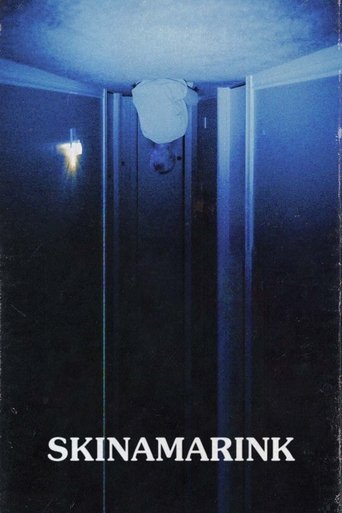
Kyle Edward Ball's feature turns a suburban house into an infinite analog-video trap. Doors vanish. Windows vanish. The parents vanish. What's left is texture, darkness, and dread. If Exit 8 rewired your brain, this will strip-mine it.
- Beau Is Afraid — Ari Aster's three-hour apartment-and-hallway anxiety spiral. The opening sequence alone, in which Beau's apartment building becomes a gauntlet of escalating wrongness, is liminal horror at its most maximalist.
- Vivarium — suburban infinity as psychological prison. A couple tours a house in a planned development and cannot leave the development. The sky is painted. The neighbors are gone. The hedge maze is the map. The upcoming A24 Backrooms adaptation will almost certainly be the commercial breakout moment for this entire subgenre. Exit 8 is the appetizer.
The Twilight Zone Wildcards The Boston Globe's review explicitly invokes The Twilight Zone to describe the repeating-corridor entrapment experience Exit 8 delivers.
That anthology DNA — pure architectural premise, no psychological backstory required — runs through a specific cluster of films worth knowing. - Cube — *Cube (1997). Pure architectural horror. Strangers wake up in a cube. Adjacent cubes are also cubes. Some cubes kill you. No explanation offered, no exit promised. Vincenzo Natali made the purest liminal horror film of the 20th century on a shoestring.
- Exam — eight candidates, one room, one question, eighty minutes. The single-location dread experiment distilled.
- Circle, Coherence, The Platform — all variations on the "one weird room" premise that Exit 8 refines into corridor form. When should you pick these over the slower J-horror entries? When you want mechanism over mood. The J-horror films want you to marinate in atmosphere. The Twilight Zone descendants want you to solve a puzzle while the walls close in.
How to Build Your Own Exit 8 Watchlist
Here's the practical part.
On RandomFlix you can stack filters to build an Exit 8-shaped shelf in about thirty seconds: 1. Start at psychological-horror movies, set runtime under 110 minutes (liminal horror almost always runs tight), and add one-location movies.
- For the existential-dread crowd, layer in a "surreal" keyword and filter to 90%+ aggregate ratings. You'll get Kubrick, Lynch, Villeneuve, and the best of J-horror in one scroll.
- For a full J-horror deep dive, start at j-horror movies and sort by decade — the 2000s wave is where most of Exit 8's direct ancestors live.
- Save the filter combination as a preset (call it "Exit 8 Mode" — we won't judge) and hit it again whenever the mood strikes. Browse RandomFlix The corridor doesn't end when the credits roll. It just opens into the next film. Pick one, dim the lights, and see how long you can go before you notice the anomaly.