Why Every Cabin Horror Owes Raimi a Royalty Check
Sébastien Vaniček's Evil Dead Burn is the latest entry in a bloodline that started with a broke twenty-year-old and his high school buddies dragging camera equipment into a Tennessee cabin in the winter of 1979. RogerEbert.com's 2026 review pegs Vaniček's film as a vicious gorefest that trades Raimi's tongue-in-cheek humor for pure mean streak, echoing the tonal shift Lee Cronin engineered with Evil Dead Rise. That's the whole story of the franchise in one sentence — and, arguably, the whole story of cabin horror.
Because The Evil Dead didn't just spawn sequels. It built a subgenre. Isolated cabin, ancient evil, escalating body horror, one final girl or guy left standing while everyone they love writhes on the floor. Raimi's DNA has been spliced into four decades of horror movies, sometimes reverently, sometimes as a hostage note.
Raimi's origin story runs through a prototype short called Within the Woods, a 32-minute proof of concept he shot with Bruce Campbell and Robert Tapert to raise money for the feature. That low-budget Michigan-and-Tennessee shoot codified everything: the shaky first-person evil-POV shots, the tree assault, the possession that turns friends into cackling threats, the practical-effects arms race. Every film below either inherits or actively rebels against a piece of that blueprint.
Here are eight descendants — direct heirs, loving imitators, meta interrogators, and modern mutations — and the exact piece of Evil Dead DNA each one chose to carry forward.
The Direct Bloodline: Franchise Entries That Redefined the Rules
Evil Dead
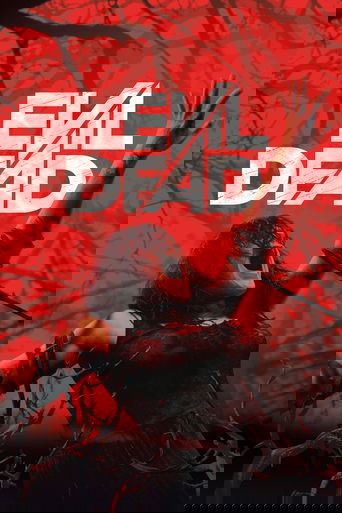
Fede Álvarez's 2013 reboot is the moment the franchise abandoned slapstick for sincerity. Gone is Ash Williams and his one-liners; in their place is Mia, a heroin addict whose intervention with friends at a family cabin becomes the cover story for her possession. The drug-withdrawal framing is genius — it explains why nobody believes her, why nobody leaves, why the horror escalates before the supernatural elements are even confirmed.
Álvarez leaned into practical gore with an almost pathological commitment, and the film's refusal to wink at the audience set the tonal template Vaniček would inherit thirteen years later. If Evil Dead Burn feels like it's trying to hurt you, blame Álvarez for proving that approach could work commercially.
Evil Dead Rise
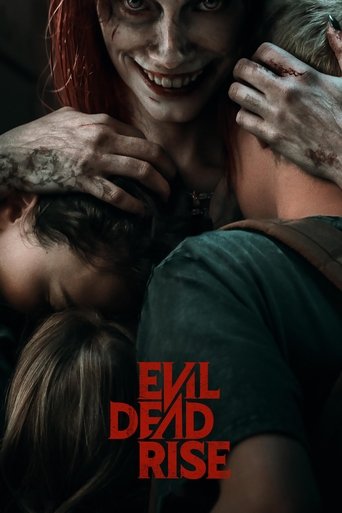
Cronin's 2023 detour swapped the cabin for a condemned Los Angeles apartment tower, and in doing so proved something crucial: the Deadites travel, but the claustrophobia stays. A high-rise with a broken elevator is just a vertical cabin. The Book of the Dead was going to find someone eventually.
The cheese-grater scene functions as the modern franchise's mission statement — a piece of domestic violence turned surrealist body horror that announces, in one four-second beat, that this iteration of the property is not interested in your comfort. Cruelty over camp. That's the flag Cronin planted, and Vaniček saluted it.
The Homage Wing: Films That Wear Their Raimi Love on Their Sleeve
Cabin Fever
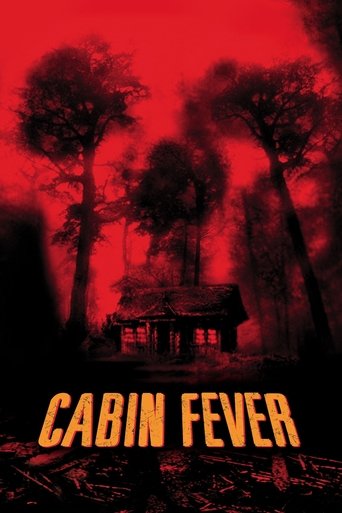
Eli Roth has never been coy about his sources. In a Dread Central interview tied to the film's 4K restoration, he framed Cabin Fever as an homage to The Evil Dead, The Thing, Dawn of the Dead, and The Texas Chain Saw Massacre. The 2026 4K scan release gives every horror fan a clean excuse to revisit how cleverly Roth swapped Raimi's demonic possession for a flesh-eating virus while keeping the cabin geography, the friend group, and the escalating "who's infected now" paranoia essentially identical.
What Roth understood — and what makes Cabin Fever more than a rip — is that the cabin subgenre is really about a small group's social contract collapsing under external pressure. Whether that pressure is a Sumerian demon or a waterborne pathogen is almost incidental. The screaming, the boarded doors, the friend you have to lock in the shed: all of it belongs to Raimi.
Dead Alive
Peter Jackson's 1992 splatter opus (also released as Braindead) is the alternate-universe answer to what Evil Dead II would look like if it had been shot in Wellington by a director who wanted to weaponize a lawnmower. The film's climactic sequence — Lionel wading through a room of undead with a Lawnboy strapped to his chest — is Raimi logic taken to its natural endpoint.
Jackson and Raimi share a foundational belief: gore, past a certain volume, becomes comedy. Both men understood that once you cross the threshold of physical possibility — once blood is arcing across the ceiling and body parts are gaining independent personalities — the audience can only laugh. Evil Dead II codified the theory. Dead Alive stress-tested it.
The Meta Wing: Films That Interrogate the Template
The Cabin in the Woods
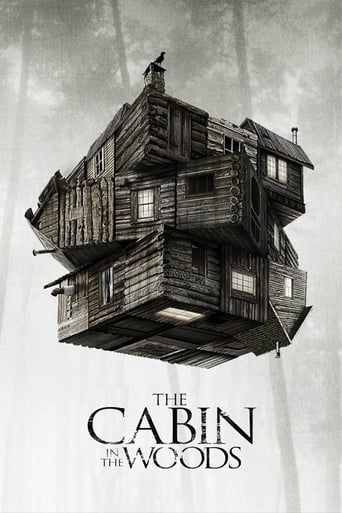
Drew Goddard and Joss Whedon's 2011 film is the subgenre's autopsy report, delivered with a straight face. Five college kids drive to a remote cabin. There's a basement full of cursed objects. A book. Redneck zombies. Everything you would expect — and every one of those elements turns out to be a ritual staged by underground technicians appeasing ancient gods.
What keeps The Cabin in the Woods from feeling like parody is its evident affection. Goddard and Whedon aren't mocking Raimi; they're itemizing his contributions and thanking him by name. The film's central joke is that the tropes only work because they're archetypal, and archetypes only become archetypes because someone brilliant invented them first. Raimi invented most of these.
Antichrist
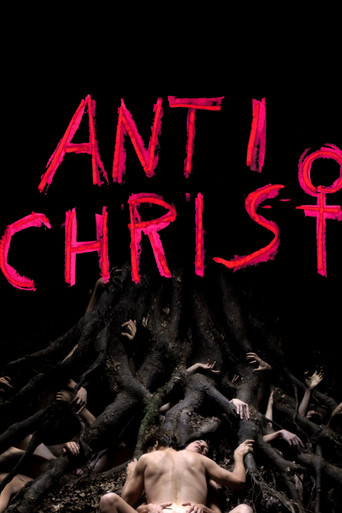
Lars von Trier's 2009 arthouse detour takes the exact same setup — grieving couple retreats to isolated woodland cabin called Eden — and swaps Deadites for repressed trauma. There's no Book, no chanting on tape. The evil is grief itself, and the cabin is where grief metastasizes.
But the bones are pure Raimi. The forest is alive and hostile. Something in the trees is watching. Isolation strips the characters down to their most primal versions of themselves, and by the third act, the violence is genital-mutilation graphic in a way that would make Raimi's 1981 splatter look modest. The cabin-in-the-woods movies setup, it turns out, is a remarkably flexible container for whatever demons a director actually wants to exorcise.
Start a Watchlist
Keep track of every movie that catches your eye. Your watchlist, your rules.
Start Your WatchlistThe Modern Descendants: Rural Isolation, Recalibrated
What Keeps You Alive

Colin Minihan's 2018 lakeside two-hander is the intimate version of the Raimi template. A couple arrives at a family cabin to celebrate their anniversary. One of them, it turns out, is a serial killer. That's the whole engine — no demons, no book, just a woman, her wife, and a rifle.
The film understands that the cabin's real power was never the supernatural. It was the geography: no neighbors, no cell signal, no witnesses, no help. Strip the ancient evil out of the Raimi formula and you still have a psychological pressure cooker where the person you trust most can become the thing you fear most. Minihan just made that transformation literal.
X
Ti West's 2022 Texas farmhouse slasher is the 2020s heir apparent to the cabin tradition. In his Academy interview about X and its prequel Pearl, West talked about wanting to make films that felt like the grimy 1970s and 80s horror he grew up on. That grimy quality — the sense that the location itself is malignant, that the walls of the property have absorbed something wrong — is straight from the Raimi playbook, filtered through Tobe Hooper.
The porn-shoot framing is a smart update on Raimi's teens-on-vacation setup. Same rural isolation, same escalating dread, different pretext. West replaced the Book of the Dead with a repressed elderly landlady, but the mechanics are identical: outsiders arrive, the location has plans for them, no one makes it back to the highway intact.
Where Evil Dead Burn Fits in the Family Portrait
Vaniček inherits Álvarez's seriousness and Cronin's cruelty, but he shoots in new geography — trading the woods around a family cabin for terrain the Ebert review argues the film gets lost inside. For viewers who want pure atmosphere over plot, that disorientation is a feature, not a bug. Burn is less interested in narrative economy than in wringing the maximum amount of suffering out of a locked location and a small cast.
Which is, in the end, what unites all eight of these films. The cabin subgenre is durable because its rules are simple and modular: put a handful of people somewhere with no exits, introduce something that wants them dead, and let the geography do the work. The evil can be a Sumerian demon, a virus, a serial-killer spouse, an ancient god, or grief itself. The cabin doesn't care.
If you want to keep pulling this thread, the horror movies shelf and the 2020s movies page are where the newest cabin descendants keep turning up.
The Short List, Ranked by
How Much Raimi They Actually Carry
Ranked from most direct inheritance to most transformed:
- Evil Dead — Franchise entry, practical gore, cabin geography. The blueprint, sincere edition.
- Evil Dead Rise — Same franchise, new zip code, same commitment to cruelty.
- Cabin Fever — Openly declared homage, cabin intact, demon swapped for virus.
- Dead Alive — Splatter comedy in the Evil Dead II tradition, spiritual sibling.
- The Cabin in the Woods — Loving critique that only works because it knows the source cold.
- What Keeps You Alive — Cabin, isolation, betrayal; no supernatural required.
- Antichrist — Same forest, entirely different demons.
- X — Rural isolation reframed for a new decade, cabin swapped for farmhouse.
Coming straight off Evil Dead Burn and looking for the closest tonal match? Start with Cronin's Evil Dead Rise — it's the film Burn most directly inherits from — and chase it with the 4K restoration of Cabin Fever for a reminder that the subgenre can wear its debts openly and still surprise you.
Raimi built the cabin cheap, mean, and modular in 1981. Forty-five years later, filmmakers are still moving into it.