Why Digger Feels Like a Kubrick Movie in a Cruise Suit
On September 22, Alejandro González Iñárritu's Digger will have its world premiere at the Royal Film Performance in London before rolling out wide on October 2. The numbers around it are startling: a reported $130 million budget for what Iñárritu himself has described as a comedy of catastrophic proportions, with Tom Cruise anchoring the whole apparatus as an oil tycoon named Digger Rockwell. Studios don't spend that kind of money on tonal extremity anymore. Warner Bros. is betting that satire — real, corrosive, formally ambitious satire — still has the horsepower to move a mass audience.
The official logline sharpens the pitch: the most powerful man in the world embarks on a frantic mission to prove he is humanity's savior before the disaster he's unleashed destroys everything. That single sentence inverts the entire Cruise archetype. The man who has spent forty years running toward the camera to save us is now the man who broke the world in the first place. The heroism becomes damage control. The mission becomes cover-up.
And the shape of the thing keeps rhyming with one specific ancestor. Digger has been framed as a throwback to 1960s nuclear jitters with a modern ecological twist, with John Goodman as president echoing the War Room of Kubrick's Dr. Strangelove. That's not a stylistic tic. It's a claim of inheritance — Iñárritu is stepping into a specific American satirical tradition, and Digger only lands with full force if you can hear the movies it's arguing with.
What follows is a map of eight films that make up Digger's satirical bloodline. Not tonal cousins. Ancestors. The specific chain of American power satire that runs from the War Room to the oil field, from Peter Sellers to Tom Cruise.
The Cold War Root: Kubrick's Blueprint
Dr. Strangelove
Everything in this lineage starts here. Kubrick's 1964 masterpiece fused procedural realism — briefing rooms, checklists, chain-of-command formalities — with pure cartoon grotesquerie, and the collision between the two registers is what makes the film immortal. That's the exact tonal knife's edge Iñárritu appears to be chasing with Digger Rockwell: a real institution, played for real stakes, populated by lunatics no one has the authority to stop.
The ethical target was never nuclear weapons themselves. It was the institutional psychology that normalized them — the men who could discuss megadeaths over cigars because the vocabulary of the system had numbed them to the meaning. Digger's ecological catastrophe reads as the 2026 update to that satirical logic. Swap out the doomsday device for an oil-field cataclysm and the target is identical: not the disaster, but the men whose worldview made the disaster inevitable and then made it unspeakable.
Network
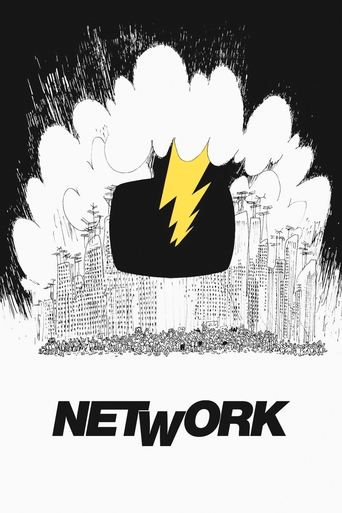
Sidney Lumet and Paddy Chayefsky's 1976 rage-comedy is the connective tissue between Kubrick and everything that follows. Network understood something Strangelove had only intuited: that satire in America has to escalate faster than reality itself can, or reality will simply overtake the joke and neutralize it. Howard Beale's on-air breakdown is funny for about ninety seconds before it curdles into prophecy.
Both films end in catastrophic public spectacle — Slim Pickens riding the bomb, Beale executed live on television — a mode Digger's trailer teases openly. When a satire's climax is a broadcast disaster, it's talking to these two movies.
The Reagan-Era Corporate Grotesque
RoboCop

Verhoeven's 1987 Detroit is now closer to documentary than dystopia. Privatized violence, ad-break satire that cuts the film into segments of pure sponsored delirium, the corporation as the real villain and the human bad guys as its middle managers — this is the template every subsequent corporate satire has drafted off. Digger Rockwell, as an oil-baron protagonist whose personal ambition drags an entire planet toward ruin, descends directly from OCP. The company that eats the city. The executive who mistakes his balance sheet for a moral compass.
Wall Street
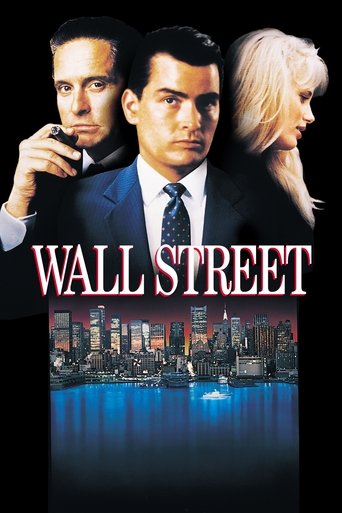
Oliver Stone made a critical error and then discovered it was actually the point: Gordon Gekko was supposed to be a monster and audiences fell in love with him. That accident became the template. Wall Street was the first mainstream Hollywood attempt to render the American capitalist as a compelling monster rather than a villain to boo, and every serious American power satire since has had to wrestle with that ambivalence. Cruise's Digger Rockwell inherits it wholesale — the villain-protagonist you can't quite look away from, played by the movie star you can't quite stop rooting for.
Note how 1980s movies satire had to smuggle its critique inside genre pleasures — action, romance, thriller — because a straight-faced attack on capitalism wouldn't get greenlit. Iñárritu is now deploying that same strategy at maximum scale, using the biggest movie star alive as the delivery mechanism for the critique.
The Oil-and-Empire Epics
There Will Be Blood
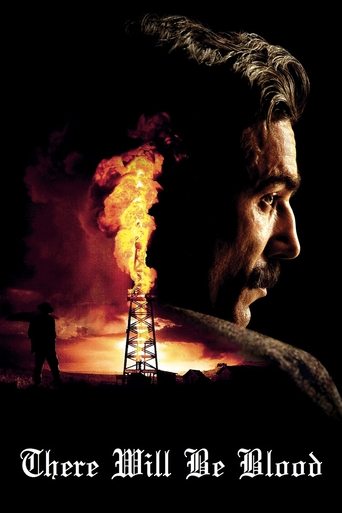
Paul Thomas Anderson's Daniel Plainview is the closest direct ancestor to Digger Rockwell in all of American cinema. The oil man as origin myth, the drill as founding violence, the milkshake as manifesto. Plainview isn't a metaphor for American capitalism; he's American capitalism given a body and a walking stick.
Variety's coverage frames Digger as unlike anything Cruise or Iñárritu had tackled before — a comedy of catastrophic proportions from the two-time Academy Award-winning filmmaker. That word, comedy, is the tonal inversion that makes Digger's existence necessary. PTA played the oil-baron story as tragedy. Iñárritu is playing it as farce. Same archetype, opposite register — and the argument seems to be that after two decades of watching real Plainviews destroy real ecosystems, tragedy is no longer the honest response.
Syriana

Stephen Gaghan's mosaic thriller is the geopolitical companion piece: what oil does to institutions rather than what it does to individual souls. Where There Will Be Blood narrows in on one damned man, Syriana fans out across CIA analysts, Gulf princes, energy lawyers, and Beltway operators, showing the crude commodity as the invisible fluid that lubricates every American power structure.
Together, these two films bracket the terrain Digger is entering. Individual damnation on one side, institutional rot on the other. Iñárritu's move is to try to hold both at once and force them into a comic register.
The 21st-Century Absurdist Turn
Sorry to Bother You

Boots Riley's 2018 debut is the closest tonal cousin to what Iñárritu seems to be attempting. Riley's argument is simple and radical: late capitalism is now so grotesque on its own terms that the only honest artistic response is maximum absurdity. Realism understates the case. Only surrealism gets close to accurate.
If Digger is going to work, it has to reach for that ceiling — the willingness to break its own reality to catch up to the reality of its subject. Riley did it with a $3 million budget. Iñárritu is trying it with more than forty times that.
Don't Look Up

Adam McKay's climate-as-comet allegory is the immediate precedent Digger has to reckon with. It prefigures Iñárritu's ecological-catastrophe-as-comedy premise almost exactly, and its mixed reception is instructive. What worked: the fury, the pace, the willingness to name names. What didn't: a script that too often mistook contempt for its characters for critique of them, and a satirical target so broad it flattened into scolding.
Iñárritu's likely correction is craft — the maximalist filmmaker replacing the sketch-comedy director, formal control instead of formal shrug. Both films argue that satire movies is now the only register capable of matching the scale of the crises. Digger will test that claim at $130 million scale.
Can't Decide What to Watch?
Let RandomFlix pick a movie for you. One click, one great movie.
Roll the DiceWhat Digger Adds to the Lineage
Three things distinguish Digger's bid for the tradition.
First, the visuals. The official site confirms VistaVision production, and Iñárritu's technical maximalism applied to satire is genuinely new. Almost every film above is visually functional rather than opulent — satire has historically been a lean, unglamorous mode because opulence tends to seduce the audience into the very worldview the film is critiquing. Iñárritu is betting he can outrun that trap. If it works, Digger will look like nothing this tradition has ever produced.
Second, the casting. Putting the biggest movie star in the world in the villain-protagonist chair is a move Kubrick made with Peter Sellers (three roles, all of them variations on institutional insanity) and PTA made with Daniel Day-Lewis. Cruise's participation is itself the meta-statement — the fact that the actor who has spent his entire career embodying American competence, American charm, and American winning is willing to play the man who breaks the world says something the film doesn't have to spell out.
Third, the register. TheWrap's CinemaCon coverage explicitly compared Cruise's performance to his Les Grossman turn in Tropic Thunder, which suggests Cruise is unleashing his rarely-used comic mode at feature length for the first time. Les Grossman was a five-minute grenade. Digger Rockwell is a two-hour detonation.
Whether Digger lands as the capstone of this tradition — the film that finally proves satire can operate at blockbuster scale — or as a spectacular course correction that forces the lineage to reinvent itself again, we'll know on October 2. The tradition is elastic. It has survived misfires before.
Building the Pre-Digger Watch
If you want the tightest possible orientation before the lights go down, three films will do most of the work.
- Dr. Strangelove for the tonal template — the collision of procedural realism and grotesque comedy that Iñárritu is clearly using as his north star.
- There Will Be Blood for the oil-baron archetype in its most fully realized tragic form, so you can hear exactly which chord Iñárritu is inverting.
- Sorry to Bother You for the absurdist ceiling — the sense of how far a modern American satire can push before the audience checks out or the film breaks.
For deeper cuts, dark-comedy movies is a natural browsing lane and corporate-satire movies covers the fuller tradition, from the 1980s movies corporate grotesques through the 2000s movies and 2010s movies anti-capitalist waves. If you'd rather be surprised, a dice roll on RandomFlix is a decent way to catch a satirical wildcard from those veins without deciding in advance what mood you're in.
The films in this bloodline share one conviction: that the American power structure is now so absurd on its own terms that only comedy can describe it accurately. Digger is either the biggest bet that conviction has ever received, or the moment it collapses under its own budget. Watch the ancestors first, then decide for yourself which one it is.