Why Couture Hits Differently
Alice Winocour has called Couture a memento mori, and she means it the way a tailor means a measurement—precisely, with both hands. The film premiered in TIFF's Special Presentations slate in September 2025 and was, remarkably, the first fictional feature ever shot inside Chanel's Paris showroom and atelier. But the location is almost beside the point. What lingers is the central conceit: Maxine, an American filmmaker played by Angelina Jolie, receives a breast cancer diagnosis in the days before a major haute couture show, and the film chooses to watch her keep working.
Winocour has spoken about how her own losses, and Jolie's family history of breast and ovarian cancer, fed the screenplay. The result is not a weepie. It's an observational, multi-strand piece that braids Maxine's story together with Ada, a young model navigating the industry's machinery, and Angèle, a seamstress whose hands hold the whole edifice together. The camera lingers on a steam iron longer than it lingers on a tear. A swatch gets more screen time than a hospital corridor.
That register—craft as a way of holding still while the body refuses to—belongs to a small, specific tradition. It's a tradition of films about women whose hands keep working while their bodies betray them, and it runs through some of the most quietly devastating drama movies of the last sixty years. Below are eight tonal cousins that share Couture's exact frequency.
The Eight Films, and How They Rhyme With Couture
These aren't ranked. Think of them as siblings at different ages, scattered across European auteur cinema and a few grown-up American dramas that earned the right to sit at this table. None of them are teen-romance cancer movies. All of them understand that work is not a distraction from mortality—it's the language mortality finally gets translated into.
If you'd rather let chance pick tonight's watch from a shortlist this specific, Roll the Dice works nicely.
Can't Decide What to Watch?
Let RandomFlix pick a movie for you. One click, one great movie.
Roll the DiceParis, Memories
Winocour's own 2022 film is the most direct sibling to Couture, and the obvious double-feature. Virginie Efira plays Mia, a survivor of a Bataclan-style attack reassembling herself by returning, again and again, to the brasserie where it happened. The interest is the same: how trauma reroutes itself through routine, how a city can be both wound and witness.
Where Couture treats fabric as something you have to handle to understand, Paris, Memories treats memory the same way—as a textile you run between your fingers until the pattern surfaces. It's the film that taught Winocour how to make Couture, and watching them in sequence is like watching a director rehearse the same prayer in two different rooms.
Proxima
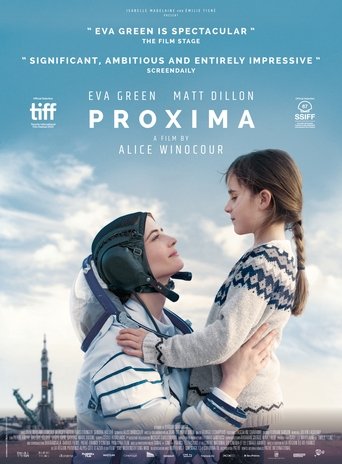
Eva Green plays Sarah, an astronaut training for a year-long mission aboard the ISS, which means leaving her young daughter behind. Winocour again—she clearly has a recurring obsession with women whose work demands they absent themselves from their own bodies and families.
The training-montage-as-grief-work parallel is exact. Maxine pinning a hem and Sarah running centrifuge drills are the same gesture: a woman submitting her body to a process larger than herself, partly because the process is more bearable than the feeling underneath it. Proxima is the film that proves Winocour was already writing Couture in 2019—she just hadn't found the atelier yet.
The Farewell
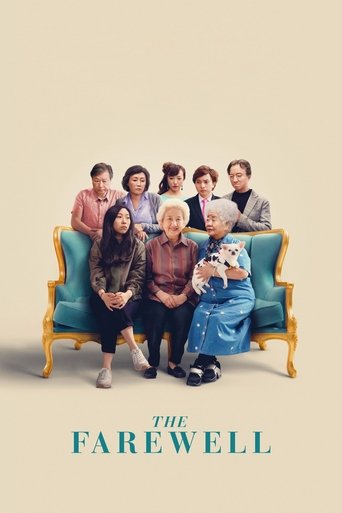
Lulu Wang's 2019 film hides a grandmother's cancer diagnosis from her, at the family's insistence, behind a fake wedding. Awkwafina's Billi is the expatriate cousin of Jolie's Maxine: an American woman wandering a city that isn't hers, trying to translate grief into the local dialect.
Both films stage illness as the thing that finally exposes which language a family actually speaks. Maxine's English keeps bouncing off the atelier's French; Billi's Mandarin keeps bouncing off her own American instincts. The performance of normalcy, in both films, is itself a form of labor—and the labor is exhausting in the same particular way.
One True Thing
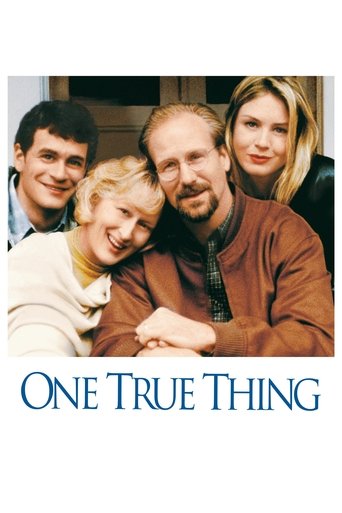
Carl Franklin's 1998 drama is underrated in part because it refused to do any of the things a movie about a mother dying of cancer was expected to do in 1998. Meryl Streep is Kate, the homemaker; Renée Zellweger is Ellen, the daughter who comes home to nurse her and slowly understands that her mother built a household with the same deliberateness Ellen brought to her magazine career.
This is the "work that outlives them" angle in its purest American form. Streep's Kate built a life out of small, repeated gestures the way Maxine builds a collection, and the film treats those gestures with a respect bordering on awe. Franklin's restraint—no violins, no big speeches, just one true thing after another—is the closest American analogue to Winocour's approach.
Phantom Thread
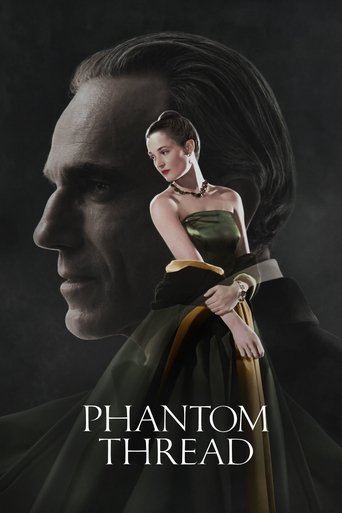
Paul Thomas Anderson's couture obsession from the male designer's side is the useful counterweight here. Daniel Day-Lewis's Reynolds Woodcock treats the body as a problem to be solved with fabric. Vicky Krieps's Alma treats his body as a problem to be solved with mushrooms. Illness becomes power exchange; the dressmaker's body becomes the room's secret weather.
Couture inherits this metaphysics—the belief that a garment is a kind of binding spell, that what you stitch into a dress at three in the morning is what holds it together on the runway—and hands it to a woman who is dying inside the garment she's making. Phantom Thread is the spell cast outward; Couture is the spell cast inward.
Cléo from 5 to 7
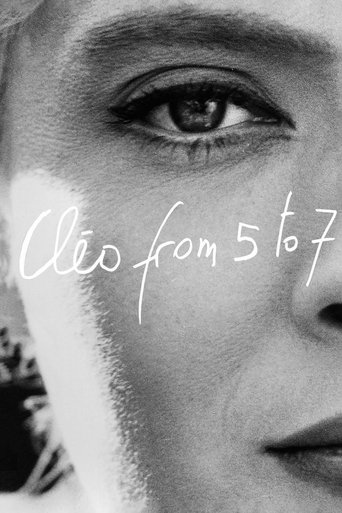
Agnès Varda's 1962 masterpiece is the ur-text. A pop singer named Cléo wanders Paris in something close to real time, waiting for biopsy results. She performs her femininity—the wig, the lover, the songs—while privately convinced she is dying. Then she stops performing, and the film changes shape around her.
Couture is most clearly answering this film, and the Slant review hints at it when it situates Winocour against the great French intimacy tradition. Cléo invented the structure: a woman drifting through Paris, terrified, observed by a camera that refuses to look away or to sentimentalize. Sixty years on, Maxine is drifting through the same city with the same secret, and the long line connecting them is one of foreign movies cinema's quietest miracles.
Personal Shopper
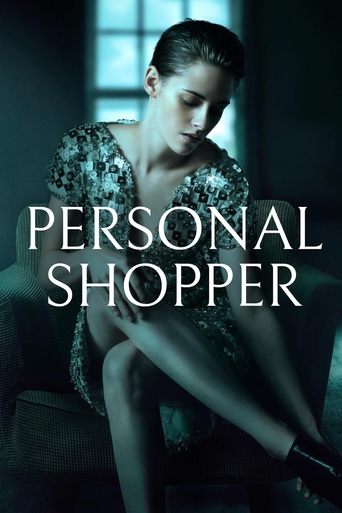
Olivier Assayas's 2016 film puts Kristen Stewart in Paris, alone with a phone and a wardrobe she doesn't own, processing the death of her twin brother by buying clothes for a celebrity she despises. The fashion world becomes a grief container. The assistant-class women who keep the industry upright become the film's real subject.
Couture is interested in the same stratum—Angèle the seamstress, Ada the model, the women below the line who hold up the whole edifice. Both films understand that fashion is a vast machine for displacing private feeling onto public surfaces, and both ask what happens to the women doing the displacing.
Wit
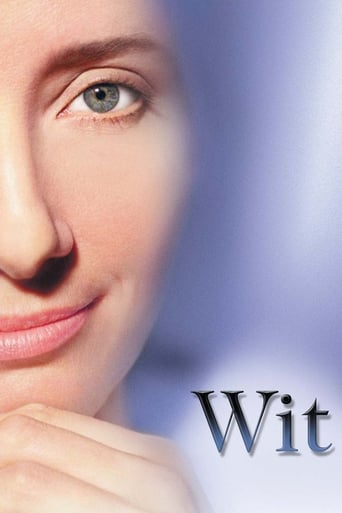
Mike Nichols's 2001 HBO film is the most direct match for Couture's signature detail—the one TheWrap singled out, where characters "pretend they're working on visual effects instead of seeing their oncologist." Emma Thompson plays Vivian Bearing, a John Donne scholar facing stage-four ovarian cancer, who realizes that her life's work—close reading—is now the tool she has to use to read her own death.
This is the cleanest articulation of the lineage. A professor whose vocation becomes her last instrument. A designer whose collection becomes hers. The work doesn't save her, but it teaches her how to look at what's happening, and in this tradition that's the only thing salvation has ever meant.
What This Lineage Tells Us About Couture
Look at these films together and the throughline clarifies. Work is not the thing that distracts these women from their illness. Work is the medium through which the illness is finally understood. The seamstress's hands, the astronaut's drills, the scholar's footnotes, the household Kate built—all of them are instruments for reading the body, and the body keeps writing.
It's striking how persistently this gesture returns. The 1960s movies gave us Cléo wandering toward her biopsy. The 1990s movies gave us Kate's quiet kitchen and Vivian's first symptoms. The 2020s movies keeps coming back to the same image: a woman finishing one more thing. The trauma victim returning to the brasserie. The astronaut completing the training. The filmmaker walking the show.
Couture's atelier is the cathedral of this tradition. Chanel's rooms—shot for the first time as a fictional space—turn out to be the perfect setting for a film about what gets stitched into a life when the seamstress knows her time is short. The dress will outlive her. So will the gesture of making it. That's what Winocour means by memento mori: not a skull on the table, but a hem being pinned at midnight by someone who already knows.
If this register is the one you came for, there's a deeper bench of cancer movies-adjacent films and quiet European drama worth wandering through. The mood is its own genre, and once you know how to recognize it, you can feel it from the first frame.
Spend an evening with any two of these and Couture starts to look less like a single film and more like the latest stitch in a very long seam.