A Farewell Forged in Rehearsal Rooms
The news broke slowly, the way Mike Leigh's films tend to arrive: first a whisper from a Golden Globes London roundtable, then a Variety headline, then confirmation across the trades. At 83, the writer-director has said Tender Loving Care is almost certainly the last feature he will make, with the autoimmune condition myositis keeping him from traveling to its Telluride premiere. For a filmmaker whose method depends on being physically present in a room with actors for months on end, the announcement carries a particular weight — this isn't retirement in the abstract, but a body finally refusing the process that built the work.
The film itself is arriving loud even as its director stays home. It swept the fall festivals — Venice, Telluride, Toronto, New York — and marks the first Leigh feature since 1990 not shot by the late Dick Pope, with Lucy Bristow stepping in behind the camera. StudioCanal has the UK release, with awards positioning aimed at 2027. The practical upshot for viewers is simple and a little melancholy: the Leigh filmography, previously an open-ended shelf that grew every three or four years, is about to become finite.
Which raises the question this piece exists to answer. If we're closing the book, which films best distill the script-less, character-first approach that defined half a century of British drama movies? Not the most awarded, not the most beloved, but the ones where his method — the thing he is now retiring — burns brightest.
The Method Behind the Canon
To rank Leigh honestly, you have to understand what you're ranking. He does not write scripts in the conventional sense. He begins with a premise so vague it barely counts as a logline, then spends months in one-on-one sessions with each actor, building a character from biographical scratch — parents, schools, jobs, disappointments, secret vanities. Only then does he bring the cast together for supervised group improvisations, watching how these people, now fully inhabited, collide. A shooting script eventually emerges, but only he sees it. The actors discover the plot the way we do: as it happens to them.
The BFI's Sight & Sound writers have long framed Leigh as a choreographer of awkwardness — someone who stages the small humiliations of English social life with the precision most directors reserve for action sequences. His films sit inside the British kitchen-sink-realism movies tradition, but they push against its edges too, especially in the period work like Topsy-Turvy and Mr. Turner, where the same rehearsal method produces bewigged Victorians rather than Hackney council-flat residents.
Ranking Leigh, then, means ranking degrees of tenderness within cruelty. His characters are almost always compromised, often ridiculous, sometimes monstrous — but the camera loves them anyway. The peaks below are the films where that love holds without softening what it sees.
The Essential Ranked: Ten Peaks of the Leigh Filmography
What follows is a critic's synthesis, drawing on BFI, SlashFilm, and awards history rather than any single popularity metric. Reasonable people will quarrel with the order. That's part of the point.
10. Career Girls
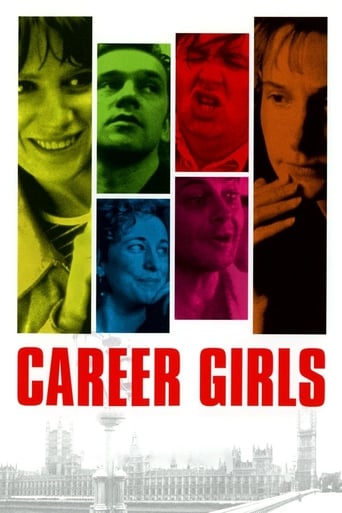
The 1997 reunion drama is the quietest film in Leigh's major-work canon and, in its way, the most delicately constructed. Katrin Cartlidge and Lynda Steadman play former university flatmates meeting a decade later, and the years between them exist because the actors genuinely built those years in rehearsal — the shared jokes, the wounds, the college versions of themselves the film flashes back to. It's a modest picture and knows it. That modesty is the experiment: can improvisation-forged intimacy carry a film with almost no plot? Yes, though barely, and the "barely" is what makes it worth returning to.
9. Happy-Go-Lucky
Sally Hawkins' Poppy — the relentlessly cheerful North London primary-school teacher — is the most radical thing Leigh ever put on screen, because sustained on-screen optimism is genuinely hard to dramatize without tipping into saccharine. She never tips. Eddie Marsan's driving instructor Scott provides the counterweight, a coiled aggregation of resentments who cannot forgive Poppy for being happy. The 2000s movies recalibrated a lot of critics who had pigeonholed Leigh as the bard of English misery; this was the film that did the recalibrating.
8. Vera Drake

Imelda Staunton won Venice's Volpi Cup for her performance as a working-class 1950s Londoner who cheerfully cleans houses by day and, in her spare time, helps young women end unwanted pregnancies. Leigh's tightest moral vise: her kindness and her criminality are the same act, and the film refuses to separate them for our comfort. The rehearsal-room legend here is famous — the actors playing Vera's family didn't know the police were coming to arrest her. The shock on their faces is not acting.
7. Another Year

Structured across four seasons in the life of a contented long-married couple and the lonely friends who orbit them, this is a late-career high in which happiness itself becomes the most uncomfortable subject on screen. Lesley Manville's Mary — divorced, drinking too much, clinging to a friendship that increasingly resembles charity — delivers one of the great modern performances of English loneliness. The film pointed straight toward the register Leigh would work in Hard Truths fifteen years later.
6. Mr. Turner
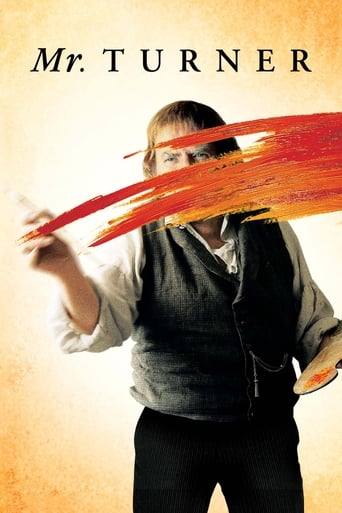
Timothy Spall grunts, spits, and hurls himself at canvases as J.M.W. Turner in what remains the most physically committed performance in Leigh's filmography. Dick Pope's cinematography deserves equal billing — every frame composed as if by the painter himself, light doing the work language can't. The film is often described as a departure, but it's really an extension: the same months of character-building, applied to a historical figure. If anything, the period constraints proved the method's flexibility.
5. Life Is Sweet
The 1990 Thatcher-era family portrait that put Leigh on the international map, and rightly. Jane Horrocks and Timothy Spall in supporting turns — Horrocks as the anorexic, spiralling twin Nicola, Spall as the disastrous restaurateur Aubrey — redefined what British comic acting could contain. The chocolate-smeared bedroom scene between Horrocks and Nicola's boyfriend is the Rosetta stone of Leigh's tonal control: erotic, disturbing, funny, and unbearably sad in the same forty seconds. Nothing else in British cinema of the era does quite what this film does.
4. Naked
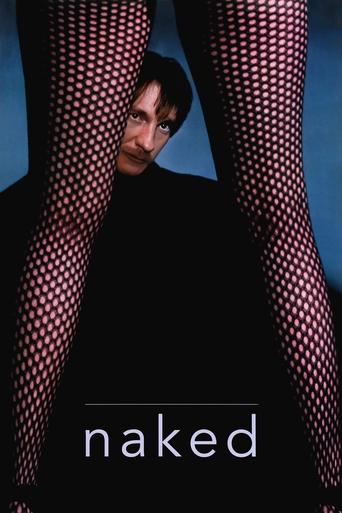
David Thewlis won Best Actor at Cannes for Johnny — a homeless Mancunian intellectual raging through a nocturnal London, delivering apocalyptic monologues to anyone unlucky enough to be listening. This is Leigh at his most nihilistic, and the film has never fully settled into the canon; its misogyny is real, not just Johnny's, and viewers still argue about how the film feels about what it shows. The discomfort is the point. The method that produced Life Is Sweet's wounded warmth also produced this, and pretending otherwise flattens the artist.
3. Meantime
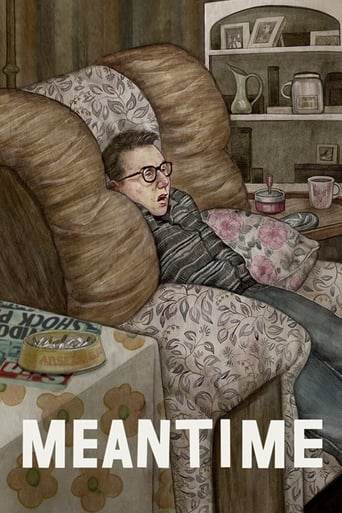
The 1983 Channel 4 telefilm starring Tim Roth and Gary Oldman — both essentially unknown at the time — remains, for many BFI critics, the purest expression of the Leigh method. A family on an East London estate curdles in the vacuum of 1980s movies unemployment; nothing much happens, and everything happens. Roth's Colin, mumbling and adrift, and Oldman's skinhead Coxy are studies in inherited stasis, in what it looks like when a political economy simply stops offering young men anywhere to go. It's the definitive statement of its historical moment and, arguably, of Leigh's sensibility.
Can't Decide What to Watch?
Let RandomFlix pick a movie for you. One click, one great movie.
Roll the Dice2. Topsy-Turvy
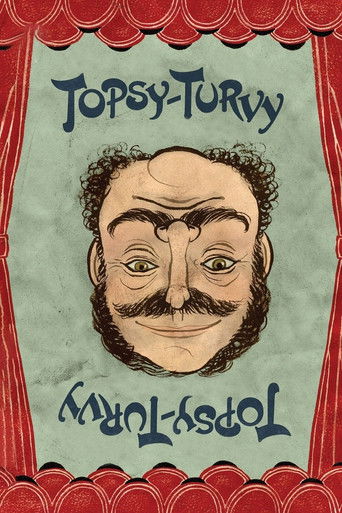
A three-hour period musical about Gilbert and Sullivan mounting The Mikado should not be one of the great films about the agony of making art, and yet. Leigh, using the same rehearsal method he uses on council-estate dramas, reconstructs the fractious backstage of Victorian theatre and — without ever winking — delivers a secret self-portrait of the director as collaborator, tyrant, and worrier. It's his most joyful film, and the pivot point that reframed everything before and after it. Nobody watching Naked in 1993 could have predicted this. That's the argument for it.
1. Secrets & Lies
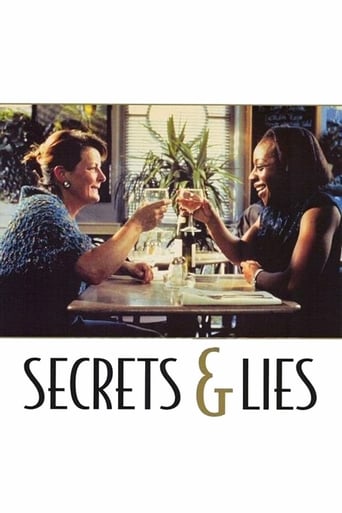
The 1996 Palme d'Or winner is the film where method and humanism achieve total fusion. Brenda Blethyn's Cynthia, meeting the Black daughter she gave up for adoption decades earlier in a single unbroken cafe long take, remains one of the great sustained sequences in modern cinema — the camera simply refuses to cut, and the actors simply refuse to break. Marianne Jean-Baptiste's Hortense is the emotional keystone, her composure the counterweight that lets Blethyn come apart. Everything Leigh had been building toward — the improvised biographies, the shame, the sudden bursts of grace — arrives here in balance. If one film had to represent the career, it is this one.
What Tender Loving Care Inherits
The reporting around the new film is unusually candid about its scale. It's the lowest-budgeted feature of Leigh's career, and the financing struggle was tied directly to his refusal to hand investors a script — a method that has become harder to sell, apparently, even at 83 with a shelf of awards. StudioCanal is handling the UK release, with the 2027 awards conversation clearly in mind.
For longtime viewers, the emotional undercurrent is Dick Pope's absence. Pope had shot every Leigh feature since 1990's Life Is Sweet, and his death means Tender Loving Care is stepping into new light — Lucy Bristow's — for the first time in a generation. That alone makes the film a threshold work, whether or not it turns out to be a masterpiece.
The title itself does interesting work. It rhymes tonally with Hard Truths, his recent reunion with Marianne Jean-Baptiste, and hints at a thematic bridge back to Secrets & Lies nearly three decades ago. Whether that echo is coincidence or design, the farewell frame invites the rewatches the ranked ten deserve — and reframes each of them as a piece of a method being formally retired.
Where to Start If You're New
For a viewer arriving fresh, the best entry point is Secrets & Lies, followed by Life Is Sweet, then Topsy-Turvy. That sequence covers the emotional range without dropping anyone into the deep end.
For readers who like their drama movies bleak and uncompromising: go straight to Naked and Meantime. Neither will comfort you. Both will change how you watch British cinema.
For character-study movies devotees coming from prestige television — the Sopranos, Mad Men, Succession lineage — Another Year and Vera Drake are the natural bridges. They operate at the same register of moral attention that the best long-form TV borrowed, largely, from Leigh in the first place.
And if you'd rather let the canon choose you, RandomFlix's shuffle is happy to drop you into a Leigh title unannounced. Sometimes the right way to meet a filmmaker who never told his actors what was coming next is to not know what's coming next yourself.
Watch the ten before the Tender Loving Care reviews land. The window for seeing this filmography as a living, still-growing thing is closing.