The Eight-Year Silence Ends on the Lido
Every four years or so, sometimes longer, Lee Chang-dong emerges from his self-imposed quiet with a film that seems to reset the temperature of Korean cinema. This time the wait stretched to eight. His new feature, Possible Love, has been slotted into the main competition at the 83rd Venice Film Festival — his first film since 2018's Burning, and, more improbably, his first return to the Lido since he won the Silver Lion in 2002 for Oasis.
The runtime is already the stuff of pre-festival myth: two hours and forty-four minutes. Possible Love's runtime is 2 hours 44 minutes, and the film premiered at Venice rather than Cannes due to Netflix's ongoing dispute with the French festival over theatrical windows. That last detail matters — Lee is a Cannes laureate several times over, and Venice, in the current geometry of festival politics, has become the natural harbor for Netflix-backed prestige work that Thierry Frémaux's rules can't accommodate.
The scale of this is easy to underestimate if you're not already inside the church. Possible Love is the 12th Korean film to compete at Venice, and Lee's seventh feature, joining a lineage that runs from the 1960s masters through Bong Joon-ho's Parasite moment. Cinephiles have been waiting for this one longer than for any Korean auteur film in recent memory, and the anticipation feels heavier than a festival slot — it feels like a generational milestone finally arriving.
Why Lee Chang-dong's Scarcity Is the Point
Lee's filmography is small enough that you can list it on one hand and still have a finger left over. Six features in nearly three decades, now becoming seven. Part of that is temperamental — he's a novelist first — and part of it is biography. Lee wrote his first screenplay at 39, directed his first feature in 1997, and served as South Korea's minister for culture and tourism from 2003-2004. Between Oasis and Secret Sunshine, in other words, he was running a government ministry.
That two-year detour into public office is one of the more remarkable career pivots in world cinema, and it sits at the heart of why his drama movies feels different from his contemporaries. Bong Joon-ho, Park Chan-wook, Hong Sang-soo — all prolific, all restless. Lee works closer to Terrence Malick's rhythm than to anything native to Chungmuro. When a film finally arrives, it has been thought about for so long that it seems to enter the world already finished.
Recently, at the Malaysia International Film Festival, Lee accepted a Lifetime Achievement Award and gave a rare interview about what the eight-year gap had done to him. He spoke about the way personal and creative changes had accumulated in silence — the sense that Possible Love is not a comeback so much as the sum of everything that had happened in between.
A Primer on the Filmography: Six Films, One Obsession
There is a throughline that critics keep circling back to, and it's the one IndieWire's long career piece names most cleanly: pain, longing, and the ethics of witnessing suffering. Lee's fascination is with pain and longing, and he came to filmmaking without formal training. Every one of his features is, in some sense, a study of what it costs to remain a moral witness in a country still processing its own recent history.
Read chronologically, the six films form a single sustained argument about Korean modernity — the compressions of the postwar decades, the debts of the democratic transition, the psychic residue of Gwangju, and the strange, denatured wealth of the twenty-first century. Nothing is peripheral. Even the smallest domestic scene carries the weight of national memory.
The Six Films, Ranked by Devastation
Burning (2018)
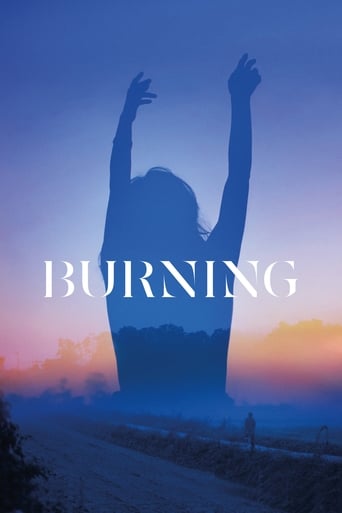
The Murakami adaptation that became a modern arthouse landmark. Burning made history as Korea's first International Feature Oscar shortlist entry. Steven Yeun's Ben — Gatsby transplanted to Gangnam, an unreadable smile behind a Porsche wheel — remains one of the decade's great villain performances, and the greenhouse monologue redrew what a slow-burn movies thriller could sustain.
More than anything, Burning felt like a summation. Class rage, sexual jealousy, the vanishing of women from the frame, the pastoral turning malignant — every Lee Chang-dong obsession refracted through a single mystery. When it landed, more than a few critics wondered if he had said everything he needed to say. Eight years of silence made that fear feel real.
Poetry (2010)
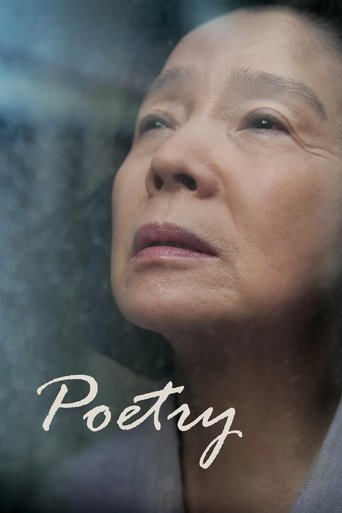
Yun Jeong-hie's grandmother-poet, drifting into Alzheimer's while trying to write a single poem and reckon with her grandson's role in a horrifying crime. It won Best Screenplay at Cannes and remains Lee's most formally serene work — the kind of film where a river shot can undo you.
Poetry is the film that made Lee a fixture of end-of-decade best-of lists, and the one that most clearly shows his novelist's instinct for moral gravity. The camera watches, patiently, as an ordinary woman is asked to carry more than any single person should have to carry. It is the quietest of his films and, arguably, the most punishing.
Secret Sunshine (2007)
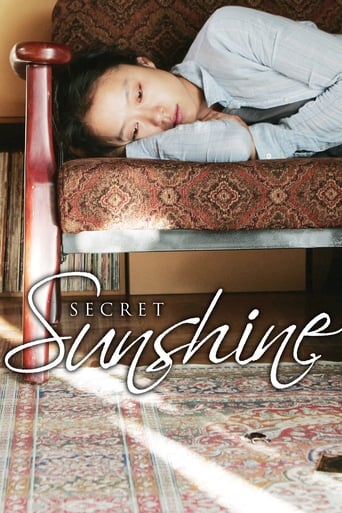
Jeon Do-yeon's Cannes Best Actress-winning turn is still the benchmark against which Korean screen acting is measured — a performance of such total emotional exposure that it feels almost indecent to watch. She plays a widow relocating with her son to her late husband's provincial hometown, only to have grief pile on grief until faith itself becomes an antagonist.
The theological rage at the film's center — the confrontation with a God who forgives without asking permission from the victim — is unlike anything else in contemporary cinema. And it matters here for another reason: Jeon Do-yeon returns to Lee's camera in Possible Love, along with Parasite's Cho Yeo-jeong. Their first reunion in nearly two decades is, on its own, a reason to hold your breath.
Oasis (2002)

The Venice Silver Lion win that first put Lee on the international map. A love story — although "love story" doesn't quite name what happens — between a socially outcast man just out of prison and a woman with cerebral palsy, played with unflinching commitment by Moon So-ri. Provocative, tender, formally daring, impossible to categorize.
Oasis is why Lee's return to the Lido feels like a closed loop. The Hollywood Reporter framed Lee as "the elder statesman of Korean arthouse cinema," noting Possible Love marks his first Venice appearance since his 2002 Silver Lion win for Oasis. Twenty-four years is a long time to wait to come home.
Can't Decide What to Watch?
Let RandomFlix pick a movie for you. One click, one great movie.
Roll the DicePeppermint Candy (1999) and Green Fish (1997)
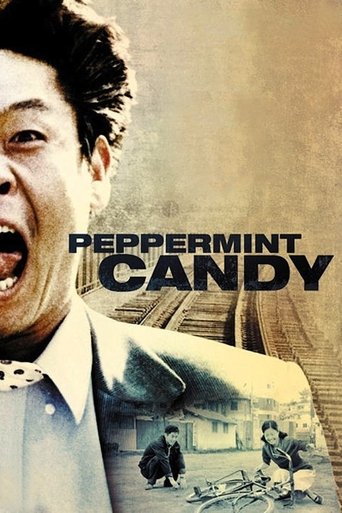
Peppermint Candy is the reverse-chronology gut-punch — a man screaming "I want to go back!" on a railway trestle in the opening minutes, and then two hours of the film walking backward through the decades to show you why. It is Lee's most explicit indictment of South Korea's post-Gwangju trajectory, and it remains one of the most structurally daring political films ever made in the country.
Green Fish, his 1997 debut, is a noir-inflected drama about a young man returning from military service to a suburb being swallowed by development and gangsters. It's where Lee's fascination with men who don't know how to be in the world first shows up — and where the political undertow that runs through every subsequent feature is already unmistakable. Both films are essential context, not optional.
What We Know About Possible Love
Details on the film itself are, in true Lee Chang-dong fashion, guarded. The cast is what has leaked: Jeon Do-yeon — the first Korean Best Actress winner at Cannes — reunites with Lee, joined by Parasite's Cho Yeo-jeong. Two performers who have redefined Korean screen acting in different decades, in the hands of the director most likely to demand everything from them.
The runtime — 2:44 — suggests Lee is working at the expansive scale of Burning rather than the compressed intensity of Poetry. The title's tentative grammar already sounds like vintage Lee: hope framed as a hypothesis rather than a promise, love as a question the film is asking rather than an answer it can offer. It's the kind of title only he would risk.
The competition slate around him is stacked with returning masters, which is characteristic of recent Venice programming — an auteur-heavy lineup that positions Possible Love not as an outlier but as a keystone. Whatever the eventual jury verdict, the reception will be an event.
Preparing for the Premiere
If this is your first serious encounter with Lee, watching the six films in release order is the way in. They talk to each other. Motifs return, minor characters echo across decades, the same moral pressure gets applied to different social textures. Possible Love will almost certainly extend that conversation rather than restart it, and the pleasure of a new Lee Chang-dong film is largely the pleasure of hearing the previous ones inside it.
For readers approaching this from a broader angle, korean-cinema movies offers plenty of adjacent entry points, and the 2010s movies in particular is where Korean arthouse achieved its current international standing — a decade Burning effectively closed. RandomFlix can surface Lee's back catalog and its neighboring titles when you're not sure where to start; sometimes the right on-ramp is a single well-chosen film rather than a syllabus.
Whatever Possible Love turns out to be — a return, a departure, a summation, a new beginning — it will be the film Lee Chang-dong needed eight years to make. In a career defined by scarcity, that alone earns the wait. Set aside the two hours and forty-four minutes when it arrives, and let it do its work.