A Wistful Goodbye From the Last Analog Pranksters
On June 26, 2026, the Jackass crew clocked out for good. Jackass: Best and Last arrived in theaters not as another escalation in the franchise's quarter-century arms race of self-inflicted injury, but as something stranger and softer — a deliberate full stop, delivered by men who can no longer bounce back the way they used to. Johnny Knoxville has been candid that, after the near-fatal brain trauma he absorbed making the last film, "this is the natural place to end." That sentence, more than any stunt in the movie, is the thesis.
Critics seem to agree, even if they're reaching for unusually gentle vocabulary. Variety called the film amusing and slightly wistful. Empire's UK review landed on "dumbly fitting." The broader critical read isn't raucous; it's elegiac. The reviews don't read like takes on a comedy sequel. They read like obituaries with a few good laughs in them.
The timing is uncanny. A flesh-and-blood comedy franchise — one whose entire artistic premise is that a real human being absorbed a real impact — is signing off in the same calendar year that AI-generated stunt clips have begun to dominate short-form video. The most popular "guy gets hit by a bull" content on your feed right now may not contain a guy, a bull, or a hit. Into that environment walks a movie whose central pitch is: these particular men, at this particular age, did this particular thing to each other, and we filmed it.
That's why Jackass: Best and Last is best understood less as a comedy movies sequel than as a memorial film about the people who made it.
The Greatest-Hits Structure and Why It Works
Structurally, the finale is a clip show with a conscience. It threads vintage bits and behind-the-scenes footage around a smaller spine of new material, and it doesn't pretend the new material is the headliner. After 25 years of escalation — from shopping-cart wipeouts to literal rocket sleds — the franchise has finally admitted what every action sequel eventually has to: you cannot top yourself forever.
A compilation format is the honest answer to that problem. Instead of straining for one more impossible gag, the movie lets the old gags breathe. It's the same move career-capping documentaries about physical performers have always made, and Variety's review reaches for a comparison that initially sounds absurd and then doesn't: that Jackass is the 21st-century answer to Buster Keaton. The comparison holds because both bodies of work are, fundamentally, archives of what a specific human body could survive in front of a specific camera in a specific era. Once that era is over, the archive is the art.
What's surprising is how unsentimental the editing actually is. The nostalgia is real, but the cruelty that made the early 2000s movies entries feel genuinely dangerous hasn't been sanded down. The cattle prods still hurt. The reaction shots are still ugly. The film knows that if it scrubbed the meanness out, it would be lying about what the show was.
Middle-Aged Bodies, Real Stakes
The A.V. Club's review gets at what the movie cannot avoid: 25 years have left marks. Knoxville's near-fatal brain injuries from Jackass Forever sit just under the surface of every frame he's in. The wear is visible on everyone — Steve-O's face, Pontius's gait, the way Wee Man moves between setups.
The camera lingers on that aging in a way the earlier films never did. Gray hair. Surgical scars. Recoveries that are measured in weeks now instead of beers. There's a shot in the new material that essentially holds on Knoxville catching his breath after a relatively mild gag, and the implication is unmistakable: he can't do this anymore, and he knows it, and the film knows you know it.
Two presences haunt the project. Ryan Dunn, gone since 2011, recurs in archival footage with a tenderness that would be unbearable if the film leaned on it any harder. Bam Margera's on-screen return — fraught, complicated, freighted with everything his fans have watched him go through — functions as the movie's emotional ballast. You can feel the crew choosing, in real time, to keep loving him on camera.
This is why mortality, not mayhem, is the finale's real subject. And once you see it that way, the entire franchise reorganizes itself in retrospect. Jackass was never really about whether the stunt would work. It was about whether everyone would still be standing at the end of the day, and eventually, inevitably, about what happens when they aren't.
A Quarter-Century Documentary About Male Friendship
Stuart Shave's review for Big Picture Big Sound makes the cleanest version of an argument a lot of the finale's critics are circling: Jackass was always built on fellowship, and the stunts were the love language. The cattle prod was a hug with extra steps.
Trace the through-line. The MTV show was a clubhouse. Jackass: The Movie was that clubhouse going to the multiplex without changing clothes. Jackass Number Two was the group at the peak of its physical fearlessness, daring each other into territory that still makes other stunt performers wince. Jackass 3D introduced gimmickry and the first whiff of self-awareness — a turning point toward nostalgia, even if no one called it that yet. Jackass Forever was the soft reboot, bringing in a younger cast and, in hindsight, quietly arranging the goodbye that Best and Last now delivers.
What's rare — genuinely rare — about that arc is how openly affectionate it lets American men be with each other on a big screen. Mainstream cinema is allergic to depicting male tenderness without the protective coating of irony or violence. Jackass found a third option: tenderness wrapped inside the violence, with the violence consented to in advance by everyone involved. When Steve-O laughs while bleeding, what you're watching is intimacy.
The finale's quieter moments — the hugs, the apologies, the eulogies that aren't called eulogies — are the emotional payoff a 25-year hangout movie earned the hard way. You don't get to those scenes without first getting hit in the face for two decades by the same friends.
Can't Decide What to Watch?
Let RandomFlix pick a movie for you. One click, one great movie.
Roll the DiceThe 'Could Never Be Made Today' Question, Honestly Addressed
Critic Ian Thomas Malone frames the finale as a clip-show farewell to a vanishing kind of comedy, and gestures at the familiar argument that this style of filmmaking is increasingly culturally impossible. That argument deserves engagement, not reflexive agreement.
What's actually changed isn't mostly cultural; it's structural. Insurance got harder. Liability got harder. Streaming economics gutted the kind of midbudget theatrical release Jackass thrives on. And — maybe most importantly — the audience got numb. A generation raised on viral stunt content has seen so many improbable gags that the baseline shock of a Jackass bit no longer registers the way it did in 2002.
Then there's the AI problem, which is the genuinely new variable. When any impossible gag can be faked in minutes by a model with a generous interpretation of physics, the value proposition of Jackass — that a real human being absorbed this, and you can see the welts forming in the next shot — becomes simultaneously more precious and harder to monetize. The very thing that makes the franchise irreplaceable is the thing the algorithm can no longer distinguish from a fake.
Metacritic's framing of the film is the most honest critical line anyone has written about it: the franchise was vanquished not by imagination but by time. Knoxville and company didn't run out of ideas. They ran out of cartilage, and the world around them stopped being able to tell the difference between what they did and what a server farm can hallucinate.
Where Best and Last Sits in the Jackass Canon
Jackass: The Movie
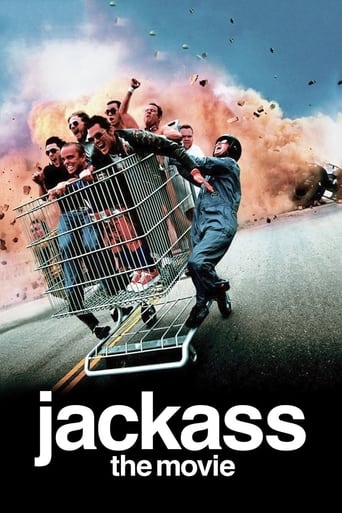
The raw, lo-fi origin point. Watched today, it's startling how unguarded everyone looks. This is the baseline the finale is saying goodbye to — a 2002 theatrical release that still feels like it was shot in someone's driveway, because most of it was.
Jackass Number Two
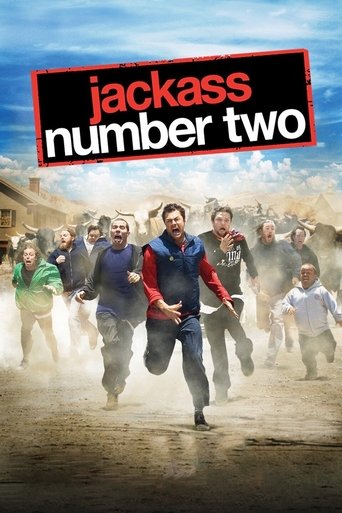
The peak. Most critics who rank these things still put Number Two on top, and it's the entry that best illustrates what a group of friends with no fear of injury and total trust in each other can produce. If the franchise has a masterpiece, it's this one.
Jackass 3D
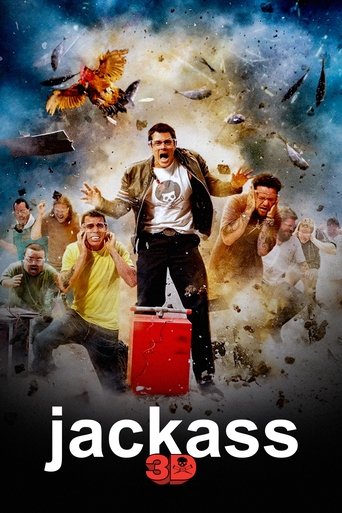
The first film to flirt seriously with self-awareness and gimmickry. The 3D was a stunt of its own — a marketing hook layered on top of the actual stunts — and in hindsight, it's the turning point where the franchise started looking backward at itself.
Jackass Forever
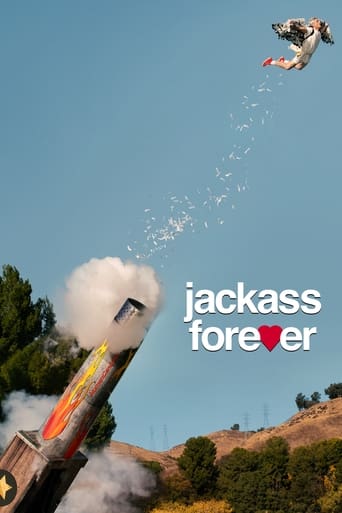
The soft reboot. Bringing in a younger cast read at the time as an attempt to extend the brand, but it now plays as the crew quietly making room for the goodbye. Knoxville's injuries on this film are also, structurally, the reason Best and Last exists at all.
Jackass: Best and Last
The elegy. Best understood as the closing parenthesis on everything above, not as a standalone entry. If you've never seen a Jackass movie before, this is not the place to start. If you grew up with them, this is the only ending that would have made sense.
What the Finale Leaves Behind
The franchise's fingerprints are everywhere. documentary movies comedy borrowed Jackass's reaction-shot grammar. Reality TV borrowed its consent-and-cruelty paradox. YouTube and TikTok stunt culture borrowed, essentially, everything — often without crediting the source. An entire economy of guys-doing-things-to-each-other-for-the-camera exists because three friends in Pennsylvania and a magazine editor in California decided in the late 90s that pain was funny if you loved the person experiencing it.
No AI model can replicate the specific texture of a Steve-O reaction shot. That isn't a sentimental claim; it's a technical one. The micro-expressions that flicker across a real face mid-flinch — the half-laugh that breaks through right before the wince — are the product of a nervous system responding to actual stimulus. A generated face can approximate the shape of that response. It cannot generate the reason for it. As physical comedy migrates increasingly into the synthetic, the analog stuff Jackass leaves behind becomes a kind of evidence — proof that a particular form of human nonsense actually happened.
If you feel the itch for a night of that texture — the full Jackass run, the Buster Keaton silents it accidentally rhymes with, the documentaries about stunt performers it spiritually descends from — RandomFlix is a fine place to let the dice land on something analog.
Best and Last isn't the best Jackass movie. Jackass Number Two still owns that title and probably always will. But it might be the most necessary one — the entry that finally admits, out loud, that the joke was love all along, and that the last laugh belongs to the people who were still around to share it.