A Motorcycle Crash in Lucan, and a Song That Won't Stop Playing
The news came in the small hours of a Wednesday, the kind of detail that will feel oddly permanent in the retelling: Glen Hansard died in a single-vehicle motorcycle crash at the Strawberry Beds in Dublin's Lucan district. He was 56. For a certain generation of moviegoers — the ones who wandered into an arthouse in the summer of 2007 not knowing what they were about to see — that sentence lands with the same disorienting thud as hearing that a place you used to live has burned down.
Because for that generation, "Falling Slowly" is not a song. It is a room. It is the specific hush of a Dublin music shop late in the afternoon, a battered guitar with a hole worn through the wood, two people who don't yet know each other's names finding a melody in real time. It is, arguably, the sound of falling in love in the twenty-first century.
Hansard was, first and always, a musician — the frontman of The Frames, a veteran of Dublin's Grafton Street busking circuit, a bit player in The Commitments long before Hollywood had any idea what to do with him. Tributes poured in from figures like Bruce Springsteen after the news broke, and the Dublin music community's grief has been loud, personal, unguarded. This was a working musician's death, mourned first by other working musicians.
But there is another argument to be made this week, and it is a film argument. Once was a $150,000 accident that quietly rewrote the rules for what a screen romance could sound like — and almost every naturalistic indie musical of the last two decades is downstream of one busking scene shot for less than the catering budget of a Hollywood rom-com.
The 17-Day Miracle: How Once Almost Went Straight to DVD
The production story is, at this point, indie-film folklore, but the numbers still stagger. The budget was $150,000. The shoot was 17 days. John Carney, a former bassist in The Frames, wrote the script around Hansard and the Czech pianist Markéta Irglová, then pointed a handheld camera at Dublin and let his non-actor leads walk through it. The apartments were borrowed. The buskers on the street were real buskers. The audio hisses because it was recorded live, on location, next to buses.
And then the film almost disappeared. The oral history of Once documents how the movie was very nearly consigned to DVD purgatory before Sundance discovered it in 2007, where it won the World Cinema Audience Award and set off the chain of festival buzz that pulled it into theaters. Against that $150,000 outlay it eventually grossed roughly $20 million worldwide — a return-on-investment ratio that continues to embarrass virtually every studio romance released the same year.
Critics understood immediately what they were looking at. Roger Ebert gave it four stars. The Chicago Tribune's Michael Phillips called it "the best music film of our generation." And then, in March 2008, came the crystallizing pop-culture moment: Hansard and Irglová won the Oscar for Best Original Song, and Hansard, visibly stunned at the podium, could only manage a version of "this is mad." It was the least practiced Oscar acceptance in a decade, and it told you everything about the film's relationship to the machinery around it.
Why the Cheapness Is the Point
Watch Once again this week and you'll notice how much of its power lives in the seams. The camera trembles because a human being is holding it. Nobody looks lit. The color grading is whatever Dublin looked like that afternoon. These are not flaws the film is apologizing for; they are the argument.
Look at what romance movies was doing at the multiplex in 2007. The meet-cute-montage-third-act-airport template was already a wax museum of itself. Once refused every one of those conventions. The leads don't even have names — they're credited as Guy and Girl. They don't kiss. There's no first-act argument to be reconciled in the rain. The film ends not with union but with a piano being delivered to somebody else's apartment.
And the music — this is the crucial part — is never performed at you the way it is in a more glittering film like La La Land. It's overheard. It's rehearsed in kitchens, tried out on stairwells, argued over in a recording studio at four in the morning. Songs here enter the story the way real songs enter a real life: sideways, when you're tired, when you're trying to say something you can't say out loud.
That's why it still lands. It treats romance as something that happens between two working people who are exhausted, broke, and slightly embarrassed. Nobody in this movie has time for a grand gesture. They have time for a demo tape.
The Lineage: What Once Made Possible
Here is the thesis: without Once proving in 2007 that a musician-led, naturalistic, sub-shoestring romance could win an Oscar and outgross its budget by two orders of magnitude, an entire wave of indie music-forward cinema in the 2000s movies and beyond doesn't get financed. The films below are not homages, exactly. They're descendants.
Begin Again
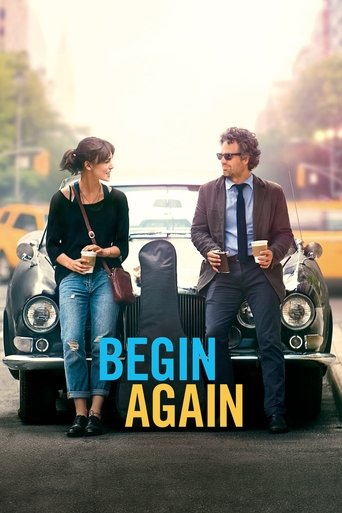
Carney's own 2013 follow-up is essentially Once with a bigger budget, Keira Knightley, and Mark Ruffalo — proof that the director had discovered a durable formula rather than caught lightning once. The trade-off is instructive: the polish comes up, the magic comes down. Watching it retroactively clarifies what made the original special. When you can afford proper lighting, you sometimes light the wrong things.
Sing Street
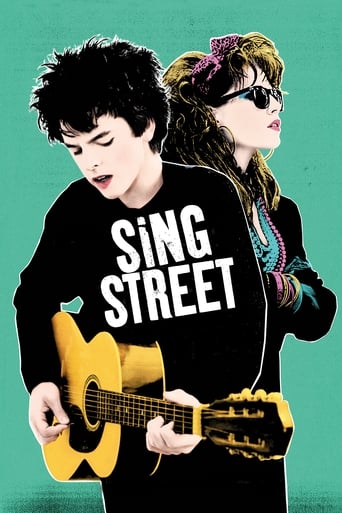
Carney's 2016 Dublin coming-of-age film completes what now feels like a loose trilogy. Same city. Same faith that pop songs are how people actually talk about the feelings they can't otherwise name. Arguably his warmest movie, and the clearest inheritor of the Once ethos: kids in a garage, a cheap keyboard, and the belief that a song written this afternoon can rearrange a life by tonight.
Frances Ha
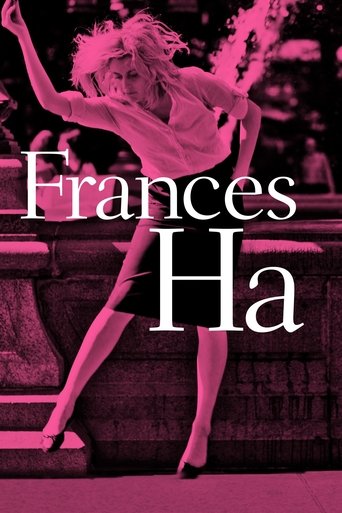
Not a musical, but built from the same DNA. Black-and-white, tiny budget, walking-and-talking naturalism, a female lead who is neither fixed nor rescued by the closing credits. Baumbach and Gerwig weren't stealing from Carney, but they were fishing in the same water — the water Once had proven was fishable: romance-adjacent stories that don't need resolution to feel complete.
God Help the Girl
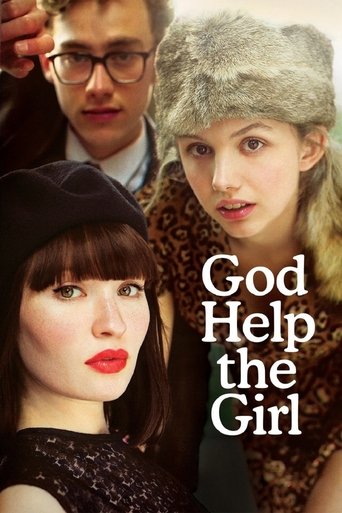
Stuart Murdoch of Belle and Sebastian directing his own indie musical in 2014 is a career move that is genuinely difficult to imagine before Once cracked the door for musician-auteurs. Twee where Once was tender, more art-directed than observed, but part of the same conversation about whether pop songcraft and cinema could share a scene without one of them apologizing.
Wild Rose
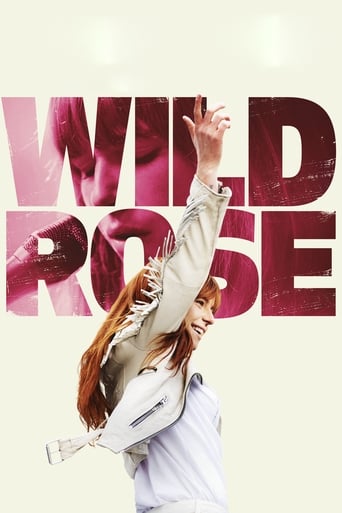
Jessie Buckley's 2018 Glasgow-to-Nashville country singer is what happens when the Once template grows up and puts on work boots. A working-class musical-drama register — messy, unglamorous, financially precarious — that would have been a much harder financing conversation without Carney's film sitting in the recent-past column as commercial evidence. It also inherits Once's finest instinct: refusing to pretend the music industry is a place where deserving people simply get what they want.
The Broadway Afterlife and the Long Tail
The film's second act was theatrical in the literal sense. The stage adaptation of Once became an 8-time Tony Award-winning Broadway musical, a genuinely rare instance of a small film translating to a bigger stage without shedding what made it small in the first place. It didn't improve the source material and didn't need to; it just honored it.
Off-screen, Hansard and Irglová's real-life relationship — begun during the shoot, extended through The Swell Season's touring years — gave the film an unusually porous border with real life. The 2011 documentary about their tour played almost as a sequel that admitted the sequel wouldn't have a happy ending. The songs kept touring long after the credits stopped rolling.
Twenty years on, Once sits comfortably alongside the 2000s movies' most quietly influential musical movies landmarks — a film that helped consolidate the whole modern musicians movies subgenre, the strand of cinema that treats songwriting as labor rather than as spectacle. The Broadway run ended, the tour eventually wound down, but the film has never really left circulation. Some films get rediscovered; this one never allowed itself to be lost.
What We Lose With Hansard
Return, then, to the obituary register, because that's where the week finds us.
Before Once, there was The Frames — a decade and a half of Dublin gigs, a devoted following, records that never quite crossed over. There was Grafton Street, where he busked as a teenager, and there was his small role in The Commitments at nineteen, playing guitarist Outspan Foster in Alan Parker's Dublin soul odyssey. The trajectory that led to that Oscar podium was thirty years of unglamorous stagecraft, not an overnight ascent.
And after Once, his solo career — Rhythm and Repose, Didn't He Ramble, This Wild Willing — was quietly, consistently excellent, and mostly under-heard by anyone who had only ever known him as the guy from the movie. Which is, in its way, the most Hansard thing about him. The film captured a musician mid-sentence. It never claimed to catch him at his peak.
Which brings us back to the scene. Guy sits down in the music shop. He plays a few bars. Girl edges over. He hands her the guitar with the hole in it. They find "Falling Slowly" together in real time, and for four minutes the movie's tiny budget and 17-day schedule and handheld camera all fall away, and what's left is just two working musicians building a song out of nothing while a camera happens to be pointed at them. It is the most romantic sequence of the twenty-first century, and as of this week it is also a kind of elegy.
If you haven't seen Once, or haven't in a decade, tonight is the night. Some films you owe yourself. This one you owe him.