Why Venice Is Honoring Ellen Burstyn Now
When the Biennale announced that Ellen Burstyn would receive the Golden Lion for Lifetime Achievement at the 83rd Venice International Film Festival, festival director Alberto Barbera framed the tribute in language that resisted the usual gala boilerplate. He called her "an actress of rare intensity and truth," a phrase that reads less like a career epitaph and more like a working critical thesis. Venice is not honoring a legend for surviving; it is honoring a specific kind of American film acting that Burstyn helped invent and has quietly refined for more than five decades.
The scale is worth stating plainly. Burstyn has appeared in more than 150 films, earned six Academy Award nominations, and in 1975 became only the third woman to win a Tony and an Oscar in the same year. But the résumé is not the argument. The argument is that across a career this long, she has almost never coasted, almost never mugged, and almost never played a "role" in the reducible sense. She plays women, one at a time, with an attentiveness that keeps discovering new registers.
What follows isn't a ranked greatest-hits countdown. It's a career map drawn through five performances — one per decade, roughly — that together explain why Venice's citation lands so precisely. The through-line isn't range as spectacle. It's depth as method. And the timely proof is that her most recent major work, her reteam with Kornél Mundruczó on Pieces of a Woman, arrived in her late eighties and reads as career-best rather than valedictory.
[Alice Doesn't Live
Here Anymore](/movie/16153) (1974): The Manifesto
Barbera specifically described Alice Doesn't Live Here Anymore as a film manifesto about women reclaiming their identity, and the phrasing still lands because the film was engineered that way from the top down. Burstyn didn't just star; she developed the project and, in a decision that would reshape American cinema, hired a young Martin Scorsese to direct it. That kind of authorship — a female lead essentially commissioning her own auteur — was almost unheard of in the Hollywood of 1974.
The performance itself is a working document of what the manifesto looks like on screen. Alice is a widow who sings, waitresses, argues with her son, flirts badly, gets things wrong, and refuses to let either grief or the men around her tell her who she is. Burstyn plays her without any of the "brave widow" varnish the studio system would have applied a decade earlier. She won the Best Actress Oscar for it, and the film's DNA is visible across half a century of drama movies about women starting over — the direct lineage runs through Erin Brockovich and Nomadland, but you can spot it in almost any American film that trusts a woman over forty to carry an ambivalent ending.
The Exorcist (1973): The Mother at the Center of the Horror
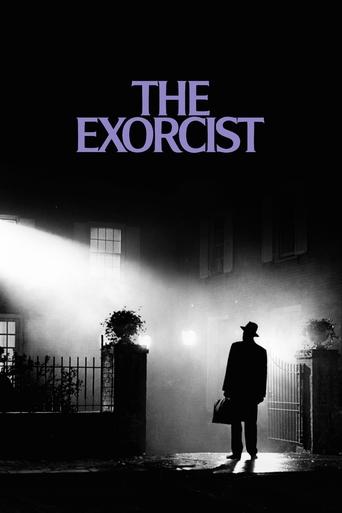
Everyone remembers Regan. Everyone remembers the pea soup, the head, the voice. But The Exorcist only works because of Chris MacNeil, and Chris only works because of Burstyn. Strip her out and William Friedkin's film is a well-shot creature feature; leave her in and it becomes the gold standard of prestige horror movies, the template every possession film since has tried to replicate.
Her Chris is a secular, exhausted, disbelieving movie-star mother — a woman who cannot even name what is happening to her daughter, let alone accept it. That refusal is the film's engine. The audience believes the supernatural because Chris resists it, and we feel the terror because we feel her love. Burstyn also paid a physical cost for the role: an on-set spinal injury from the harness work during the possession scenes that she never fully recovered from, a fact that says as much about 1970s production culture as it does about her commitment.
Requiem for a Dream (2000): The Performance That Broke a Generation
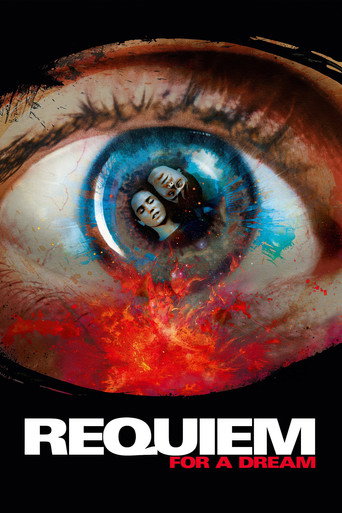
If Alice is the manifesto, Sara Goldfarb is the aria. Burstyn's diet-pill-addicted Brooklyn widow in Requiem for a Dream is arguably the most harrowing performance in modern American cinema, and it earned her a sixth Oscar nomination — twenty-six years after her Alice win, and to date her most recent nod. That gap is the whole point. It is the record of an actor deepening rather than repeating.
The infrared refrigerator monologue is the piece everyone cites, and rightly. Darren Aronofsky built the film's editorial rhythm around her face; his hip-hop montages exist to interrupt what she is doing, because what she is doing cannot be sustained in real time by an audience. Sara's fantasies of being on television, of fitting into the red dress, of being seen by her son — Burstyn plays them as if they are the last warm objects in a cold apartment, and then she plays their disappearance without a single note of self-pity. Placed in the 2000s movies arthouse canon alongside other portraits of psychological unraveling, it remains the one nobody has topped.
Interstellar (2014):
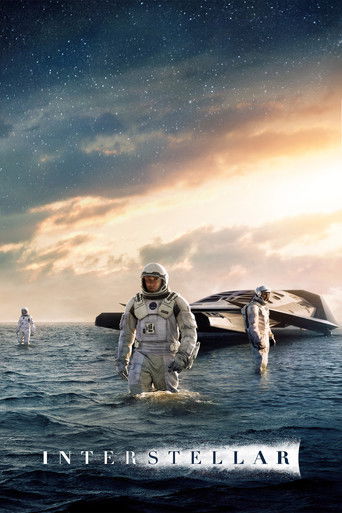
Two Minutes That Wreck the Film
Christopher Nolan's Interstellar is a three-hour epic about wormholes, black holes, and a father's love for his daughter. It is also, functionally, a film whose entire emotional payoff is delivered by an actor on screen for about two minutes. Burstyn plays the elderly Murph on her deathbed, receiving the father she outlived, and the scene is the movie's mic drop.
Nolan cast her because he needed an actor who could carry a lifetime of unresolved grief in a single close-up — the accumulated weight of every year Cooper was gone, every birthday video he missed, every version of forgiveness she rehearsed and abandoned. Burstyn gives him all of it without visible effort. The scene reframes her legacy in a specific way: she is the finisher directors call when the whole third act depends on one face. Within the sci-fi movies pantheon of emotionally driven epics, it is one of the shortest performances doing the heaviest lifting.
Pieces of a Woman (2020): The Late-Career Peak
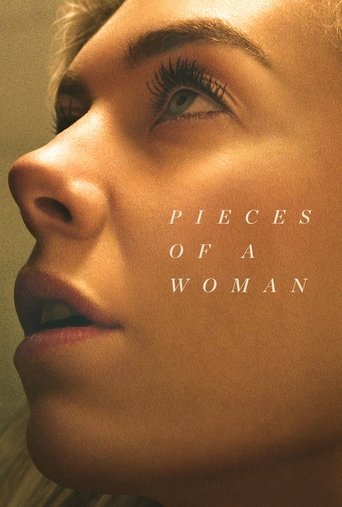
Elizabeth, the imperious Holocaust-survivor mother in Pieces of a Woman, is built around an eight-minute monologue that functions as a one-act play inside the larger film. It is the kind of set piece that in most careers would be a summation. In Burstyn's it reads as another entry, delivered with the same unshowy specificity she brought to Alice in 1974.
Venice's citation specifically nods to the Mundruczó reteam, and it closes a loop the Golden Lion now formalizes: the film premiered on the Lido, and the honor returns her to the same festival grounds. Structurally, Elizabeth mirrors Alice's thesis in reverse. Where Alice was a younger woman insisting on a self worth having, Elizabeth is an older woman insisting her daughter reclaim one. Burstyn is one of the rare actors whose work in her eighties and nineties belongs in the same conversation as her work in her thirties and forties — not as a curiosity, but as peer material.
The Through-Line: What These Five Films Share
Look at the five together and a shape emerges. Every role is a woman in a crisis of identity — widowhood, motherhood, addiction, regret, legacy. Burstyn rarely plays "strong women" as a marketing concept. She plays specific women whose strength is contingent, negotiated, and hard-won, sometimes lost by the last reel. That specificity is what draws the directors who cast her. Scorsese, Friedkin, Aronofsky, Nolan, Mundruczó — five very different filmmakers with five very different aesthetic projects — all use her the same way: as a truth-detector for their own material. If a scene doesn't survive her attention, it doesn't survive.
That is what Venice is actually recognizing. The Golden Lion isn't for a career of variety, though the variety is real. It isn't a nostalgia prize, though the length of the record earns nostalgia if she wanted it. It is for a career of unflinching attention — a body of work in which the acting is never the point but is always the reason the point lands.
Watched in sequence, these five performances feel less like highlights and more like the same argument made in five different registers over fifty years. If you want to feel that arc without ranking it, letting a shuffle pick your entry point is honestly the best way in. Start anywhere. She'll meet you there.