The Shelving Heard 'Round Hollywood (November 2023)
On November 8, 2023, Deadline dropped a story that landed like a brick through the window of every animation studio in Los Angeles. Warner Bros. Discovery, under CEO David Zaslav, had quietly killed a completed, test-screening-darling family film called Coyote vs. Acme — not to release it later, not to sell it, but to bury it entirely as a $30 million tax write-off.
The shock wasn't just the shelving. It was the math. This wasn't a troubled production or a creative disaster limping toward a merciful ending. This was a finished movie that had scored, according to industry testing, an astonishing 14 points above the family-film norm. In a business where a single point of positive test movement can trigger a marketing budget increase, 14 points is a green light with klaxons attached. Warner Bros. was killing it anyway.
By late 2023, the pattern was already grim. Batgirl had been shelved in 2022 in the deal's first infamous casualty. Scoob! Holiday Haunt vanished the same year. Now Coyote vs. Acme — a $72 million live-action/animation movies hybrid starring John Cena and Will Forte, directed by Dave Green, and built around one of the most beloved characters in the history of animation movies — was set to join them in the accounting drawer.
What made this one hit differently was the sheer waste visible from every angle. This wasn't a corporate story about a balance sheet. It was a story about what happens to art when accounting logic overrides audience desire — and about a coyote, of all creatures, becoming an unlikely symbol of the entire streaming-era shelving crisis.
The Backlash and the Reversal (Late 2023 – 2024)
The industry revolt was immediate and unusually public. Filmmakers, animators, and Looney Tunes obsessives took to social media comparing the decision to burying Batgirl, and — more damningly — to burning a warehouse full of finished paintings for the insurance money. The film's director and producers watched from the sidelines as their work was declared officially worthless.
Warner Bros.' initial position made things worse. Filmmakers were reportedly barred from shopping the movie to other buyers, a stance that turned an accounting decision into a hostage situation. The pressure campaign that followed — from talent, from press, from fans who had never seen a frame of the film — was significant enough that the studio eventually reversed course and allowed a sale process to begin.
Then came the second twist: nobody would pay. Amazon, Apple, and Netflix all circled the property. All three walked away. The reported sticking point was Warner Bros.' asking price, which appeared to be inflated by the studio's own write-off math — the film had to be sold above a certain figure or the tax benefit collapsed. The streamers, sensing both the leverage and the awkwardness of overpaying for a film the seller had publicly declared valueless, held their wallets shut.
There was also a strategic reason the streamers passed. The family-animation movies theatrical window still generates real money and real cultural weight — ask anyone who watched The Super Mario Bros. Movie clear a billion dollars — and nobody wanted to bury Coyote a second time on a streaming home page. The film needed a theatrical partner. Instead, it got a stalemate.
Enter Ketchup Entertainment (March 2025)
In March 2025, Variety broke the news that would define the entire salvage-era story. Ketchup Entertainment, a distributor most casual moviegoers had never heard of, had closed a roughly $50 million deal for Coyote vs. Acme — approximately $22 million below Warner Bros.' initial ask.
Ketchup wasn't a random buyer. The company had already released The Day the Earth Blew Up: A Looney Tunes Movie, another Warner-orphaned animated feature, giving them a track record with the exact same IP family. If any distributor on Earth had a credibility case for handling a shelved Looney Tunes movie, it was the one that had literally just done it.
The larger context is what made the deal historic. A small distributor was doing what three of the largest streamers on the planet wouldn't — echoing how mid-tier labels have quietly rescued orphaned projects across comedy movies and family filmmaking for years. And the price point mattered. Ketchup didn't overpay. They waited out the write-off cycle, watched the majors flinch, and walked in with a number the seller could no longer refuse.
More importantly, the deal established a template. Finished films are now assets that can be sold off the shelf, not just written off. The Coyote deal proved there is a functioning secondary market for completed movies — one that studios ignoring their own catalog do so at their peril.
Comic-Con, Legion M, and a Marketing Strategy Built on Revenge (2025–2026)
At San Diego Comic-Con 2025, Will Forte took the Hall H stage and announced an August 28, 2026 global release date — with a running Acme Corp. cease-and-desist bit that reframed the film's entire baggage as brand identity. The gag was simple and brilliant: of course a movie about a coyote suing a corporation for defective products would be haunted by legal threats from a fictional corporation. The film's off-screen story had become part of its promotional text.
The next move was arguably even smarter. In May 2026, Deadline reported that Ketchup was partnering with equity-crowdfunding firm Legion M for the theatrical release — an unusually direct way of turning fan advocacy into actual marketing spend. The people who had spent two years demanding this movie exist would now, quite literally, have skin in the release.
Then came the Tax Day teaser, timed with obvious intent. The trailer leaned into the WB feud rather than avoiding it, including the now-notorious "releasing this film for accounting purposes only" line — a piece of marketing copy that would have been unthinkable from a major studio. Ketchup wasn't hiding the film's history; they were selling it.
The final trailer, released in July 2026, framed the entire thing as Hollywood's ultimate underdog fight. Wile E. Coyote suing Acme mirrors the film suing its own former studio in every meaningful way. It's rare — maybe unprecedented — for a movie's off-screen narrative to become this cleanly inseparable from its on-screen premise.
Can't Decide What to Watch?
Let RandomFlix pick a movie for you. One click, one great movie.
Roll the DiceThree Films the Coyote Saga Belongs Beside
The write-off era didn't start with Coyote and won't end with it. To understand what August 28, 2026 actually represents, it helps to look at three other films that were nearly lost — one that stayed lost, one that was rescued by the same team, and one that became a template for what salvage can look like when the pieces align.
Batgirl
The first Zaslav-era casualty and the film that made "tax write-off" a household phrase. Directed by Adil El Arbi and Bilall Fallah, and starring Leslie Grace, J.K. Simmons, Brendan Fraser, and Michael Keaton returning as Batman, Batgirl was shelved in August 2022 in a decision so brazen it launched a thousand think pieces about the state of the DC brand and the ethics of corporate write-downs.
Unlike Coyote, Batgirl never got a rescuer. No Ketchup equivalent stepped in. The film remains, as of 2026, a ghost — screened privately for its makers as a kind of funeral, never released. That silence is exactly what makes Ketchup's deal look remarkable in retrospect. Batgirl proved a major shelving could stick. Coyote proved it doesn't have to.
The Day the Earth Blew Up: A Looney Tunes Movie
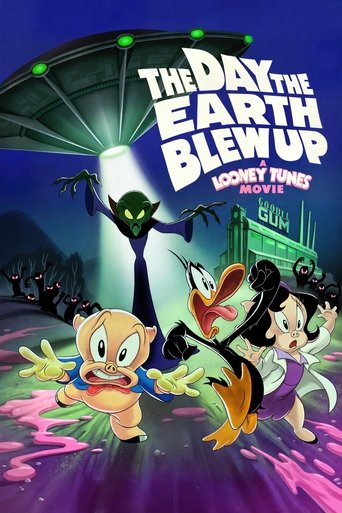
Also orphaned by Warner Bros. Also rescued by Ketchup. Released in early 2025 to warm reviews and a modest but real theatrical footprint, The Day the Earth Blew Up was, in retrospect, the dry run — the proof-of-concept that told the industry Ketchup could actually get a Looney Tunes film into theaters and generate real reviews from real critics.
Without this film, the Coyote deal likely never happens. With it, Ketchup had a case study, a distribution playbook, and a relationship with the Looney Tunes brand that no streamer could match. It's the kind of quiet precedent that changes an entire subgenre's math — and it made every other studio holding a shelved animated feature reconsider what "worthless" actually means.
Nimona
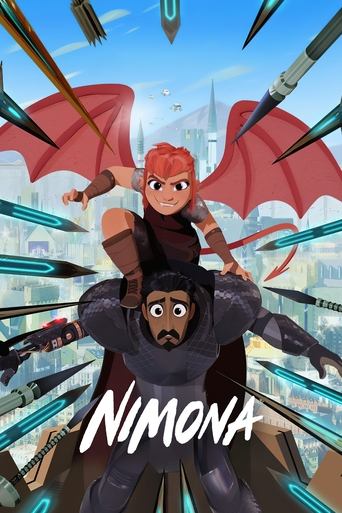
The Blue Sky Studios feature that was famously salvaged by Annapurna and Netflix after Disney shuttered the studio in the wake of the Fox acquisition. Based on ND Stevenson's graphic novel and directed by Nick Bruno and Troy Quane, Nimona arrived in 2023 to Oscar nominations, critical acclaim, and a genuine cultural moment — the exact kind of second life that made industry observers wonder how many other films were sitting in vaults waiting for someone to make a phone call.
Nimona is the parallel Coyote fans have been pointing at for two years. It's proof that art rescued from corporate consolidation can become a genuine cultural moment in animation movies, not a footnote. The lineage matters: Nimona showed it could be done, Day the Earth Blew Up showed Ketchup could do it, and Coyote is now the test of whether the model scales to a $72 million tentpole.
What August 28, 2026 Actually Means
The release is, functionally, an industry stress test. Can a mid-size distributor open a family tentpole against major-studio competition in late summer? Ketchup has to answer that question in real time, against real box-office data, with a fanbase that has been marinating in anticipation for nearly three years.
The precedent it sets for the 2020s movies is bigger than one weekend's grosses. This has become the decade of mergers, write-offs, and the increasingly urgent question of who actually owns a finished movie — the studio that made it, the shareholders it's now attached to, or the audience that will eventually pay to see it. Coyote is the first case where the answer has bent, publicly, toward the audience.
For viewers, the takeaways are unusually concrete. Public pressure can force reversals. Finished films aren't necessarily gone forever. And the mid-tier distributors doing the salvage work deserve the same attention we lavish on the majors — because they're increasingly the ones keeping interesting movies alive.
The final irony is the one Ketchup's own marketing has been leaning into for months. A movie about a coyote suing a corporation for selling him defective products became a movie about a movie suing its studio for treating it as one. Wile E. Coyote finally caught something — and it turned out to be the entire modern history of Hollywood accounting.