The Comer Paradox: A Movie Star Who Refuses to Be Recognizable
There's a moment, roughly forty minutes into 28 Years Later, when Jodie Comer's Isla looks at her son and you can see two performances happening simultaneously. The first is the one Isla is giving — a mother holding herself together, dressing the disorientation of her illness in something that looks like reassurance. The second is the one Comer is giving us: the flicker behind the eyes that tells you Isla knows exactly what she's doing, and how much it costs. The Hollywood Reporter, in its review of Danny Boyle's sequel, singled Comer out as the soulful core of the film — and that single scene is the cleanest distillation of what she's been quietly doing for a decade.
Here is the strange math of Comer's career: she has an Emmy, a BAFTA, a Tony, and an Olivier, all collected before her thirty-second birthday, and most casual viewers still couldn't pick her out of a lineup. That's not a failure of recognition. That's the point. Comer is the most chameleonic screen actor of her generation, and her best performances all share a single trick: she lets us see the person underneath the performance the character is giving.
To rank her work, we used three axes. Transformation — how completely she vanishes into accent, posture, era, class. Difficulty — the technical lift, whether that's a one-woman play or three contradictory versions of the same scene. Resonance — what the performance leaves behind once you've stopped watching. The spread is staggering: assassins, queens, barristers, medieval noblewomen, plague-era mothers, Chicago biker wives. If you want the broader landscape of the kind of drama movies she keeps remaking from the inside, you'll find she's quietly built a parallel canon to anyone working at her tier.
How We Ranked Them
A few ground rules. TV miniseries count, because that's where Comer's most demanding work lives. Stage-to-screen captures count, because Prima Facie isn't a footnote — it's the ceiling. Cameos and bit parts don't.
The reception of 28 Years Later was genuinely split. THR went rapturous; Pajiba offered a cooler, more skeptical take on the film as a whole, which is worth acknowledging in a ranking that places the film high. Our placement weighs Comer's specific contribution rather than the consensus on the picture around her. And this is a critical ranking, not a popularity vote — Killing Eve loyalists may bristle at how high the deeper cuts climb. That's fine. The argument is that her range deserves the longer look.
The Ranked List: 10 Performances That Prove Her Range
10. Free Guy

The studio-comedy curveball, and a useful stress test. As game developer Millie and her in-game avatar Molotov Girl, Comer had to share a $300M Ryan Reynolds vehicle without ceding the frame, and she does it by giving the two roles different centers of gravity. Millie hunches; Molotov Girl plants. Same face, two physical performances. It's the lowest-stakes entry on the list, but it earns its slot on transformation — proof that she could do blockbuster machinery without flattening into it. Pair it with her more action movies-adjacent work for a full picture of what she'll consent to do inside a popcorn frame.
9. The White Princess
Her Elizabeth of York is the first time the Comer specialty crystallizes on screen: a woman performing composure for political survival. Den of Geek's overview of her best roles flags this as a key early showcase, and you can see why. The 2017 Starz miniseries asked her to play a queen consort whose every smile is a calculation, every silence a negotiation. It's the template she'll perfect a decade later in The Last Duel: stillness as strategy, not absence. Score: resonance, because everything she does later refers back to it.
8. Thirteen
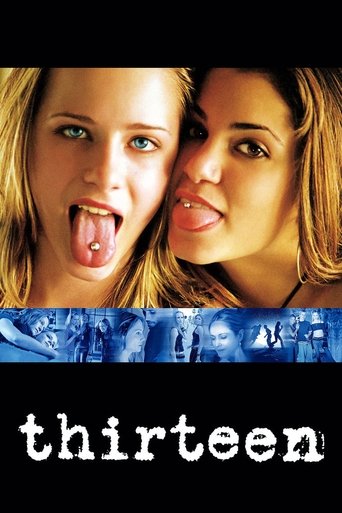
Three episodes of BBC reactive acting at its most disciplined. As Ivy, a woman emerging from thirteen years of captivity, Comer plays trauma without italicizing it — no shaking-hand shorthand, no Big Crying scenes designed for clip reels. Just a face that's forgotten how to be a face in public. Den of Geek credits this period with the moment casting directors started seriously circling her, and it's easy to see why: this is the first role where you can feel the camera leaning in to catch what she's not doing. Score: difficulty, for sustaining that level of restraint across a thriller movies miniseries that could have rewarded the opposite.
7. My Mad Fat Diary
Her early role as Chloe — the pretty best friend whose veneer cracks late in the run — is where the Comer trick first becomes visible. Den of Geek's list of her best roles names this performance among the ones that built her reputation, and the reason is a single scene: the moment Chloe's polished surface gives way and you realize the character has been performing for the show's entire run. The performance underneath the performance. The 2010s movies British TV ecosystem produced a lot of working actors; almost none of them were doing this in their early twenties. Score: resonance.
6. Doctor Foster
As Kate Parks, the mistress in Mike Bartlett's marital thriller, Comer had to hold her own opposite Suranne Jones in scenes that play like prizefights — clipped sentences, weaponized silences, the camera daring one of them to flinch first. She doesn't. SlashFilm's ranked breakdown of her career places Doctor Foster among the foundational roles that defined her early range. It's the first performance where critics started reaching for the word "fearless," and it remains the cleanest evidence that she could absorb pressure without leaking it. Score: difficulty.
5. The Bikeriders
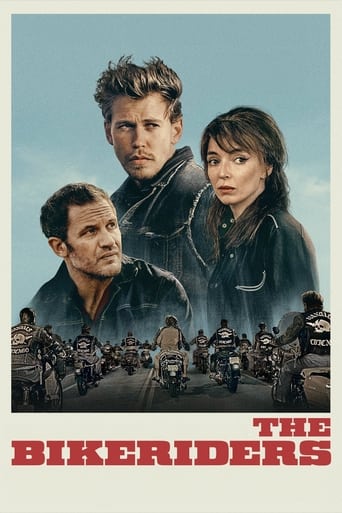
Kathy, narrating Jeff Nichols' chronicle of a Midwestern motorcycle club in a Chicago accent so specific it generated its own discourse. The accent isn't a stunt — it's character architecture. Kathy talks the way she does because she's performing toughness she doesn't actually feel, dressing herself in vowels she borrowed from the men she's standing next to. The whole performance is a woman ventriloquizing a version of herself that can survive the room. In a film stacked with Tom Hardy and Austin Butler doing their fullest, most committed work, she walks off with the picture. Score: transformation, decisively.
4. The Last Duel
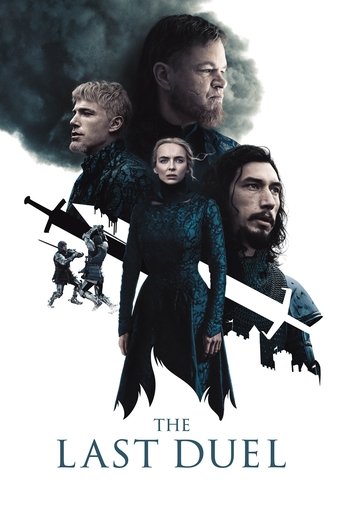
Marguerite de Carrouges in Ridley Scott's Rashomon-style medieval drama, and a working masterclass in calibration. Comer plays the same events three times — once as her husband remembers them, once as her assailant remembers them, once as she actually lived them — and the genius is how microscopically she shifts. The "truth" chapter isn't louder than the other two. It's quieter. The micro-adjustments of posture, the rhythm of her glances, the timing of when she chooses to speak — none of it matches the previous versions. SlashFilm's ranking treats this as the role that confirmed she could carry a Scott prestige picture opposite Damon, Driver, and Affleck, and that's the right read. Score: all three axes, but especially difficulty.
Can't Decide What to Watch?
Let RandomFlix pick a movie for you. One click, one great movie.
Roll the Dice3. 28 Years Later

Isla, the dying mother on the mainland — the role currently rewriting how critics talk about her. THR's analysis describes how Isla subtly transforms on the mainland, with Comer anchoring the film's emotional center alongside Ralph Fiennes and Jack O'Connell. What lifts the performance into the top three is the choice underneath it. In a ScreenRant interview about Isla's arc and final scene, Comer talks at length about her approach to the character's emotional choices and what she wanted those final moments to mean. Crucially, she plays Isla's lucid stretches as a gift the character is consciously giving her son — not a symptom of her illness lifting, but a deliberate act of love performed against the clock.
That's a horror-movie performance that doesn't behave like horror-movie acting. Boyle's sequel is a horror movies picture in genre but a chamber drama in this particular bloodstream, and Comer's stillness changes what the form can do. It's the first time she's deployed her core register inside this kind of frame, and the field is going to keep referring back to it.
2. Prima Facie
One hundred minutes alone on a stage, then captured for cinemas via NT Live. As barrister Tessa Ensler, Comer has to navigate the play's closing monologue — a sustained piece of acting that might be the single most demanding thing on her CV. The Olivier and Tony weren't acclaim. They were arithmetic. If you watch the capture cold, the most striking thing isn't the volume of what she's doing; it's how cleanly she modulates a character whose own self-image is collapsing in real time. The screen, frankly, has been underselling her this whole time. Score: difficulty, by a wide margin.
1. Killing Eve
Villanelle. Of course Villanelle.
The argument for keeping her here, even after Prima Facie and 28 Years Later, is that this is the role that contains every other performance in miniature. The accent-hopping is in there. The whiplash pivots between menace and play are in there. The woman performing personhood — trying on humanity like a series of couture pieces, none of them quite fitting — is the engine of every performance she's given since. Comer's career, including her Emmy win and her broader awards haul, is anchored to this role, and the win over Sandra Oh, Julia Roberts, and Laura Linney wasn't an upset. It was a handover. Score: all three.
What to Watch Next, and Where Comer Goes From Here
Look at her top five and a pattern emerges. Marguerite. Kathy. Isla. Tessa. Villanelle. Each one is a woman performing a calibrated version of herself in order to survive the room she's standing in — sometimes for political survival, sometimes literal, sometimes psychic. That's not range as variety-show shape-shifting. That's range as a single, repeatable insight applied to a dozen different rooms. The Comer signature is the gap between the performance the character is giving and the person you can almost see behind it.
What's coming is more of the same widening. She's already shot 28 Years Later: The Bone Temple, the immediate sequel to Boyle's reboot, and there are further projects on her slate that suggest she's not interested in coasting on Villanelle goodwill. Rotten Tomatoes confirms her casting as Isla in 28 Years Later, and her next chapter in that universe will tell us a lot about whether the field has caught up to what she's actually doing.
If the ranked list above feels too much like homework — if you'd rather just drop into a Comer performance and let the chips fall — RandomFlix can shuffle one of her films at random. Sometimes the best way to see a chameleon clearly is to stop trying to plan the encounter, and just let her appear.