The Two Ruperts: A Career Bracketed by Opposites
When Brett Goldstein paid tribute to his Ted Lasso co-star this week, he reached for a paradox that anyone who watched Anthony Head work for five decades already understood. He called him a brilliant actor who played the worst person in the world — a line that lands precisely because the man behind Rupert Mannion was, by every available account, the opposite of him.
There is an eerie symmetry to the bookends Head leaves behind. The two roles that will define his late career obituaries share a first name. Rupert Giles, the tweed-jacketed Watcher who eventually chose love for his Slayer over the cold mandates of duty. And Rupert Mannion, the smiling tycoon who chose spite over everything — over his ex-wife, over a football club, over his own better instincts. One Rupert taught a teenage girl how to save the world. The other tried to buy the world and break it on the way out.
Head died on June 5 at age 72, and the appreciations that have poured in since have struggled, fairly, with the breadth of what to remember. This is not a eulogy. It is an argument: that the ten finest performances of Head's career, arranged not chronologically but along the warmth-to-menace spectrum he commanded, all draw from a single instrument. The English charm that once sold instant coffee was the same charm that made Giles a generational father figure, and the same charm Mannion used as a blade.
The Gentleman Mentor: Giles and His Variations
Begin where most viewers did, in the autumn of 1997, with a horror movies series that wasn't supposed to last. Buffy the Vampire Slayer arrived as a midseason gamble and ended as a defining text of the 1990s movies, and the show's emotional architecture was built, week after week, on Head's quiet authority. Joss Whedon's Buffy adaptation needed a Watcher who could ground its baroque mythology in something resembling a real adult. Head gave it more than that. He gave it a man with a past.
Rupert Giles in 'Band Candy'
The third-season episode in which enchanted chocolate regresses Sunnydale's adults into reckless teenagers remains the purest distillation of what made Head's casting brilliant. Watch him shed the cardigan and resurrect "Ripper," Giles's pre-Watcher punk-occultist persona, and you see an actor visibly delighted to play his own character's id. The leather jacket, the cigarette, the cockney slouch — Head plays it not as caricature but as memory, as if Ripper had been sitting under Giles's tweed the entire time, waiting.
Giles in 'The Body'
The opposite pole, and one of the most devastating things Head ever did in front of a camera. When Joyce Summers dies, Giles arrives at the house and learns of it without a word of dialogue. Head's performance is almost entirely physical — a collapse held in check, grief processed in the seconds before he has to be useful again for Buffy. It is a masterclass in stillness, the kind of work that gets remembered only by people who actually watched television.
Giles in 'Once More, With Feeling'
By the time the musical episode arrived in season six, Whedon knew exactly what he had in Head: a trained stage performer with a singing voice that had carried him through Godspell and Chess. The ballad "Standing" is the moment Giles realizes he has become a crutch, and Head sings himself out of Buffy's life with a tenderness that doubles as a thesis statement. The Watcher's love for his Slayer is real, and so is the cost of staying.
Uther Pendragon in Merlin
The BBC's long-running Arthurian retelling cast Head as the king who would sire the once and future king, and the role pushed his paternal register toward something colder. Uther's love for his son is genuine; his capacity for tyranny, especially toward magic-users, is equally genuine. Watching it now, after Ted Lasso, you can see Head rehearsing the architecture of Mannion — the man who has confused his authority with his identity, and who lashes out when either is questioned.
The Inverse retrospective on Head's Buffy years made a case worth borrowing here: the Ripper backstory revealed across "Halloween," "The Dark Age," and "Band Candy" made Giles television's most fully imagined mentor figure precisely because Head was given room to play the man's worst self. Giles was never just wise. He was wise because he had been reckless, and he remembered.
The Charming Cad: Comedy and the Pivot to Menace
The Prime Minister in Little Britain
Matt Lucas's tribute this week framed the role beautifully — Head's PM was the actor weaponizing his own statesman-handsomeness for farce. The bit, in which Lucas's aide harbors an enormous unspoken crush on his boss, only works because Head plays the Prime Minister entirely straight: handsome, oblivious, decent. Head gave the sketch its straight line so completely that the joke had somewhere to land.
Nathan in Repo! The Genetic Opera
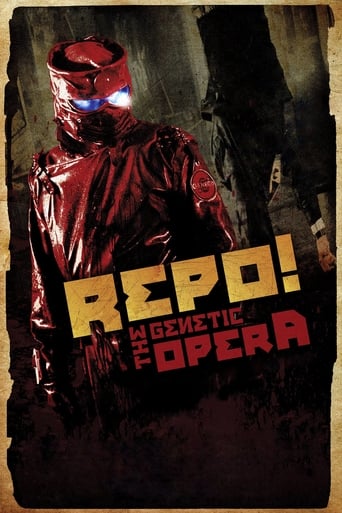
A glorious gothic detour, and a role Head reportedly got because of his work on the Buffy musical episode. As Nathan Wallace, the surgeon-by-day, organ-repossession-killer-by-night, Head got to braid every register he had — the grieving father, the operatic baritone, the man whose tenderness and violence share the same nervous system. The film is a midnight-movie acquired taste, but Head's performance is the spine of it.
Mr. Finch in Imagine Me & You
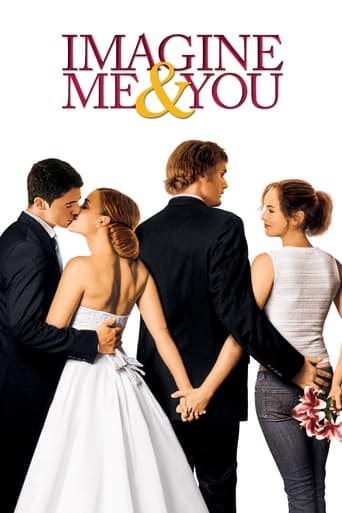
A quieter pivot, and one that gets under-celebrated. In a landmark British romance movies about a bride who falls for the florist at her own wedding, Head plays the warm father whose acceptance is never in doubt — which is itself a small revolution for a 2005 film. The performance is decent, lived-in, completely without vanity. It broadened his register at exactly the moment Buffy was receding into syndication.
Can't Decide What to Watch?
Let RandomFlix pick a movie for you. One click, one great movie.
Roll the DiceThe comedy and supporting-character years did something specific to Head's craft. They taught him the precise calibration of charm — the exact wattage at which a smile reads as warmth, the exact half-degree of cooling at which it reads as threat. He spent fifteen years learning where that line was. Then he crossed it on purpose.
The Velvet Villain: Mannion and the Late Heel Turn
Rupert Mannion in Ted Lasso
TheWrap's appreciation put it well: Head plays a man who has confused wealth with worth, and the performance is calibrated to make you feel every flinch Rebecca Welton suffers in his presence. Mannion never raises his voice. He doesn't have to. The cruelty is in the timing of his pauses, the way he lets a silence land before delivering a compliment that is actually a knife. Goldstein's line — the worst person in the world — is funny because it's true. Head plays him without a single redeeming note, and yet you understand exactly the young woman who once mistook him for love.
Lord Sheffield in Bridgerton
A smaller part, dispatched with surgical economy. Head as the cold patriarch who disinherits his own daughter for marrying beneath the family is the kind of period villainy that requires no swordplay, only the right pause before the right word. He is in the show for minutes. The shape of his menace stays for episodes.
Period Menace in Dancing on the Edge and Vanity Fair
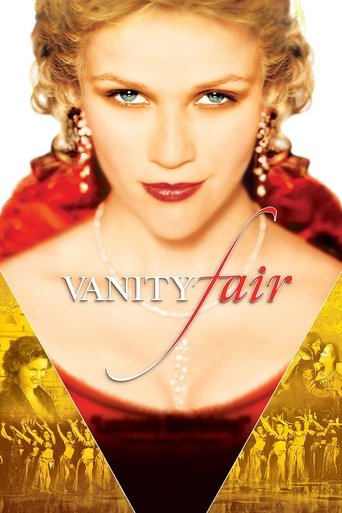
The Stephen Poliakoff drama Dancing on the Edge, in which Head played a 1930s aristocrat whose civility curdled into something uglier, belongs in any honest catalogue of his late work. So does his turn in Vanity Fair, period menace dressed in impeccable tailoring. The English drama movies tradition of distinguished actors aging into villainy — McKellen, Rickman, Pryce — is not a wide club, but Head earned his seat at the table. He had the voice for it. More importantly, he had the patience.
Before the Cameras Found Him: Stage, Song, and a Cup of Coffee
It is easy, in the rush of Buffy and Ted Lasso obituaries, to forget how much of Head's training happened in front of live audiences. His theater life included Godspell in the late 1970s, along with productions of Chess, Peter Pan and Rocky Horror Show Live. The musical-theater foundation explains everything that came after — the precision of "Standing," the operatic commitment to Repo!, the rhythmic economy of his line readings as Mannion, every comma weighted, every silence engineered.
And then there is the coffee. From 1987 to 1993, Head fronted a Nescafé Gold Blend ad campaign that ran as a long-form romantic mini-series and made his face familiar to virtually every household in Britain before Whedon ever cast him. The American audience that discovered him as Giles met a stranger. The British audience that discovered him as Giles met a man they had already been having coffee with for six years. Both readings are correct. Both inform the work.
Where to Start, Where to Return
For newcomers, the path is obvious enough: begin with the Buffy run, then jump straight to Ted Lasso. The two performances, seen back to back, are the clearest illustration of an actor's full range you are likely to find on television. Same instrument, opposite poles, three decades apart.
For returning fans, the underseen corners reward a revisit. Repo! The Genetic Opera is the cult oddity that lets Head sing through his grief. Dancing on the Edge is the prestige drama that previewed every cold beat Mannion would later deliver. Merlin is the long, patient rehearsal for the tyrant Head would eventually become on screen.
If you'd rather let RandomFlix surface a Head performance at random across his five decades on screen, the dice handle the curation while you make the tea.
The line that keeps surfacing in this week's tributes is that Anthony Head was one of television's most reliable figures. Reliability is a word we use too lightly. In a medium that chews actors up — that hires for a moment and discards by the season — reliability is the radical act. Head spent fifty years showing up, calibrated, prepared, generous to his scene partners, and capable of pivoting from mentor to monster without ever changing his diction. The Two Ruperts were never opposites. They were the same craftsman, working both ends of a single instrument, all the way to the last note.
Pour the coffee. Put on "Band Candy." Then put on a Mannion scene. The distance between them is the measure of the loss.