The Year of Anne, and Why Mother Mary Changes the Conversation
There's a moment about two-thirds of the way through Mother Mary where Anne Hathaway, alone on a stage lit like a Caravaggio, begins to dance in total silence. No score. No diegetic music. Just her body moving through choreography that, as Brian Tallerico noted in his review, drifts past performance and into something closer to demonic possession. It's the kind of sequence that doesn't just play well in a trailer — it forces a reassessment of the actress doing it. Because if you can do that, on camera, with David Lowery watching, the question isn't whether Anne Hathaway is a great actress. It's whether we've been ranking her greatness wrong for twenty years.
This isn't a hagiography occasioned by a single comeback. 2026 is, by any reasonable accounting, the most ambitious calendar year of Hathaway's career: Mother Mary with Lowery and A24, The Devil Wears Prada 2, Christopher Nolan's The Odyssey, David Robert Mitchell's Flowervale Street, and the Colleen Hoover adaptation Verity. Five swings in twelve months, across psychological thriller, sci-fi epic, legacy comedy, suburban horror, and prestige drama. The slate is the context for this piece, not its subject.
The subject is the pattern that Mother Mary finally makes legible. Lowery has spoken about pulling from Bram Stoker, Taylor Swift's Reputation Tour, and Beyoncé to build the film's grammar — a collage of pop iconography and gothic dread — and Hathaway is the medium through which all of it has to pass. The thesis: Hathaway has always been most interesting when she's chasing texture over likability, and her career reads better as a ledger of risks than as a trophy shelf.
So this isn't a "best-reviewed" list. It's a "most-to-lose" list. The criteria: physical or vocal transformation, persona sabotage (playing against the brand), genre whiplash, and director-as-test — auteurs whose style could swallow a movie star whole.
What Counts as a 'Risky' Hathaway Role
The four risk axes are doing real work here, so it's worth defining them.
Physical or vocal transformation is the most obvious — the Les Misérables weight loss, the prosthetics in The Witches, the choreography of Mother Mary. Persona sabotage is subtler: roles that contradict the public's image of "Anne Hathaway" the star, the polite Oscar host, the Princess Mia. Genre whiplash is what happens when she steps into a kaiju movie about alcoholism, or a rom-com about Parkinson's, or a Nolan space epic that asks her to deliver a monologue about love as a fifth-dimensional force. And director-as-test is the gamble of working with a Demme, a Nolan, a Lowery — filmmakers whose voices are loud enough to either elevate or eclipse a movie star.
After Les Misérables, Hathaway had a clean lane open: more Oscar-bait dramas, more sympathetic suffering, more tasteful prestige. She didn't take it. The countdown that follows runs from #10, a calculated commercial risk, to #1, full tightrope no net — and it leans hard on her range across drama movies and science-fiction movies.
The Ranking: Anne Hathaway's 10 Riskiest Performances
10. The Princess Diaries 2: Royal Engagement
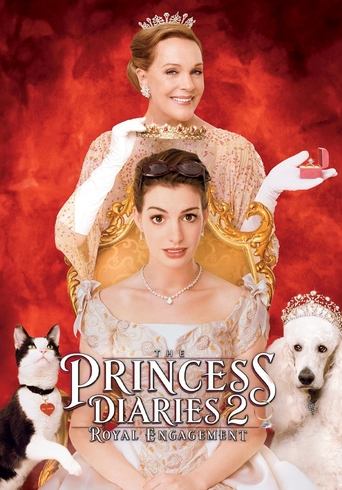
The counterintuitive opener. By 2004, Hathaway was actively trying to break out of the Disney lane — and then doubled down on it. The risk here was the inverse of every other entry on this list: not playing too dark, but staying too sweet. The 2004 sequel could have welded her permanently into family-film jail at exactly the moment she needed velocity. That she escaped the gravitational pull of Genovia at all is part of why everything that followed reads as deliberate.
9. The Dark Knight Rises
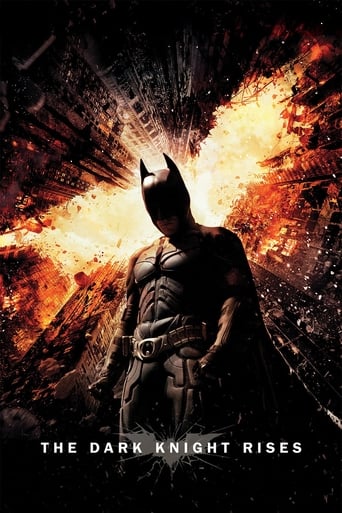
She inherited Catwoman from a version of the character that had, in the popular imagination, been napalmed by the 2004 Halle Berry film. Fan campaigns wanted anyone but her. Christopher Nolan's Gotham is also not a place known for its tonal generosity to camp, and Selina Kyle is, structurally, a camp character. The heist-bar scene — where she flips from coquettish socialite to lethal operator inside a single beat — is the proof of concept. She found the seam between Nolan austerity and pulp pleasure, and Catwoman has been recoverable ever since.
8. Love & Other Drugs
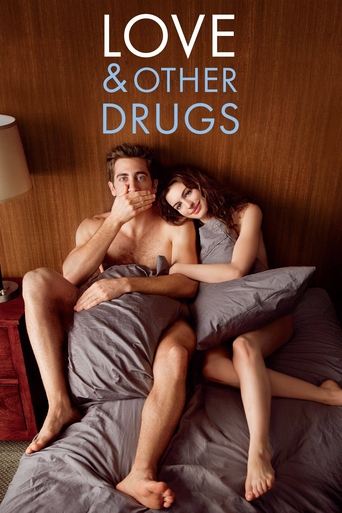
Sold as a glossy Jake Gyllenhaal romance with skin and pharmaceutical satire; actually, in its bones, a film about a young woman with early-onset Parkinson's. The marketing actively undermined the performance, and the reception split along that fault line. Gold Derby and other reappraisals have flagged it as one of her most underrated turns. The diner scene — where she catalogs, brutally, the future Gyllenhaal's character is signing up for — is the emotional pivot, and it's played without a milligram of self-pity. Tonal gamble; she wins it; the marketing loses for her.
7. Interstellar
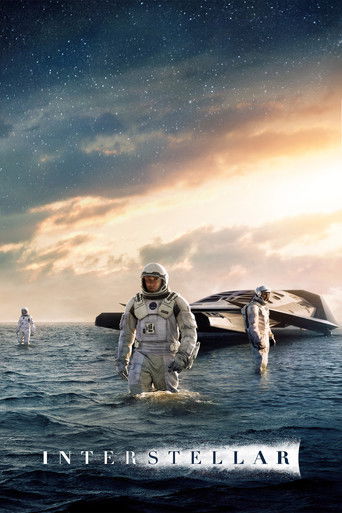
The "love transcends dimensions" monologue is the most-mocked passage in any Nolan film, and it is also, on rewatch, fully committed. That commitment is the risk. A more cautious actress would soften the speech, modulate it, hedge against the giggle factor. Hathaway plays it straight — Brand believes it, so the audience has to wrestle with it — and inside the science-fiction movies ecosystem Nolan is building, that earnestness is what makes the film's emotional architecture stand up. Career-defining or career-damaging depending on whom you ask, which is itself a useful definition of risk.
6. The Devil Wears Prada
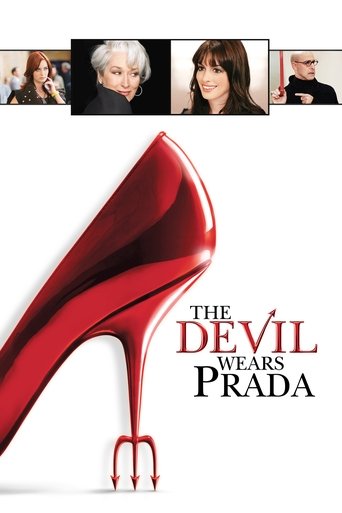
The risk most viewers forget. Andy Sachs is the straight-woman ballast in a film that could have been — should have been, by every law of comic physics — devoured whole by Meryl Streep and Emily Blunt. That Andy reads as a person at all, and not just a coat rack for the supporting cast's punchlines, is the performance. The 2026 reunion in The Devil Wears Prada 2 is, in effect, a referendum on whether that character still works two decades later — whether the millennial-girlboss frame has dated or aged into something more interesting.
5. The Witches
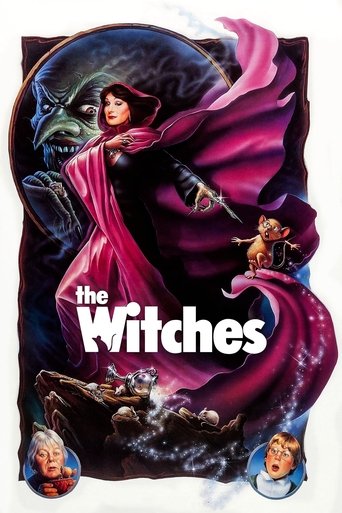
Following Anjelica Huston into one of the most beloved children's-horror performances of all time, in a Robert Zemeckis remake almost nobody asked for. The reception was rough. But the swing — the prosthetics, the elongated mouth, the heightened mid-Atlantic voice pitched somewhere between Eva Gabor and a hissing kettle — is fully committed body-horror work disguised as a kids' movie. In retrospect, it's a clear preview of the Mother Mary register: the willingness to look genuinely strange on camera, to let the image be unsettling rather than flattering.
4. Rachel Getting Married
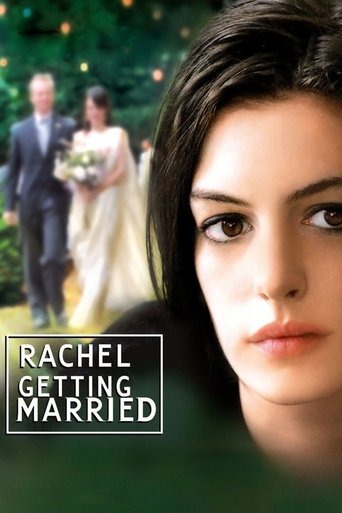
Jonathan Demme handed her a documentary-style camera, a recovering addict named Kym, and a sister's wedding to detonate. She ran at the role. The toast scene — a public apology that curdles into a performance of contrition that curdles into something genuinely cruel — is the moment her filmography pivots. Up to that point, the public read of Hathaway was "nice girl, on paper." After that scene, the read was "actress." It earned her first Oscar nomination, and more importantly, it gave her permission to take the next six entries on this list.
3. Colossal
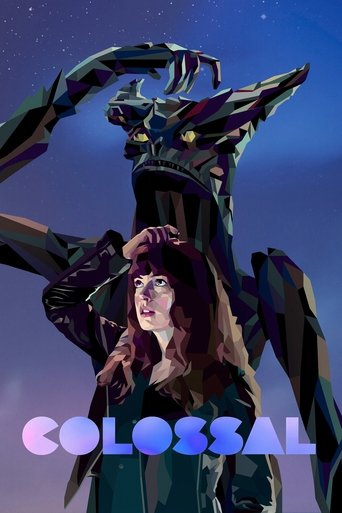
Nacho Vigalondo's indie kaiju metaphor for alcoholism and abusive relationships had no reference point and a high failure ceiling. The premise — a struggling woman discovers her movements are being mirrored by a giant monster destroying Seoul — could have collapsed under its own conceptual weight in any of fifteen places. Hathaway anchors it by playing Gloria as recognizably, embarrassingly human first and metaphor-vessel second. The performance quietly rewired what kinds of scripts she said yes to in the 2010s movies, and you can draw a straight line from Gloria to whatever she's doing in Lowery's pop-fantasy fever dream.
2. Les Misérables
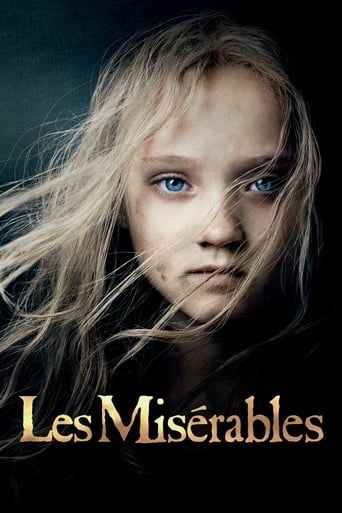
The 25-pound weight loss on a sub-500-calorie regimen. The live on-set singing — Tom Hooper's gambit, executed without a net. The single-take "I Dreamed a Dream" that ran the table during awards season. The textbook Oscar swing. The risk, paradoxically, wasn't whether it would win. It was the cultural backlash that arrived after the win, the exhausting "Hathahate" cycle that defined her public image for years and, by her own subsequent accounts, cost her real work in the back half of the 2010s movies. Most actresses absorb a backlash and retreat. She kept making things like Colossal. That's the risk staying paid off, in slow motion.
1. Mother Mary
Lowery's A24 pop fantasy is the synthesis of every prior risk on this list. Physical performance: the silent dance Tallerico flagged, plus the full pop-star choreography Hathaway built with a Beyoncé-influenced movement vocabulary. Persona sabotage: a Gaga/Swift/Beyoncé collage filtered through Bram Stoker's Dracula, a character designed to be magnetic and uncanny in roughly equal measure. Auteur trust: Lowery, whose films routinely ask their leads to perform in registers most movie stars can't access.
The reception is genuinely split — a 67% on Rotten Tomatoes against a 58 on Metacritic — and that split is the point. A consensus rave would mean she'd hit an obvious target. A divisive reception, with serious critics divided about what they're watching, is the surest sign that she's actually risked something. The performance recontextualizes the nine entries that came before it, turning what looked like a scattered filmography into a coherent throughline: a movie star who keeps choosing the role where the floor might give out.
The Throughline: Hathaway as a Texture Actor
Pull all ten entries onto a single timeline and the pattern is hard to miss. Hathaway is most alive on screen when the role threatens the "Anne Hathaway" the public thinks it knows. The Oscar moments are real, but they're not the spine. The spine is the willingness to look strange, to play unlikable, to commit to a monologue most actors would hedge, to follow a Demme or a Vigalondo or a Lowery into rooms where movie-star instincts don't help.
Flowervale Street and The Odyssey are the next two data points. David Robert Mitchell makes horror that operates on dream logic, which is a different kind of pressure test than anything she's done — closer to Colossal than to anything in the prestige lane. And Nolan's The Odyssey is the largest-canvas project of her career, a film whose scale could either confirm her as a fixture of contemporary epic cinema or expose the limits of her register. Either outcome is interesting. Neither is safe.
If you'd rather watch the ranking than just read about it, RandomFlix's roll-the-dice picker can shuffle her filmography across drama movies and strong-female-lead movies and let chance pick the rewatch.
The pattern, once you see it, is hard to unsee. Anne Hathaway has spent twenty years quietly building the case that the riskiest performance in the room is almost always hers. Mother Mary is the loudest version of that case yet — and the most convincing argument that the trophy-shelf consensus has been the wrong way to read her all along.