Why One Battle After Another Demands a Follow-Up
Paul Thomas Anderson finally got his trifecta. After two decades of near-misses with There Will Be Blood and Phantom Thread, One Battle After Another swept the 98th Academy Awards, converting 13 nominations into six wins — Best Picture, Director, Adapted Screenplay, Supporting Actor for Sean Penn, Film Editing, and Casting. It became the most expensive production ever to take home Best Picture, surviving a fierce race with Sinners and landing Anderson the Picture/Director/Screenplay trifecta that had eluded him for a generation.
It's also, finally, easy to watch. After its theatrical run and an HBO Max window, the film hit Prime Video in late May 2026, which is presumably how you ended up here — wrung out, a little wired, and looking for whatever's next.
The thing about Anderson's epic is that it operates on three distinct frequencies at once. There's the paranoid 70s thriller, all zooms and chases and government rot. There's the revolutionary cell drama, where idealism curdles into something colder. And there's the intergenerational protectorate film — Bob Ferguson, burnout father, trying to keep Willa alive while the past kicks the door in. The movie even tells you what it's drinking from: Bob watches The Battle of Algiers on a TV inside the film, a direct citation of Gillo Pontecorvo's 1966 newsreel-realist masterpiece.
What follows are eight films organized around those three frequencies. Inherent Vice — PTA's own spiritual predecessor — gets a respectful nod and is left off the list, because you've already found it.
The Paranoid 70s Bloodline
This is the thriller movies tradition Anderson is drinking from: handheld zooms, government rot, men running from forces they can't name. The texture of 1970s movies American cinema — grainy, sweaty, suspicious of every institutional surface — is what gives OBAA its bone structure. These are the films that taught Anderson how to shoot a chase as a metaphysical condition.
The French Connection
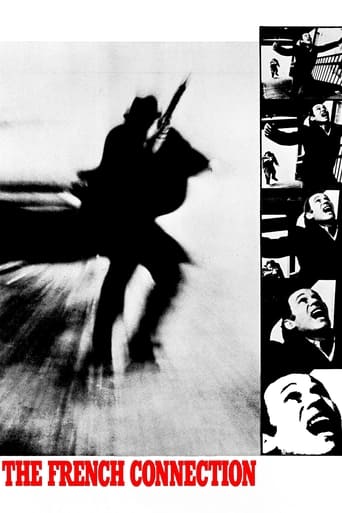
William Friedkin's 1971 manhunt is the grammar of the OBAA car chases. The famous elevated-train sequence — Popeye Doyle gunning a commandeered Pontiac LeMans under the rattling Brooklyn tracks — is in Anderson's bloodstream every time Bob's beater fishtails through another anonymous American street. The curb-stomp realism, the New York grain, the sense that the cop is just as feral as the quarry: that's the inheritance.
It's also where Lockjaw comes from. Popeye Doyle is the system's enforcer as deranged true believer, a man who has become the chase, and Penn's Oscar-winning Colonel is his direct descendant. Watch them back-to-back and the lineage is so naked it's funny.
The Manchurian Candidate
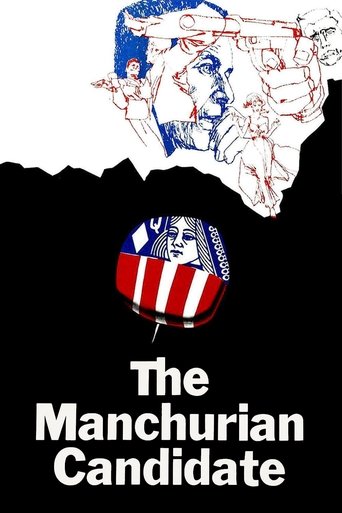
John Frankenheimer's 1962 original is the ur-text of American political paranoia — brainwashed assassins, shadow conspiracies, mothers feeding sons into a meat grinder of patriotic horror. Without it, there's no Christmas Adventurers Club. The whole notion that the rot at the top of the country is organized, ritualistic, and laughing at you over brandy — that's Frankenheimer's gift to every paranoid thriller since.
It also bridges nicely toward Kubrick, because Frankenheimer understood that the only sane response to this level of institutional madness is a kind of horrified comedy.
Dr. Strangelove
Stanley Kubrick's 1964 satire is the comedic shadow of OBAA's secret-society sequences. Both films understand that American institutional power is funniest at its most apocalyptic — that a war room full of men in suits deciding the fate of the country, with their pants metaphorically (and in Strangelove's case nearly literally) down, is the truest portrait of how decisions actually get made. The Adventurers Club initiation scenes are Kubrickian to their marrow. When Anderson pulls back to show the absurdity of the men running things, he's quoting Strangelove without quoting it.
The Revolutionary Cell Channel
Now turn the dial. These are films about radicals, idealists, and the long aftermath of choosing violence — the political-thriller movies wing of the list, the films Perfidia would have watched on grainy VHS while the French 75 argued about tactics in the next room.
The Battle of Algiers
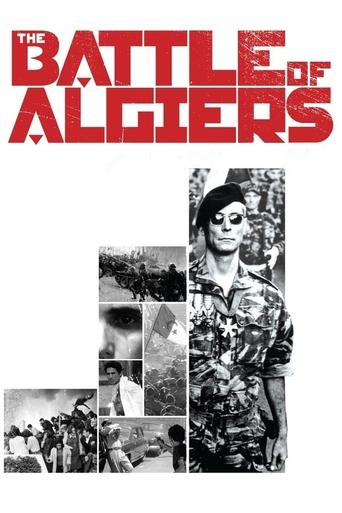
Non-negotiable. Pontecorvo's 1966 docu-realist masterpiece is the film Bob is literally watching inside OBAA, and it's the template for the entire underground portion of Anderson's movie. The checkpoint sequences, the cell-structure paranoia, the way an informant's face can change the architecture of a city overnight — that's all here, shot in stunning black-and-white that looks like uncovered newsreel.
There's a reason governments keep nervously re-screening it. It still scans as a how-to manual, which is exactly why the French 75 would have studied it, and why Anderson wanted it on Bob's TV. If you watch one film off this list, it's this one.
Can't Decide What to Watch?
Let RandomFlix pick a movie for you. One click, one great movie.
Roll the DiceHow to Blow Up a Pipeline
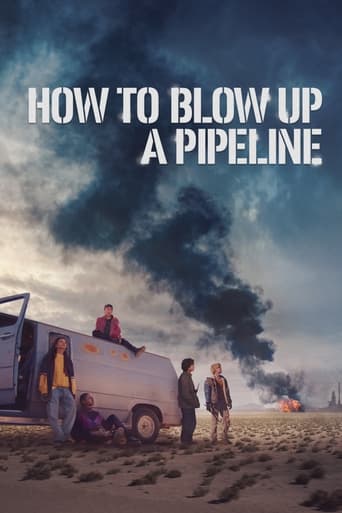
Daniel Goldhaber's 2022 heist-of-conscience is the closest tonal cousin on this list to OBAA's prologue. Shot on 16mm to evoke exactly the kind of 70s paranoid texture Anderson is chasing, it follows a young eco-radical cell as they prepare a sabotage in West Texas. The ideological friction — what does "doing something" actually cost, and who pays — is the contemporary update of the French 75's whole project.
It's also tight and mean and ninety minutes long, which makes it the most efficient possible companion piece. Where OBAA spans a generation, Pipeline catches the exact instant of decision, the moment before the rest of your life becomes a consequence.
Judas and the Black Messiah
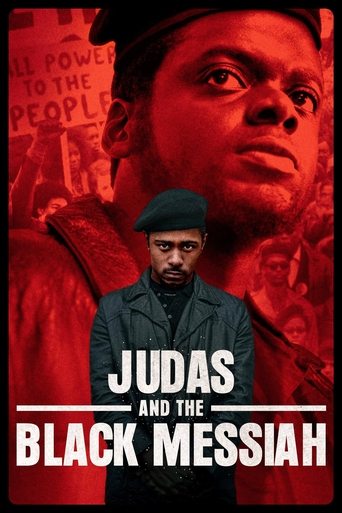
Shaka King's Fred Hampton film is the historical ground truth that OBAA fictionalizes. Informant paranoia, FBI surveillance, a movement betrayed from the inside — this is the political memory Anderson's film is built on top of, the actual American 1960s under the metaphor. LaKeith Stanfield's Bill O'Neal is a real-world Sean Penn villain in inverse: not a true believer in the system, but a man hollowed out by it, recording every betrayal in his own face.
Watch it and OBAA's flashbacks gain a second floor of grief.
The Father-on-the-Run Wing
Now the chase turns interior. OBAA's emotional engine isn't the surveillance state — it's a damaged parent trying to keep a kid alive while history closes in. The drama movies side of the bloodline.
No Country for Old Men
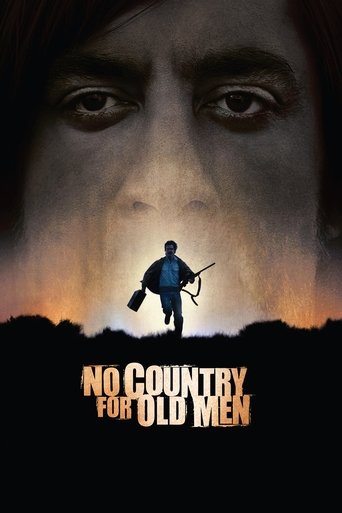
Llewelyn Moss, running through Texas with a satchel he shouldn't have, is the kinetic blueprint for Bob Ferguson protecting Willa. The Coens' 2007 Best Picture winner runs on the same engine OBAA does: a man in over his head, an institutional menace that cannot be reasoned with, and a slow-burning understanding that the country itself has gone wrong.
Anton Chigurh is the direct lineage to Lockjaw — the unkillable enforcer, the human shape of a system that doesn't take prisoners. Where the Coens land on fatalism, though, Anderson lands on stubborn hope, and that productive contrast is what makes this the most rewarding pairing on the list. Two visions of the same nightmare, one bleak, one — barely — illuminated.
A Thousand and One
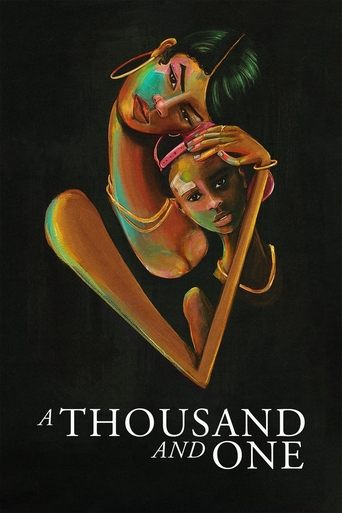
A.V. Rockwell's 2023 Sundance Grand Jury winner is the quietest film here and the one that matches OBAA's intergenerational ache most precisely. Teyana Taylor, in a performance that should have been on every shortlist, plays Inez, a young mother building a life with her son in a Harlem that's being gentrified out from under them. The chase here isn't a chase. It's housing court, school registration, the slow institutional grind that can rip a family apart as efficiently as any colonel.
Where OBAA aches for a daughter, this aches for a son. Same wound, different angle. If you cried at the end of Anderson's film, you'll cry at this one — and you'll know exactly why.
Keep the Frequency Going
Eight films, three frequencies, one bloodline. These aren't the ceiling — they're the floor, the foundation OBAA stands on. Adjacent threads spiral out from here: deeper into political-paranoia movies, sideways into the long history of on-the-run movies thrillers, backwards into Anderson's own filmography where Inherent Vice is waiting with the same shaggy, stoned, surveilled energy.
When you can't decide which thread to pull next, RandomFlix's Roll the Dice will pick for you. Trust the shuffle. Trust the bloodline. The revolution, as Gil Scott-Heron promised and Anderson quoted, will not be televised — but the films that prepared us for it absolutely were.