Why Dead Man's Wire Has Everyone Revisiting the Siege Canon
For 63 hours in February 1977, downtown Indianapolis became a live-television sound stage. Tony Kiritsis, a small-time real estate operator convinced he'd been swindled, walked into the offices of Meridian Mortgage, wired a sawed-off shotgun to broker Richard Hall's neck with a coat-hanger contraption he called a "dead man's line," and marched his hostage out onto Pennsylvania Street in front of every news camera in the Midwest. He didn't want money. He didn't want a getaway plane. He wanted an apology — on the air, in his own words, broadcast to the city that had ignored him.
That standoff is the engine of Dead Man's Wire, Gus Van Sant's return to true crime, with Bill Skarsgård as Kiritsis and a supporting turn from Al Pacino as the lawyer-negotiator brought in to defuse him. Empire's review caught the gag immediately: putting Pacino — cinema's most iconic hostage-taker — on the other side of the wire is the kind of circular casting that only works if you know what room you're already standing in.
In an NPR interview around the film's release, Van Sant talked about the case as a watershed moment in the relationship between American grievance and American broadcasting — a man who used live television to put a city on trial, and was ultimately found not guilty by reason of insanity. That, finally, is the through-line. Every great hostage film is really about who's watching. Below are eight thriller movies and crime movies touchstones that map the tradition Van Sant is consciously joining — from Sidney Lumet's Brooklyn sidewalk to a Dutch Apple Store in 2022.
The Direct Ancestor: Lumet's Brooklyn Standoff
Dog Day Afternoon
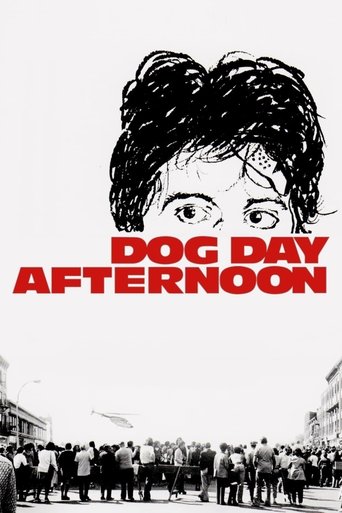
This is the comparison every critic reached for, and they reached for it because it's correct. Sonny Wortzik's botched August 1972 Chase Manhattan robbery curdles, over one humid afternoon, into a sidewalk happening — pizza deliveries, crowd chants, a bisexual love story leaked to the wire services in real time. Lumet understood before almost anyone that the camera was no longer covering the event; the camera was the event.
Pacino's "Attica! Attica!" is the original viral moment in hostage cinema, and Skarsgård's Kiritsis is its direct descendant. The demand is different — a televised apology instead of a jet to Algeria — but the choreography is identical: a desperate man discovering, mid-crisis, that the news truck idling at the curb is the most powerful weapon he has. Both films are unthinkable outside their 1970s movies context, when post-Watergate distrust had turned live coverage into a kind of accomplice, and the antihero hostage-taker into a strange folk figure the country half-rooted for.
The Highway Siege
The Sugarland Express
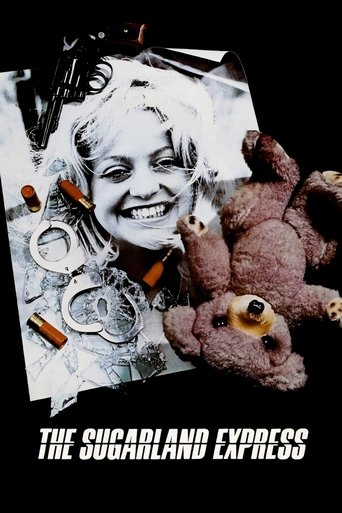
Spielberg's 1974 debut, cited in the RogerEbert review as part of Van Sant's reference shelf, takes the same compulsions and stretches them across a Texas highway. Goldie Hawn and William Atherton play a couple whose custody-driven kidnapping of a state trooper balloons into a roving media event, trailed by a 200-car police convoy and a parade of well-wishers who treat the fugitives like rodeo royalty.
It's the same rolling spectacle Kiritsis weaponized on foot in Indianapolis, only on wheels and in CinemaScope. Vilmos Zsigmond's anamorphic Panhandle landscapes do for Spielberg what the grainy live-news look does for Van Sant: both filmmakers locate the American absurd in the spectacle of a hostage with nowhere to go and a country that can't look away.
The Political Hostage
State of Siege

Costa-Gavras's 1972 procedural, the BFI's anchor pick for the kidnapping canon, is the geopolitical mirror to Van Sant's intimate Midwestern crack-up. It reconstructs the Tupamaros guerrillas' 1970 abduction of Dan Mitrione, a USAID adviser in Uruguay whose "development" credentials concealed a much darker brief in interrogation training.
Where Dead Man's Wire diagnoses a private grievance metastasizing into public theater, State of Siege does the reverse: a coordinated political act forces a private institutional rot into daylight. Costa-Gavras shoots it with the dry, fact-checked rhythm of a Le Monde dispatch, which only makes the revelations land harder. Essential viewing for anyone who wants the based-on-true-story movies edge sharpened to a geopolitical point.
The Heiress and the Symbionese
Patty Hearst
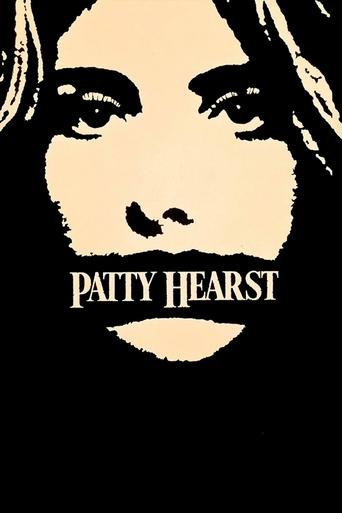
Paul Schrader's 1988 dramatization of the 1974 SLA kidnapping — the other essential American pairing on the BFI's list — opens inside a closet. Natasha Richardson's Patty hears her captors before she sees them, and Schrader keeps us locked in her disoriented sensory frame as identity itself begins to slip its moorings.
It mirrors Dead Man's Wire's interest in the unstable boundary between captor and captive, and in how televised hostage events rewrite identity in real time. Kiritsis and Hall, over 63 hours, developed something not unlike the strange intimacy the Hearst case made a household phrase. Run the two films back to back and you have a coherent double feature on 1970s America's long, public nervous breakdown.
The Forensic Masterpiece
High and Low
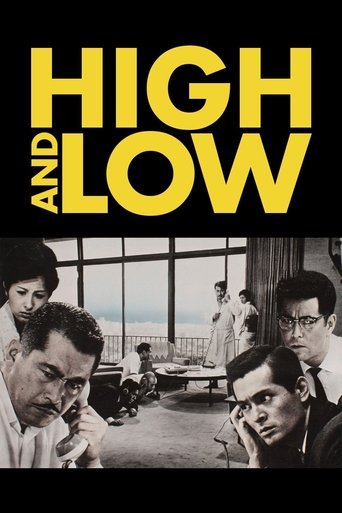
Kurosawa's 1963 Yokohama-set kidnapping procedural is the godfather of the modern hostage thriller and a touchstone for any serious list. The setup is brutally economical: a wealthy shoe executive learns his son has been abducted, then learns the kidnappers grabbed the chauffeur's boy by mistake. Does he still pay?
The split structure — a claustrophobic first half locked inside the executive's hilltop home, a sprawling second half that becomes a citywide police hunt through Yokohama's dives and back alleys — anticipates how Van Sant moves between Hall's living room and the surrounding spectacle. Newly relevant, too, with Spike Lee's Highest 2 Lowest remake fresh in viewers' minds. Start at the source.
Can't Decide What to Watch?
Let RandomFlix pick a movie for you. One click, one great movie.
Roll the DiceThe British Outlier
Seance on a Wet Afternoon
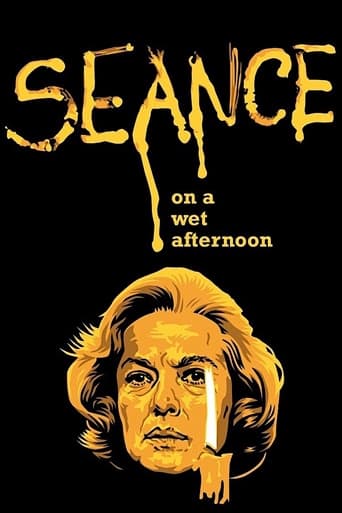
Bryan Forbes's 1964 chiller is the strangest film on this list and, tonally, the closest cousin to what Van Sant is doing. Kim Stanley plays a delusional medium who orchestrates a child's kidnapping so she can "solve" it via séance and ride the resulting publicity into legitimacy. Her browbeaten husband (Richard Attenborough) goes along with it because he has no idea how to stop her.
This is the portrait of a person whose grievance has curdled into elaborate self-mythology — and that's Kiritsis exactly, a man so convinced of his own narrative arc that he scripts the hostage crisis as the third act of a wronged-everyman screenplay. A reminder, as the BFI noted, that the hostage film has always been a psychological genre as much as a procedural one.
The Netflix Now-Pick: A 2022 Amsterdam Siege
iHostage
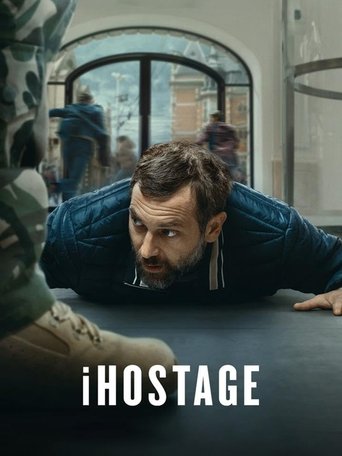
The Dutch dramatization of the May 2022 Apple Store standoff in Amsterdam's Leidseplein is, as of writing, sitting at No. 1 on Netflix — the contemporary update of everything above. A lone gunman walks into a flagship retail store demanding €200 million in cryptocurrency. Bystanders livestream. Police negotiators stall. The crisis ends with a civilian-driven getaway that doubles as a rescue.
Single location, livestreamed by phones, resolved in ways the network-news playbook of 1977 couldn't have imagined — but the underlying choreography is pure Kiritsis. The hostage-taker still wants an audience. The audience still can't decide whether it's witnessing news or content. Watch it immediately after Dead Man's Wire and the fifty-year arc clarifies itself: the broadcast tower has shrunk into a pocket, but the thriller movies hasn't changed shape.
The Wild Card
Network
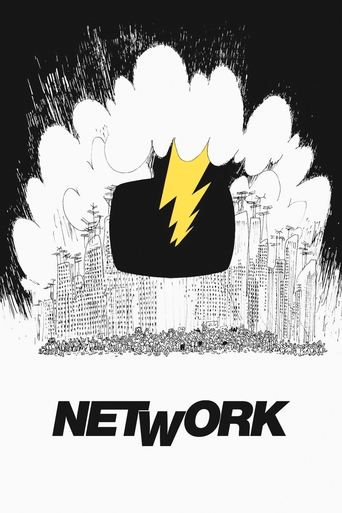
Not a hostage film in the literal sense, but RogerEbert flagged it as essential Van Sant DNA, and they're right. Howard Beale and Tony Kiritsis are the same man, screaming on the same broadcast, three months apart. Paddy Chayefsky's 1976 satire — a deranged anchor who threatens on-air suicide and is promptly handed a primetime slot — predicted the live-television grievance economy that the Kiritsis standoff would inaugurate for real that February.
Close on this pairing. Dead Man's Wire is, in a way, the historical companion piece Network has been waiting fifty years for: the documentary footnote to Chayefsky's prophecy, dramatized by a director who understands that "I'm as mad as hell" was never a punchline. It was a forecast.
Eight films, six decades, one continuous argument about what happens when a private wound finds an open microphone. If the choice is paralyzing, RandomFlix's dice will pick one of them for you — and any of these is the right answer.