Why Project Hail Mary Just Rewrote the 2026 Box Office
The numbers are the story. Project Hail Mary landed in theaters with an $80.5 million opening weekend, and more than half of that — roughly 55% — came from IMAX and Dolby premium large-format screens. This wasn't a movie people stumbled into. It was a movie they sought out, specifically, for the biggest screen they could find.
That matters because original sci-fi, unattached to a franchise or a comic book, isn't supposed to do this anymore. According to The Hollywood Reporter, Lord and Miller's adaptation became only the second non-franchise film in a decade to cross $80 million on opening weekend, behind Christopher Nolan's Oppenheimer. The closest recent comparisons — F1, Jordan Peele's Us — open strong and then fade. Hail Mary did the opposite. It held onto 68% of its audience in weekend two (a 32% drop, better than both Oppenheimer and Dune: Part Two) and crossed $300 million globally by the end of its third frame.
You don't get those legs from hype. You get them from a movie that rewards the people who showed up, and then those people tell their friends. The takeaway from a studio strategy perspective is obvious: audiences are hungry for thinking-person science-fiction movies again, and they'll pay a premium-ticket markup to see it done right. The takeaway for the rest of us — the people who walked out of an IMAX screening still buzzing about Rocky and tau radiation and the quiet dignity of solving one impossible problem at a time — is more personal. We want more of this. Seven more, specifically.
The Project Hail Mary DNA: What Makes It Tick
Before we get to the recommendations, it's worth naming what actually makes Hail Mary work, because "space movie" is the laziest possible category to drop it into. Strip the film down and you find three distinct strands braided together.
The first is hard-science problem solving. Ryland Grace is a scientist, not a soldier, and the film's tension comes from notebooks, spectrometers, and slide-rule thinking. The BBC's Nicholas Barber called it a thinking-person's blockbuster for a reason — the climax of any given chapter is usually a hypothesis confirmed, not a punch thrown.
The second is profound isolation. Even after Rocky arrives, the film's emotional foundation is the hollow quiet of a man waking up alone, light-years from anyone who knows his name. Ryan Gosling carries long stretches of screen time with nothing but voiceover and the hum of a life-support system.
The third is joyful first contact. This is where Lord and Miller — directors with buddy-comedy instincts honed on 21 Jump Street and the LEGO Movie — do something genuinely radical. The alien isn't a threat. The alien is a friend. The encounter is the reward.
The directors have been open about their touchstones: 2001: A Space Odyssey for scale, Arrival for patience, Close Encounters of the Third Kind for wonder. Those films all make this list. So do four more that share at least two of Hail Mary's three strands. The criterion isn't "movies set in space." It's "movies that feel the way Project Hail Mary feels."
7 Smart Sci-Fi Films to Watch Next
These range from near-clone siblings to distant cousins, arranged roughly on a spectrum from pure problem-solving survival to lyrical first-contact awe. Pick your entry point based on which strand of Hail Mary's DNA you can't stop thinking about.
1. The Martian

The most obvious pairing, and the one you've probably already considered. Ridley Scott's 2015 adaptation isn't just thematically adjacent to Hail Mary — it's literally from the same author. Andy Weir wrote both novels, and the DNA match is almost comical: a wisecracking scientist stranded alone, solving impossible problems with duct tape, spreadsheets, and gallows humor.
What The Martian nails, and what Hail Mary inherits wholesale, is the belief that competence under pressure is the highest form of heroism. Mark Watney doesn't defeat anyone. He doesn't outwit a villain. He grows potatoes in his own feces and does the math. If you loved Ryland Grace's small whiteboard victories, this is your easiest rewatch.
2. Sunshine
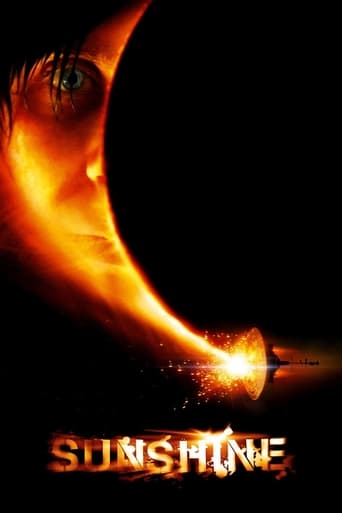
Danny Boyle's 2007 dying-sun rescue mission is the closest thematic sibling to Hail Mary's premise that exists on film. The stakes are identical on paper — a star is failing, humanity sends a small crew on what is functionally a suicide run to save it — and the IMAX-scale solar imagery (those gold-orange shields, the sun itself treated as a psychedelic altar) pairs beautifully with Hail Mary's premium-format appeal.
Where they diverge is tone. Sunshine spirals darker, into a psychological breakdown and something close to cosmic horror in its third act. If Hail Mary is what happens when optimists get handed a rescue mission, Sunshine is what happens when the same mission is crewed by people slowly losing their grip. Watch it second, not first.
3. Arrival
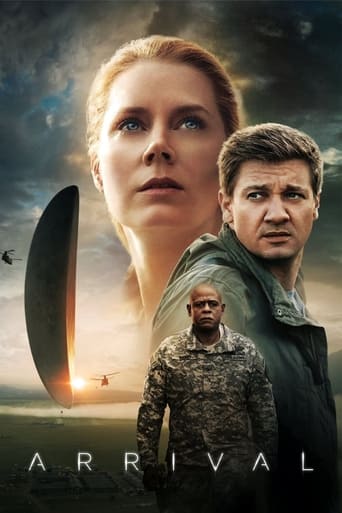
Denis Villeneuve's 2016 first-contact masterpiece is probably Hail Mary's closest emotional cousin. Both films treat communication across species as the heart of the story — not a plot obstacle to overcome but the entire point of the exercise. Louise Banks learning to read Heptapod logograms and Ryland Grace learning to speak with Rocky are, at their core, the same scene stretched across different runtimes.
What Arrival proved in the mid-2010s movies was that smart sci-fi could do blockbuster emotional work on a modest budget. Linguistics as romance, math as a love letter — Villeneuve trusted the audience to follow, and they did. Hail Mary is the spiritual sequel to that trust.
4. Moon
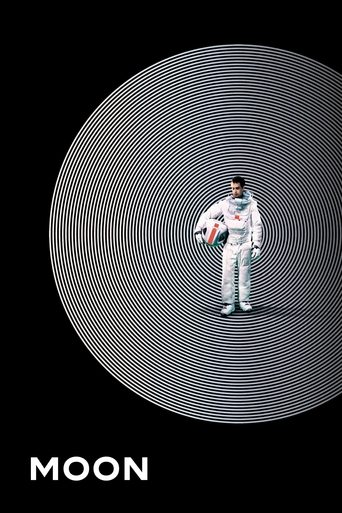
Duncan Jones's 2009 debut is the purest distillation of Hail Mary's isolation strand. Sam Rockwell, a lunar mining station, a soft-spoken AI companion, and a growing sense that the silence around him is hiding something. There are no aliens, no rescue missions, no tau radiation — just one man and the architecture of his own loneliness.
Rockwell's performance is the spiritual predecessor to the stretches of Hail Mary where Gosling is carrying entire acts solo. If what haunts you from Hail Mary is the quiet — Ryland waking up in the coma pod, the long months before Rocky — Moon is a 97-minute love letter to exactly that feeling. Pair it with space-isolation movies viewing for maximum effect.
Can't Decide What to Watch?
Let RandomFlix pick a movie for you. One click, one great movie.
Roll the Dice5. Interstellar
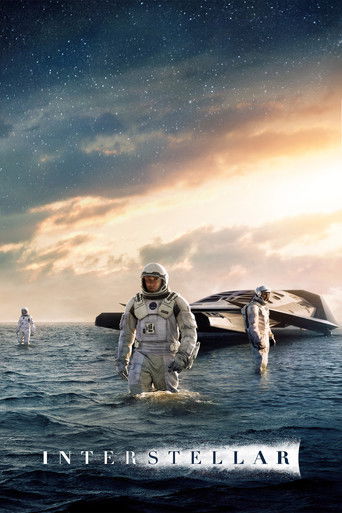
Christopher Nolan's 2014 extinction-level space opera is the maximalist version of Hail Mary's premise: if the stakes of saving humanity weren't already high enough, here they are turned up to cosmic, five-dimensional, love-transcends-spacetime scale.
What Interstellar shares with Hail Mary isn't plot mechanics but emotional architecture. Both films argue, quietly and then loudly, that the bonds between characters — Cooper and Murph, Ryland and Rocky — are not sentimental decoration on top of the science. They are the point of the science. The IMAX-native shot composition Nolan pioneered here is also a direct precursor to Hail Mary's 1.43:1 ambitions. If you saw Hail Mary on the biggest screen you could find, you already know why this matters.
6. 2001: A Space Odyssey
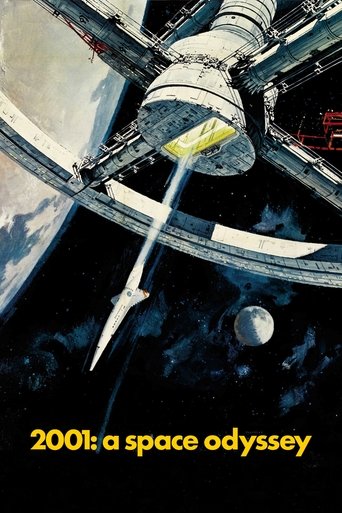
The foundational text. Lord and Miller have openly cited Kubrick's 1968 masterpiece as a reference point, and it's not hard to see why: the AI-companion dynamic in Hail Mary quietly echoes HAL 9000's presence, just inverted from menace into friendship. Rocky is what happens if you take HAL's central role — the non-human intelligence that shares the spacecraft with the protagonist — and make it the source of warmth instead of terror.
More than any single visual callback, 2001 matters because it's the film that established science-fiction movies blockbusters could be strange, slow, and philosophical, and audiences would still show up. Hail Mary's $300M global gross is, in a very real sense, a dividend on a bet Kubrick made nearly sixty years ago.
7. Close Encounters of the Third Kind
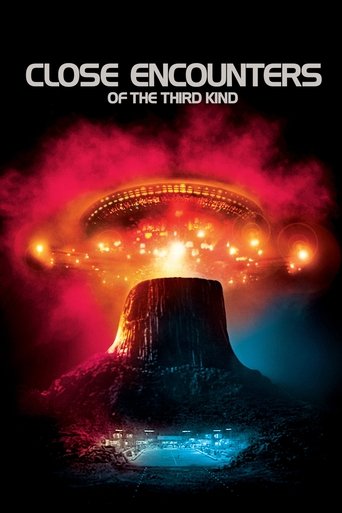
Steven Spielberg's 1977 wonder-first first-contact film is Hail Mary's tonal grandfather. Everything Lord and Miller do in the film's final act — the refusal to treat alien intelligence as a threat, the insistence that the encounter itself is the reward, the tears rather than the gunfire — Spielberg did first, and did in a way that rewired what mainstream sci-fi was allowed to feel like.
If Hail Mary sent you out of the theater with a lump in your throat and a weird, unfamiliar optimism about the universe, this is the film that invented that feeling. Close out your watch order here. It lands in exactly the same emotional register.
Building Your Own Post-Hail Mary Watch Order
Seven films is too many for one weekend and too few for a full month, so here's a suggested arc that mirrors Hail Mary's own emotional progression.
Night one: Start with The Martian. It's the tonal overlap, the safest landing — competence and humor, and the same author's voice. You'll feel immediately at home.
Night two: Escalate to Sunshine, then Interstellar if you want the stakes cranked to cosmic scale. These are the premium-format companions, the films you watch loud and in the dark.
Night three: Close on the lyrical duo. Arrival first for the patience and the linguistics, then Close Encounters of the Third Kind for the pure awe. Moon and 2001: A Space Odyssey slot in wherever your mood dictates — Moon for the quiet nights, 2001 for the ambitious ones.
If none of the seven quite scratches the specific itch Hail Mary left behind, the broader science-fiction movies catalog and the 2010s movies sci-fi revival are full of adjacent rewards worth dice-rolling through on RandomFlix. The thinking-person's blockbuster isn't a lost art. It's a wave, and Hail Mary just proved the tide is coming back in.
Put the phone down, dim the lights, and pick one. The universe rewards attention.