The Most Unfilmable Gothic in English Literature
Emerald Fennell's Wuthering Heights landed on HBO Max on May 1, and the war hasn't cooled down. After Warner Bros. released the film theatrically in February, it crossed $240 million at the global box office before arriving on streaming — a number that, in a year of franchise wreckage, makes Fennell's bodice-ripper the strangest mainstream literary adaptation since Joe Wright's Anna Karenina. The reviews have been a knife fight. Brontë purists are calling it desecration; the rest of us are still arguing about whether desecration might, for once, be the point.
Because here is the thing nobody wants to say out loud: Emily Brontë's novel has never been successfully filmed. Not really. It's a two-generation revenge saga in which the romantic leads — Heathcliff and Cathy — are functionally horror movie villains by the halfway mark, and the second half is about what their cruelty does to their children. Almost every adaptation amputates that second half and serves up a doomed love story instead. The novel has spawned more than 35 film and television adaptations, in English, Spanish, French, Japanese, and Hindi, stretching from the 1930s movies through the 2020s movies, and almost none of them have the stomach for what's actually on the page.
What follows isn't a fidelity contest. Fidelity is a trap with this book. This is a ranking of which films found something true in the wreckage — and where Fennell's polarizing new version belongs in the rubble.
What Every Adaptation Gets Wrong (And Why That's Interesting)
Start with Heathcliff. Brontë describes him as dark-skinned, possibly Romani, picked up off the streets of Liverpool and treated like an animal by the Earnshaw family that takes him in. He is feral, foreign, and — crucially — already broken before Cathy ever loves him. Hollywood spent half a century casting matinee idols in eyeliner instead: Olivier, Dalton, Fiennes, all magnificent, all wrong. The novel's racial wound becomes a brooding pout.
Then there's the Cathy problem. She dies halfway through the book. Most films don't know what to do after that, so they don't try — they kill her, fade to black, and pretend the second generation doesn't exist.
And the moors. The Yorkshire landscape is a character in the prose, weather you can feel in your teeth, but soundstage versions flatten it into wallpaper. Only a few directors — Andrea Arnold, Jacques Rivette — treat the land as something that could kill you.
All of which is to say: the romance movies marketing of these films almost always misrepresents what is, structurally, a horror movies story about generational abuse. The love is the bait. The cruelty is the meal.
The Ranked Adaptations: From Curio to Canon
Ten films, worst to best — with curios up front and the heavyweights at the back.
10. Dil Diya Dard Liya (1966)
The Bollywood transposition starring Dilip Kumar is fascinating less as cinema than as cultural translation. Melodramatic to the point of camp, it nevertheless does something none of the English versions manage: it maps the caste system onto Heathcliff's class wound so cleanly that the social cruelty actually lands. The romance is overcooked, but the humiliation is precise. Worth seeing for that alone.
9. Wuthering Heights
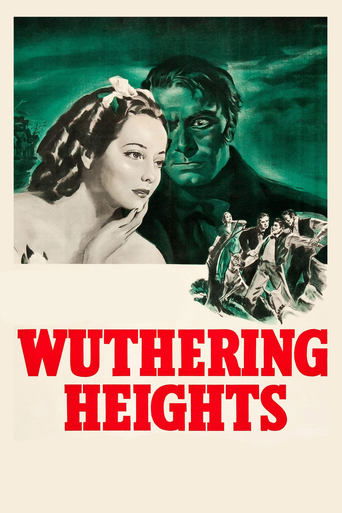
Timothy Dalton's Heathcliff is too handsome, too polished, too obviously a future James Bond — and the film knows it. This is the museum piece for tracking the genre's drift from 1930s movies prestige gothic into '70s sexed-up costume drama. Dalton smolders. The moors look like a backlot. The whole thing functions as a halfway house between Wyler's myth and the sleazier, more bodily versions to come.
8. Abismos de Pasión (1954)
Luis Buñuel's Mexican-set version retitles and relocates the story but it is unmistakably the same animal, stripped of every romantic varnish. TIME's survey of ten adaptations gives extensive analysis to international takes by Buñuel and Rivette, and for good reason: Buñuel leaves only the obsession. The necrophilia-adjacent ending — Heathcliff clawing at Cathy's coffin — is the most faithful translation of the novel's morbidity anyone has ever filmed. It belongs in conversation with the rest of foreign movies cinema's gothic experiments, a surrealist-adjacent vision that treats love as a disease.
7. Wuthering Heights (2026)
Emerald Fennell's polarizing version is the bodice-ripper the source material has been threatening to become for ninety years. Variety's premiere coverage includes direct quotes from Fennell, Margot Robbie, and Jacob Elordi about the film's approach, with casting inspiration reportedly drawn from Elordi's Saltburn sideburns and discussion of the legacy of past Heathcliffs including Olivier, Fiennes, and Hardy.
The strengths are real. The film is genuinely horny and genuinely cruel — two registers every prior English-language version has been too polite to commit to. Elordi plays Heathcliff as a damaged hot mess rather than a tragic prince; Robbie's Cathy is sharper-edged than the dewy heroines of past versions. The weaknesses are also real: Robbie is a decade too old for early Cathy, the moors look art-directed within an inch of their lives, and once again the second generation is shoved offscreen.
The verdict: divisive, overheated, and the first English-language Wuthering Heights since Arnold's that seems aware Heathcliff is the villain. That alone is worth the argument.
6. Hurlevent (1985)
Jacques Rivette moves the story to 1930s Provence, slows it to a glacial drift, and lets the strangeness pool in the corners of the frame. It is austere, deeply weird in the best Rivette way, and — decades before the term existed as a marketing category — already operating as folk-horror movies. The lovers are less star-crossed than possessed. The landscape watches them.
5. Onimaru (1988)
Yoshishige Yoshida's medieval Japan version, all stone monasteries and elemental violence, is the most visually radical adaptation ever made. There are no moors. There is no Yorkshire. There is only wind, rock, and ritual. It is proof that the story survives every transposition, because the engine isn't the setting — it's the cycle of harm.
Can't Decide What to Watch?
Let RandomFlix pick a movie for you. One click, one great movie.
Roll the Dice4. Wuthering Heights
Penguin's own guide to the major adaptations highlights the 2009 Tom Hardy and Charlotte Riley ITV version alongside the Wyler classic and Arnold's 2011 film, and the miniseries earns its place by doing what almost nothing else has: it has the runtime to actually include the second generation. Hardy plays Heathcliff as a wounded animal rather than a romantic lead — a man whose violence is the residue of childhood, not a personality trait — and the show is enormously better for it. Riley (who later married Hardy) is the rare Cathy who reads as genuinely difficult rather than dreamy.
3. Wuthering Heights
Peter Kosminski's version is handsome, slightly stiff, and elevated to greatness by two performances. Ralph Fiennes plays Heathcliff with the controlled menace he would soon weaponize elsewhere; Collider's ranking notes that Spielberg took notice of Fiennes in this role before casting him in Schindler's List. Juliette Binoche plays both Cathy and her daughter — the cleverest structural solution any film has found to the two-generation problem, since it makes the inheritance of damage visually literal. You watch the mother's face return in the daughter's, and the curse becomes legible.
It's not the most exciting Wuthering Heights. It might be the most intelligent.
2. Wuthering Heights
The film against which everything since has defined itself. Mental Floss notes the 1939 William Wyler film's 96% Tomatometer rating and its eight Oscar nominations, with a win for Best Cinematography. It is not faithful — the second half of the novel is gone entirely, the moors are a soundstage, and Merle Oberon's Cathy is more porcelain than peasant — but Wyler and his cinematographer Gregg Toland invented the cinematic language every subsequent version has spent ninety years reacting against.
Laurence Olivier's Heathcliff is the version Kate Bush, every Brontë cosplayer, and arguably Fennell are still arguing with. He's too beautiful, too cultivated, too obviously a Great Actor — and yet his face in the famous final shots is the image the popular imagination has welded to the book. You cannot undo it. You can only respond.
1. Wuthering Heights (2011)
Andrea Arnold's film is the only adaptation that feels like the novel reads. Screen Rant's ranking covers the full breadth of adaptations and highlights Andrea Arnold's 2011 film, which won Best Cinematography at the Venice Film Festival. Penguin's overview underscores Arnold's version as the one with the first Black Heathcliff: Solomon Glave as the boy, James Howson as the man.
Arnold shoots in 4:3, almost wordless, the camera close enough to feel breath. The moors are constant wet wind in the lens. Mud, blood, feathers, fur. She understands what no other director has been brave enough to commit to on screen — that Heathcliff is a brutalized child who becomes a brutal man, and that the cause and the effect are not separable. The racism of the Earnshaws and the Lintons isn't atmosphere; it is the wound the rest of the story bleeds from.
It belongs on any serious list of essential drama movies of the 2010s movies.
Where to Start If You're New
If you want the myth, watch the 1939 Wyler. If you want the truth, watch Arnold's 2011. If you want the argument everyone is having right this minute, Fennell's 2026 is on HBO Max. The three of them together are a small graduate seminar on what cinema can and can't do with prose that resists it.
For those of us working through the whole strange shelf of them, RandomFlix is a decent home for that kind of slow, eccentric viewing project — the kind where you wander between a Mexican Buñuel and a medieval Yoshida and a Yorkshire mud-bath without anyone marketing you a unified franchise.
Why This Story Won't Stop Getting Remade
Every era projects its anxieties onto Heathcliff. 1939 made him a romantic outsider, an aristocrat of suffering. 1992 made him a tragic refugee. 2011 made him a victim of racial violence whose violence in turn is legible as inheritance. 2026 makes him a hot mess of toxic obsession — a Saltburn boy with sideburns and bad intentions.
This is why the book keeps getting remade and the films keep falling short of it. Each generation reaches for the part of the cruelty it recognizes, and leaves the rest untouched. The through-line of every great gothic — Frankenstein, Dracula, Jane Eyre — is the same: not love, but unresolved harm. Wuthering Heights is the purest example we have, which is why it defeats people.
The next great Wuthering Heights will be the one that finally films the second half. The children of these monsters, living with what their parents did, learning whether the cycle can be broken or only repeated. That movie hasn't been made yet. When it is, it will rearrange this list.