A 55-Year-Old Novel Finally Gets Its Movie
For 45 years, Stephen King's The Long Walk has worn the label of "unfilmable" like a badge. The premise sounded like commercial poison: 100 boys walk down a road until 99 of them are dead. No monster. No prison break. No car crashes. Just walking, talking, and getting shot when your legs give out. Directors from George A. Romero to Frank Darabont circled it and passed. And then, quietly, Francis Lawrence did what nobody thought could be done — he made a movie of it that actually works.
The numbers back that up. The Long Walk pulled in roughly $63 million on a $20 million budget during its theatrical run, landed on HBO Max for streaming, and holds an 88% critics score on Rotten Tomatoes from 293 reviews with a Metacritic of 71. Those are strong marks for a film that consists almost entirely of teenage boys putting one foot in front of the other for 108 minutes.
The historical stakes are what make this arrival feel weighty. King started writing this book in the mid-1960s, when he was 19 years old and the draft board's shadow stretched across every young man's future. He finally published it in 1979 under his Richard Bachman pseudonym — the pen name he reserved for his angriest, least commercial work. Lawrence, who spent four films staging dystopian movies youth mortality in the Hunger Games franchise, is exactly the wrong-seeming and yet perfectly-right director for the job. He knows how to make walking cinematic. He also knows when to stop moving the camera.
The argument I want to make here is a specific one: this is the most faithful Bachman-era King adaptation since Rob Reiner's Stand By Me, and it's very possibly the bleakest King movie since Frank Darabont's The Mist. It earns both of those comparisons by refusing spectacle and trusting its actors.
The Premise, and Why It Kept Scaring Off Filmmakers
The setup, for the uninitiated: in a militarized alternate America, 100 teenage boys are selected each year for a walking contest. They must maintain 3 miles per hour. Drop below the pace and you get a warning. Three warnings and soldiers shoot you where you stand. The last boy still walking gets anything he wants for the rest of his life. That's the whole movie.
You can see why it terrified directors for decades. There are no set pieces waiting to be storyboarded. The horror lives inside conversation and inside the body — cramps, blisters, blown-out feet, the mind unraveling from sleeplessness. It's a chamber piece staged on an open road.
Screenwriter JT Mollner's most important choice was subtraction. There's no voiceover reaching for meaning, no flashback montages softening the boys with backstory, no last-minute rescue fantasy. The saccharine has been cut out with a scalpel. What's left is dread, dark humor, and a slowly narrowing group of teenagers trying to keep each other awake.
The lineage matters. This is the dystopian-survival movies template that would later fuel Battle Royale, Squid Game, and Lawrence's own Hunger Games work. Common Sense Media explicitly identifies the film as the forerunner to Battle Royale, The Hunger Games, and Squid Game. King got there first, in the mid-1960s, and Lawrence's film restores that primacy by feeling nothing like its descendants. There's no arena. No spectators cheering from bleachers. Just a two-lane road and the sound of boots.
Cooper Hoffman and David Jonsson: The Quiet Center
Cooper Hoffman plays Ray Garraty, the closest thing the film has to a protagonist, and his performance is a small miracle of restraint. He inherits his father Philip Seymour Hoffman's gift for interiority — the sense that a character is thinking constantly even when the face barely moves. He doesn't push. He doesn't monologue. He walks, and you watch his eyes get emptier by the mile.
David Jonsson, as Peter McVries, is the film's emotional engine. He's the one who cracks jokes, needles the group into staying human, and slowly reveals the exhaustion underneath the charm. The Rotten Tomatoes critics consensus singles out Hoffman and Jonsson's soulful performances as the reason the dystopia lands. That's the right read. Without that friendship at the center, the movie would be an endurance test. With it, the endurance test becomes a love story between two boys who both know, somewhere behind their eyes, how this ends.
This is what IndieWire understood about the film: it's a coming-of-age movies movie hiding inside a death march. The genre chassis is dystopia; the actual engine is boys discovering who they are in the presence of mortality, which is exactly the territory Stand By Me owned for forty years.
Lawrence's directorial discipline is worth calling out. He refuses to give any of the walkers a hero moment. Nobody makes a stirring speech before dying. Nobody gets a slow-motion sacrifice. Each death lands because the boys stay recognizably teenage — awkward, funny, cruel, tender in flashes, and then gone. The ensemble around Hoffman and Jonsson is uniformly excellent, and Lawrence trusts them to disappear without underlining it.
Mark Hamill's Major Is the Villain of the Year
Then there's Mark Hamill.
If you only know Hamill from Star Wars, his Major will genuinely startle you. It's closer to the vocal menace he brings to the animated Joker than to anything Skywalker adjacent — a smiling institutional man whose worst quality is how utterly unbothered he seems. Collider's review describes his turn as menacing, but the specific flavor of menace matters. Hamill plays authoritarianism as boredom rather than sadism. He's not enjoying this. He's just done it many times before.
That choice is what makes the film's politics bite. TheWrap frames the movie as a Vietnam-draft parable, and that reading is right there in the text — this is a recruiting poster with a rifle behind it, and Hamill plays the poster. His voice is warm. His eyes are somewhere else. Every so often he says the word "son" and it lands like a hand on a shoulder blade, right before the shove.
There's a long tradition in the horror movies genre — and in King's work specifically — of institutional monsters mattering more than supernatural ones. Nurse Ratched. Warden Norton. Annie Wilkes with her rulebook. Hamill's Major belongs on that shelf. He's not a killer; he's a manager of killers. That distinction is the movie's whole thesis.
Can't Decide What to Watch?
Let RandomFlix pick a movie for you. One click, one great movie.
Roll the DiceRanking It Against the King Adaptation Canon
Where does The Long Walk actually sit in the King pantheon? The critical consensus is doing the heavy lifting here, but the Bachman-lineage argument matters too. Here's how it stacks against the touchstones.
Stand By Me
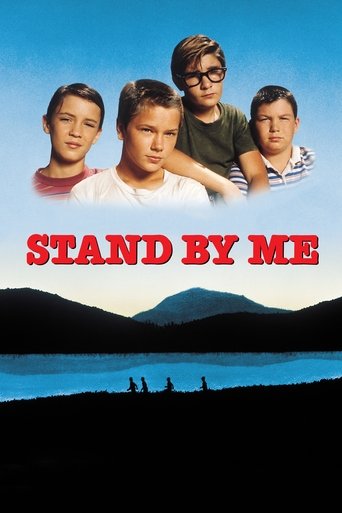
The benchmark for King as a coming-of-age writer, and the closest structural cousin The Long Walk has. Boys on a journey. Mortality lurking one step off the path. The difference is tone. Reiner filtered his story through nostalgia and Richard Dreyfuss's warm narration. Lawrence strips nostalgia off completely. It's the same story told in the cold.
The Shawshank Redemption
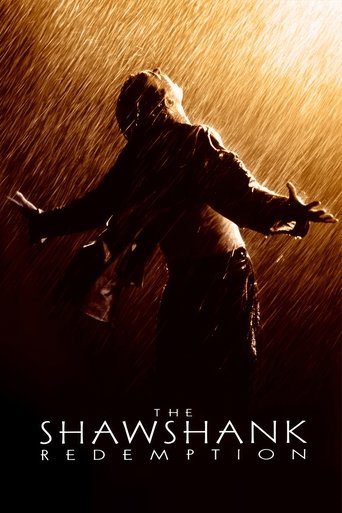
Still the humanist peak of the King canon. What The Long Walk shares with it is a faith in male friendship as a survival mechanism under institutional cruelty. What it refuses is the catharsis. Andy Dufresne crawls through a river of filth into freedom. Garraty and McVries just keep walking.
The Mist
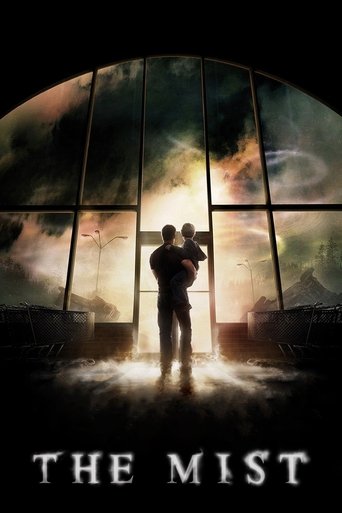
CinemaBlend's touchstone, and the most useful one. CinemaBlend positions The Long Walk as the bleakest King adaptation since Darabont's The Mist, which came out 18 years prior. That's not a marketing line — it's a technical claim about how far a mainstream King adaptation is willing to go into the dark. Lawrence matches Darabont's nerve. Nobody who has seen the ending of Darabont's film needs to be told what that means.
Misery
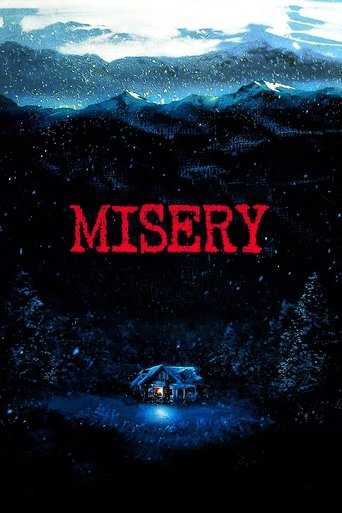
The other great Bachman-adjacent chamber piece — small cast, confined space, one authority figure with a weapon and a smile. Kathy Bates's Annie Wilkes weaponized domesticity. Hamill's Major weaponizes patriotism. Same species, different uniform.
It
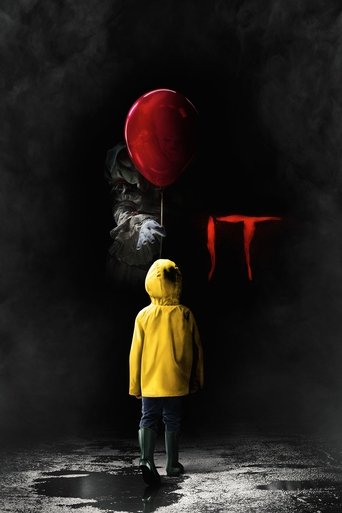
The modern commercial peak of King adaptation, and The Long Walk's opposite number. No dancing clown, no CGI spider, no jump scares, no supernatural threat at all. Just the boys and the road. If It is the crowd-pleasing summer entry, The Long Walk is the counter-programming.
The Verdict: Grueling, Faithful, and Not for Everyone
Let me restate the case. Slate's Rebecca Onion called it the leanest, meanest King adaptation in a long time, and after 108 minutes with it, I think that assessment holds cleanly. The film is lean because it refuses padding. It's mean because it refuses to look away.
The Hollywood Reporter called the film grueling but powerful, noting that Lawrence delivers the sort of emotion and heart that have marked the best King adaptations. That's the balance Lawrence hits. Grueling and generous at the same time. The CinemaScore B tells you audiences walked out shaken — and that reaction is earned honestly. Nothing about the ending panders. Nothing about the middle drags. The 108-minute runtime does not overstay by a single frame.
Who should watch it? Viewers who loved the ending of The Mist and didn't feel manipulated by it. Readers of the Bachman books who have been waiting since the '80s for a faithful translation. Anyone tired of King adaptations that pad the source material with digital monsters and Easter eggs for the fan wiki.
Who should skip it? Viewers looking for the propulsive spectacle of 2010s movies dystopian YA. This is closer in temperature to a bleak character drama movies than to The Hunger Games. There are no arena kills to cheer for. There is no love triangle. There is no revolution waiting in the next film. There is only the road.
Rating: 9/10. The most faithful Bachman-era adaptation since Stand By Me, and one of the five best King films ever made.
If you're not sure whether you can take a film this heavy tonight, sometimes a shorter warm-up helps calibrate the mood — RandomFlix's dice roll can surface a leaner King title or a dystopian-survival movies companion piece to sit alongside this one. But when you're ready, put the phone down, kill the lights, and walk with these boys. They deserve your full attention. They aren't getting anything else.